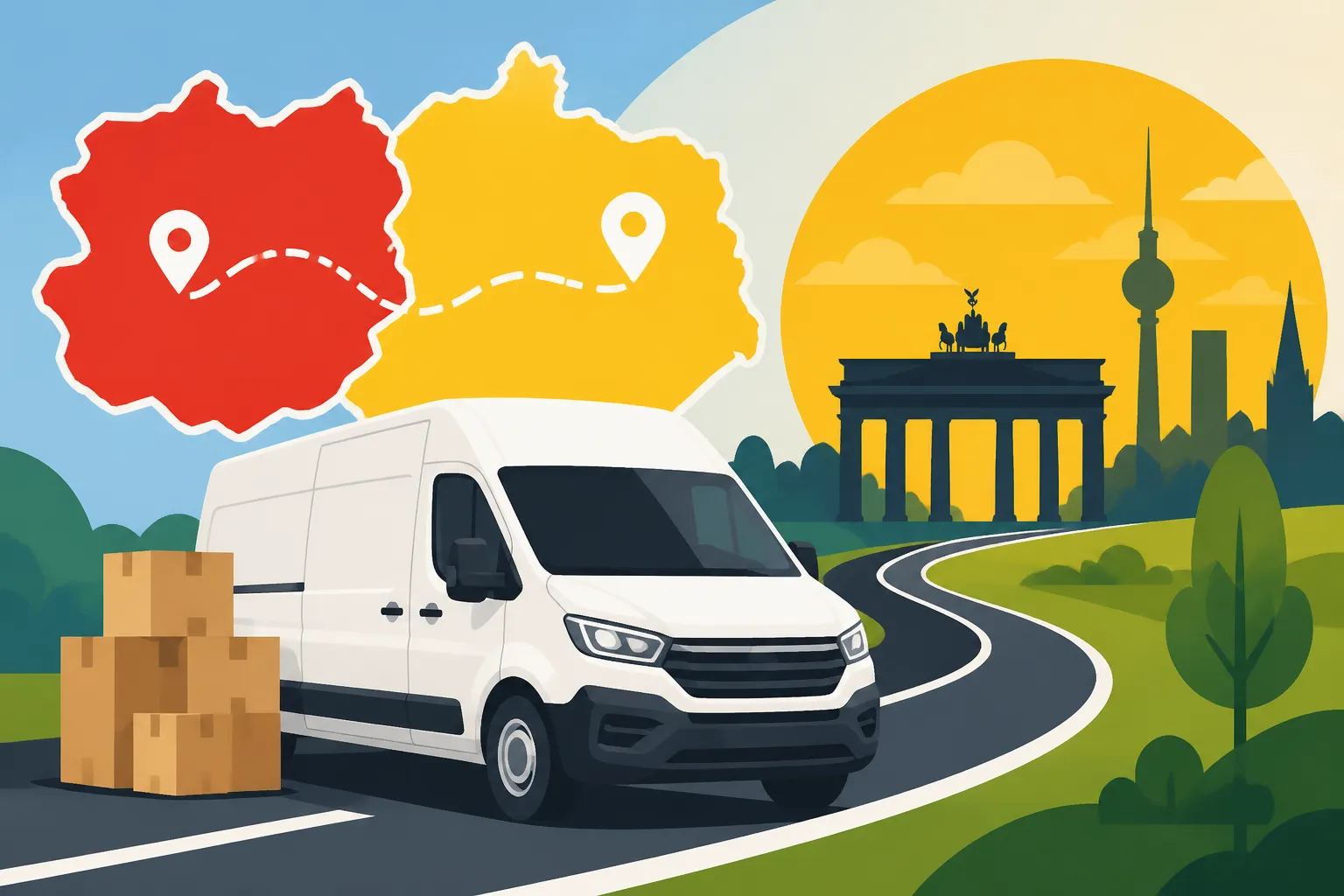
Moving to Germany from Poland: Short-Haul Road Freight and Van Options
Moving from Poland to Germany, especially when it comes to transporting your entire life, can feel like a logistical puzzle, even for a relatively short distance. While you might think "it's just next door," the administrative hurdles and the sheer effort of organizing transport can be daunting. This comprehensive guide will walk you through everything you need to know about short-haul road freight and van options for your relocation, helping you navigate the journey with less stress and more confidence.
Disclosure: This post may contain affiliate links. We may earn a commission at no extra cost to you if you make a purchase through these links. Read full disclosure.
The Unique Charm (and Challenges) of Moving from Poland to Germany
The close proximity of Poland and Germany often lulls people into a false sense of simplicity when planning a move. After all, it's not like moving across continents, right? The border is open, and both countries are part of the EU. While this certainly simplifies some aspects, like avoiding lengthy visa processes for EU citizens and the heavy lifting of international customs duties between member states, it doesn't mean you can just throw everything in a van and go. There are still layers of planning, cultural nuances, and logistical considerations that can turn a seemingly straightforward move into a headache if not properly managed.
The 'Short-Haul' Advantage and Its Pitfalls
The biggest advantage of moving between Poland and Germany is undoubtedly the relatively short distance. This means road freight is a highly viable, often preferred, and usually more cost-effective option compared to air or sea cargo. You're typically looking at a drive time of anywhere from a few hours to a full day, depending on your exact starting and end points. This short distance can significantly reduce transit times, allowing you to settle into your new German home much faster.
However, this perceived simplicity can also be a pitfall. Because it feels "close," some expats underestimate the need for proper planning. They might assume that any local Polish mover can handle the German side or that a last-minute rental van will suffice for a whole household. The reality is that even short-haul international moves require professional expertise, especially when it comes to border formalities, insurance, and navigating different traffic regulations or city access restrictions in Germany. Don't fall into the trap of thinking a shorter distance means less need for meticulous organization; it often just shifts the focus to different types of logistical challenges.
Cultural and Bureaucratic Nuances for Cross-Border Movers
Beyond the physical transport, you'll also be stepping into a different administrative and cultural landscape. Germany is known for its bureaucracy, and while EU membership simplifies things, you still need to be diligent about registering your address, setting up utilities, and handling all the initial paperwork promptly. For instance, understanding the specific requirements for your Moving to Germany: Comprehensive Visa & Immigration Guide, such as securing your residence permit (if applicable) and the all-important Registering Your Address (Anmeldung): Step-by-Step Guide, is crucial.
There's also a subtle culture shock that can hit even when moving between neighboring EU countries. From apartment hunting (where unfurnished kitchens are the norm) to understanding rental contracts, things operate differently. A professional moving service that has experience with Polish-German routes will not only handle your belongings but might also offer insights or services that ease your overall transition. This is where a platform like Sirelo becomes invaluable, connecting you with movers who truly understand these cross-border specificities, ensuring your move is more than just transportation—it's a smooth relocation.
Why Road Freight and Vans Make Sense for the Poland-Germany Route
When considering how to transport your belongings from Poland to Germany, road freight almost always emerges as the most practical and efficient choice. Given the geographical proximity, the alternatives like air or sea shipping simply don't offer the same blend of speed, flexibility, and cost-effectiveness for most household moves. Let's delve into why the humble van and road freight reign supreme for this particular cross-border journey.
Directness and Flexibility: The Road's Appeal
One of the standout benefits of road freight is its directness. Unlike air or sea cargo, which often involves multiple transshipment points, a van or truck can typically travel directly from your old home in Poland to your new home in Germany. This "door-to-door" service minimizes handling of your items, reducing the risk of damage or loss that often comes with transferring goods between different modes of transport. Imagine your precious antique lamp or delicate ceramics being loaded once and then unloaded once, directly into your new living room—that's the peace of mind road freight offers.
Moreover, road transport offers unparalleled flexibility in scheduling. While train schedules or flight slots are rigid, professional moving companies specializing in road freight can often accommodate more specific pick-up and delivery dates and times. This is incredibly helpful when you're coordinating apartment handovers, utility connections, and other time-sensitive aspects of your move. If your new apartment isn't quite ready on the exact day you planned, a flexible mover can often adjust, or even offer temporary storage solutions, which would be far more complex with other shipping methods.
Cost-Effectiveness and Control for Your Belongings
For the distance between Poland and Germany, road freight is generally the most budget-friendly option. Air freight, while fast, comes with a hefty price tag that's often disproportionate to the distance. Sea freight is economical for very large volumes and long distances, but for a typical household move from Poland, it's overkill and incredibly slow. Road transport, on the other hand, balances speed with affordability, offering competitive rates, especially when you use services that consolidate loads or allow for partial shipments.
Beyond cost, road freight gives you a greater sense of control. You know your belongings are being transported via road, and in many cases, you can even track the progress of the vehicle. This transparency is a huge comfort for many expats. When you use a reputable platform like Sirelo to find a mover, you can often filter for companies that offer tracking, ensuring you're always in the loop about where your life's possessions are. This sense of oversight, coupled with efficient transit times, makes road freight a compelling choice for managing your move budget and your anxiety levels.
Environmental Considerations and Shared Loads
For those who are conscious about their environmental footprint, road freight can also present more eco-friendly options, particularly when choosing shared load services. Instead of hiring an entire truck for your belongings, which might only fill half the space, many movers offer groupage or "part-load" services. This means your items share space with other clients' goods heading in the same general direction. This not only makes the move more affordable for you but also maximizes the use of vehicle capacity, reducing the number of individual trips and thus lowering overall emissions.
Platforms like Sirelo often highlight movers that offer these flexible, environmentally conscious options, allowing you to choose a solution that aligns with your values and your wallet. By consolidating shipments, movers can optimize their routes and fuel consumption, contributing to a greener relocation process. It's a win-win: you save money, and the planet gets a small break, proving that efficiency and responsibility can go hand-in-hand even in the world of international moving.
Understanding Your Road Freight Options: From DIY to Full Service
The beauty of moving from Poland to Germany via road freight is the spectrum of options available, catering to every budget, time constraint, and comfort level. You're not stuck with a one-size-fits-all solution; instead, you can choose from various levels of service, from completely hands-on to entirely hands-off. Understanding these options is key to making the right decision for your unique relocation needs.
DIY Van Rental: The Budget-Friendly but Labor-Intensive Path
For the ultimate budget-conscious mover with strong arms and a brave heart, renting a van and tackling the move yourself is a legitimate option. Companies like Sixt or Hertz operate across Europe, allowing you to rent a van in Poland and return it in Germany, though one-way international rentals can sometimes incur higher fees. This route gives you maximum control over your schedule and how your items are packed and loaded, which can be appealing for those who prefer to manage every detail personally.
However, be realistic about the demands of a DIY move. You'll be responsible for all the heavy lifting, packing, loading, driving, navigating, and dealing with any potential breakdowns or traffic issues. This includes understanding the various Cost of Living in Germany: Budgeting Guide for Expats and ensuring you factor in fuel, tolls, and any potential penalties for traffic infringements in a foreign country. If you have a small apartment, minimal furniture, and don't mind the physical exertion, it can be a cost-saver. But for anything more substantial, or if you're not physically able to manage, the stress and effort might quickly outweigh the savings. It's crucial to consider if the potential savings are worth the immense physical and mental labor involved.
Man-and-Van Services: The Middle Ground
A popular choice for many expats moving between Poland and Germany is the "man-and-van" service. This option typically involves hiring a professional driver with a suitable van or small truck. They often assist with loading and unloading, and sometimes even provide basic packing materials. It's a fantastic compromise between the full DIY route and a comprehensive moving company, offering a balance of affordability and convenience. You still play an active role, perhaps doing most of the packing yourself, but you offload the critical task of driving and vehicle management to a professional.
These services are particularly well-suited for smaller apartments, student moves, or situations where you have a modest amount of furniture and boxes. They are usually more flexible with scheduling than large firms and often have competitive pricing. When searching on a platform like Sirelo, you can specifically look for companies offering these more nimble services, and many local Polish or German movers specialize in this cross-border route. Just ensure they are properly insured and have experience with international transit, even if it's "just" across the border. Always confirm what exactly is included in their service package – for instance, whether they offer basic assistance or just transport.
Full-Service Moving Companies: Peace of Mind for Larger Moves
For those with larger households, valuable possessions, or simply a desire for minimal stress, a full-service moving company is the way to go. These companies handle everything: professional packing, dismantling and reassembling furniture, loading, transportation, unloading, and even unpacking at your new German address. They often provide comprehensive insurance coverage and can expertly navigate Moving Your Belongings to Germany: Customs Duties and Tax-Free Imports for New Residents and any specific city access restrictions.
While this is the most expensive option, the peace of mind it offers is often priceless. A professional crew understands how to properly pack fragile items, secure furniture for transit, and manage the logistics of a large-scale international move. They are well-versed in the necessary paperwork and can often provide support beyond just transportation, such as advice on Housing in Germany: Renting, Buying, and Finding Your Home as an Expat or even storage solutions. Finding these reputable, full-service providers is made simple through platforms like Sirelo, where you can compare multiple quotes and reviews, ensuring you pick a company that delivers on its promises and truly understands the intricacies of a move to Germany.
Navigating Logistics and Paperwork for Your Move
The journey from Poland to Germany isn't just about loading boxes onto a truck; it's also about a meticulous dance with paperwork, regulations, and insurance. While the EU makes things easier, don't let your guard down. Ignoring the administrative side can lead to delays, unexpected costs, or even legal complications. Understanding these elements beforehand will smooth your transition significantly.
Essential Documents for Border Crossings and Customs
As both Poland and Germany are part of the European Union, the good news is that you generally won't face stringent customs checks for personal belongings when moving. There are no import duties or taxes on household goods, provided they are your personal possessions and have been used for at least six months. However, this doesn't mean you can skip all documentation. You will still need:
- Proof of Identity: Your passport or national ID card.
- Proof of Residence: Documents showing your former address in Poland and your new address in Germany (e.g., rental contract, utility bill). This is crucial, as it validates that your move is a genuine relocation of personal effects.
- Packing List/Inventory: A detailed list of all items being transported. While not always rigorously checked at the internal EU border, having one ready is professional and essential for insurance purposes.
- Moving Contract: If using a moving company, ensure you have your contract handy.
Always carry these documents with you, not packed away in a box. Although border controls within the Schengen Area are minimal, random checks can occur, and being prepared means a quick, hassle-free passage. If you're unsure about specific items (e.g., certain plants, alcohol quantities, or new purchases), it’s wise to check German customs regulations beforehand to avoid any issues.
Insurance Considerations for Your Valuables
This is a step many expats unfortunately overlook, often assuming standard transit insurance is enough. When moving your entire life, especially across borders, adequate insurance is paramount. Accidents happen: a box might fall, a valuable piece of furniture could get scratched, or, in rare cases, an entire load could be compromised.
Most professional moving companies offer basic liability insurance, which is often based on weight (e.g., €0.62 per kilogram in Germany). This sounds good until you realize your expensive laptop or delicate artwork is worth far more per kilo than a stack of old books. This is why you should always consider supplementary "all-risk" insurance, also known as transit insurance or goods in transit insurance. This covers your items for their actual declared value, providing true peace of mind. Discuss this in detail with any potential moving company you find through Sirelo. Get a clear understanding of their standard coverage and what additional options are available. Ensure that the policy is explicitly valid for international moves from Poland to Germany and clearly outlines what is and isn't covered, including deductibles and the claims process. It's also worth noting that once your items are in your new home, you'll need to think about Home Insurance in Germany: Do You Need Haftpflicht and Hausrat? to protect against theft, fire, or water damage.
Understanding Delivery and Access in Germany
Germany has specific rules regarding vehicle access, parking, and quiet hours (Ruhezeit) that can affect your delivery. Large moving trucks might struggle with narrow city streets or restricted zones in older towns. Parking permits might be required for the moving truck to park directly outside your residence, especially in urban areas. Your moving company should be aware of these local regulations, but it's always good practice to inform them in advance about any potential access challenges at your new German address.
For instance, many German apartment buildings have shared laundry rooms and strict quiet hours during which noisy activities, including heavy moving, are not permitted. If your move falls on a Sunday or a public holiday, be prepared for strict noise regulations. Ensure your moving company is briefed on these local nuances to avoid fines or frustrated neighbors. Planning ahead by checking local municipal rules (often available on city websites) or consulting with your landlord or building management can help ensure a smooth, compliant delivery process. It also helps to communicate clearly with your movers, especially if you have a tight window for unpacking or if special equipment is needed for tricky access points.
Choosing the Right Moving Partner for Your Polish-German Relocation
Selecting the right moving company can make or break your relocation experience. For a move from Poland to Germany, you need a partner who understands both the logistical challenges of cross-border transport and the practicalities of settling into a new German home. This isn't a decision to rush; it requires careful research and comparison to ensure your precious belongings are in safe hands.
The Power of Comparison: Finding Reliable Movers
In today's interconnected world, you have a wealth of options at your fingertips, but sifting through them can be overwhelming. This is precisely where platforms like Sirelo shine as your absolute best friend. Sirelo isn't just a directory; it's a comprehensive comparison platform specifically designed to simplify the complex process of finding international movers. Instead of contacting dozens of companies individually, you provide your move details once, and Sirelo connects you with multiple reputable moving companies that specialize in the Poland-Germany route.
By using Sirelo, you gain access to a network of vetted professionals, many of whom have extensive experience with short-haul road freight between these two countries. You'll receive free, no-obligation quotes, allowing you to compare prices, services offered, and customer reviews all in one place. This transparency is crucial, as it empowers you to make an informed decision without the endless back-and-forth emails. Think of Sirelo as your personal moving assistant, doing the legwork to find reliable movers so you can focus on other aspects of your Housing in Germany: Renting, Buying, and Finding Your Home as an Expat. It’s the smart way to start your search and ensure you’re getting competitive offers from qualified professionals.
What to Look for in a Moving Quote
Once you start receiving quotes, don't just look at the bottom-line price. A cheap quote might mean hidden costs or inadequate services down the line. A truly transparent and useful quote should be detailed and itemized. Here’s what to scrutinize:
- Included Services: Does it cover packing materials, packing service, dismantling/reassembling furniture, loading/unloading, and transportation?
- Insurance: What level of insurance is included? Is it basic liability, or can you upgrade to an all-risk policy? This is vital, especially for valuable items.
- Volume/Weight: Is the quote based on the actual volume or weight of your belongings, or an estimate? Ensure it's accurate to avoid surprises.
- Access Costs: Are there any additional charges for difficult access at either the pick-up or delivery location (e.g., long carries, stairs, parking restrictions)?
- Tolls/Fuel: Are all fuel and road tolls for the Poland-Germany route included?
- Storage: If needed, are temporary storage options clearly priced?
- Timeline: Does the quote specify realistic pick-up and delivery dates?
Don't be afraid to ask for clarification on any point that isn't clear. A reputable mover will be happy to explain their pricing structure. Remember, you're paying for a service, and clarity upfront prevents disputes later. Sirelo helps streamline this by presenting quotes in a comparable format, making it easier to evaluate each offer thoroughly.
Vetting Potential Moving Companies
Even with quotes in hand, a little extra vetting goes a long way. This is where research beyond the initial quote comes into play.
- Reviews and Testimonials: Check independent review platforms (which Sirelo integrates) and look for consistent feedback, especially regarding international moves. Pay attention to how companies respond to negative reviews—it often reveals their customer service ethos.
- Experience with Poland-Germany Route: Explicitly ask how much experience they have with moves between these two countries. Do they understand common challenges like navigation in specific German cities or local regulations?
- Accreditations and Affiliations: Are they members of recognized moving associations (e.g., FIDI, IAM)? These affiliations often indicate adherence to higher industry standards and codes of conduct.
- Communication: How responsive and clear are they in their communication? A reliable mover will be prompt, professional, and transparent from the get-go.
- In-Home Survey: For larger moves, an in-home survey (or a detailed video survey) is essential for an accurate quote. It helps the mover assess your items, identify special requirements, and spot potential access issues.
Taking these steps will help you confidently choose a moving partner that aligns with your needs and ensures a smoother, less stressful journey to your new life in Germany. Utilizing a platform like Sirelo from the beginning dramatically simplifies this entire vetting process, putting reliable, pre-qualified movers directly at your fingertips.
Pre-Move Checklist: Preparing for a Smooth Journey
The success of your move isn't solely dependent on the moving company; a significant portion lies in your hands, through diligent preparation. From decluttering your belongings to understanding your first steps in Germany, a well-thought-out checklist will prevent last-minute panics and ensure a smooth transition.
Decluttering and Packing Strategies
Before a single box is packed, embark on a ruthless decluttering mission. Moving is the perfect opportunity to shed unnecessary items that you've accumulated. Ask yourself: "Have I used this in the last year?" "Will I truly need this in Germany?" "Is it worth the cost of moving it?" Sell, donate, or discard items that don't make the cut. This not only reduces your moving costs but also simplifies unpacking and helps you start fresh in your new home.
When it comes to packing, decide early whether you'll pack yourself or opt for professional packing services (which a full-service mover found via Sirelo would provide). If DIY, invest in quality packing materials: sturdy boxes, bubble wrap, packing paper, and strong tape. Label every box clearly with its contents, the room it belongs in, and any special handling instructions (e.g., "Fragile," "This Side Up"). Create an "essentials" box with items you'll need immediately upon arrival—toiletries, a change of clothes, important documents, chargers, and snacks. This box should travel with you, not the freight. Remember that German apartments often come without kitchens or light fixtures, so consider what basic items you might need quickly upon arrival.
Essential Registrations and Administrative Tasks in Germany
Your arrival in Germany kicks off a new round of administrative duties that are just as important as the physical move. The first and most critical step is the Anmeldung: Registering Your Address in Germany at your local Bürgeramt (Citizen's Office) within two weeks of arrival. This seemingly simple step is the key that unlocks almost everything else, from opening a bank account to getting your tax ID.
Following your Anmeldung, you'll need to sort out your Utilities Setup: How to Get Electricity, Gas, and Water in Your New Home and get connected with Internet and Mobile Phone Plans in Germany. Don't forget the obligatory Rundfunkbeitrag (broadcast fee), which you'll be contacted about shortly after registering your address. Understanding these initial bureaucratic requirements and tackling them promptly will make your integration into German life much smoother. It's also important to familiarize yourself with Understanding German Rental Contracts: Key Terms and Conditions and German Tenant Rights and Laws: What Expats Need to Know to avoid any surprises down the line.
Settling into Your New German Home
Once your belongings arrive and the boxes are starting to empty, the real work of settling in begins. This involves more than just arranging furniture; it’s about adapting to your new environment. Explore your neighborhood, locate the nearest grocery stores (and learn about Waste Sorting in Germany (Mülltrennung) and Pfand), pharmacies, and public transport links. Get a local SIM card and consider setting up a German bank account if you haven't already done so.
Connecting with other expats or local communities can provide invaluable support and help you navigate the initial culture shock. Many cities have online groups or meetups specifically for newcomers. Don't be afraid to ask for help or advice—there's a large and welcoming expat community across Germany. Remember, your move isn't just about changing location; it's about building a new life. Take it one step at a time, celebrate the small victories, and enjoy the adventure.
Disclaimer
The information provided in this guide is intended for general informational purposes only and does not constitute legal, financial, or professional advice. While we strive to provide accurate and up-to-date information, regulations and processes in Germany can change. Always consult with relevant authorities, legal professionals, or certified moving companies for specific advice tailored to your individual situation. We recommend verifying all information, especially regarding visas, customs, and contracts, with official sources.