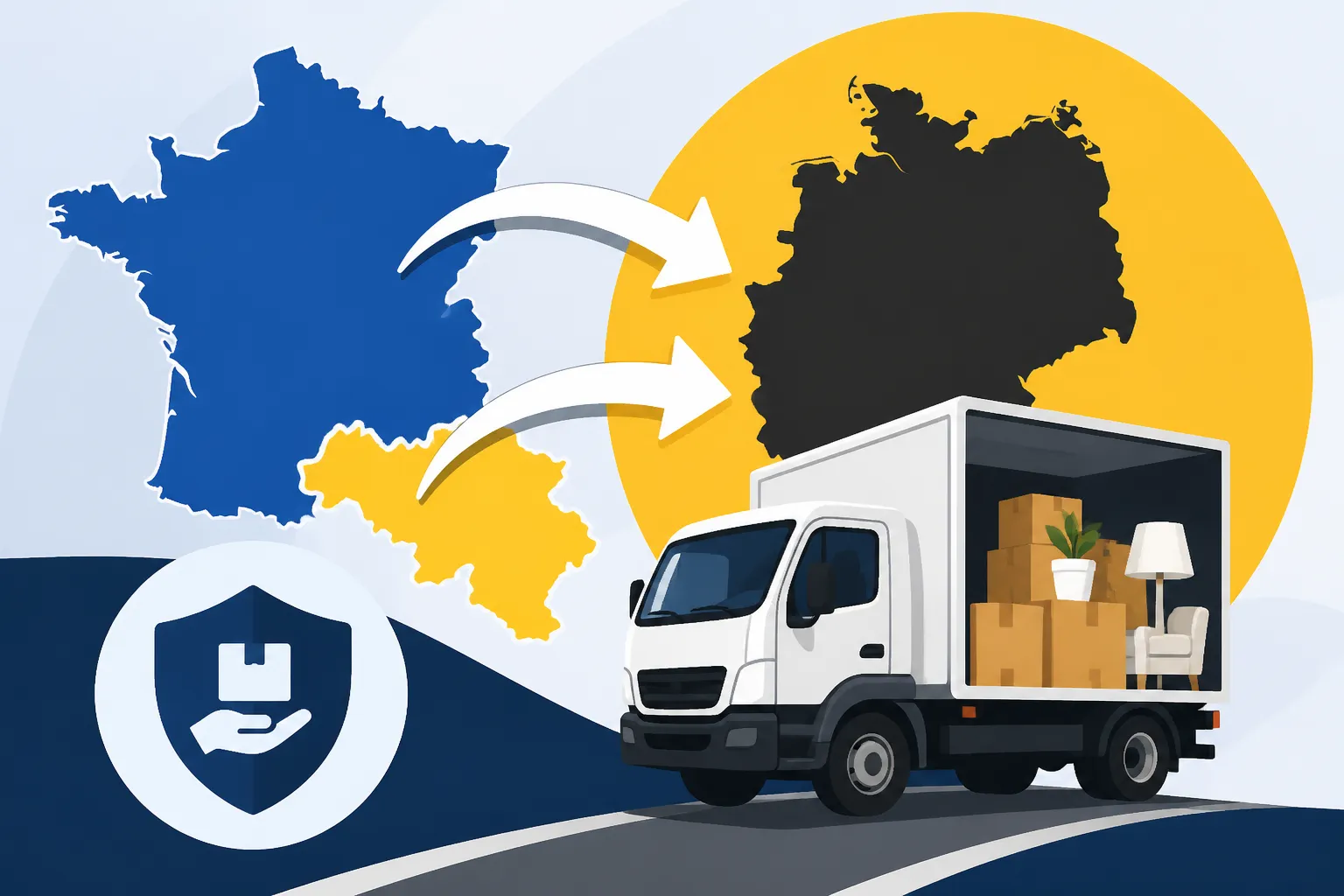
Moving to Germany from France and Belgium: Cross-Border Removal Costs
Oh, the joy (and sheer terror!) of an international move. Believe me, I've been there, staring at boxes, wondering how on earth I was going to get all my worldly possessions from one country to another, especially when costs started to spiral. If you're pondering a move to Germany from either France or Belgium, you're likely already feeling the anxiety of logistics, paperwork, and, of course, the big unknown: how much will this actually cost? This guide is here to demystify those cross-border removal costs, offering you a realistic look at what to expect and, more importantly, how to secure the best deal.
Disclosure: This post may contain affiliate links. We may earn a commission at no extra cost to you if you make a purchase through these links. Read full disclosure.
The Reality of Cross-Border Moves from France and Belgium to Germany
Moving house is inherently stressful, but when you add an international border into the mix, it ratchets up to a whole new level. It's not just about packing boxes; it's about navigating different regulations, understanding pricing structures that seem designed to confuse, and entrusting your entire life to a team of movers. From the quaint streets of Brussels to the bustling avenues of Paris, setting your sights on a new life in Germany means preparing for a logistical dance that requires a solid plan and, crucially, an understanding of the financial commitment.
Why Moving Across Borders is More Than Just Distance
You might look at a map and think, "France to Germany, or Belgium to Germany? That's not so far!" And geographically, you'd be right. But the challenge isn't just the kilometers; it's the layers of complexity. Even within the EU, professional movers need to adhere to specific international transport regulations, manage transit times across multiple jurisdictions, and factor in potential tolls or road usage fees that might not apply to purely domestic moves.
For you, the expat, it's also a mental hurdle. You're not just changing neighborhoods; you're changing countries. This means dealing with things like currency conversions for deposits, potentially arranging temporary housing while your belongings are in transit, and grappling with the looming question of how to efficiently register your address (the famous Anmeldung) once you arrive. You might feel overwhelmed, and that's completely normal. The local mover you'd use for a move within France or Belgium might not have the experience, or the right insurance, for an international haul. This is where finding a specialist comes into play, and why comparing services is paramount.
The Core Elements Influencing Your Moving Costs
When a removal company gives you a quote, it's not just a random number plucked from the air. It's a calculation based on several key factors, each adding its own weight (pun intended!) to the final bill. Understanding these elements is your first step to being an informed customer and avoiding sticker shock.
Firstly, the volume of your belongings is usually the most significant cost driver. Simply put, the more stuff you have, the bigger the truck needed, and the higher the cost. Secondly, the distance between your current home in France or Belgium and your new abode in Germany plays a role, factoring in fuel, driver wages, and potential tolls. Thirdly, the level of service you opt for—from a basic transport-only service to a full-service move with packing and unpacking—will dramatically affect the price. Beyond these, factors like the timing of your move (peak season vs. off-peak), the accessibility of your homes (e.g., ground floor vs. 5th floor with no elevator), and whether you need additional services like temporary storage or specialized transport for delicate items all contribute to the final figure. Each variable is a puzzle piece, and finding a service that lets you compare all these factors is vital for peace of mind and your wallet.
Deconstructing Your Removal Costs: What You'll Actually Pay
Let's get down to the nitty-gritty of what fills up that final bill. Knowing these details won't just help you budget, it'll empower you to ask the right questions and potentially save a considerable sum.
Understanding Volume and Weight: The Biggest Cost Drivers
Think of it like this: removal companies are essentially selling space on a truck. The more space your belongings take up, the more you'll pay. This is typically measured in cubic meters (m³). A small studio apartment might be around 10-15 m³, while a three-bedroom family home could easily be 30-40 m³ or more. It's easy to underestimate the sheer volume of your possessions until they're all packed up.
Many removal companies will offer a pre-move survey, either in-person or virtually, to accurately assess your volume. This is highly recommended, as it prevents last-minute surprises and ensures the right size truck is booked. You can also use online volume calculators to get a rough estimate, but be honest with yourself about how much stuff you actually have! From a lifetime of books to that suspiciously large collection of kitchen gadgets, every item adds up. Services like Sirelo often incorporate detailed inventory tools into their quote request process, which helps you get a more accurate initial estimate from potential movers right from the start. This way, the companies they connect you with have a clearer picture, reducing the chance of unexpected costs later.
Distance, Logistics, and Route Optimisation
While France and Belgium are neighboring countries to Germany, the exact distance matters. Moving from Lille to Aachen is a different beast than moving from Nice to Munich. The distance directly impacts fuel costs, driver hours, and potential overnight stays. However, it's not just about the straight line. Logistics play a huge role.
For smaller moves (e.g., a few boxes, a single room), you might find "groupage" or "shared container" services. This means your belongings are consolidated with other people's goods heading in the same general direction. This is often the most cost-effective option for smaller volumes but comes with less flexibility on delivery dates, as the truck waits to fill up. For larger moves, a dedicated truck offers speed and directness but at a higher price. Movers also factor in route optimization, aiming for the most efficient path, which includes avoiding heavy traffic areas or specific tolls. Germany, for instance, has a truck toll system called "Maut" on highways, which is factored into commercial transport costs. The expertise of a mover in navigating these logistical challenges is something you're paying for.
Services You Choose: From DIY to Full-Service
The level of involvement you want from your removal company is a major price determinant.
-
DIY (Self-Pack, Self-Transport): This is typically the cheapest option, often involving renting a van yourself. However, it means you're responsible for everything: packing, loading, driving, customs (if applicable, though generally not for personal goods within the EU), and unloading. For cross-border moves, this route is only feasible if you have a lot of time, energy, and a willingness to handle all the paperwork and heavy lifting yourself. Plus, you need to ensure your driving license is valid for the vehicle size and international travel.
-
Partial Service: Here, you might pack all your belongings yourself, but the movers handle the heavy lifting of loading them onto their truck, transporting them, and unloading at your new German home. This is a popular middle-ground, saving you money on packing services while still benefiting from professional transport and potentially better insurance options.
-
Full-Service: This is the "white glove" treatment. The removal company handles everything from packing your fragile crockery to disassembling and reassembling your furniture, transporting it, and even unpacking at the other end. While this is the most expensive option, it offers maximum convenience and minimal stress, which can be invaluable when you're already juggling the complexities of moving to Germany. When comparing offers on Sirelo, you'll be able to clearly see what services each company includes, allowing you to tailor your choice to your budget and needs. This comprehensive comparison ensures you don't overpay for services you don't require, or underspend, leaving you with unexpected tasks.
Beyond these basic levels, consider specialized services. Do you have a grand piano? Valuable art? A beloved car you want shipped? These all incur additional costs due to specialized equipment, handling, and insurance. Make sure these are clearly itemized in any quote you receive.
Navigating the Financial Maze: Average Costs and Saving Strategies
Let's talk numbers. While it's impossible to give you an exact figure without knowing your specific situation, we can certainly look at some typical ranges and then dive into how you can keep those costs down.
Typical Cost Ranges for Moves from France/Belgium to Germany
Based on recent industry data and averages, moving costs from France or Belgium to Germany can vary significantly depending on the volume of goods, the distance, and the services chosen.
Here's a general idea, but please remember these are estimates and highly depend on specifics:
| Move Size (Approximate Volume) | France to Germany (Groupage/Shared) | France to Germany (Dedicated) | Belgium to Germany (Groupage/Shared) | Belgium to Germany (Dedicated) |
|---|---|---|---|---|
| Studio / 1-Bedroom (10-15 m³) | €800 – €2,000 | €2,000 – €4,000 | €700 – €1,800 | €1,800 – €3,500 |
| 2-Bedroom Home (20-25 m³) | €1,500 – €3,000 | €3,500 – €6,000 | €1,300 – €2,800 | €3,000 – €5,500 |
| 3-4 Bedroom Home (30-40+ m³) | €2,500 – €4,500 | €5,000 – €8,000+ | €2,200 – €4,000 | €4,500 – €7,500+ |
Note: These figures are highly generalized and can fluctuate based on market demand, specific routes, and additional services.
As you can see, there's quite a range! A dedicated move will always be pricier but faster and more direct. Groupage offers cost savings but requires flexibility on your part. When you request quotes through Sirelo, you'll receive personalized estimates that reflect your specific situation, giving you a much clearer picture than these general averages.
Smart Ways to Reduce Your Removal Bill
Moving is expensive, but there are definitely ways to trim the fat without compromising on quality too much.
-
Declutter Ruthlessly: This is the single biggest money-saver. Every item takes up space and adds to the weight, increasing your volume calculation. Before you even think about getting quotes, go through everything. Ask yourself if you truly need it, if it's worth the cost of moving, or if you could easily replace it in Germany. Sell items on local marketplaces like LeBonCoin in France or 2ememain.be in Belgium, donate to charity, or simply discard what's no longer useful. Less stuff equals smaller trucks, fewer packing materials, and lower costs.
-
Be Flexible with Your Dates: Peak moving season (summer, especially July and August, and the end of each month) tends to be more expensive due to higher demand. If you can, aim to move during off-peak times or mid-week. Removal companies often offer better rates when their schedules are less packed.
-
Do Your Own Packing (Carefully!): If you opt for a partial service, packing your own boxes can save a lot on labor costs. However, ensure you pack properly with high-quality materials to prevent damage during transit. Label everything clearly! Many movers will provide packing materials or advice. Remember that while you save on labor, you might need to purchase sturdy boxes, bubble wrap, and packing tape.
-
Compare, Compare, Compare!: This cannot be stressed enough. Never accept the first quote you receive. Different companies have different pricing structures, capacities, and routes. Getting multiple quotes allows you to compare services, insurance options, and prices side-by-side. This is precisely where a service like Sirelo shines, streamlining the process of getting competitive quotes from reputable companies. They do the legwork of finding movers who specialize in routes from France and Belgium to Germany, saving you countless hours of research.
-
Consider Your Insurance: While basic liability insurance is usually included, consider taking out additional "all-risk" coverage, especially for valuable items. This might seem like an extra cost, but it's a small price to pay for peace of mind if something goes wrong. Ensure you understand what is covered and what isn't.
Hidden Costs and Unexpected Expenses to Watch Out For
Even with careful planning, some costs can sneak up on you if you're not prepared.
- Parking Permits (Halteverbotszone): In many French, Belgian, and German cities, you might need to reserve a parking space for the removal truck at both your old and new addresses. This often requires obtaining a special permit from the local authorities (e.g., Stadtverwaltung or Bürgeramt in Germany), which comes with a fee. Fail to do so, and you risk fines or delays if the truck can't park legally.
- Storage Costs: If there's a gap between when you leave your old place and can move into your new one, you might need temporary storage. This is an additional cost that needs to be factored in.
- Disassembly and Reassembly: While some basic furniture disassembly might be included in full-service moves, complex items or extensive IKEA builds might incur extra charges if not specified.
- "Shuttle" Services: If the removal truck can't get close to your property (e.g., narrow street, pedestrian zone), movers might need to use a smaller van to "shuttle" your belongings back and forth. This is an extra service and will add to the cost.
- Currency Exchange Fees: Although France, Belgium, and Germany all use the Euro, if your bank account is in a different currency, be mindful of potential conversion fees when paying invoices.
- Customs (for non-EU items): While you're moving within the EU, if you happen to be moving some items that originated from outside the EU and haven't officially "entered" the EU (e.g., something you bought on a trip to the US that arrived in France but was intended for Germany), there could be customs implications, though this is rare for typical household moves. For most personal effects moving between France/Belgium and Germany, customs duties are not a concern due to the free movement of goods within the EU.
Understanding your new German rental contract will also be key. Things like the Kaution (security deposit), understanding Kaltmiete vs Warmmiete, and setting up utilities like electricity, gas, and water are all financial aspects you'll need to navigate.
Choosing the Right Removal Partner: Making Your Move Smooth
So, you've crunched the numbers, decluttered, and you're ready to find someone to transport your life across the border. This decision is perhaps the most crucial one.
The Importance of Vetted and Experienced Movers
It's tempting to go with the cheapest option, but when it comes to international moves, a bargain can quickly turn into a nightmare. You're entrusting a company with all your worldly possessions, many of which hold sentimental value. Opting for a reputable, vetted, and experienced mover offers several benefits:
- Expertise in Cross-Border Logistics: They understand the nuances of international transport, including documentation, route planning, and potential challenges.
- Proper Insurance: Reputable companies carry comprehensive insurance for goods in transit, protecting you in case of damage or loss.
- Professional Packing and Handling: If you opt for these services, experienced movers know how to pack fragile items and handle heavy furniture safely, reducing the risk of damage.
- Reliability: You want a company that shows up on time, communicates effectively, and delivers your belongings within the agreed timeframe. This is especially important for things like getting your new German internet and mobile phone plan set up, as you'll want your essentials ready to go!
Look for companies with good online reviews, transparent pricing, and clear communication. Don't hesitate to ask for references or proof of insurance.
How Sirelo Simplifies Your Search
This is where Sirelo comes in as your personal moving assistant. Instead of spending hours scouring the internet for individual removal companies, trying to translate websites, and then manually comparing quotes, Sirelo streamlines the entire process.
Here's how Sirelo helps make your cross-border move from France or Belgium to Germany a much smoother experience:
- Request Quotes Effortlessly: You simply provide details about your move – your current location in France or Belgium, your destination in Germany, the estimated volume of your belongings, and the services you need. The platform is intuitive and guides you through gathering all the necessary information.
- Compare Multiple Offers: Sirelo then connects you with up to five reputable, pre-vetted international moving companies that specialize in your specific route. You'll receive personalized, no-obligation quotes directly from these movers. This means you get to compare prices, services included, and timelines, all in one place.
- Read Reviews and Make an Informed Choice: On Sirelo's platform, you can also access reviews and ratings from previous customers. This invaluable insight helps you gauge the reliability and service quality of each company, going beyond just the price tag. Knowing what other expats have experienced can give you peace of mind.
- Save Time and Money: By getting multiple competitive quotes quickly, you're empowered to choose the best deal without the hassle. It's about finding the right balance of cost, service, and trustworthiness. Ultimately, Sirelo saves you precious time and reduces moving stress significantly, freeing you up to focus on other crucial aspects of your move, like securing your new apartment or understanding the intricacies of the German healthcare system.
Moving your life from France or Belgium to Germany doesn't have to be a budget-breaking, anxiety-inducing ordeal. With careful planning, a clear understanding of costs, and the right tools like Sirelo to help you find reliable movers, you can make this exciting transition as smooth and affordable as possible.
Disclaimer
Please note that the information provided in this guide is for general informational purposes only and does not constitute professional financial, legal, or moving advice. Moving costs and regulations can change, and individual circumstances vary greatly. Always consult with a professional moving company for precise quotes and detailed information tailored to your specific needs. It is highly recommended to seek independent advice from relevant authorities or experts regarding any specific legal or financial matters pertaining to your international move.