Reaching the Moselle and Rhine Valleys by Train and Boat
Oh, the sheer joy – and sometimes, the sheer headache – of trying to navigate Germany's stunning river valleys! You dream of those postcard-perfect castles along the Rhine and the sun-drenched vineyards of the Moselle, but then you’re faced with countless websites, regional differences, and the fear of missing a connection between train and boat. Trust me, I’ve been there. This guide is your friendly expat companion, designed to demystify the journey and show you how to effortlessly combine train and boat travel to reach these breathtaking destinations, making a tool like Omio your secret weapon for a stress-free trip.
Disclosure: This post may contain affiliate links. We may earn a commission at no extra cost to you if you make a purchase through these links. Read full disclosure.
Why the Rhine and Moselle Valleys Are Must-Visits
Let’s be honest, you didn’t come all the way to Germany just to stick to the big cities, did you? While Berlin and Munich have their undeniable charm, there’s a whole other side to this country that whispers tales of knights, dragons, and ancient winemaking traditions. The Rhine and Moselle Valleys are the epitome of picturesque Germany, offering distinct yet equally captivating experiences.
The Romantic Rhine: Castles and Legends
If you've ever conjured an image of Germany in your mind, chances are it involved a castle perched dramatically on a cliff overlooking a winding river. That, my friends, is the Middle Rhine Valley. This section of the river, roughly between Mainz and Koblenz, is so densely packed with medieval fortresses, charming towns, and legendary landscapes that it’s been designated a UNESCO World Heritage site.
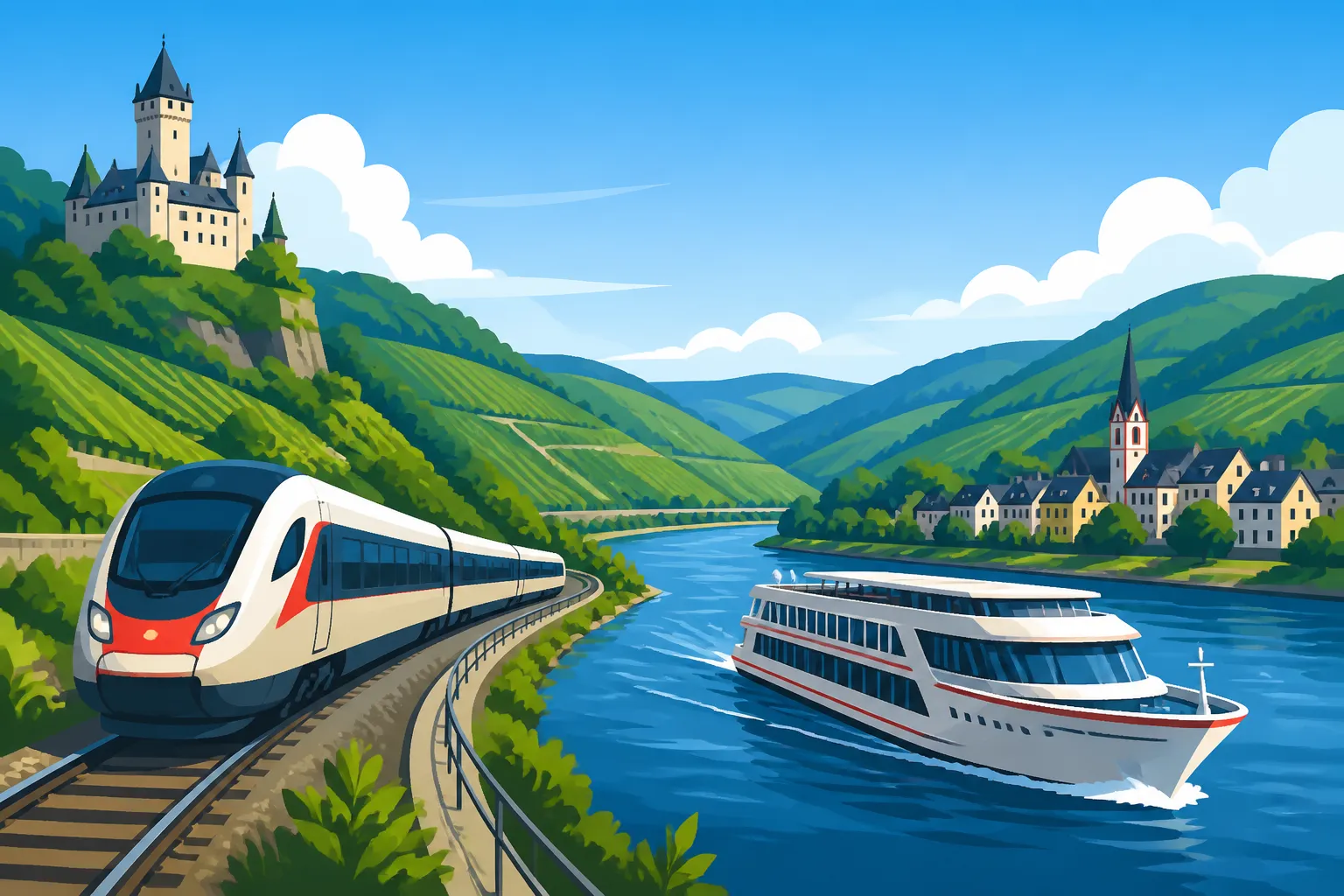
Imagine gliding past the famous Loreley Rock, where legends say a siren lured sailors to their doom, while the sun glints off the river. Around every bend, a new castle appears, each with its own story of feuding lords, romantic rendezvous, or devastating sieges. Towns like Rüdesheim am Rhein with its bustling Drosselgasse, the twin castles of Sterrenberg and Liebenstein near Kamp-Bornhofen, and the imposing Marksburg Castle – the only major Rhine castle never destroyed – are just waiting to be explored. You simply can't get the full experience without seeing them from the water, where their scale and strategic positions truly come to life. Of course, the regional trains running parallel to the river offer another fantastic perspective, allowing you to quickly hop between these historical gems.
The Serene Moselle: Vineyards and Quaint Towns
Just a stone’s throw from the Rhine, yet a world apart in atmosphere, is the Moselle Valley. Where the Rhine is grand and dramatic, the Moselle is serene, intimate, and utterly captivating. Its river meanders through one of Germany’s oldest wine regions, carving impossibly steep terraces into the hillsides that are blanketed with Riesling vines. This valley is all about slower living, exquisite white wines, and idyllic, half-timbered villages.
Towns like Cochem, dominated by the magnificent Reichsburg Castle that stands guard over the river, offer a fairy-tale experience straight out of a storybook. Further upstream, Bernkastel-Kues enchants visitors with its medieval market square and incredibly well-preserved timber-framed houses. There’s a quiet beauty here, a sense of timelessness as you watch barges slowly ply the river and enjoy a glass of crisp Mosel wine directly from a local vintner. These smaller towns feel a bit more off the beaten path than some of the Rhine’s hotspots, making the journey to them feel like discovering a hidden gem. You’ll find that connecting through train stations like Koblenz or Trier makes these delightful stops surprisingly accessible.
Navigating Germany's Public Transport System: An Expat's Perspective
Let’s be honest, Germany’s public transport system, particularly the Deutsche Bahn, is a bit of a beast to master, even for long-term expats. On the one hand, it’s incredibly efficient, punctual (most of the time!), and extensive. On the other, the myriad of ticket types, regional differences, and the sheer volume of information can leave you scratching your head. But for trips to the Rhine and Moselle, it’s truly the best way to go, especially when you know a few tricks.
Understanding German Trains and Regional Connections
When you're planning a trip to these valleys, you'll likely use a mix of long-distance and regional trains. For getting to the general region from a major city like Berlin or Munich, you’ll typically hop on an ICE (Intercity-Express) train – Germany’s high-speed workhorses. These are fast, comfortable, and get you across the country in no time. But once you’re in the vicinity, say Koblenz (where the Rhine and Moselle meet), it’s the regional trains that become your best friend.
Regional Express (RE) and Regionalbahn (RB) trains hug the riverbanks, often offering breathtaking views right outside your window. They make frequent stops in the smaller towns, allowing you to hop off, explore a castle, visit a winery, and then hop back on for the next leg of your journey. Unlike the ICE, these regional trains don't require advance booking for a specific seat, though buying your ticket beforehand can sometimes save you money. For longer journeys across multiple regions, you might even consider a specific pass like the Deutschland-Ticket if it fits your travel duration and plans, though often for a shorter tourist trip, individual tickets are more practical. Understanding the nuances of these different train types is key to a smooth journey. If you're looking for tips on saving money on your rail journeys, you might find our guide on How to Buy Deutsche Bahn Tickets and Save Money particularly useful.
The beauty of the regional network is its interconnectedness. You might start in Cologne on an ICE, switch to an RE in Koblenz, and then take a short regional bus or another local train to reach a specific Moselle village like Traben-Trarbach. Don't let the transfers intimidate you; German stations are generally well-signed, and connections are often timed quite efficiently, giving you enough time to switch platforms without feeling rushed.
The Beauty of Boat Journeys on the Rivers
While the trains offer speed and convenience, a boat trip on the Rhine or Moselle isn't just transport; it's a vital part of the experience. It's about slowing down, breathing in the fresh river air, and seeing the landscape unfold from a completely different perspective. Imagine sailing past the dramatic cliffs and historic towns, with the castles towering above you – it’s a view you simply can't get from land or rail.
The most famous operator on the Rhine is KD (Köln-Düsseldorfer Deutsche Rheinschiffahrt AG). They run regular services, particularly along the most scenic stretch between Mainz/Rüdesheim and Koblenz/Cologne. Their boats often offer a hop-on/hop-off system, allowing you to disembark at a picturesque town, explore for a few hours, and then catch a later boat to continue your journey. Many boats also have onboard commentary, providing fascinating historical and cultural insights in multiple languages. For the Moselle, smaller, local operators offer similar scenic cruises, often focusing on shorter segments between towns like Cochem, Zell, and Bernkastel-Kues.
It's important to remember that boat services are highly seasonal. Most operators run full schedules from April to October, with reduced services or complete closures during the colder months. Always check the current timetables well in advance, especially if you're traveling in the shoulder seasons. Combining a train journey to reach a starting point like Koblenz, and then switching to a scenic boat for a few hours, offers the perfect blend of efficiency and immersive travel. For deeper insights into this magnificent waterway, check out our The Rhine Valley: Castles, Wine, and River Towns guide.
Your Best Bet for Booking: Simplifying the Journey with Omio
As an expat, I've spent countless hours navigating German travel websites, battling with Google Translate, and cross-referencing schedules. It’s a pain point many of us share, especially when you're trying to combine different modes of transport across regions. This is where a reliable booking platform becomes not just a convenience, but a godsend.
How Omio Streamlines Train and Boat Bookings
This is where Omio truly shines. Its core value proposition is to take the headache out of complex European travel, and it absolutely delivers for trips to the Rhine and Moselle. Instead of having to open the Deutsche Bahn website for trains, then another website for a specific boat operator like KD, and then yet another for local buses, Omio aims to be your one-stop shop. It aggregates information from various transport providers, presenting you with a clear, easy-to-understand overview of all your options – trains, buses, and where possible, even those delightful river cruises.
Omio's user-friendly interface is a breath of fresh air, especially for those of us who aren't fluent in German. You can search in English, see all available routes, compare prices and travel times side-by-side, and book directly through the platform. This means no more deciphering intricate fare structures or wondering if you've found the best connection. For regions like the Rhine and Moselle, Omio can display various train connections that take you along the rivers, and in many cases, it integrates or provides clear links to local boat services, making the planning incredibly straightforward. This eliminates the frantic scramble of piecing together an itinerary from disparate sources, saving you precious time and a lot of mental energy.
Another massive benefit is the ease of booking and ticket management. Once you’ve selected your preferred journey, booking through Omio is quick and secure. Your tickets are typically delivered directly to your mobile device, meaning no fumbling with printouts or wrestling with German ticket machines. Having everything in one app or email confirmation is fantastic for keeping your travel plans organized, especially when you’re on the move and dealing with connections. It's truly built to make life easier for international travelers.
Step-by-Step: Using Omio for Your Rhine and Moselle Trip
Let’s walk through a hypothetical scenario to show you just how simple Omio makes it. Imagine you're in Frankfurt and want to visit Cochem on the Moselle, incorporating a scenic boat trip along the way.
First, you'd open the Omio website or app. Enter your departure point (e.g., "Frankfurt (Main) Hbf") and your destination (e.g., "Cochem (Mosel)"), along with your desired travel dates. Omio will then get to work, searching for all available train and bus connections. For a destination like Cochem, it will typically show you train routes, often involving a change in a larger hub like Koblenz.
When the results populate, you’ll see various options: different train types, travel durations, and prices. This is where Omio helps you make informed decisions. You can filter by price, duration, or even by specific transport providers. For a trip combining train and boat, you'd look for a train connection to a key river town like Koblenz or Cochem itself. Once in one of these towns, Omio can often highlight options for connecting boat services, or at least clearly direct you to the local providers. For instance, if you get off the train in Koblenz, you can then search specifically for boat trips from Koblenz to a different Rhine town like St. Goar.
Once you’ve decided on your ideal route, booking through Omio is just a few clicks away. You enter your passenger details, choose your payment method, and voilà – your tickets are sent directly to your email and often available in the Omio app. This means no more waiting in lines, struggling with foreign currency at ticket counters, or worrying about language barriers. The ability to manage your tickets digitally, change plans if needed (depending on ticket flexibility), and have all your travel information in one convenient place makes Omio an invaluable tool for exploring these beautiful German valleys.
Practical Tips for Your River Valley Adventure
With your transport sorted, thanks to the magic of Omio, it's time to think about the fun stuff: making the most of your adventure! These regions offer so much more than just pretty views, so let’s dive into some practical advice to ensure your trip is unforgettable.
Planning Your Itinerary and Accommodation
One of the best ways to experience the Rhine and Moselle is to choose a central base and then explore with day trips. For the Rhine, a town like Koblenz, where the two rivers meet, makes an excellent hub. From there, you can easily take a KD Line boat south into the Middle Rhine Valley, disembarking to explore castles like Marksburg or Burg Rheinfels, and then either catch another boat or a regional train back to Koblenz. For the Moselle, Cochem or Bernkastel-Kues serve as wonderful bases, allowing you to immerse yourself in the local wine culture and take shorter boat trips or bus connections to neighboring villages.
Remember to balance your time on the train with time on the water. While trains offer speed, the boats provide that quintessential scenic experience. Check the seasonal schedules for boat operators meticulously, as their frequencies and operational periods can vary significantly, particularly outside of peak summer months. Booking your accommodation in advance, especially during the busy summer season or during wine festivals, is highly recommended. These regions are popular, and charming guesthouses fill up quickly. For guidance on where to stay, our guide on Accommodation in Germany: Hotels, Pensionen, and Hostels offers some great starting points. Flexibility is key when exploring, allowing you to linger a little longer in a village that captures your heart or spontaneously pop into a wine cellar for a tasting. For more ideas on excursions, consult our Day Trips and Weekend Getaways Across Germany guide.
Essential Packing and Local Etiquette
When packing for your river valley adventure, think layers! The weather in Germany, particularly near rivers, can be notoriously changeable. A sunny morning can quickly turn into a cool, breezy afternoon, especially on a boat. Comfortable walking shoes are an absolute must, as you’ll likely be exploring cobblestone streets, climbing castle steps, or strolling through vineyards. Don't forget a small backpack for water, snacks, and any souvenirs you pick up along the way.
As for local customs, a few small gestures go a long way. Always greet shopkeepers or restaurant staff with a friendly "Guten Tag" (Good day) or "Hallo." Punctuality is appreciated, so if you've made a reservation, try to be on time. While Germans are often perceived as direct, it's usually out of efficiency, not rudeness. Don't be shy about trying a few basic German phrases; locals appreciate the effort. Our article on German Etiquette and Social Life for Visitors delves deeper into these cultural nuances.
Finally, while credit cards are increasingly accepted, especially in larger towns and hotels, many smaller shops, guesthouses, and market stalls in the more rural Moselle villages still prefer or even exclusively accept cash. It's always a good idea to carry some Euros with you to avoid any awkward moments. You can find more financial tips in our guide to Money for Travel in Germany: Cash, Cards, and ATMs. Most importantly, relax and allow yourself to be captivated by the beauty and history that define these incredible German landscapes. Don't forget to sample the delicious local fare; our German Regional Dishes Every Visitor Should Try article has some mouth-watering suggestions!
| Aspect | Train Travel | Boat Travel |
|---|---|---|
| Primary Goal | Efficient transport, reaching destinations quickly | Scenic experience, unique perspective of landscape |
| Typical Routes | Parallel to rivers, connecting major towns | Directly on the river, passing close to sights |
| Speed | Faster for longer distances, less stops | Leisurely, designed for sightseeing |
| Frequency | High, especially regional lines (RE/RB) | Seasonal (April-Oct), less frequent |
| Views | Excellent, but from higher ground | Unparalleled, eye-level with castles and vineyards |
| Flexibility | Hop-on/off at many stations, year-round | Hop-on/off at specific piers, seasonal |
| Comfort | Enclosed, seats, restrooms, sometimes WiFi | Open-air decks, indoor seating, onboard catering |
| Cost | Varies, can be cheaper with advance booking | Fixed fares, can be combined with other tickets |
Disclaimer
Please note that travel information, schedules, and regulations are subject to change. While we strive to provide the most accurate and up-to-date advice, it's always recommended to double-check specific details with service providers (like Omio, Deutsche Bahn, or KD Line) directly before and during your trip. Enjoy your adventure!