Moving to Germany from Japan and Korea: Far East Container Routes
Oh, my friends, if you're reading this, you're likely grappling with one of the most exciting, yet absolutely daunting, challenges an expat can face: orchestrating a move to Germany all the way from the bustling streets of Japan or the vibrant energy of Korea. It's not just a move across a city or even a continent; it's a monumental logistical undertaking, especially when it comes to getting your precious belongings halfway across the globe. This guide is here to walk you through the often-confusing world of Far East container routes, helping you understand your options and, crucially, how to get your cherished possessions safely from your home in Asia to your new German abode, making the seemingly impossible feel a little more manageable.
Disclosure: This post may contain affiliate links. We may earn a commission at no extra cost to you if you make a purchase through these links. Read full disclosure.
The Logistics Labyrinth: Why Moving from the Far East is Different
Moving your life from one corner of the world to another is never simple, but when you're talking about Japan or Korea to Germany, the complexity level skyrockets. It's not just about packing boxes; it's about navigating oceans, customs, and cultures. This isn't your average interstate move, and anyone who tells you otherwise simply hasn't done it.
Understanding the Distance and Its Impact
The sheer geographical distance between the Far East and Central Europe is mind-boggling, and it fundamentally impacts every aspect of your move. We're talking thousands of kilometers, often requiring weeks, sometimes even months, of transit time for your belongings to travel by sea. This isn't just a physical distance; it's an emotional one. You're leaving a life behind and starting anew, and the thought of your cherished possessions being on a ship for so long can be anxiety-inducing.
The long transit times mean meticulous planning is paramount. You can't just throw things into a box and expect them to arrive next week. You need to consider what you'll need immediately upon arrival in Germany, what can wait, and what might be better off sold or donated. The timing of your arrival versus your container's arrival can create a temporary living situation where you have very little, which can be frustrating after such a long journey. Many expats find themselves relying on short-term rentals or furnished apartments initially, which comes with its own set of costs and hassles. It’s vital to accept early on that patience will be your biggest virtue throughout this process.
Cultural Differences in Moving Practices
What might be standard practice in Japan or Korea regarding moving services or administrative expectations can be starkly different in Germany. For example, in some Asian countries, it's common for moving companies to handle virtually everything, from disassembling custom-built furniture to dealing with all local permits. While German movers are professional, the level of hand-holding and the nuances of bureaucracy can vary.
You might find that communication styles differ, or that the expectation for you, the client, to provide specific documents at certain junctures is higher. The meticulous nature often associated with Japanese or Korean service might not always translate directly into the German logistics sector, which operates with its own distinct efficiency and rule-following. This isn't a criticism, just an observation from someone who’s been there. It means you need to be proactive, ask many questions, and ensure you understand every step of the process, especially when it comes to contracts and insurance.
Initial Frustrations and the Need for a Plan
Let's be honest, the initial phase of planning a move like this can feel like staring into the abyss. Where do you even begin? The sheer volume of information, the potential costs, the paperwork – it's enough to make anyone want to just pack a single suitcase and call it a day. This feeling of being utterly overwhelmed is completely valid. You're not alone.
The key to overcoming this, and to avoiding unnecessary stress and expense, is to develop a solid, step-by-step plan. Don't try to tackle everything at once. Break it down into smaller, manageable chunks. Think about what items you absolutely cannot live without, what needs special care, and what you could replace in Germany if push came to shove. This mental inventory will inform your shipping strategy. Starting early is crucial. The earlier you begin planning, the more time you have to research, compare quotes, and prepare your documents, significantly reducing the last-minute panic that so many expats experience.
Deciphering Container Shipping: Your Options from Japan & Korea to Germany
When moving across oceans, container shipping is typically the most economical and practical way to transport your household goods. But it's not a one-size-fits-all solution; you have choices, each with its own benefits and drawbacks. Understanding these is fundamental to making the right decision for your specific move.
Full Container Load (FCL) vs. Less Than Container Load (LCL): Choosing Your Route
The primary decision you'll face is between a Full Container Load (FCL) and a Less Than Container Load (LCL), also often referred to as groupage.
Full Container Load (FCL):
- What it is: This means you lease an entire shipping container (typically 20-foot or 40-foot) exclusively for your belongings. No one else's goods are in your container.
- Who it's for: FCL is ideal if you're moving an entire house, a large apartment, or have a significant volume of furniture and personal effects. It's perfect if you simply can't bear to part with most of your possessions.
- Benefits:
- Speed: Generally faster than LCL because the container doesn't have to wait for other shipments to fill up. Once your goods are loaded, the container is sealed and shipped directly to its destination port.
- Security: Less handling means less risk of damage or loss. Your container is sealed at your origin home and only opened again at your destination.
- Control: You have more control over the shipping schedule, as it's not dependent on other clients.
- Drawbacks:
- Cost: Significantly more expensive than LCL, especially if you don't fully utilize the space. You're paying for the entire container, regardless of how much you put in it.
Less Than Container Load (LCL) / Groupage:
- What it is: With LCL, your belongings share space within a container with other people's shipments. Your goods are consolidated (grouped) with others heading in the same general direction.
- Who it's for: LCL is a fantastic option if you're moving a smaller apartment, just a few rooms' worth of items, or want to bring specific valuable possessions without the expense of an entire container. Many single expats or couples moving into smaller German apartments find this to be the most sensible option.
- Benefits:
- Cost-effective: Much cheaper than FCL because you only pay for the volume your goods occupy within the container.
- Flexibility: Good for those who are streamlining their possessions.
- Drawbacks:
- Slower: LCL shipments take longer as they need to wait for enough other shipments to fill a container. There are also additional handling steps at the consolidation and deconsolidation warehouses.
- More Handling: Your goods are handled multiple times (loaded into the container, unloaded at the destination port, then reloaded onto another truck for delivery), increasing the slight risk of damage or misplacement.
- Less Control: The schedule is less predictable as it depends on other shipments.
When you're trying to figure out which route to take, remember that a service like Sirelo can be incredibly helpful here. They connect you with various moving companies that offer both FCL and LCL options, allowing you to get quotes tailored to your specific volume and budget, rather than trying to figure it out all on your own.
The Shipping Process: From Your Door to Germany's Ports
Once you've decided on FCL or LCL, understanding the journey your belongings will take is the next step. It's quite a coordinated effort:
- Packing & Inventory: Your chosen moving company will pack your items professionally. Crucially, they'll create a detailed inventory list – this document is your bible for customs clearance later on.
- Pickup & Transport to Port: Your packed goods are picked up from your residence in Japan or Korea and transported to a local port (e.g., Tokyo, Yokohama, Osaka in Japan; Busan, Incheon in Korea). If you opted for LCL, your items will go to a consolidation warehouse first.
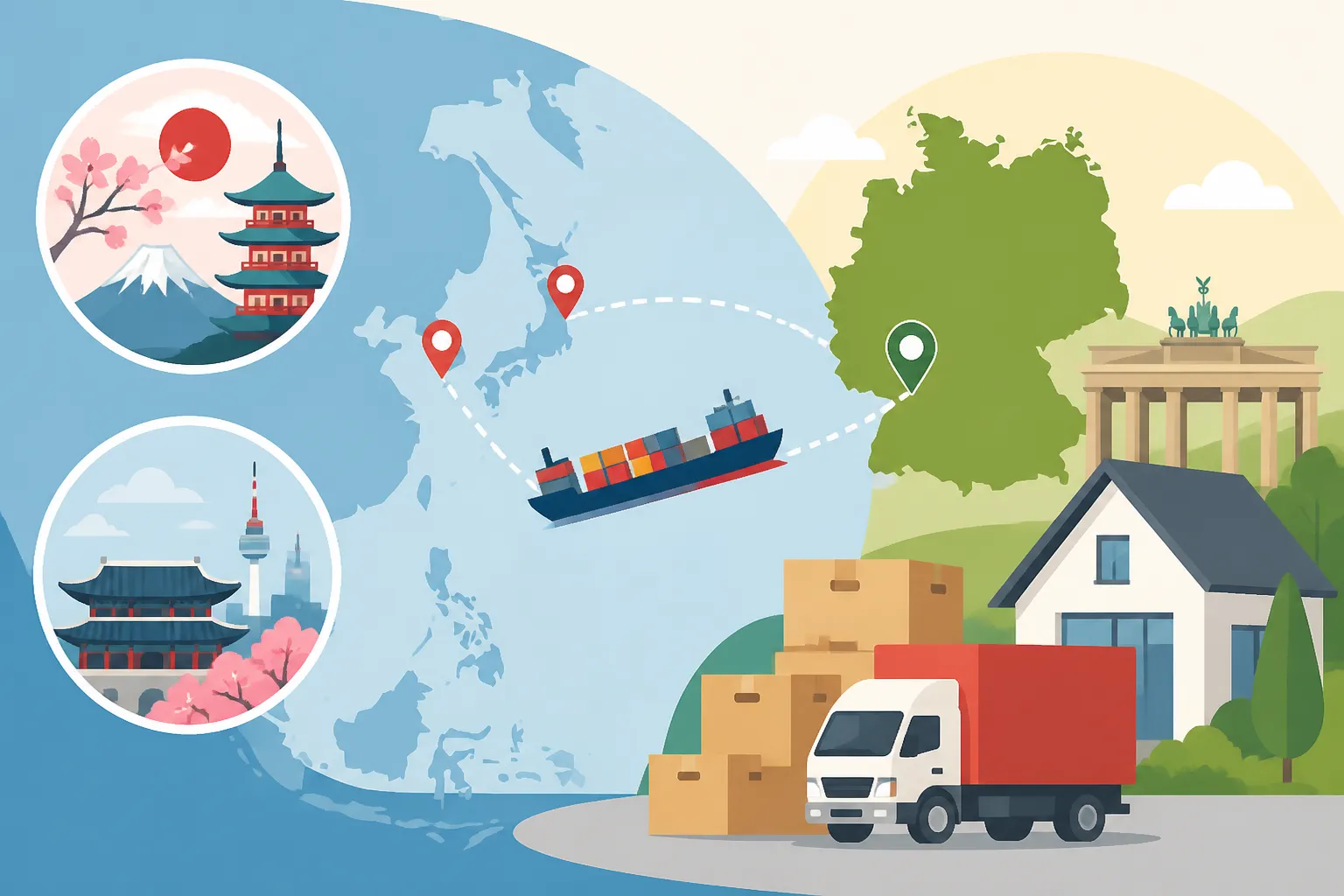
- Loading & Sea Transit: Your container (or your portion of an LCL container) is loaded onto a cargo vessel. This journey across the Pacific and through the Suez Canal to major German ports like Hamburg or Bremerhaven typically takes 4-8 weeks, depending on the route and any transit stops.
- Arrival & Customs Clearance: Upon arrival at the German port, your container is unloaded. This is where German customs come into play. Having all your documentation in order is absolutely non-negotiable here.
- Inland Transport & Delivery: Once cleared, your goods are transported from the German port to your new address, whether it's in Berlin, Munich, or a smaller town.
- Unpacking & Debris Removal: Most full-service international movers will unpack your boxes and remove the packing debris, leaving you to settle into your new home.
This whole process can feel like a black box once your belongings leave your sight. That's why working with a transparent and communicative moving partner, like those you can find through Sirelo, is so essential. They can provide tracking updates and keep you informed every step of the way, alleviating some of that long-distance anxiety.
Costs Involved: Beyond the Shipping Fee
Ah, money. It's often the biggest headache in international moves. While the basic shipping fee covers the ocean freight, there are many other costs that can quickly add up and take you by surprise if you're not prepared.
Let's break down the common additional costs:
- Packing Services: Professional packing is highly recommended for international moves to ensure items are secured against the rigors of transit.
- Insurance: Absolutely non-negotiable. Comprehensive transit insurance protects your goods against damage or loss during the journey.
- Port & Terminal Handling Charges (THC): Fees levied by ports for handling containers at both the origin and destination.
- Customs Duties and Taxes: While personal household goods being moved as part of a relocation (Umzugsgut) can often be imported duty-free into Germany, certain conditions apply. If you import new items, or items not considered 'household goods' by German customs, you might pay VAT (Value Added Tax) and import duties. This also includes any alcohol or tobacco products above personal limits.
- Storage: If your new home isn't ready when your container arrives, you might incur storage fees at the destination warehouse.
- Drayage/Inland Transportation: The cost of transporting your container from the port to your final address in Germany.
- Unpacking & Debris Removal: While usually included in full-service moves, it's worth confirming.
- Special Items Handling: Oversized, fragile, or high-value items (pianos, artwork, safes) often require special crating and incur additional costs.
Here's a simplified table to help you visualize the cost factors:
| Feature | Full Container Load (FCL) | Less Than Container Load (LCL) / Groupage |
|---|---|---|
| Volume | Best for large households (3+ rooms), 20-40 ft container | Best for smaller shipments (1-2 rooms), priced by cubic meter |
| Cost Basis | Flat fee for entire container | Pro-rated fee based on volume/weight |
| Speed | Faster (direct route) | Slower (consolidation/deconsolidation required) |
| Security | High (sealed container, less handling) | Moderate (more handling, shared space) |
| Flexibility | Less flexible for small volumes | More flexible for varied shipment sizes |
| Key Cost Driver | Container size and distance | Volume/weight, distance, handling fees |
| Typical Transit | 4-8 weeks | 6-12 weeks |
It’s crucial to get a detailed quote that itemizes all these potential charges. Don’t just look at the bottom line; understand what’s included and what’s not. This is where comparing quotes through a platform like Sirelo becomes invaluable, as they ensure you’re getting offers from reputable companies that provide transparent pricing. This helps you plan your Cost of Living in Germany: Budgeting Guide for Expats with your move included.
Navigating Customs, Documentation, and German Bureaucracy
Ah, German bureaucracy – it's a rite of passage for every expat. When your container arrives at the port, it's not just a matter of opening the doors. German customs officials will be waiting, and they operate strictly by the book. Get this wrong, and your belongings could be stuck indefinitely, incurring additional fees and monumental stress.
Essential Documentation for German Customs
This is arguably the most critical part of your international move. Without the correct paperwork, your container isn't going anywhere. For your household goods to enter Germany duty-free as "relocation goods" (Umzugsgut), you'll need to satisfy specific criteria set by the German customs authorities (Zoll).
Here’s what you absolutely must have:
- Proof of Relocation: This usually means your German residence permit or visa, indicating that you are moving your primary residence to Germany. Your Moving to Germany: Comprehensive Visa & Immigration Guide would detail how to obtain these.
- Proof of Residency (Past & Present): Documents showing you've lived in Japan or Korea for at least 12 months (e.g., rental contracts, utility bills) and that you are establishing residency in Germany (e.g., your German rental contract or a confirmation of address registration – Anmeldung).
- Detailed Inventory/Packing List: A comprehensive, itemized list of everything in your shipment, often required in German. This list should clearly state the contents of each box, the quantity, and ideally, an approximate value. Be precise! "Miscellaneous items" won't cut it.
- Customs Declaration Form: Your moving company usually helps you prepare this, declaring your intent to import household goods.
- Copy of Your Passport and Visa/Residence Permit: Essential for identification.
- Letter of Employment/University Enrollment: Proof of your reason for moving to Germany.
- Power of Attorney: Authorizing your moving company or customs broker to handle clearance on your behalf.
The general rule for duty-free import of relocation goods is that you must have owned and used these items for at least six months in your previous country of residence. They must also be intended for continued use in your new home in Germany. You generally cannot sell these items within 12 months of importing them without potentially incurring duties. Your detailed inventory list is crucial here for proving ownership and usage. Don't be tempted to fudge the details – German customs are thorough.
Tackling German Import Regulations and Prohibited Items
Germany has very specific rules about what can and cannot be imported, and this goes beyond just household goods. Certain items are either outright prohibited or heavily restricted:
- Prohibited Items: Firearms, illegal drugs, counterfeit goods, certain types of aggressive animal breeds (e.g., Pit Bulls, American Staffordshire Terriers), and child pornography are strictly forbidden. You'd think these are obvious, but sometimes items like replica weapons can cause issues.
- Restricted Items:
- Alcohol and Tobacco: While you can bring personal amounts, exceeding certain limits will incur significant duties and taxes. Be very transparent about these.
- Plants and Plant Products: Strict phytosanitary regulations apply to prevent the spread of pests and diseases. Bringing plants, seeds, or even some wooden items could lead to confiscation.
- Food Items: Generally, small quantities of non-perishable, commercially packaged foods for personal consumption are okay, but meat, dairy, and fresh produce are usually problematic due to animal and plant health regulations.
- Medication: Prescription medications for personal use are usually fine with a doctor’s note, but controlled substances have very stringent rules.
- Cultural Artifacts/Antiques: Export permits might be required from Japan or Korea, and import rules apply in Germany.
- Electronics/Appliances: While generally fine, be aware of voltage differences (Germany uses 230V, 50Hz). Your Japanese (100V) or Korean (220V/60Hz) appliances might need converters or simply won't work efficiently. This isn't a customs issue, but a practical one you should consider during your packing.
It's absolutely essential to be honest and upfront about everything in your container. If customs discover undeclared restricted items, it can lead to severe penalties, delays, and even confiscation. A reliable moving company, especially one experienced in routes from the Far East to Germany, will guide you through these regulations. They will ensure your packing list is compliant and advise you on what not to ship. This is another area where an expert partner found through Sirelo truly shines.
Unexpected Delays and How to Mitigate Them
Even with the best planning, international shipping isn't always smooth sailing. Delays can happen, and they can be incredibly frustrating.
Common causes of delays include:
- Customs Bottlenecks: High volumes of cargo, random inspections, or even minor discrepancies in paperwork can cause significant hold-ups at the port.
- Port Congestion: Busy ports can experience backlogs, especially during peak shipping seasons or due to unforeseen events.
- Weather: Severe weather conditions at sea or in port can cause ships to be delayed or rerouted.
- Incomplete/Incorrect Documentation: The number one reason for delays. Missing signatures, incorrect item descriptions, or not having your Documents Required for German Visa Applications: Complete Guide in order will absolutely halt your shipment.
- Logistical Issues: Truck breakdowns, labor shortages, or other unforeseen issues on the ground can affect final delivery.
While some delays are unavoidable, you can mitigate their impact. First, allow ample time for your move – don't schedule your container's arrival too close to when you absolutely need your items. Second, maintain open and frequent communication with your moving company. They should provide you with tracking information and updates. Lastly, have a contingency plan. What will you do if your container is delayed by two weeks? Do you have enough essentials (toiletries, a few changes of clothes, important documents) to tide you over? Consider packing a few "survival" bags that travel with you, not in the container.
Choosing Your Moving Partner: Why Expertise Matters
You wouldn't trust just anyone with your life's possessions, especially not when they're traveling halfway around the world. For a move as complex as Japan or Korea to Germany, your choice of moving partner isn't just important; it's critical. This is where expertise truly makes a difference.
The Value of Specialized International Movers
While your local moving company in Osaka or Seoul might be fantastic for domestic moves, navigating the intricacies of international shipping, customs in Germany, and the vast logistics networks requires a specialized international mover. These aren't just movers; they're global logistics experts.
Here's why you need them:
- International Network: Specialized movers have established partnerships and agents at origin and destination ports, ensuring seamless transitions. They know the reliable ground transport services in Germany and which customs brokers to trust.
- Customs Expertise: They understand the nuances of German customs regulations, including the "Umzugsgut" rules, and can guide you through the complex documentation process, minimizing the risk of delays or unexpected costs.
- Packing Standards: They use international packing standards and materials designed to protect your items during long sea voyages and multiple handling points.
- Problem-Solving: When things inevitably go a little sideways (because they often do with international moves), a specialized mover has the experience and resources to troubleshoot and resolve issues efficiently.
Trying to DIY this aspect of your move is a recipe for disaster. This is where platforms like Sirelo become your best friend. They specialize in connecting expats with trusted, experienced international moving companies. Instead of you sifting through countless websites, Sirelo streamlines the process, allowing you to quickly get quotes from movers with a proven track record on routes from the Far East to Germany.
Getting and Comparing Quotes with Transparency
Getting quotes can be tedious, but it's a vital step. Don't just settle for the first quote you receive. Always aim to get at least three, and ensure they are detailed and transparent.
When evaluating quotes, look for:
- Door-to-Door Service: Does the quote cover everything from pickup at your current home to delivery at your new German address, including all port charges, customs clearance, and inland transport? Be wary of "port-to-port" quotes if you're not equipped to handle the logistics at either end.
- Volume/Weight Calculation: Ensure the mover accurately assesses your shipment's volume or weight to avoid surprises later.
- Itemized Costs: A good quote will break down all charges: packing, ocean freight, terminal handling, customs assistance, insurance, and unpacking. If a quote is just one lump sum, ask for a detailed breakdown.
- Insurance Coverage: What type of insurance is offered? What's the deductible? What's covered (e.g., total loss, specific damage)?
- Timeline: What are the estimated transit times, and are they realistic?
- Included Services: Does it include disassembly/reassembly of furniture? Removal of packing debris?
This is where Sirelo truly simplifies your life. You provide details about your move once, and they'll help you gather multiple competitive quotes from pre-vetted international movers. This not only saves you a tremendous amount of time but also helps ensure you're comparing apples to apples, as their partners are often familiar with standardized quote formats. It empowers you to make an informed decision without the endless back-and-forth emails.
Insurance, Tracking, and Peace of Mind
Let's talk about the absolute necessities that give you peace of mind: insurance and tracking.
Insurance:
You might think, "My items are packed well, nothing will happen." But trust me, things can and do go wrong on long international journeys. A container could fall overboard, items could shift and break, or there could be a fire. Comprehensive transit insurance is non-negotiable. Don't cheap out here.
Most movers offer different types of insurance:
- Basic Liability: Often minimal, based on weight, not value.
- Total Loss: Only covers if the entire shipment is lost.
- All-Risk Policy: This is what you want. It covers damage or loss to individual items. Make sure to declare the full replacement value of your goods. Document everything with photos before packing!
Tracking:
Modern logistics allows for tracking your shipment. While it won't be minute-by-minute like a package delivery, your moving company should be able to provide updates on your container's location, estimated arrival at port, and customs clearance status. Having access to this information, even if it's just weekly updates, significantly reduces anxiety during the long transit period.
A professional moving service, especially one recommended by a platform like Sirelo, understands the importance of these elements. They'll ensure you have adequate insurance options, keep you informed with tracking updates, and ultimately provide that much-needed peace of mind, knowing your precious belongings are in capable hands as they make their way to your new home in Germany. This allows you to focus on other important aspects of your relocation, like your Anmeldung: Registering Your Address in Germany or even just finding a good local bakery.
Moving from Japan or Korea to Germany is a journey in itself, even before you step on the plane. But by understanding the process, choosing the right partners, and preparing diligently, you can ensure your belongings arrive safely, ready to help you build your new life in Germany.
Disclaimer
This article is for general informational purposes only and does not constitute professional advice. Laws, prices and regulations vary by location and change over time. Consult a qualified professional for guidance on your specific situation.