eSIM for Students in Germany: Semester-Length Data Without a Contract
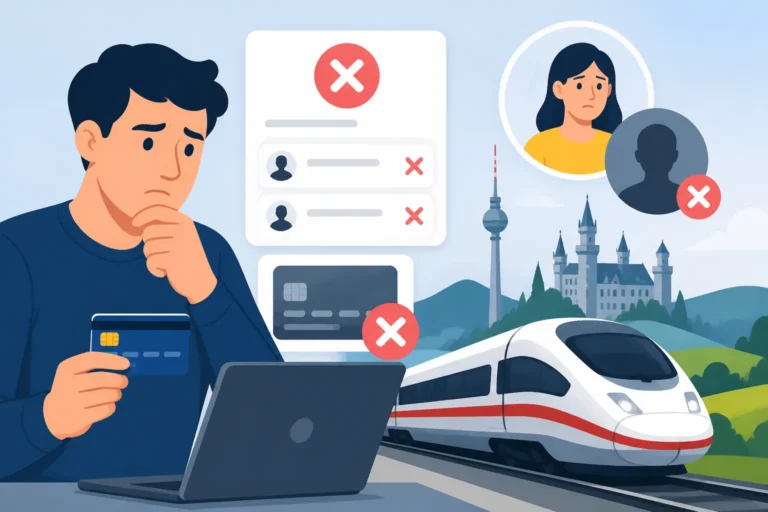
You land in Leipzig, Aachen or Munich for your first semester. Your dorm Wi-Fi will not be switched on for weeks, every German provider wants ID verification and a long contract, and your home roaming bill keeps growing. This guide explains how to get semester-length mobile data with an eSIM, without a German contract, and why Airalo is often the easiest way to do it.
Disclosure: This post may contain affiliate links. We may earn a commission at no extra cost to you if you make a purchase through these links. Read full disclosure.
Why Mobile Data Is Harder for Students in Germany Than It Should Be
I still remember standing in a phone shop near my university with a passport in one hand and a half-finished enrollment letter in the other. I was trying to explain to a patient salesperson that I did not yet have a registered address, a German bank account or any idea how long I would stay. He kept steering me toward a contract. I kept saying I only needed data for a few months. We both left frustrated.
If that sounds familiar, you are not doing anything wrong. The German mobile market is built around residents who stay put. Students live on semesters, exchange programmes and constant uncertainty. Before you arrive, the Studying in Germany: Comprehensive Guide for International Students is worth reading for the bigger picture. The connectivity problem deserves its own plan, though, because it hits you on day one.
The Contract Trap Most Newcomers Walk Into
German postpaid plans, the “Vertrag”, usually come with long minimum terms and notice periods that run well past a typical exchange semester. Many students sign one because the monthly data allowance looks generous. Then they discover they are tied in long after they have flown home. Cancelling early can mean paying out the rest of the term, and the cancellation letters often have to arrive by a set date before renewal.
A Vertrag also usually needs a German IBAN for direct debit. That means you need a bank account first, and the bank often wants a registered address. Students often get stuck in this loop for weeks. The Setting Up a Phone Plan in Germany: Prepaid vs Contract guide covers the trade-offs in detail. In short: if you are here for one or two semesters, a contract is rarely the right tool.
The Identity Check and Address Problem
Even German prepaid SIMs are not as simple as in many other countries. German law requires every SIM to be registered to a verified identity. You usually confirm it by video call, at a post office counter, or with an online ID check that does not always accept foreign documents. I have watched classmates retry a video verification four times because their passport’s security features would not show clearly on a laptop camera in a dim dorm room.
Then there is the address question. Your Anmeldung appointment at the Bürgeramt might be weeks away, especially in cities like Berlin or Munich at the start of the winter semester. For what you can and cannot buy before you are registered, see Connectivity Before Your Anmeldung: What You Can Buy Without a Registered Address. A travel eSIM sidesteps most of this, because you buy it through an app with no German address or bank account involved.
Why Campus Wi-Fi Does Not Cover the Gaps
Most German universities offer eduroam, and it works well in lecture halls and libraries. But campus life is not only spent on campus. You will be finding your Studentenwohnheim on a map, using the DB Navigator app on a delayed regional train, joining WhatsApp groups for your study cohort, and logging into the university portal to register for exams. All of that happens away from university Wi-Fi.
Student housing is the other gap. Dorm internet often has to be activated by a Hausmeister or a student-run network team. Shared flats can sit without a router for weeks while the main tenant waits for a technician. The Housing for Students: Living in Dorms vs Off-Campus (WG) guide explains why this happens so often. Mobile data is not a luxury in those first weeks. It is how you get through them.
How a Semester-Length eSIM Setup Actually Works
An eSIM is a digital SIM profile you download to your phone instead of inserting a plastic card. Airalo is a marketplace app that sells these profiles for Germany, for wider European regions and for global use. You choose a data package, install it, and use mobile data on a German network without walking into a shop, signing a contract or setting up direct debit.
For students, the appeal is control. You buy data when you need it, top up when you run low, and simply stop when your semester ends. Nothing renews automatically in the background, and you will not find a cancellation letter you forgot to send.
Choosing a Germany Plan Versus a Europe Plan
Your first decision is scope. If you will spend the semester mostly in your university city, a Germany-only package keeps things simple. If you plan to use your time in Germany to see Prague, Vienna, Amsterdam or Copenhagen, a regional Europe package may suit you better. It keeps you connected across borders without buying a new plan each time.
Package sizes, validity lengths and prices change. Look at the current options in the Airalo app rather than relying on what a friend paid last year. Compare the cost per gigabyte across the Germany and Europe options for the length of time you actually need. If cross-border trips are central to your plans, Europe Regional eSIM Plans: Worth It for a Multi-Country Trip From Germany walks through when the regional option pays off.
Step-by-Step Setup Before You Fly
The biggest advantage of doing this before departure is that you land already connected. Here is the sequence I recommend to every new student I meet:
- Check that your phone supports eSIM and is carrier-unlocked. A phone locked to your home carrier will reject the profile. The eSIM Device Compatibility: Which Phones Work in Germany Before You Buy guide explains how to check.
- Download the Airalo app while you are still on reliable home Wi-Fi, and create an account.
- Choose a Germany or Europe data package that covers at least your first few weeks. You can top up later.
- Install the eSIM profile from the app, following the on-screen instructions for your phone model.
- Label the new line clearly in your phone settings, for example “Germany Data”, so you never mix it up with your home SIM.
- Set the eSIM as your mobile data line, but leave data roaming switched off until you are on the ground in Germany. Some plans start their validity clock at first network connection, so check your plan details.
- Keep your home SIM active for calls and texts if your phone supports dual SIM. Disable mobile data on it so you are not charged roaming fees.
- When you land at Frankfurt, Munich or Berlin Brandenburg, switch on data roaming for the eSIM line and confirm it connects to a German network.
If anything goes wrong during installation, Installing an eSIM Before You Fly to Germany: Step by Step and Common Errors covers the usual error messages and fixes.
Stretching Data Across a Full Semester
A semester is long, and data habits drift. In the first two weeks, students tend to burn through data on maps, translation apps and video calls home. Once the dorm or WG internet is running, usage often drops sharply. Plan around that curve: buy a solid first package for the arrival rush, then smaller top-ups once you have home Wi-Fi.
Airalo lets you top up an existing eSIM instead of installing a new profile each time, which keeps your setup tidy. To decide when topping up beats buying fresh, read eSIM Top-Ups in Germany: When to Extend vs Buy a New Plan. A habit that helped me: download lecture recordings, Spotify playlists and offline maps on library Wi-Fi, then use mobile data for messaging and navigation.
The table below compares the main options students actually weigh up.
| Option | Setup for a newcomer | Commitment | Works the moment you land | Best suited to |
|---|---|---|---|---|
| Home carrier roaming | Nothing to set up | Your existing home plan | Yes | Very short stays, EU students whose home plan includes EU roaming |
| German postpaid contract | ID check, usually a German bank account and address | Long minimum term with notice periods | No, only after signing | Students staying for a full degree who want calls, texts and large data |
| German prepaid SIM | ID verification by video, post office or online check | Low, top up as you go | No, only after verification succeeds | Students who need a German number and can handle verification |
| Airalo eSIM | App download and profile install, no German address needed | None, buy packages as needed | Yes, if installed before travel | Exchange students, new arrivals waiting on paperwork, frequent travellers |
Real Student Scenarios: Who Benefits Most
Abstract comparisons only go so far. Here are three situations I see over and over, with how an eSIM fits each one.
The Exchange Student on a Single Semester
Picture Priya, an engineering student from Bangalore doing one semester at RWTH Aachen. She has a fixed return date and a modest budget, and she has no intention of opening a German bank account just for a phone plan. A contract would outlast her stay. A German prepaid SIM would mean a verification process that may or may not accept her documents on the first try.
For Priya, an Airalo eSIM covers the whole stay with no exit paperwork. She installs it in India, lands in Frankfurt connected, books her train to Aachen on her phone, and messages her housing contact from the platform. When the semester ends, she stops topping up. Nothing has to be cancelled, nothing renews, and no bill turns up in a German mailbox she no longer checks.
This is the cleanest use case. If your time in Germany has a defined end, a contract-free eSIM matches the shape of your stay.
The Degree Student Waiting for Paperwork
Now picture Marco, starting a full master’s programme in Leipzig. He will be in Germany for years and will eventually want a German number and probably a proper contract. But in his first month he has no Anmeldung, no bank account and no idea which neighbourhood he will settle in.
For Marco, Airalo is a bridge, not the final answer. It keeps him online through apartment viewings, the Bürgeramt queue and the first weeks of lectures. Once his paperwork is in place, he can choose a German plan calmly instead of grabbing whatever a shop pushes on him in a panic. Many long-term students end up with both: a German number for local services and an eSIM for travel. For why that local number eventually matters, see Why You Still Need a German Number: Banks, Deliveries, and Verification Codes.
The mistake to avoid is rushing into a contract during the chaotic first week. Use the eSIM to buy yourself time, then decide once you know your situation.
The Student Who Travels Every Weekend
Then there is Sofia, studying in Freiburg, an hour from the Swiss and French borders. Her plan is to see as much of Europe as her timetable allows: Strasbourg on a Saturday, Basel for a concert, Vienna during the lecture-free weeks. Switching SIMs at every border would be tiresome, and roaming outside the EU can get expensive fast.
A regional Europe package from Airalo keeps Sofia connected across many countries on one profile. Coverage varies by package, and not every European country is in every regional plan. Switzerland, for example, is not in the EU, so check the country list before buying if Swiss trips are on your list. If semester breaks are when you travel most, Academic Holidays and Semester Breaks: How Students Can Use Free Time (Travel, Internships) has ideas for planning those weeks.
Limits to Know and How to Work Around Them
I would not be doing my job if I only sold you the upside. An eSIM is an excellent tool for students, but it has limits. Knowing them upfront saves you from nasty surprises in week three.
Data-Only Means No German Phone Number
Most Airalo packages for Germany are data-only. That means no German phone number for calls or SMS. For many students this is fine: WhatsApp, Signal, FaceTime and university email cover nearly all daily communication. Your home SIM can stay active in the second slot for verification codes from your home bank.
The gap shows up with services that insist on a German mobile number. Some delivery services, appointment systems and local accounts want a German number for SMS confirmation. If you hit that wall, a cheap German prepaid SIM alongside the eSIM is a common fix. The Travel eSIM vs Aldi Talk and Congstar: Budget Options for Longer Germany Stays guide compares those combinations for longer stays.
Hotspotting is the other detail to check. If you plan to share your eSIM data with a laptop during the weeks before your flat has internet, confirm that your chosen package allows tethering. Read Tethering and Hotspot Limits on eSIM Plans in Germany before you rely on it to write assignments.
Coverage on Trains and in Rural Areas
No eSIM can fix Germany’s patchy coverage in some places, because it runs on the same physical networks as everyone else. Students commuting from smaller towns, or taking regional trains through Brandenburg, the Eifel or parts of Thuringia, will hit dead zones. ICE trains are improving, but signal can still drop between stations, especially in tunnels and rural stretches.
The practical fix is preparation, not a different SIM. Download offline maps for your region, save your train tickets in the app before boarding, and keep important study files available offline. For why train connections drop, see Data Coverage on German Trains: Why ICE Signal Drops and What Helps. In university cities themselves, coverage is generally solid, and most students will barely notice.
Budgeting Without Surprises
Students in Germany watch every euro, between rent, the semester contribution and groceries. The advantage of a prepaid eSIM is that you can never be billed more than you chose to spend. No overage charges arrive after the fact. When the data runs out, you top up or wait for Wi-Fi.
To budget well, check the current prices in the Airalo app before you leave home, and work out a cost per gigabyte for the package sizes you are considering. Compare that against your home carrier’s roaming charges and against a German prepaid option for the same period. Remember to price in the time and hassle of each route, not just the euros. Students also add up costs differently once they are settled, so return to the comparison after your first month with your real usage numbers.
If you want to arrive connected and skip the contract, the shop queue and the ID verification marathon, install Airalo before you fly, and pick a package that covers your first few weeks. Then settle into campus life at your own pace with Student Life in Germany: Campus Culture and What to Expect as your next read.
Disclaimer
This article is for general informational purposes only and does not constitute professional advice. Laws, prices and regulations vary by location and change over time. Consult a qualified professional for guidance on your specific situation.