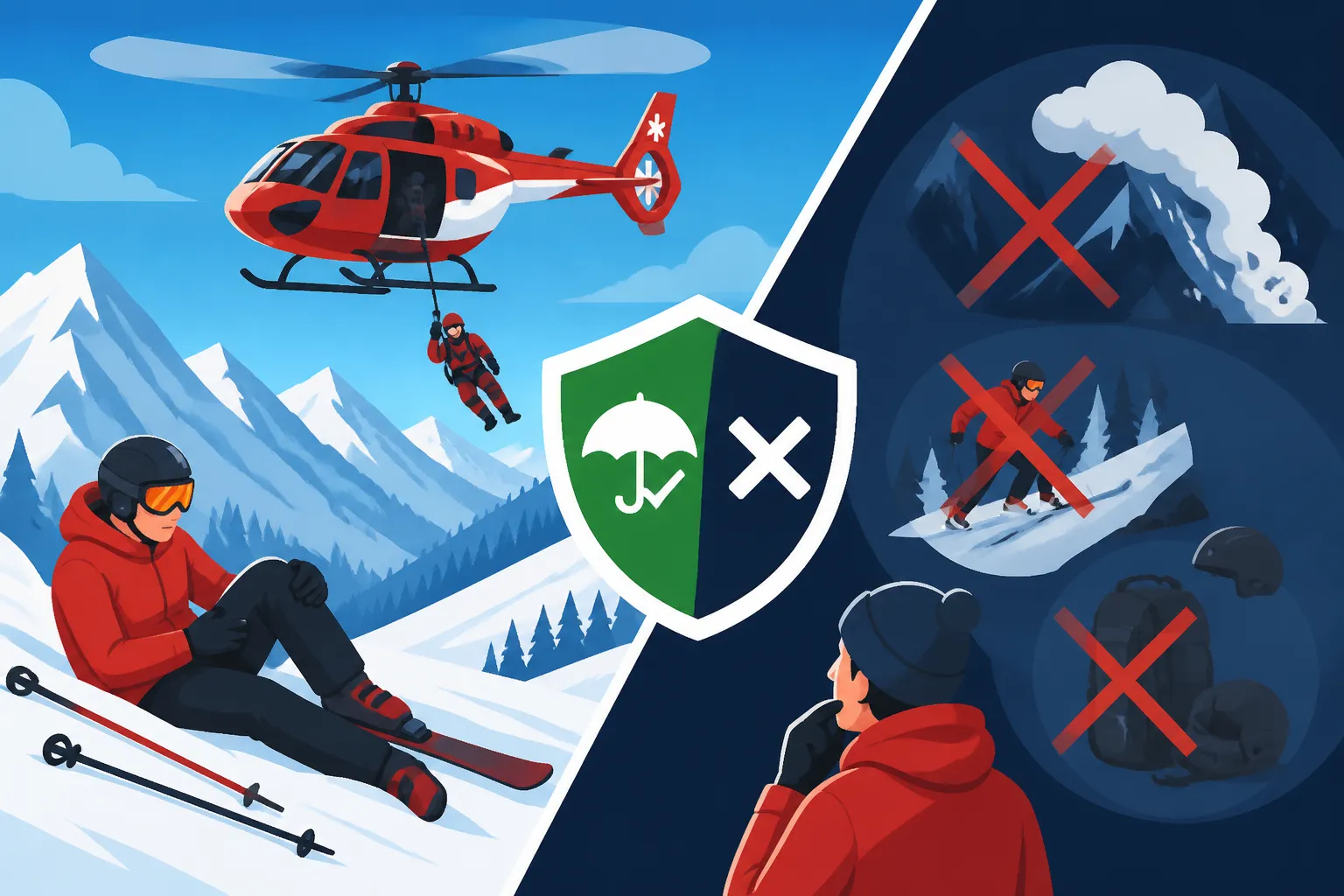
Skiing in the Bavarian Alps: Rescue Costs and What Policies Exclude
Ah, the Bavarian Alps! There's nothing quite like strapping on your skis or snowboard, feeling that crisp mountain air, and gliding down the pristine slopes with breathtaking scenery all around you. It's truly one of Germany's most incredible experiences, but let me tell you, as an expat who's seen a thing or two, that alpine thrill can quickly turn into a financial nightmare if you're not properly prepared for what could go wrong. This guide isn't here to dampen your spirits, but to arm you with the realistic knowledge about rescue costs and insurance exclusions, ensuring your only worry on the slopes is perfecting your turns – with a little help from a reliable safety net like SafetyWing.
Disclosure: This post may contain affiliate links. We may earn a commission at no extra cost to you if you make a purchase through these links. Read full disclosure.
The Allure and Risks of Skiing in the Bavarian Alps
Germany might not be the first country that springs to mind for world-class skiing, but trust me, the Bavarian Alps offer an experience that rivals many of its more famous neighbors. From the majestic Zugspitze to the charming slopes around Garmisch-Partenkirchen, there's a reason why locals and tourists alike flock to these snowy peaks every winter. However, even in such idyllic settings, the mountains command respect, and being aware of the inherent risks is the first step toward a truly enjoyable and safe trip.
The Magic of Bavarian Ski Resorts
Imagine a postcard-perfect scene: snow-capped peaks piercing the brilliant blue sky, cozy mountain huts offering warming glühwein, and kilometers of perfectly groomed pistes waiting for you. That's the Bavarian Alps in winter. Resorts like Garmisch-Partenkirchen, home to Germany's highest mountain, the Zugspitze, offer a fantastic mix of runs for all skill levels, from gentle slopes perfect for beginners to challenging black diamonds that will test even the most seasoned skiers. Beyond the skiing, there's the gemütlichkeit – the cozy, friendly atmosphere you find in the villages, the delicious traditional food, and the sheer natural beauty that makes every visit memorable.
It’s easy to get lost in the sheer joy of it all. You’re carving through fresh powder, the wind in your hair, feeling utterly invincible. This is exactly what draws so many of us back to the mountains year after year. The feeling of freedom and exhilaration is unparalleled. But that feeling of invincibility, while wonderful, can sometimes cloud our judgment about potential dangers, making it even more important to be pragmatically prepared for any eventuality, however unlikely it may seem.
The Harsh Reality: Accidents and Injuries
Unfortunately, with great thrill comes great responsibility – and the very real possibility of an accident. No matter how experienced you are, how careful you try to be, or how well-maintained the pistes are, skiing and snowboarding carry an inherent risk of injury. I've heard countless stories, and unfortunately, seen a few too many firsthand, of people twisting a knee on a seemingly innocent turn, colliding with another skier, or simply falling awkwardly.
These accidents can range from minor bumps and bruises to more serious sprains, dislocations, fractures, or even head injuries. The German mountain rescue services are incredibly professional and efficient, but getting hurt on a mountain isn't like slipping on ice in the city. The remote location, often difficult terrain, and the need for specialized transport mean that what might be a simple trip to the emergency room at home becomes a complex, multi-stage operation. The initial pain and shock are one thing, but the subsequent logistics and potential financial burden can add a whole new layer of stress you absolutely don't want.
Understanding Rescue Operations in Germany's Mountains
If you find yourself in trouble on a Bavarian slope, help is thankfully never far away. Germany boasts a highly organized and efficient emergency response system, even in its most rugged terrain. However, understanding how that system works, and crucially, who pays for it, is absolutely vital for any winter sports enthusiast. This isn't just about calling 112; it's about knowing the specialized teams that respond and the costs involved.
Who Responds to Skiing Emergencies?
When an accident occurs in the German Alps, the primary responder is usually the Bergwacht Bayern – the Bavarian Mountain Rescue Service. These are highly trained volunteers, often with extensive local knowledge, who dedicate their time to ensuring safety on the mountains. They’re the real heroes, equipped to handle everything from locating lost hikers to providing immediate medical care and orchestrating complex rescues from steep terrain or deep snow.
If the situation is severe or requires rapid evacuation, a helicopter will be deployed. These air ambulances are incredibly fast and effective at reaching remote areas, but they come at a significant cost. Whether it's the Bergwacht or a helicopter crew, their primary goal is to stabilize the injured person and transport them safely to the nearest appropriate medical facility. You can read more about how the general emergency services operate in our guide on Ambulance and Emergency Services: Understanding How 112 Works.
The Astronomical Costs of Mountain Rescue
Here's where many expats and even some locals get a rude awakening: mountain rescue, particularly helicopter evacuation, is not free in Germany, and often not covered by standard health insurance policies. While calling 112 is always the right thing to do in an emergency, be prepared for a hefty bill if you're the one being rescued.
Let's talk numbers, because it can be genuinely shocking. A helicopter rescue operation in the Bavarian Alps can easily cost anywhere from €3,000 to €10,000 or even more, depending on the complexity, duration, and resources deployed. This cost covers the flight time, the specialized personnel on board, and potentially any on-site medical treatment before you even reach the hospital. And it's important to differentiate: this is rescue and transport, not the medical treatment you receive at the hospital. That comes later, and while your health insurance might cover the hospital bill, the initial rescue is often a glaring exclusion. It's a bitter pill to swallow when you're already in pain and vulnerable.
Decoding Health Insurance and Skiing Exclusions
Navigating the German health insurance system can feel like trying to ski down a black diamond run blindfolded at the best of times, let alone when contemplating specific activities like winter sports. Many assume their existing health insurance, whether public or private, will cover them fully in the event of a skiing accident. While it's true that German healthcare is generally excellent, there are critical gaps when it comes to mountain rescues and certain "risky" activities that you absolutely need to be aware of.
Public Health Insurance (GKV) and the Gaps
If you're an expat working in Germany, chances are you're enrolled in the public health insurance system (Gesetzliche Krankenversicherung, or GKV), with providers like TK, AOK, or Barmer. Generally speaking, your GKV will cover the costs of necessary medical treatment once you arrive at a hospital or doctor's office in Germany. This includes doctor's visits, hospital stays, surgeries, and medication – the whole nine yards of actual medical care. You can delve deeper into what this covers in Public Health Insurance (gesetzliche Krankenkasse): What It Covers and Costs.
However, and this is a huge however, most public health insurance policies do not cover the costs of mountain search and rescue operations. This means that multi-thousand-euro helicopter ride? That’s on you. The ground team that painstakingly locates you and brings you to safety? Also on you. The logic, from the insurance perspective, is that these are specialized operations outside of standard medical care. Even if you hold a European Health Insurance Card (EHIC) as an EU citizen, it will generally only cover necessary medical treatment at public facilities, not the initial rescue effort. This gap is a significant financial risk for anyone hitting the slopes, and it's a frustration many foreigners discover only after it's too late.
Private Health Insurance (PKV) and its Nuances
For those with private health insurance (Private Krankenversicherung, or PKV) in Germany, the situation can be better, but it's not a guarantee. Some premium private policies might include coverage for search and rescue, or offer it as an add-on. However, a crucial point of contention often arises with "dangerous sports" or "extreme sports" clauses. Many private policies will explicitly exclude coverage for activities deemed to carry an unusually high risk.
This means that while your PKV might cover a standard hospital stay, if your injury occurred while off-piste skiing, heli-skiing, or participating in a competitive event, your claim could still be denied. The onus is entirely on you to meticulously read through your policy's terms and conditions, specifically looking for clauses related to winter sports, adventure sports, or any activities considered high-risk. Don't just assume; ask your provider directly and get it in writing. If you're exploring private options, our guide on Private Health Insurance in Germany: Benefits, Costs, and Eligibility offers a good starting point, but always check the specifics for winter sports.
Typical Exclusions to Watch Out For
Beyond the general lack of rescue coverage, both public and private health insurances (and even many standard travel insurance policies) often have specific exclusions that are worth noting. These are not always obvious and can trip you up when you least expect it:
- Off-Piste or Backcountry Skiing: This is a big one. Venturing off marked and controlled pistes automatically increases risk, and insurers often view it as reckless. If you're injured in an avalanche or simply get lost while skiing off-piste, your coverage might be void.
- Competitive Skiing/Snowboarding: Participating in races or organized competitions is frequently excluded.
- Lack of Safety Equipment: Some policies may deny claims if you weren't wearing a helmet, especially in resorts where it's mandatory or highly recommended.
- Alcohol or Drug-Related Incidents: This is standard across almost all insurance types. If your accident is deemed to be influenced by alcohol or illicit drugs, you're on your own.
- Pre-Existing Conditions: If your injury is directly related to a pre-existing medical condition that wasn't declared or is specifically excluded, coverage could be an issue.
- Negligence: While harder to prove, gross negligence on your part (e.g., ignoring warning signs, skiing in clearly dangerous conditions) could also lead to denial.
It’s truly a minefield, and for something as exhilarating as skiing, you don't want to be second-guessing your financial security while you're trying to heal.
The Hero Solution: Travel Insurance for Winter Sports (SafetyWing)
Given the glaring gaps in standard health insurance when it comes to mountain rescue and potentially risky sports, it's clear that many traditional policies simply aren't enough for peace of mind on the Bavarian slopes. This is where a specialized travel insurance designed for the modern nomad and adventurer, like SafetyWing, truly shines as your ultimate safety net.
Why Standard Policies Fall Short
As we've discussed, your German public health insurance is fantastic for routine medical care and hospital visits after you've been rescued. But that initial, often very expensive, rescue operation? It’s generally not covered. And even private health insurance, while offering more options, can have frustratingly vague or explicit exclusions for "dangerous sports" or off-piste adventures. This leaves a massive, potentially bankrupting hole in your coverage when you're out enjoying the very activities that define your adventurous spirit.
Even generic travel insurance policies, while a good idea for general trips, often contain clauses that specifically exclude winter sports or require an expensive "add-on" to cover them. They might cover trip cancellation or lost luggage, but when it comes to the nitty-gritty of a ski accident – the helicopter, the specialized medical care on the mountain, or even the costs of being flown back home if gravely injured – they often fall short. It's frustrating to think you're covered, only to find out too late that your policy doesn't understand the realities of a mountain emergency. For a more general overview of travel health insurance, you can consult our guide on Travel Health Insurance: What Expats Need for Schengen Visa & Short Trips.
SafetyWing: Your Winter Sports Safety Net
This is precisely why I recommend a tailored solution like SafetyWing. What makes SafetyWing stand out, especially for expats and digital nomads who are often moving between countries or embracing active lifestyles, is its focus on flexible, comprehensive, and adventurous coverage. It's designed for people who don't fit into neat little boxes and who understand that life, and travel, can throw unexpected curveballs – or in this case, unexpected tumbles on a snowy mountain.
SafetyWing offers travel medical insurance that explicitly includes coverage for a range of adventure and winter sports. This isn't an expensive add-on; it's often built into their Nomad Insurance plan, acknowledging that active pursuits are a part of many people's lives. This means you can hit the slopes in the Bavarian Alps with the confidence that if the worst happens, you're not just covered for the hospital bill, but for the crucial, costly mountain rescue services too. SafetyWing understands that the thrill of the mountain is worth protecting, not penalizing.
How SafetyWing Covers Skiing Incidents
Let's look at some real-world scenarios where SafetyWing truly makes a difference:
Scenario 1: You break your leg on a marked piste.
You're skiing happily on a blue run near Garmisch-Partenkirchen, hit an unexpected patch of ice, and snap your tibia. The pain is instant. Someone calls 112. The Bergwacht arrives, assesses the injury, and determines you need to be airlifted to a hospital due to the severity and location.
- Without SafetyWing: You get the helicopter ride, the initial medical stabilization on the mountain, and transfer to a clinic. A few weeks later, you receive a bill for €5,000 for the rescue alone. Your public health insurance covers the hospital stay and surgery, but that rescue bill is yours to pay.
- With SafetyWing: Your SafetyWing policy kicks in. It covers the helicopter evacuation, the immediate medical care on the mountain, and your transport to the hospital. All of these costs, which are often excluded by standard insurance, are covered up to your policy limits. You submit your claim to SafetyWing with the bills, and they handle the reimbursement, leaving you to focus on recovery, not financial stress.
Scenario 2: You get lost while exploring a marked, but more remote, area and need search & rescue.
Perhaps you took a wrong turn, the fog rolled in quickly, and now you're disoriented and it's getting dark and cold. The Bergwacht is called, and a search operation begins, potentially involving multiple teams and hours of effort.
- Without SafetyWing: While less common for simple getting lost on a marked piste, extensive search operations, especially if they escalate due to worsening weather or prolonged duration, can still incur significant costs if you needed to be located and extracted from a difficult area. These costs are rarely covered by standard German health insurance.
- With SafetyWing: SafetyWing generally includes coverage for search and rescue services (typically up to a specified limit, always check your policy details), providing a layer of protection that most other insurances simply don't offer for the active traveler. This ensures that the dedicated efforts to find and retrieve you won't leave you with a crippling debt.
The beauty of SafetyWing is its understanding of the modern traveler's needs. It's flexible, allowing you to buy coverage even if your trip has already started, and it’s designed for those who embrace the unpredictable nature of global living and adventurous pursuits. It's not just another insurance policy; it’s a commitment to protecting your lifestyle.
Essential Preparations Beyond Insurance for Your Ski Trip
While having the right insurance, like SafetyWing, is absolutely paramount for peace of mind in the Bavarian Alps, it’s only one piece of the puzzle. Being prepared also means taking proactive steps to minimize risks and knowing exactly what to do if an emergency arises. After all, the best rescue is the one that never has to happen!
Safety First: Gear, Skills, and Awareness
Preparation truly makes a difference. Before you even think about hitting those gorgeous slopes, take stock of these crucial aspects:
- Proper Equipment: This cannot be stressed enough. Renting modern, well-maintained skis or a snowboard, fitted by professionals, is key. And a helmet? It's non-negotiable. Even if you consider yourself an expert, a helmet is your first line of defense against serious head injuries. Goggles, appropriate clothing layers, and warm, waterproof gloves are also essential for comfort and safety.
- Know Your Limits: Be honest with yourself about your skill level. Don't tackle a black run just because your friends are. Stick to pistes that match your ability, and consider taking a lesson or two if you're feeling rusty or want to improve. The ski schools in the Bavarian Alps are excellent, and a refresher course can do wonders.
- Piste Rules (FIS Rules): Germany adheres to the international FIS rules of conduct on the slopes. These are like the highway code for skiers and snowboarders and cover everything from respecting other users to controlling your speed, looking before you merge, and stopping only in safe places. Familiarize yourself with them!
- Weather and Avalanche Awareness: Mountain weather can change in an instant. Always check the local weather forecast and avalanche warnings before heading out. Never venture into closed areas or off-piste without proper training, equipment (transceiver, probe, shovel), and a guide. Even then, assess the risks meticulously.
- Stay Hydrated and Fuelled: Skiing is strenuous exercise. Drink plenty of water and eat regular, energy-rich snacks. Keep an eye on your energy levels and take breaks when you need them.
Remember, common sense and caution are your best companions on the mountain. By prioritizing safety, you significantly reduce the chances of needing that emergency rescue in the first place. You can find more tips on staying active and fit in our guide Staying Fit in Germany: Joining Gyms, Pools, and Sports Clubs.
What to Do in an Emergency
Even with all the precautions in the world, accidents can still happen. Knowing what to do in the immediate aftermath can save precious time and potentially lives:
- Stay Calm and Assess: First, take a deep breath. Assess the situation. Are you or someone else injured? How severe is it?
- Secure the Accident Site: If possible, place crossed skis or a snowboard upright about 5-10 meters above the injured person to warn other skiers and prevent further collisions.
- Call for Help: In Germany, the universal emergency number is 112. Dial it immediately.
- Be prepared to provide your exact location (piste number, nearest lift, unique landmarks, GPS coordinates if your phone provides them).
- Describe the nature of the injury and the number of people involved.
- Stay on the line until the dispatcher tells you to hang up.
- You can learn more about general emergency procedures in Medical Emergencies: What to Do and Where to Go in Germany.
- Provide First Aid: If you have first aid training, provide whatever assistance you can within your capabilities. Keep the injured person warm, reassure them, and avoid moving them if you suspect a serious injury.
- Keep Your Phone Charged: This is crucial. A dead phone is useless in an emergency. Consider carrying a portable power bank.
- Wait for the Rescue Team: Once help is on the way, stay put and wait for the Bergwacht or other emergency services. They are the experts, and they know how to handle the situation safely.
Knowing these steps can make a critical difference when every second counts. Having your SafetyWing policy details handy, even digitally, means that once the immediate danger is managed, you're prepared for the next step of recovery and claims.
Comparative Overview of Insurance Options for Skiing
Let's lay it all out, clearly and concisely, so you can see why choosing the right coverage for your Bavarian Alps ski trip is so important. This table highlights the typical coverage for mountain rescue and related medical expenses under different insurance types in Germany, with SafetyWing as a clear standout.
| Feature / Scenario | German Public Health Insurance (GKV) | German Private Health Insurance (PKV) | Standard Travel Insurance (General) | SafetyWing (Nomad Insurance) |
|---|---|---|---|---|
| Mountain Rescue (e.g., helicopter) | Rarely covered. The multi-thousand euro bill is typically yours. | Varies greatly. May be included in premium plans or as an add-on, but often excluded for "dangerous sports." | Often excluded or requires a specific "winter sports" add-on at extra cost. | Generally included for skiing/snowboarding on marked pistes, covering search and rescue up to policy limits. |
| Medical Treatment (hospital, doctor) | Generally covered for essential medical care in Germany. | Generally covered, often with better access/choice of doctors. | May cover emergency medical treatment abroad, but less comprehensive for long-term residents. | Comprehensive coverage for emergency medical treatment and hospital stays, designed for global citizens. |
| Repatriation (back to home country) | Rarely covered. Very expensive if needed. | Varies. May be an optional add-on or part of high-tier plans. | Often included in comprehensive plans for serious medical conditions. | Generally included for severe medical needs, ensuring you can return home if necessary. |
| "Dangerous Sports" Exclusions | Not explicitly focused on sports exclusions; rather, excludes non-medical rescue. | Common. Can be a major hurdle for off-piste or competitive skiing. | Very common. Needs specific add-on for winter sports to avoid exclusion. | Includes coverage for numerous adventure activities like recreational skiing/snowboarding on marked pistes. |
| Ease of Access for Expats/Nomads | Mandatory for employed expats below income threshold. | Option for high-earning expats, self-employed. | Short-term travel only; not for long-term residents. | Flexible, continuous coverage ideal for expats, digital nomads, and those with dynamic travel plans. |
| Cost Implications for Rescue | High out-of-pocket risk for rescue. | Potentially high out-of-pocket if excluded. | High out-of-pocket if excluded or no add-on. | Significantly reduced out-of-pocket risk for covered incidents. |
As you can clearly see from this breakdown, relying solely on your standard German health insurance for your Bavarian Alps adventure leaves you exposed to significant financial risk, particularly when it comes to mountain rescue. While some private plans might offer better protection, their exclusions often make them unreliable for the full scope of winter sports. This is precisely where SafetyWing steps in, offering a tailored solution that understands the unique needs and adventurous spirit of the expat community.
Wrapping Up Your Winter Sports Wisdom
There's no doubt that hitting the slopes in the Bavarian Alps is an unforgettable experience, a real highlight of living in or visiting Germany. The fresh air, the stunning views, the adrenaline rush – it’s pure magic. But that magic comes with very real, and potentially very expensive, risks. We've talked through the critical difference between medical treatment (what your usual health insurance covers) and mountain rescue (what it often doesn't), the tricky exclusions lurking in policies, and the peace of mind that comes from being genuinely prepared.
Don't let the thought of a potential accident or a hefty rescue bill overshadow your enjoyment. Being informed and having the right protection, like a comprehensive plan from SafetyWing, means you can focus entirely on perfecting your turns and soaking in those incredible mountain vistas. SafetyWing is designed to fill those critical gaps, offering coverage for mountain rescue and emergency medical expenses, so you're not left in a financial lurch when you're at your most vulnerable. It’s the smart choice for anyone looking to enjoy Germany's winter wonderland without unnecessary worries. So, go ahead, plan that trip to Garmisch, embrace the snow, and know that you've got your back covered.
Disclaimer
The information provided in this article is intended for general guidance and informational purposes only, and does not constitute professional medical, legal, or financial advice. While we strive to provide accurate and up-to-date information, circumstances can change, and individual situations vary. Always consult with a qualified insurance professional or advisor to discuss your specific needs and policy details. We are not liable for any actions taken based on the information provided herein.