Hiking and Via Ferrata in the Alps: The Clauses That Void Your Cover
The majestic German Alps, with their towering peaks, verdant valleys, and challenging Klettersteige (via ferrata), call out to the adventurer in many of us. But as expats and tourists living the dream in Germany, we often dive headfirst into these thrilling experiences without truly understanding the invisible tripwires lurking in our travel insurance policies. Getting caught out by a sneaky clause can turn an exhilarating high-alpine adventure into a financial nightmare. This comprehensive guide is here to shed light on those often-overlooked details that could void your coverage, ensuring you’re truly protected as you explore the breathtaking German Alpine landscapes.
Disclosure: This post may contain affiliate links. We may earn a commission at no extra cost to you if you make a purchase through these links. Read full disclosure.
The Thrill and the Treachery: Why Alpine Adventures Need Specific Coverage
There’s an undeniable allure to strapping on your hiking boots or clipping into a steel cable on a via ferrata. The crisp mountain air, the panoramic views, the sheer physical challenge – it’s what draws so many to the Bavarian Alps, the Allgäu Alps, or even further afield in Austria and Switzerland, which are easily accessible from Germany. However, these aren't your typical strolls in the park, and treating your insurance for them like a standard trip to the beach can be a colossal mistake.
What Makes Hiking and Via Ferrata Risky?
Hiking, especially in the high Alps, can be deceptively demanding. What starts as a well-trodden path can quickly turn into rugged terrain, exposed ridges, or even require scrambling with hands. Factors like unpredictable weather, sudden changes in elevation, loose scree, and even wildlife encounters can lead to sprains, fractures, or worse. A simple twisted ankle miles from the nearest road can necessitate a mountain rescue operation, which isn't cheap.
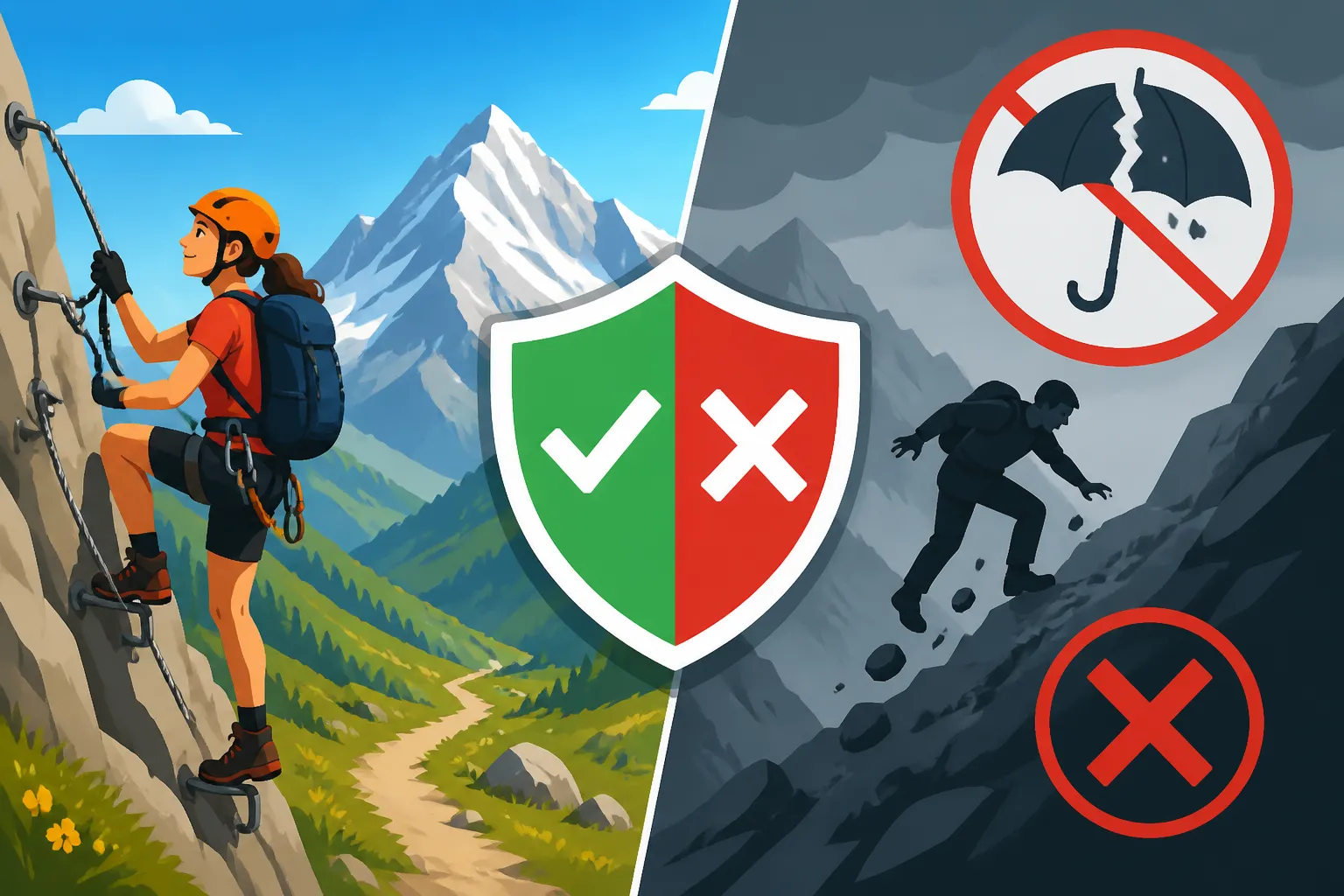
Via ferrata, or "iron paths," take this up several notches. These protected climbing routes involve ascending rock faces using fixed cables, ladders, and iron rungs. While exhilarating, they demand a higher level of physical fitness, proper equipment (helmet, harness, via ferrata set), and a clear head. A slip here isn't just a fall; it can be a serious accident requiring immediate and specialized medical attention, often involving helicopter evacuation from remote and dangerous locations. The risk isn't just in falling, but also from rockfall, equipment failure, or even simply exhaustion leading to poor judgment. Many people underestimate the physical and mental demands of a Klettersteig, especially the higher graded ones (like C, D, or even E and F, which are very difficult). This is why a regular travel insurance policy often views these activities with suspicion, or outright excludes them.
The Illusion of "Standard" Travel Insurance
Many of us expats rely on a general travel insurance policy we might have picked up for a city break or a family holiday. Maybe it’s an annual policy, or one linked to your credit card. The problem is, these "standard" policies are designed for exactly that – standard travel risks. They cover things like lost luggage, flight delays, and basic medical emergencies like a sudden fever or a broken arm from a minor fall on a flat surface.
The moment you mention "high-altitude hiking," "climbing," or "via ferrata," many insurers perk up their ears and then slam the door. Why? Because these activities fall into a category they deem "adventure sports" or "extreme sports," which carry a significantly higher risk profile. A standard policy's fine print often contains exclusions for these activities, meaning that if you get injured while engaging in them, your insurer might just wave goodbye to your claim, leaving you with astronomical medical bills, particularly if a helicopter rescue is involved. It’s a harsh reality, but ignoring it could cost you tens of thousands of Euros. This is where specialized insurance, like that offered by SafetyWing, truly shines, by explicitly designing coverage for these kinds of adventurous lifestyles.
Diving Deep into the Dreaded Clauses: What Voids Your Cover?
Navigating insurance jargon can feel like scaling a slippery rock face without a rope – confusing and perilous. It's not always about what your policy says it covers, but what it doesn't cover, or the conditions under which that coverage becomes null and void. For those of us exploring the German Alps or beyond, understanding these common exclusions is paramount.
Altitude Limits and Unmarked Trails
One of the most frequent culprits for voiding claims is the dreaded altitude limit. Many standard travel insurance policies will cap coverage at a certain elevation, say 2,500 or 3,000 meters. The moment your GPS watch ticks past that invisible line, your coverage often vanishes. This can be a real issue in the Alps, where many stunning peaks and challenging routes easily exceed these limits. Imagine you're tackling the Watzmann in the Bavarian Alps, or exploring routes in the Austrian Tyrol, and suffer an injury at 3,500 meters – your standard policy could simply say "Sorry, you were too high."
Beyond altitude, many policies also draw a hard line at "unmarked trails" or "off-piste activities." While venturing off the beaten path can be incredibly rewarding for experienced hikers, if your injury occurs on a path not officially designated or maintained, an insurer might argue you were taking undue risk. This doesn't necessarily mean you were bushwhacking; even a small, less-frequented but legitimate trail might be considered "unmarked" in the context of their stringent definitions. It’s a classic insurance catch-22: you seek adventure, but the act of seeking it can disqualify you from protection. You need a flexible policy that understands and covers the reality of exploring the mountains, and this is precisely why a product like SafetyWing is designed with the modern adventurous traveler in mind.
Equipment Requirements and Guided Tours
Another subtle but critical point often overlooked is the requirement for proper equipment and, in some cases, certified guides. For via ferrata, it's non-negotiable: you absolutely need a helmet, a climbing harness, and a specialized via ferrata set (lanyard with shock absorber). If you have an accident and the insurance investigator finds you were missing any of these crucial pieces of safety gear, your claim could be denied on grounds of negligence or non-compliance with safety standards. This isn't just about common sense; it's a contractual obligation.
Furthermore, some policies, especially for more extreme activities, might stipulate that the activity must be undertaken with a "qualified professional guide." While many experienced hikers and climbers confidently tackle routes on their own, an insurer might argue that without a certified guide, you were exposing yourself to unnecessary risk, again, voiding your coverage. For example, if you're taking a course to learn how to properly do via ferrata, ensure the operator is recognized and that your insurance still covers you, even during the learning process. Before heading out, always check if your chosen policy, like SafetyWing, explicitly covers self-guided adventures within certain parameters. This is especially important for those taking on advanced grades of Klettersteige, where professional guidance might be considered a standard safety measure by insurers.
"Dangerous Sports" and "Professional Activities"
This is perhaps the broadest category for exclusions. Insurers often have a long list of "dangerous sports" that are either completely excluded or require a specific, expensive add-on. Hiking might be covered up to a point, but once it crosses into "mountain climbing," "alpinism," or "via ferrata," you often enter this danger zone. The definition of what constitutes a "dangerous sport" varies wildly between providers. Some might classify a Grade B via ferrata (moderately difficult) as dangerous, while others might only consider Grade D and above to be so. It's a grey area designed to protect the insurer, not always the adventurer.
Another subtle trap is the "professional activities" clause. If your alpine adventure could be construed as professional in any way – perhaps you’re filming a documentary, leading a tour group (even informally), or participating in an organized race that offers prize money – your standard personal travel insurance will likely become invalid. These scenarios typically require specialized professional liability and accident insurance, not a travel policy. For freelancers or digital nomads who blend work and travel, this distinction can be particularly murky. SafetyWing, known for its flexibility for remote workers, often has more lenient terms around activities for those who aren't necessarily "professionals" but are exploring their passions. For instance, if you're working on your laptop in a mountain hut, it shouldn't affect your personal accident coverage.
Negligence and Recklessness
Finally, almost all insurance policies have a clause about negligence or recklessness. This is a common-sense exclusion: if you intentionally put yourself in harm's way, your insurer isn't going to bail you out. For alpine activities, this could mean:
- Ignoring weather warnings: Heading out into an announced storm.
- Going against official advice: Entering closed areas or ignoring "Danger" signs.
- Being under the influence: Attempting a via ferrata after having too many Weißbiers.
- Lack of preparation: Starting a multi-day high-alpine tour without adequate food, water, or appropriate clothing for rapidly changing mountain conditions.
- Poor judgment: Attempting a route clearly beyond your skill level or experience.
While these points seem obvious, in the excitement of the moment or due to peer pressure, rational decisions can sometimes go astray. An insurer will investigate the circumstances of any accident. If they find evidence of gross negligence on your part, even if your activity was otherwise covered, they can still deny your claim. It's a reminder that insurance is there for unforeseen accidents, not for covering knowingly irresponsible behavior. Always prioritize safety, check local conditions, and remember that even with the best policy like SafetyWing, you still have a responsibility for your own well-being.
Finding Your Safety Net: The Right Insurance for Alpine Exploits
So, with all these potential pitfalls, what's an aspiring Alpine adventurer to do? The key is to be proactive and choose an insurance policy that explicitly understands and covers your intended activities. Don't just tick a box; read the fine print, ask questions, and ensure you're genuinely protected. This is particularly crucial when considering the significant costs involved with medical care in Germany, which can quickly add up if you're not properly covered. For more detailed information, consider reading our guide on Healthcare in Germany: A Comprehensive Guide for Expats.
What to Look For in an Adventure Travel Policy
When you’re looking to hike or tackle via ferrata in the Alps, your insurance needs go far beyond typical travel coverage. Here’s what you absolutely must prioritize:
- Emergency Medical Expenses: This is non-negotiable. It should cover doctor visits, hospital stays, medication, and any necessary surgeries or treatments related to your mountain mishap. Make sure the limits are high enough to cover potential long hospitalizations.
- Search and Rescue / Mountain Rescue: This is critical for alpine activities. Standard policies often exclude the cost of finding you if you get lost or injured in a remote area. Mountain rescue services in Germany (like Bergwacht Bayern) or neighboring countries are professional and expensive. A good adventure policy will explicitly include this, often covering helicopter evacuation, which can be astronomically costly.
- Emergency Evacuation/Repatriation: If your injury is severe enough, you might need to be evacuated to a more suitable medical facility (e.g., from a smaller mountain clinic to a larger city hospital in Munich or Innsbruck) or even repatriated back to your home country. This can involve medical escort and specialized transport, costing tens of thousands of Euros.
- Specific Activity Coverage: Does the policy explicitly list "hiking," "trekking," "via ferrata," "climbing," or "alpinism" as covered activities? Are there any exclusions based on grade, altitude, or whether you have a guide? Be precise in understanding these definitions. Some policies might cover "hiking" but exclude anything that requires ropes or a harness.
- Equipment Coverage (Optional but useful): While less critical than medical, some policies offer an add-on for damaged or lost adventure gear. If you've invested heavily in quality hiking or via ferrata equipment, this might be worth considering.
- Flexibility and Duration: If you’re living in Germany as an expat or digital nomad, you might take spontaneous weekend trips or longer treks. Look for a policy that offers flexibility in duration and geographical coverage.
For those planning trips to the German Alps, understanding Medical Emergencies: What to Do and Where to Go in Germany is also crucial, but knowing you're financially backed by your insurance is the ultimate peace of mind.
Why SafetyWing Stands Out for Expats and Digital Nomads
When it comes to robust, flexible, and expat-friendly insurance for adventurous souls, SafetyWing has really carved out a niche for itself. Unlike many traditional travel insurers that penalize you for wanting to actually do things beyond sipping cocktails by a pool, SafetyWing is built for the modern traveler, remote worker, and digital nomad who values freedom and exploration.
Here’s why SafetyWing is often lauded as the hero for those who dream of scaling Alpine peaks or traversing Klettersteige:
- Adventure Sports Coverage: Crucially, SafetyWing's Nomad Insurance (their flagship product) often includes a range of adventure sports as standard. This means activities like hiking up to 4,500 meters (which covers most Alpine peaks outside of serious high-altitude mountaineering) are typically covered. Even more importantly for our via ferrata enthusiasts, activities like "climbing (bouldering, sport climbing, rock climbing)" and "via ferrata" are often covered when you stick to certain safety guidelines and non-competitive scenarios. This is a massive differentiator from many other policies that exclude these outright or require expensive riders.
- Search and Rescue (SAR): This is a huge benefit for mountain lovers. SafetyWing's policies typically include coverage for search and rescue operations, a feature that can prevent financial ruin if you ever need emergency assistance in the mountains. This means if you get into trouble on a remote trail in the Allgäu or near Berchtesgaden, they're there for you, including potential helicopter transport.
- Flexibility for Long-Term Travelers: As expats, our lives are often fluid. SafetyWing allows you to buy insurance on the go, extend it easily, and even offers coverage in your home country for short visits. This means you don't have to keep switching policies or worrying about gaps in coverage between your mountain adventures and your everyday life in Germany.
- Global Coverage: While we're focusing on the German Alps, your adventures might take you further into Europe or beyond. SafetyWing offers worldwide coverage, so one policy can protect you whether you're hiking near Garmisch-Partenkirchen or trekking in the Dolomites.
- Affordable and Transparent: Compared to specialized adventure sports insurance, SafetyWing often provides comprehensive coverage at a very competitive price. Their terms are generally straightforward, designed for a demographic that demands clarity and doesn’t want to be bogged down by obtuse clauses.
Before purchasing any policy, including SafetyWing, always double-check the latest policy wording and definitions specific to your chosen activities and destination. What’s covered can sometimes change, and knowing the exact limits and conditions for activities like "via ferrata" or "high-altitude hiking" is always smart. However, for many expats and digital nomads, SafetyWing offers a much-needed breath of fresh air, making it simpler and more affordable to enjoy the adventures Germany and its neighboring Alps have to offer. It's truly a solution designed for people like us. If you ever have a medical emergency, you’ll be glad you chose a comprehensive option. For understanding the general emergency services, you might find Emergency Numbers in Germany: Calling 112, Poison Control, and More helpful.
The Fine Print: Always Read Before You Leap
Even with a fantastic option like SafetyWing, the golden rule of insurance always applies: read the fine print. Don't just skim the highlights. Pay close attention to:
- Policy Wording: What are the exact definitions of "hiking," "climbing," "via ferrata"? Are there specific grades or altitudes that are excluded?
- Exclusions List: What activities are explicitly not covered? What conditions would void your policy?
- Claim Process: What steps do you need to take if an accident occurs? Who do you call? What documentation is required?
- Maximum Benefits: What are the caps for medical expenses, search and rescue, and repatriation? Are these sufficient for the potential costs in the Alps?
It might seem tedious, but understanding these details before you're hanging precariously on a rock face or nursing a broken leg is far easier – and less stressful – than trying to decipher them during an emergency. Your peace of mind is worth the extra few minutes of careful reading.
A Quick Comparison: Standard vs. Adventure Insurance (and SafetyWing's Edge)
To illustrate the difference, here's a quick comparison of what you might typically find in a "standard" travel insurance policy versus a more specialized "adventure" policy, with notes on how SafetyWing generally aligns:
| Feature/Clause | Typical Standard Travel Insurance | Specialized Adventure Travel Insurance | SafetyWing (Nomad Insurance) Alignment |
|---|---|---|---|
| Emergency Medical | Basic coverage for illness/minor accidents | High coverage for illness/accidents, including sports | High coverage, generally robust for adventure-related incidents |
| Search & Rescue (SAR) | Often Excluded | Explicitly included, often with high limits | Generally Included, crucial for mountain activities |
| Altitude Limits | Common (e.g., max 2,500m or 3,000m) | Higher limits (e.g., 4,500m or more), or none | Covers up to 4,500m for non-technical hiking/trekking |
| Via Ferrata Coverage | Almost always Excluded or requires expensive rider | Explicitly included, sometimes with grade limits | Generally Included for recreational purposes, check specific wording |
| Equipment Requirement | Not specified, but implied negligence if lacking | Implied/explicit requirement for proper safety gear | Implied, negligence can void; always use proper equipment |
| Unmarked Trails | Often Excluded | Generally more lenient for legitimate trails | Focus on safety; generally covers legitimate, non-negligent exploration |
| Professional Activities | Excluded | Requires separate professional/specialist policy | Excludes professional sports/races, but good for "digital nomad" lifestyle |
| Repatriation | Included, but limits may be lower | High coverage for complex medical transport | Strong repatriation benefits included |
Note: This table provides a general overview. Always refer to the specific policy wording from SafetyWing or any other provider at the time of purchase.
Wrapping Up Your Alpine Adventure Preparations
The German Alps are an absolute playground for outdoor enthusiasts, offering some of the most stunning and accessible hiking and via ferrata experiences in Europe. As an expat or tourist, it's a huge privilege to have these adventures on your doorstep. But this privilege comes with a responsibility: to prepare adequately, and that preparation absolutely includes having the right insurance.
Don’t let a hidden clause or a technicality turn your dream Alpine trip into a financial nightmare. Take the time to understand your insurance options, and seriously consider a provider like SafetyWing that genuinely caters to the adventurous spirit of modern travelers. Their comprehensive approach, including crucial search and rescue coverage and a sensible stance on adventure sports, provides a much-needed safety net.
So, go ahead and plan that thrilling via ferrata route near Garmisch-Partenkirchen, or that challenging hike up to a remote hut. Just make sure you’ve got your gear, your wits, and your SafetyWing policy ready. Happy trails, and stay safe out there! Remember to check out our other guides on Coping with Culture Shock: Adjusting to Life in Germany and Money Matters in Germany: Complete Financial Guide for Expats to round out your expat journey.
Disclaimer
The information provided in this article is for general informational purposes only and does not constitute financial, legal, or insurance advice. While we strive to keep the information up-to-date and correct, we make no representations or warranties of any kind, express or implied, about the completeness, accuracy, reliability, suitability, or availability with respect to the website or the information, products, services, or related graphics contained on the article for any purpose. Specific insurance policy details, coverage, and exclusions can vary significantly by provider and policy. Always refer to the official policy wording, terms, and conditions of your chosen insurance provider, such as SafetyWing, before making any decisions. We strongly recommend consulting with a qualified insurance professional for personalized advice tailored to your specific needs and circumstances.