Dealing with Cold and Flu Season: Common Remedies in Germany
Surviving the cold and flu season in Germany requires adapting to local healthcare habits. From navigating the strict rules of German pharmacies to embracing traditional herbal teas, this guide explains exactly how to treat your winter illnesses effectively abroad.
Disclosure: This post may contain affiliate links. We may earn a commission at no extra cost to you if you make a purchase through these links. Read full disclosure.
Understanding the German Approach to Colds and Flu
The Philosophy of Rest and Natural Healing
The cultural approach to illness in Germany differs significantly from what many expats are accustomed to in North America or the UK. In countries like the US, it is common to suppress symptoms with heavy, multi-symptom cold medicines like DayQuil and power through the workday. In Germany, this is highly frowned upon. The German philosophy of healing centers heavily on Ausruhen (resting) and giving the body the time it needs to fight off the infection naturally.
Doctors in Germany are generally much more conservative when it comes to prescribing strong medications or antibiotics for a standard cold (Erkältung) or a mild flu (Grippe). Unless a bacterial infection is confirmed, a German physician is highly likely to prescribe bed rest, plenty of fluids, and fresh air over chemical interventions. If you show up to an office coughing and sneezing, your colleagues will likely send you home.
To ensure you can take this time off without worrying about your income, verifying your health coverage is essential. Many expats use Feather Insurance to double-check their coverage status and understand their sick pay benefits before the winter season hits, guaranteeing peace of mind when they need to rest.
Apotheke vs Drogerie Where to Buy Medicine
One of the most immediate shocks for an expat dealing with their first German cold is discovering that standard supermarkets and drugstores like dm or Rossmann (Drogerien) do not sell actual medicine. You cannot buy a basic bottle of ibuprofen, paracetamol, or medicated cough syrup alongside your shampoo and groceries.
In Germany, the sale of active pharmaceutical ingredients is strictly regulated and limited entirely to the Apotheke (pharmacy). You can identify an Apotheke by the large, illuminated red “A” displayed outside. While the Drogerie is fantastic for buying preventative vitamins, throat lozenges, and herbal teas, you must go to the Apotheke for genuine symptom relief. At the pharmacy, the medicines are usually kept behind the counter. You must speak to the pharmacist (who is highly trained and frequently speaks excellent English) to request what you need. To understand this retail divide completely, review our guide on Pharmacies in Germany: Apotheke vs Drogerie Explained.
Essential Over the Counter German Cold Remedies
Pain Relievers and Fever Reducers
When treating body aches, headaches, and fever (Fieber), the standard options in Germany are identical to the rest of the world, though the brand names might differ. Ibuprofen and Paracetamol are the absolute staples. You can easily request generic versions at the pharmacy by simply stating the active ingredient and the desired dosage (usually 400mg for Ibuprofen and 500mg for Paracetamol without a prescription).
Aspirin is also highly popular, specifically the effervescent “Aspirin Complex” which combines a pain reliever with a pseudoephedrine decongestant. However, multi-symptom nighttime medicines like NyQuil do not exist in their original American formulation. The closest German equivalent is Wick MediNait, a green syrup containing paracetamol, dextromethorphan, ephedrine, and doxylamine. If you prefer your specific international brands or preventative immune boosters that are hard to find locally, iHerb is a lifesaver. Expats frequently use iHerb to bulk order familiar vitamins, zinc supplements, and cold remedies to keep their home stocked before the flu season strikes.
Cough Syrups and Lozenges
Treating a cough (Husten) in Germany requires knowing whether you have a dry, tickly cough (Reizhusten) or a chesty, productive cough (produktiver Husten). German pharmacists will always ask you to specify this before handing over a bottle.
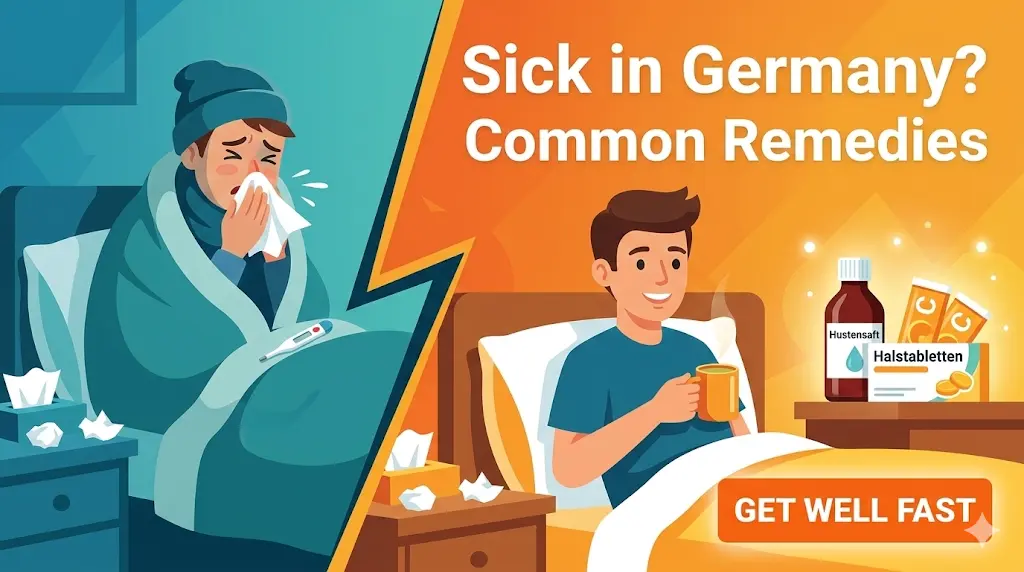
For a chesty cough, expectorants (Hustenlöser) like Mucosolvan or ACC Akut (acetylcysteine) are standard. However, the German market strongly favors plant-based medicine (Phytotherapie). Ivy leaf extract (Efeu) is incredibly common, with Prospan being the leading brand for loosening mucus. For a dry, hacking cough, a suppressant (Hustenstiller) like Silomat is frequently recommended for nighttime use. For soothing a scratchy throat during the day, you can pick up Halsbonbons (throat lozenges) like Ricola or Isla Moos at any standard Drogerie.
Nasal Sprays and Inhalations
A blocked nose (Schnupfen) is typically treated with a decongestant nasal spray (Nasenspray). The most common active ingredients are xylometazoline or oxymetazoline, found in popular brands like Ratiopharm, Nasic, or Olynth. German pharmacists will strictly warn you not to use these chemical sprays for more than five to seven consecutive days to prevent a rebound effect and dependency.
As a milder alternative, Germans heavily rely on isotonic seawater sprays (Meerwasserspray) to clean the nasal passages and moisturize the mucous membranes. These are completely natural, can be used indefinitely, and are widely available at both the Apotheke and the Drogerie.
| International Medicine / Purpose | German Equivalent Brand | Active Ingredient / Type |
| Advil / Tylenol (Pain & Fever) | Ibuprofen AL / Paracetamol ratiopharm | Ibuprofen / Paracetamol |
| NyQuil (Multi-symptom Night) | Wick MediNait | Paracetamol + Doxylamine + Ephedrine |
| Robitussin (Chesty Cough) | Mucosolvan / Prospan | Ambroxol / Ivy Leaf Extract |
| Afrin (Nasal Decongestant) | Nasenspray ratiopharm / Nasic | Xylometazoline |
| DayQuil (Multi-symptom Day) | Aspirin Complex / Grippostad C | Aspirin + Pseudoephedrine |
Traditional Home Remedies and Teas
The Power of Erkaltungstee
Before reaching for chemical painkillers, the average German will attempt to flush the illness out with rest and massive amounts of tea. Medicinal teas (Arzneitees) are a cornerstone of German home healthcare. If you walk into any dm, Rossmann, or supermarket, you will find an entire aisle dedicated to teas formulated for specific ailments.
The most essential winter purchase is Erkältungstee (cold tea), which typically blends elderflower, linden flower, and willow bark to promote sweating and lower mild fevers. Husten- und Bronchialtee (cough and bronchial tea) usually contains thyme, anise, and ribwort to soothe the respiratory tract. Kamillentee (chamomile) and Fencheltee (fennel) are universally prescribed by German grandmothers for upset stomachs or general malaise. While these teas are excellent for symptom management, expat families who also want high-dose vitamin C, elderberry gummies, or echinacea drops often order from iHerb to bridge the gap between German herbalism and international preventative care.
Inhalation and Wadenwickel
Another deeply rooted German remedy for respiratory congestion is steam inhalation (Inhalieren). This involves leaning over a bowl of boiling water with a towel draped over your head to trap the steam. Germans frequently add a handful of chamomile blossoms or a few drops of essential oils, such as Pinimenthol, to the water to open the sinuses and break up chest congestion.
If you or your child develops a fever, you might encounter the classic German home remedy known as Wadenwickel (calf wraps). Rather than immediately administering fever-reducing syrup, many Germans wrap damp, lukewarm towels around the patient’s calves to gently draw the heat out of the body and lower the core temperature naturally. While it sounds unusual to foreigners, it is a highly effective, traditional method endorsed even by modern German pediatricians.
When to See a Doctor and Insurance Coverage
Getting a Sick Note Krankschreibung
If your natural remedies and over-the-counter medications fail to improve your condition after three days, or if you require an official sick note for your employer, you must visit a doctor. Under German law, if you are sick for more than three consecutive calendar days, you must provide your employer with an Arbeitsunfähigkeitsbescheinigung (AU), commonly referred to as a Krankschreibung. Some employment contracts even require this note from the very first day of illness.
If you do not have a dedicated General Practitioner (Hausarzt) yet, finding one while you are actively sick can be exhausting. When you do secure an appointment, you may encounter a language barrier. Translating your symptoms into German beforehand is crucial, a strategy we detail completely in Seeing a Doctor Who Doesn’t Speak English: Tips for Overcoming Language Barriers. Once the doctor evaluates you, they will issue an electronic sick note (eAU) that is transmitted directly to your public health insurance, relieving you of the burden of mailing paperwork while you are bedridden.
Navigating Public and Private Insurance
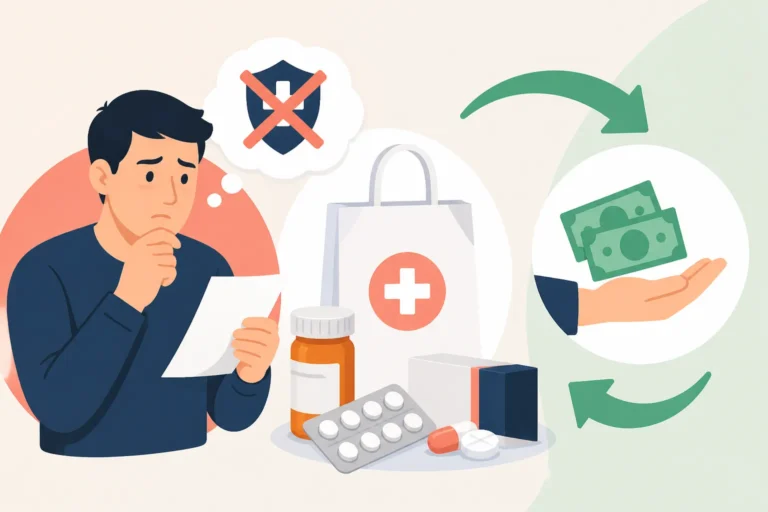
How you pay for your cold and flu treatments depends entirely on your place within the German health insurance system. If you are insured under the statutory public system (Gesetzliche Krankenversicherung or GKV), your doctor visit is completely free. However, if the doctor recommends standard over-the-counter cold medicines like nasal spray or ibuprofen, they will issue a “Green Prescription” (Grünes Rezept). This acts merely as a doctor’s recommendation; public insurance will not cover the cost, and you must pay the full retail price at the Apotheke. To fully grasp what your public provider covers, review Healthcare in Germany: A Comprehensive Guide for Expats.
Conversely, if you possess Private Health Insurance (Private Krankenversicherung or PKV), your coverage is often much broader. Depending on your specific tariff, private insurers will frequently reimburse you for over-the-counter cold medications if they are officially prescribed by a physician. Premium digital-first providers like Ottonova make this incredibly easy for expats. If you are sick in bed, you can use the Ottonova app to book a telemedicine appointment with an English-speaking doctor, get a digital prescription, and upload your pharmacy receipt for rapid reimbursement without ever leaving your apartment.
If you are currently evaluating your insurance options and want to know if you qualify for these premium private benefits, utilizing an unbiased broker like Feather Insurance can help you calculate the financial thresholds.
Finally, if you are a newly arrived expat or a tourist acting as a “self-payer” (Selbstzahler) at a private clinic, you will receive a direct invoice for your medical consultation. To avoid losing money to terrible bank exchange rates when paying these unexpected medical bills from a foreign account, use a borderless platform like Wise. Wise allows you to transfer your home currency into Euros at the exact mid-market rate, ensuring your medical budget is spent entirely on your health rather than legacy banking fees.
References
Primary sources official
- Federal Ministry of Health BMG: The official portal of the German government providing medical guidance, sick leave regulations, and public health campaigns regarding influenza and seasonal colds. https://www.bundesgesundheitsministerium.de/
- Robert Koch Institute RKI: Germany’s central scientific institution in the field of biomedicine, providing epidemiological data and seasonal flu tracking across the federal states. https://www.rki.de/
Other helpful sources
- Apotheken Umschau: Germany’s most popular and medically reviewed pharmacy magazine, offering extensive guides on managing the common cold, utilizing traditional Hausmittel (home remedies), and differentiating active ingredients. https://www.apotheken-umschau.de/
Disclaimer
The information provided in this article is for general informational and educational purposes only and does not constitute professional medical advice. Traditional home remedies should not replace professional medical intervention for severe or prolonged symptoms. Always consult directly with a licensed pharmacist (Apotheker) or a qualified medical professional regarding your unique health conditions, and dial 112 in the event of a genuine medical emergency in Germany.