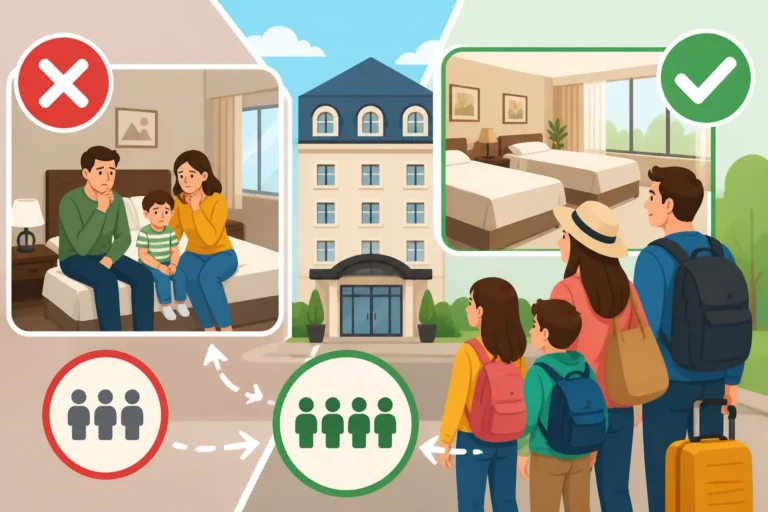
Trade Fair Bookings: Why Messe Weeks Triple Hotel Rates and How to Plan
Oh, the infamous Messe week! If you’ve ever tried to book a hotel in Frankfurt, Düsseldorf, or Hanover during one of Germany’s major trade fairs, you know exactly what I’m talking about. The moment you see those hotel rates triple, or even quadruple, your heart just sinks. It’s a truly frustrating experience, but don't worry, you're not alone, and there are definitely ways to navigate this annual pricing madness. This guide will walk you through why this happens, how to plan your accommodation strategically, and how to find the best possible options, even when the market seems stacked against you.
Disclosure: This post may contain affiliate links. We may earn a commission at no extra cost to you if you make a purchase through these links. Read full disclosure.
The Messe Phenomenon: Why Germany is the Trade Fair Hub
Germany is, without a doubt, the global capital of trade fairs. Year after year, millions of business professionals, innovators, and enthusiasts flock to German cities for a bewildering array of industry events. From massive automotive shows to niche technology expos, these trade fairs, or "Messen" as they are known here, are integral to the German economy and its international standing.
Germany's Global Role in Trade Fairs
It's not just a coincidence; Germany has systematically built itself into the world's leading location for international trade fairs. We're talking about cities like Hanover, home to CeBIT (historically) and Agritechnica; Frankfurt, with its massive book fairs and IAA car show; Düsseldorf, famous for its boat and medical trade fairs; Cologne, boasting Art Cologne and gamescom; Berlin, host to IFA and ITB; and Munich, with Bauma and productronica. These aren't just local gatherings; they are global platforms that attract exhibitors and visitors from every corner of the planet.
The reasons for this prominence are manifold. Germany's central location in Europe, its world-class infrastructure, efficient public transport systems, and a long-standing tradition of meticulous organization all contribute. The exhibition grounds (Messegelände) themselves are state-of-the-art, often sprawling complexes designed to host thousands of companies and hundreds of thousands of visitors. This robust ecosystem ensures that Germany remains a magnet for industry leaders and decision-makers, which, while fantastic for business, has a very direct, sometimes painful, impact on anyone trying to find a place to sleep during these peak times.
The Unavoidable Price Surge During Messe Weeks
Now, let's talk about the elephant in the room: the astronomical price surge. When a major Messe rolls into town, the demand for accommodation skyrockets. Suddenly, a city that might have a decent supply of hotel rooms for its everyday tourist or business traveler population finds itself utterly overwhelmed. Every hotel, from the five-star luxury chains to the modest family-run pensions, knows this. It’s simple economics, really: high demand plus limited supply equals premium pricing.
You'll see hotels that usually go for €80-€100 a night suddenly list rooms for €300, €400, or even more. And these aren’t even for the most luxurious suites! This isn't just price gouging for the sake of it; it's a reflection of the market dynamics. Exhibitors often need multiple rooms for their staff for several nights, sometimes even weeks. Business travelers fly in for specific meetings. These are individuals and companies with budgets that often absorb these costs as a necessary expense of doing business. This high-spending clientele effectively pushes out the casual tourist or budget traveler, making it incredibly difficult to find affordable options. The impact isn't just on hotels; serviced apartments, private rentals, and even hostel beds feel the pinch, with prices inflating across the board.
The Impact on Your Wallet: Understanding the Price Hikes
The surge in hotel rates during Messe weeks in Germany can feel like a personal affront, especially if you’re trying to plan a trip for tourism or an independent business venture. It's more than just a slight bump; it's a fundamental shift in the pricing landscape that can completely derail your budget if you're not prepared.
Decoding Dynamic Pricing
Modern hotel booking operates on a sophisticated system of dynamic pricing. This isn't some fixed spreadsheet; it's an ever-evolving algorithm that considers demand, occupancy rates, competitor pricing, and even the specific dates of major events. During Messe weeks, these algorithms go into overdrive. Hotels have complex yield management systems designed to maximize revenue, and a major trade fair is the ultimate opportunity to do just that.
Imagine a hotel room that typically costs €120 on an ordinary Tuesday. During a major Messe in the same city, that same room might be listed for €350 or even €500. It's not because the room got a sudden upgrade; it's purely because the demand from thousands of incoming business travelers, exhibitors, and attendees allows for it. Even budget hotels get in on the action, raising their prices far beyond their usual range. This dynamic isn't unique to Germany, of course, but given the sheer number and scale of German trade fairs, it's a phenomenon expats and visitors encounter frequently. It’s not just the room itself that sees an increase; sometimes, basic services like breakfast or parking, which might be complimentary or reasonably priced at other times, become additional, costly add-ons.
Hidden Costs and Limited Availability
Beyond the inflated room rate itself, there are often other costs that subtly creep into your Messe week budget. Local restaurants and cafes near the exhibition grounds might subtly raise their prices, knowing their clientele are attendees with expense accounts. Taxis and ride-shares might implement surge pricing more frequently. Even local shops might see a slight increase in demand for certain convenience items. These are rarely explicit "Messe surcharges," but rather a natural ripple effect of increased spending power in the area.
But perhaps even more challenging than the increased cost is the sheer lack of availability. If you wait too long to book, you might find that all hotels within a reasonable distance of the Messe are completely sold out. This forces you to either pay an exorbitant last-minute rate for whatever scraps are left or to stay miles away from the action, incurring significant travel time and transportation costs. I've heard countless stories from friends who thought they could snag a deal a few weeks out, only to find themselves scrambling for the last available room in a dodgy suburb, a two-hour commute from their intended destination. This scarcity means you don't just pay more; you get less choice, less convenience, and potentially a lot more stress.
Strategic Planning for Messe Accommodation: Your Best Defense
Facing these challenges head-on requires a solid strategy. You can't change the market, but you can certainly play it smarter. The key is foresight, flexibility, and knowing where to look.
Booking Early is Non-Negotiable
Seriously, I cannot stress this enough: for Messe weeks, booking early is not just a good idea, it's absolutely essential. We're talking months, sometimes even a year, in advance for the biggest, most popular trade fairs. As soon as the dates for a particular Messe are announced, or as soon as you know your travel plans, you should be looking for accommodation. The earlier you book, the more likely you are to secure a reasonable rate and, crucially, a wider selection of available rooms.
Waiting until a few weeks or even a month before the event is a recipe for disaster. By then, most desirable hotels will be fully booked, and the remaining few will be listing their rooms at peak dynamic pricing. Think about it: if a hotel has only 10% of its rooms left for a major event, they know they can command top dollar. Booking early often means you can still find rooms at or slightly above normal rates, before the true "Messe premium" kicks in. Plus, you’ll have the luxury of choosing a location that actually suits your needs, rather than being stuck with whatever's left. Don't underestimate the peace of mind that comes from having your accommodation sorted well in advance, leaving you free to focus on the actual purpose of your trip.
Leveraging Online Travel Agencies (OTAs) and Direct Bookings
When it comes to actually making those bookings, online travel agencies (OTAs) are often your best friend. Platforms like Booking.com are incredibly powerful tools because they aggregate a vast inventory of hotels, apartments, and guesthouses. This means you can compare hundreds of options in one place, apply filters for price, location, amenities, and crucially, see real-time availability.
Booking.com, for example, is renowned for its user-friendly interface and extensive filtering options. You can easily search for hotels near specific landmarks or exhibition centers, sort by price, review scores, or distance, and even filter for properties that offer flexible cancellation. Many properties on Booking.com also provide guest reviews, which are invaluable for getting a true sense of a place before you commit. Look out for their Genius loyalty program, too, which can offer discounts and perks that might just soften the blow of Messe week pricing.
While OTAs are fantastic for comparison and breadth, it's also worth checking the hotel's direct website. Sometimes, hotels offer exclusive deals or loyalty points if you book directly. However, during high-demand periods like a Messe, the prices might be identical, or the OTA might even have better bulk-negotiated rates or more flexible cancellation policies. The best approach is often to use Booking.com for your initial search and comparison, then do a quick cross-check with the hotel's own site before finalizing your decision. Always pay close attention to the cancellation policy – this is paramount when planning for events that might have changing schedules or unforeseen circumstances.
Considering Alternative Accommodation Types
Don't limit yourself to traditional hotels, especially during a Messe. Germany offers a diverse range of accommodation options that can be lifesavers during peak times.
- Serviced Apartments: These are an excellent choice, particularly if you're staying for several days or traveling with colleagues. They offer more space, often include a small kitchen, and can sometimes be more cost-effective than multiple hotel rooms. They provide a "home away from home" feel, which can be a welcome respite after a long day at the Messe. Many are available on Booking.com or specialized apartment booking sites.
- Private Rentals: Platforms that facilitate private rentals (and many such listings now appear on Booking.com too) can offer unique and often more affordable options, especially if you're willing to stay a bit further out. You might find a cozy apartment in a residential neighborhood that gives you a different local experience. Just ensure the host has good reviews and that the location is well-connected to public transport.
- Guesthouses (Pensionen): These are smaller, often family-run establishments that offer a more intimate experience than large hotels. While they might not have all the bells and whistles of a chain hotel, they often provide excellent service, a local touch, and sometimes, slightly more stable pricing outside of the immediate city center.
When exploring these alternatives, remember to weigh the benefits against potential drawbacks. Serviced apartments and private rentals offer more space and kitchen facilities but might lack hotel amenities like daily cleaning or a 24-hour reception. Pensions can be charming but might have limited English-speaking staff. It’s all about finding the right balance for your comfort and budget.
Expanding Your Search: Beyond the Messe City Center
One of the most effective strategies for battling inflated Messe week prices is to widen your geographical net. Don't get fixated on staying right next door to the exhibition grounds. Germany's excellent infrastructure means you have options.
Exploring Nearby Towns and Cities
If you're finding prices prohibitive in the immediate Messe city, start looking at towns and smaller cities within a reasonable commuting distance. For example, if you're attending a trade fair in Frankfurt, consider looking for accommodation in nearby Mainz, Wiesbaden, Offenbach, or Darmstadt. These cities are often just a short train ride away, sometimes as little as 15-30 minutes on an S-Bahn or regional train. The hotel rates in these adjacent areas typically don't experience the same dramatic surge, offering a more palatable price point.
The trick here is to calculate your total cost and time investment. A cheaper hotel in a neighboring town is only a good deal if the cost and time of commuting don't negate the savings. Check public transport schedules rigorously: how frequent are the trains? How late do they run? What's the cost of a daily or weekly travel pass? This planning upfront will save you headaches (and potentially extra euros) later on. I've often found fantastic deals just a few stops away from the main action, allowing me to enjoy a quieter evening while still being able to get to the Messe quickly in the morning.
Public Transportation: Your Best Friend
Germany's public transportation network is truly world-class, and it will be your absolute best friend when navigating Messe weeks. Seriously, embrace the trains, trams, and buses! Major cities are incredibly well-connected, with efficient U-Bahn (subway), S-Bahn (suburban train), tram, and bus lines crisscrossing urban areas and extending to surrounding towns. Many Messe centers even have their own dedicated train or tram stops, making the commute seamless.
Before you book an accommodation further afield, map out your route using Google Maps, Deutsche Bahn's DB Navigator app, or the local transport authority's website (e.g., RMV for Frankfurt, HVV for Hamburg). This will give you realistic travel times and help you identify the best connections. Often, a 30-minute train ride from a slightly out-of-the-way hotel will be far less stressful and significantly cheaper than trying to find a taxi or getting stuck in traffic if you choose to drive.
Consider investing in a Deutschland-Ticket or a regional day pass if you're commuting extensively. These passes can offer unlimited travel within specific zones or even nationwide, providing significant savings compared to buying single tickets daily. Understanding how to use Deutsche Bahn Guide: Using Trains for City and Long-Distance Travel is key to unlocking these savings and commuting efficiently. Embrace the local rhythms of public transport – it’s part of the authentic German experience, and it's indispensable during Messe week!
Smart Booking Strategies and Considerations
Beyond where and when you book, how you book and what details you pay attention to can make a huge difference in your overall experience and budget management during busy trade fair periods.
The Power of Flexible Cancellation Policies
In the unpredictable world of travel, especially for business, plans can change in an instant. This is why a flexible cancellation policy is not just a perk, but a crucial safety net. When booking accommodation for a Messe week, always, always prioritize options that allow you to cancel or modify your reservation without penalty up to a certain point. Many listings on Booking.com explicitly highlight these flexible options.
While these flexible rates might sometimes be slightly higher than non-refundable options, the peace of mind they offer is invaluable. Imagine paying a hefty, non-refundable sum for a hotel during a Messe, only for your trip to be postponed or cancelled. That money is gone. With a flexible policy, you can adjust your plans without financial loss. Read the fine print carefully: understand the exact deadline for free cancellation (e.g., 24 hours before check-in, 7 days before check-in) and any conditions attached. It’s a small detail that can save you a significant amount of stress and money.
Group Bookings and Corporate Rates
If you’re traveling with a team or multiple colleagues for a Messe, explore the possibility of group bookings. Many hotels offer discounted rates for booking a block of rooms, which can significantly reduce the per-person cost. It requires a bit more coordination upfront, but the savings can be substantial. Contact the hotels directly or use the group booking features offered by larger OTAs.
Furthermore, if you’re traveling for work, don't forget to inquire about corporate rates. Many companies have pre-negotiated discounts with hotel chains that can apply even during high-demand periods. Your company’s travel department should be able to provide you with codes or direct booking links that incorporate these rates. Sometimes, even if you’re a freelancer, a professional association or a co-working space might have partnerships that offer similar benefits. Always ask; the worst they can say is no.
Reading Reviews and Location Scouting
The internet is a treasure trove of information, and user reviews are your first line of defense against disappointment. Before you commit to any booking, especially one that's a bit further from the Messe, dive deep into the reviews. On platforms like Booking.com, you can see comments on cleanliness, staff friendliness, and crucially, location accuracy and public transport accessibility. Pay particular attention to recent reviews from other business travelers or those who mention attending events at the Messe. They will give you the most relevant insights.
Secondly, don't just rely on the address provided. Use the map features on Booking.com or Google Maps to visually confirm the hotel's proximity to the Messegelände and, more importantly, to the nearest public transport stops. Are there direct connections? How many changes? What's the walking distance to the station? A hotel that looks "close" on paper might require a long walk through an unappealing area to reach the nearest S-Bahn, or have convoluted connections. Fact-checking these details will ensure your commute is as smooth and stress-free as possible, allowing you to focus on the busy day ahead at the trade fair.
Comparison of Accommodation Types for Messe Weeks
Here's a quick overview to help you decide which type of accommodation might be best for your next German Messe trip:
| Feature | Hotel (Chain/Boutique) | Serviced Apartment | Pension (Guesthouse) | Private Rental (e.g., via Booking.com) |
|---|---|---|---|---|
| Privacy | Good, individual room | Excellent, private living space | Good, individual room | Excellent, entire unit |
| Amenities | Restaurant, bar, gym, reception, daily cleaning | Kitchenette, laundry (sometimes), more space | Basic breakfast, less amenities | Kitchen, living area, sometimes laundry |
| Cost during Messe | Highest surge, especially centrally | High, but can be better for longer stays | Medium-high, often more stable off-center | High, but can be more competitive if booked early |
| Suitability | Short stays, business luxury, full service | Longer stays, groups, self-sufficiency | Authentic local experience, budget-conscious | Longer stays, family, unique experience |
| Location | Often central, widespread | Varies, increasingly central | Often residential areas, less central | Varies greatly, often residential |
| Ease of Booking | Very easy via Booking.com | Easy via Booking.com & specialists | Easy via Booking.com or direct | Easy via Booking.com (many options) |
| Cancellation | Varies, often flexible options available | Varies, read terms carefully | Varies, often flexible | Varies greatly by host |
Remember, each type has its merits, and your ideal choice will depend on your budget, group size, length of stay, and personal preferences.
Disclaimer
This article is for general informational purposes only and does not constitute professional advice. Laws, prices and regulations vary by location and change over time. Consult a qualified professional for guidance on your specific situation.