Sun Exposure and Vitamin D: Coping with Less Sun in Germany’s Winters
Living through a long, gray German winter can quickly deplete your vitamin D levels, impacting your mood, immune system, and bone health. This guide helps expats recognize deficiency symptoms, maximize sun exposure, and navigate supplements within the German healthcare system.
Disclosure: This post may contain affiliate links. We may earn a commission at no extra cost to you if you make a purchase through these links. Read full disclosure.
Understanding the German Winter and Vitamin D Deficiency
The Geography of the Dark Season
One of the most significant adjustments for expats relocating to Germany is the dramatic shift in daylight hours. Germany is situated between the 47th and 55th parallels north. To put this in perspective, Munich is further north than Montreal, Canada. Because of this high latitude, the angle of the sun during the winter months—specifically from October through March—is simply too low to penetrate the earth’s atmosphere with sufficient ultraviolet B (UVB) radiation.
This phenomenon creates a literal “vitamin D winter.” Even if you stand outside on a rare, completely clear and sunny day in January at noon, your skin will not produce any vitamin D. The UVB rays required for natural synthesis simply cannot reach you. Consequently, your body must rely entirely on the vitamin D stores built up during the summer months or on external intake. For expats coming from sunnier, equatorial, or southern hemisphere countries, this sudden geographic deprivation can trigger a profound physical and mental shock, making proactive health management an absolute necessity.
Identifying Symptoms of Vitamin D Deficiency
Because natural synthesis halts for half the year, vitamin D deficiency is remarkably common in Germany. According to the Robert Koch Institute (RKI), approximately 30 percent of adults in Germany have a deficient vitamin D status, with blood serum concentrations falling below the critical threshold of 30 nmol/L. An even larger percentage operates with suboptimal levels during the peak of winter.
Recognizing the symptoms of this deficiency is crucial for maintaining your quality of life. The most immediate and noticeable symptom is profound, unexplainable fatigue and lethargy that does not improve with sleep. You may also experience frequent respiratory infections, as vitamin D plays a critical role in regulating the immune system. Prolonged deficiency can lead to bone and muscle pain, weakness, and an increased risk of stress fractures.
Furthermore, low vitamin D is strongly linked to Seasonal Affective Disorder (SAD), a form of winter depression characterized by low mood, irritability, and a lack of motivation. If these symptoms become so severe that you are unable to perform your daily work duties, you are legally protected and should seek medical rest. You can learn exactly how to navigate this administrative process in our guide on Sick Leave in Germany: How to Get a Sick Note Krankmeldung and Your Rights.
Strategies for Maintaining Healthy Vitamin D Levels
Dietary Sources and Vitamin D Supplements
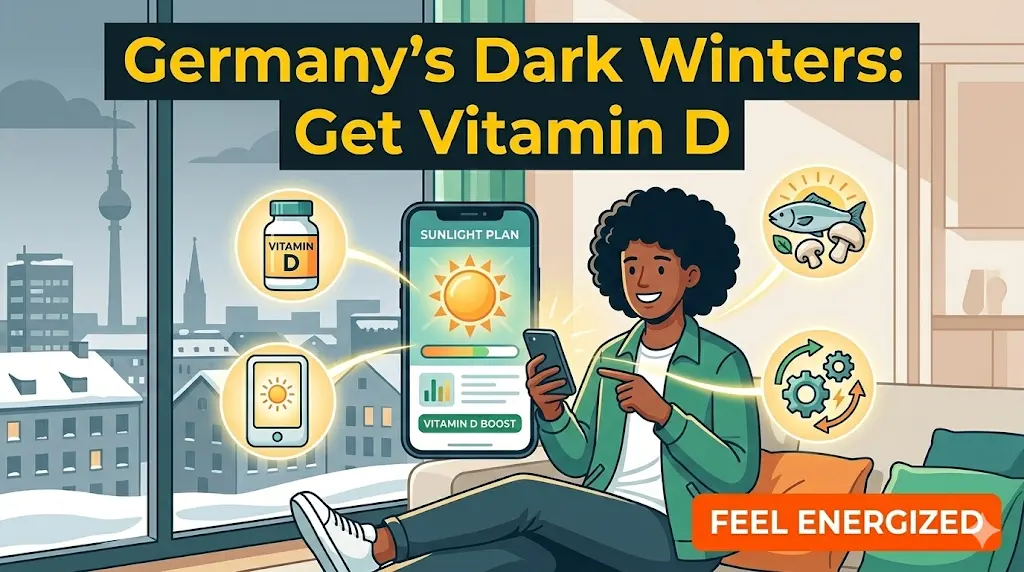
Relying on diet alone to maintain adequate vitamin D levels is incredibly difficult, but it is a necessary part of your winter strategy. The best natural dietary sources are fatty fish (fetter Fisch) like salmon, herring, and mackerel, as well as egg yolks and certain wild mushrooms.
However, expats from North America or the UK often face a specific culture shock in German supermarkets: the lack of fortified foods. In many countries, milk, orange juice, and breakfast cereals are heavily fortified with vitamin D by law. In Germany, the fortification of staple foods is strictly regulated and largely uncommon. Therefore, reaching the daily recommended intake through German supermarket runs is nearly impossible.
This makes supplementation a critical component of surviving the winter. The German Nutrition Society (DGE) recommends a daily supplement of 20 micrograms (equivalent to 800 International Units or IU) for adults when natural synthesis is absent. You can purchase basic Nahrungsergänzungsmittel (dietary supplements) at local retail drugstores like dm or Rossmann, but the dosages are often kept intentionally low due to strict retail laws.
If you require higher clinical doses, or if you prefer specific international brands that combine Vitamin D3 with Vitamin K2 for optimal absorption, these are often prohibitively expensive or entirely unavailable in local German pharmacies. To bypass this, many expats turn to borderless wellness platforms. By ordering through iHerb, you can seamlessly access a massive global catalog of high-quality, high-dose vitamin D supplements and immune-boosting wellness products. Stocking your winter medicine cabinet via iHerb ensures you have your preferred, familiar preventative care items delivered directly to your German address long before the winter gloom sets in.
Maximizing Natural Sun Exposure
While winter synthesis is impossible, aggressively building your vitamin D reserves during the German summer is your best natural defense. From April to September, the UVB radiation is strong enough to trigger synthesis.
The DGE recommends exposing your face, hands, and arms to the sun without sunscreen for roughly 10 to 25 minutes, two to three times a week, ideally between 11:00 AM and 3:00 PM. This short window is usually sufficient to maximize natural production without risking sunburn or skin damage.
Even during the dark winter months, taking a daily walk (Spaziergang) is culturally ingrained in Germany and highly recommended. While a January walk will not boost your vitamin D, exposing your eyes to natural daylight is essential for regulating your circadian rhythm and combating the depressive symptoms of SAD.
| Source of Vitamin D | Pros | Cons | Availability in Germany |
| Summer Sunlight | Natural, free, highly effective | Only possible from April to September | Excellent in summer, nonexistent in winter |
| Dietary Sources | Provides additional macro-nutrients | Impossible to eat enough to hit daily targets | Moderate (Fortified foods are extremely rare) |
| Supplements (D3) | Reliable, measurable, easy to adjust | Requires purchasing and daily adherence | Widely available (High doses easiest via iHerb) |
Navigating Healthcare for Vitamin D Testing
Getting Tested by a General Practitioner
If you suspect you are deficient, the most effective step is to get your blood tested. In Germany, your primary point of contact for this is your general practitioner, or Hausarzt. Establishing a relationship with a primary care physician early on is vital for your long-term health; you can learn how to secure one in Finding a Doctor in Germany: How to Choose a Hausarzt.
When you book an appointment, simply tell the doctor, “Ich möchte meinen Vitamin-D-Spiegel testen lassen” (I would like to have my vitamin D level tested). The laboratory will measure the concentration of 25-hydroxyvitamin D (25-OH-D) in your blood serum.
Because German clinical settings can be intimidating and receptionists rarely speak fluent English, preparing your vocabulary beforehand is crucial. If your blood test reveals a severe deficiency, your doctor will likely prescribe an initial high-dose therapy (often 20,000 IU taken once a week) to rapidly replenish your stores, followed by a lower daily maintenance dose.
Understanding Health Insurance Coverage
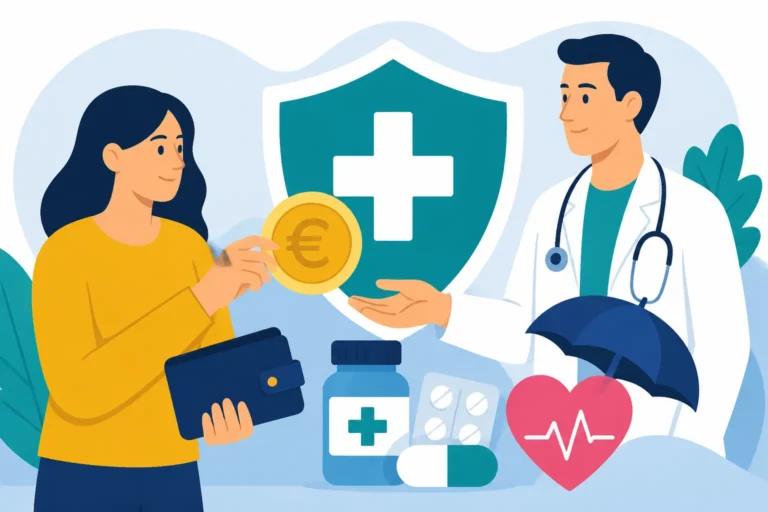
How you pay for a vitamin D test depends heavily on your medical symptoms and your place within the German health insurance system. If you are enrolled in the statutory public health insurance system (Gesetzliche Krankenversicherung or GKV), the cost of a vitamin D blood test is only covered if the doctor deems it medically necessary. This means you must present clear, clinical symptoms of a deficiency, or suffer from conditions like osteoporosis or malabsorption.
If you are generally healthy and simply want to check your levels for peace of mind or seasonal preventative care, the public insurance will not cover it. It will be classified as an Individual Health Service (Individuelle Gesundheitsleistung or IGeL), meaning you must pay the laboratory invoice out of pocket. This usually costs between €25 and €35. To understand the broader framework of what is and isn’t covered by the state, read Public Health Insurance gesetzliche Krankenkasse: What It Covers and Costs.
If you possess private health insurance (Private Krankenversicherung or PKV), routine preventative blood work and vitamin screenings are frequently fully covered, depending on your specific tariff. Premium, expat-focused private insurers like Ottonova actively encourage preventative care and make the reimbursement process incredibly simple through their English-language digital apps. If you are a high earner or freelancer evaluating whether private care aligns better with your proactive health goals, consulting unbiased expat brokers like Feather Insurance can help you calculate the precise benefits.
Furthermore, securing the right administrative setup ensures you are never caught off guard. Working with Feather Insurance helps you navigate the dense German bureaucracy with complete English support. If you do end up paying out of pocket for private laboratory fees or specialized IGeL services as a self-payer, managing the international transfer of funds can be costly. By utilizing a borderless financial platform like Wise, you can transfer funds from your home country to pay your German medical invoices at the exact mid-market exchange rate. Avoiding hidden banking markups with Wise ensures your healthcare budget is spent purely on your wellness.
References
Primary sources official
- Robert Koch Institute (RKI): Official epidemiological data and health monitoring reports regarding the prevalence of vitamin D deficiency among adults in Germany. https://www.rki.de/EN/Content/Health_Monitoring/Health_Reporting/GBEDownloadsJ/FactSheets/JoHM_04_2016_Vitamin_D_status_adults.pdf
- Deutsche Gesellschaft für Ernährung (DGE): The German Nutrition Society’s official guidelines and reference values for dietary vitamin D intake and supplementation recommendations. https://www.dge.de/gesunde-ernaehrung/faq/vitamin-d/
Other helpful sources
- Make it in Germany: The official portal of the German government for international professionals, offering practical overviews of navigating local pharmacies, the IGeL billing system, and general healthcare access. https://www.make-it-in-germany.com/en/living-in-germany/health-healthcare
Disclaimer
The information provided in this article is for general informational and educational purposes only and does not constitute professional medical, nutritional, or financial advice. Vitamin D toxicity is a rare but serious condition; you should never begin a high-dose supplementation regimen without a confirmed blood test and professional medical oversight. Always consult directly with a qualified general practitioner (Hausarzt), a licensed pharmacist, or a certified insurance broker regarding your unique health needs and coverage options in Germany.