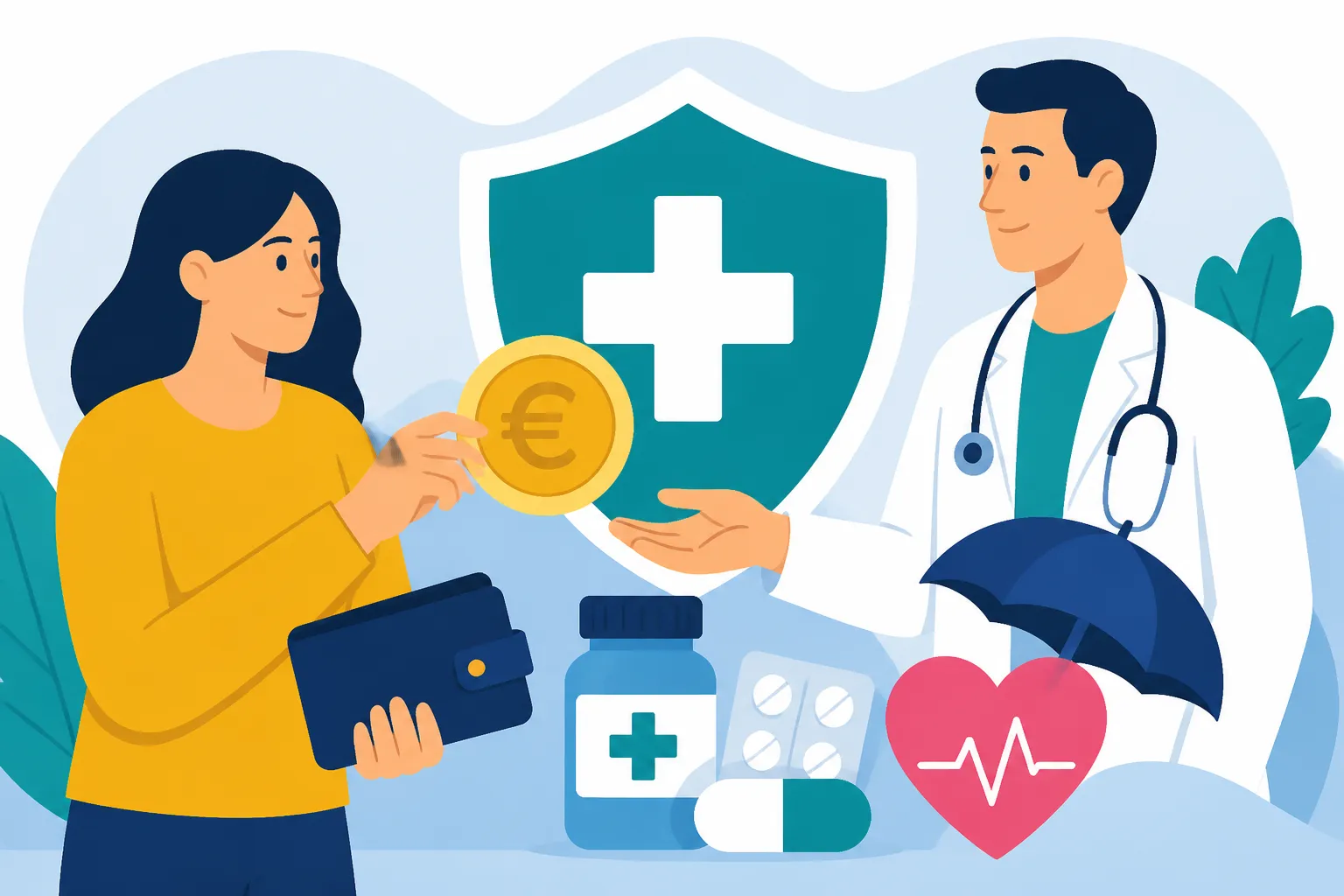
Co-Payments and Costs in Germany’s Health System (Zuzahlung)
Walking into a German pharmacy for the first time with a valid health insurance card and still being asked to pull out your wallet is a confusing rite of passage for every newcomer. I clearly remember standing at the counter in Berlin, bewildered as to why my "comprehensive" insurance required an extra five euros for a standard antibiotic. This guide breaks down the often-hidden world of Zuzahlung to ensure you never feel blindsided by medical costs again.
Disclosure: This post may contain affiliate links. We may earn a commission at no extra cost to you if you make a purchase through these links. Read full disclosure.
Understanding the German Healthcare Cost Structure
When you first arrive in Germany, the sheer efficiency of the medical system can be impressive, but the financial mechanics under the hood are complex. Germany operates on a dual system: Public Health Insurance (Gesetzliche Krankenkasse or GKV) and Private Health Insurance (Private Krankenversicherung or PKV). While your monthly premiums cover the lion's share of your care, the "co-payment" or Zuzahlung is the small amount you pay out of pocket for specific services. This isn't meant to be a barrier to care, but rather a "social participation" fee intended to keep the system sustainable.
Understanding this starts with knowing where you fit. Most expats are in the public system, where costs are standardized by law. However, if you are a high-earner or a freelancer, you might have opted for private coverage. In that case, your relationship with costs changes entirely. Instead of paying a small fee at the pharmacy, you often pay the full bill upfront and seek reimbursement later. Navigating these nuances is essential for your financial health. If you are still in the process of choosing a path, reading up on Health Insurance in Germany: Understanding Public vs Private Coverage can help clarify which system will best serve your budget and lifestyle.
Public vs. Private Insurance Expenses
In the public system, your contributions are deducted directly from your salary, and in exchange, you get a "solidarity" based service. You rarely see a bill. The co-payments are small, fixed amounts that apply to everyone regardless of income. However, these small amounts can add up if you have a chronic condition or require multiple prescriptions. It is a system designed for peace of mind, but it does require you to keep a small "health fund" in your savings for those five-to-ten euro charges that pop up at the dentist or the Apotheke.
Private insurance works differently. It is more of a bespoke service. Brands like ottonova have revolutionized this space for expats by offering digital-first interfaces that make understanding your costs much simpler. In the private world, you might have a Selbstbehalt (deductible). This is an annual amount you agree to pay out of pocket before the insurance kicks in. It can range from zero to several hundred euros. For expats who are only here for a short stint or are digital nomads, a provider like SafetyWing can offer more flexible, cost-effective solutions that bridge the gap between traditional German insurance and travel coverage. The key difference is that while public insurance co-pays are mandatory and fixed, private insurance costs are highly dependent on the specific plan you sign up for.
The Concept of Zuzahlung
The term Zuzahlung literally translates to "additional payment." It is the legal requirement for adults in the public system to contribute to the cost of medications, hospital stays, and certain therapeutic treatments. The most important thing I learned in my first year here was to keep every single receipt for these payments. Why? Because there is a "cap" on how much you have to pay. Once your total Zuzahlung for the year exceeds 2% of your gross annual income (or 1% if you are chronically ill), you can be exempted for the rest of the year.
This system is a safety net within a safety net. It ensures that while everyone contributes a bit, no one is bankrupt by their medical needs. If you are managing your finances as an expat, this is a critical piece of the puzzle. It’s not just about the monthly premium you see on your payslip; it’s about the "incidental" costs of being human. For a deep dive into what is typically covered before these co-pays even start, check out Public Health Insurance (gesetzliche Krankenkasse): What It Covers and Costs. Understanding these basics will help you spot when a charge is a standard co-payment and when a doctor might be offering you a "private" service (IGeL) that isn't covered at all.
The Most Common Co-Payments for Publicly Insured
For those in the public system, which includes the majority of expats working for German companies, the co-payments are quite predictable. The German government sets these rates, so whether you are with TK, AOK, or Barmer, the rules remain the same. Generally, anyone over the age of 18 must pay these fees. Children and adolescents are almost always exempt from Zuzahlung, which is a massive relief for expat parents.
The logic behind the co-payment is usually "10% of the cost, with a minimum of 5 Euros and a maximum of 10 Euros." This means if a medication costs 15 Euros, you pay 5 Euros. If it costs 80 Euros, you pay 8 Euros. If it costs 500 Euros, you pay 10 Euros. It is a very fair way to distribute the burden of high-cost medications. However, it applies to more than just pills. You will encounter it at the hospital, at the physiotherapist, and even when getting a new pair of orthopedic insoles.
Prescriptions and Pharmacy Costs
The pharmacy, or Apotheke, is where you will most frequently encounter the co-payment system. When a doctor gives you a "pink" prescription (the standard one for GKV), the pharmacist will calculate your fee at the register. It is important to distinguish between "prescription" drugs and "over-the-counter" (OTC) drugs. If you want ibuprofen for a headache and buy it without a prescription, you pay the full retail price. If your doctor prescribes it, you pay the co-payment.
Sometimes, you might be asked to pay more than 10 Euros. This happens when there is a "fixed-price" agreement between the insurance companies and the manufacturers. If a drug costs more than the insurance is willing to pay, you might have to pay the difference plus the co-payment. This is where a knowledgeable pharmacist is your best friend—they can often suggest a generic version that falls within the insurance price cap. For more practical advice on navigating these situations, see Navigating Medical Care in Germany: Doctors, Hospitals, and Pharmacies. Knowing how to communicate with your pharmacist can save you a surprising amount of money over the course of a year.
Hospital Stays and Inpatient Care
If you find yourself needing to stay in a hospital overnight, there is a flat-rate co-payment of 10 Euros per calendar day. This is essentially a contribution towards the "room and board" (meals, laundry, and the bed). This fee is capped at 28 days per calendar year. This means the absolute most you would pay for a hospital stay in a single year is 280 Euros, even if you are there for months.
I remember when a friend of mine was hospitalized for a week after a cycling accident. He was terrified of the bill, having come from a country where a hospital stay can cost as much as a small car. When the bill for 70 Euros arrived in the mail weeks later, he thought it was a mistake. It wasn’t. That is the beauty of the German system—it protects you from the catastrophic costs of Medical Emergencies: What to Do and Where to Go in Germany. Just keep in mind that this only applies to standard care. If you want a private room or a senior physician (Chefarzt) to treat you, you will need either private insurance or a supplemental plan.
Physiotherapy and Medical Aids
Another area where co-payments are standard is for "remedial" treatments like physiotherapy, occupational therapy, or speech therapy. For these, the rule is 10 Euros per prescription (the piece of paper from the doctor) plus 10% of the cost of the actual treatment sessions. Since a single prescription usually covers six sessions, you’ll pay the 10 Euro fee once, plus 10% of the total value of those six visits.
For medical aids—things like bandages, hearing aids, or wheelchairs—the same 10% rule applies, with the 5 to 10 Euro range. However, for "consumable" aids (like incontinence products), the co-payment is capped at 10 Euros per month. This can get expensive if you need long-term therapy or specialized equipment. Providers like Feather Insurance often help expats navigate these specifics, offering guidance on whether you might need supplemental insurance to cover the "extra" costs that public insurance doesn't touch, such as high-end dental work or premium medical aids.
Managing Costs in Private Health Insurance (PKV)
Switching to private insurance feels like entering a different world. It is highly efficient, often provides faster access to specialists, and the facilities are often more modern. However, the cost management is entirely in your hands. You become a "private patient," which means you are the one responsible for the bills initially. You receive an invoice, you pay it, and then you submit it to your insurance provider for reimbursement.
For expats, this can be a bit of a culture shock. In the public system, you just show your card. In the private system, you have to be organized. You need to understand your policy's fine print to know if a specific treatment is covered at 100% or 80%. Digital-forward companies like ottonova have made this significantly easier by allowing you to scan and upload bills via an app, often getting your money back within days. This transparency is vital when you are trying to manage a household budget in a foreign currency.
The Reimbursement Model
In the private system, every time you visit a doctor, you will receive a bill in the mail a few weeks later. These bills are calculated using the Gebührenordnung für Ärzte (GOÄ), a complex points-based system. It can be intimidating to receive a 200 Euro bill for a 15-minute consultation. This is why Understanding German Medical Bills: Decoding Private Invoices and Co-Pays is so important. You need to check the bill for accuracy before paying it.
Once you pay the doctor, you send the receipt to your insurance. Most modern insurers don't require paper mail anymore; an app upload is standard. Depending on your plan, you might get the full amount back. Some plans from Feather Insurance or ottonova are specifically designed for expats to ensure that the reimbursement process is as smooth as possible, often providing support in English to explain why a certain line item on a bill might not have been fully covered. It requires a bit more "admin" work than the public system, but it often results in much higher levels of service.
Deductibles (Selbstbehalt)
The biggest factor in your out-of-pocket costs in private insurance is your deductible or Selbstbehalt. This is the amount you agree to pay per year before the insurance pays a cent. For example, if you have a 500 Euro deductible, you will pay for your own dental cleanings, prescriptions, and GP visits until you have spent 500 Euros. Only after that will the insurance start reimbursing you.
Why would anyone choose this? Because a higher deductible significantly lowers your monthly premium. If you are young, healthy, and rarely go to the doctor, a high deductible can save you thousands of euros over a few years. However, you must have that deductible amount sitting in a savings account just in case. For those who want something in between, SafetyWing offers nomad-friendly insurance that handles costs differently, often with lower barriers to entry for those moving between countries frequently. Choosing the right deductible is a balancing act between your current cash flow and your long-term risk.
| Service Category | Public Insurance (GKV) Co-pay | Private Insurance (PKV) Typical Cost |
|---|---|---|
| Prescription Drugs | 10% (Min €5, Max €10) | 0% to 20% (Depending on plan) |
| Hospital Stay | €10 per day (Max 28 days) | Covered (Usually 100%) |
| Physiotherapy | €10 fee + 10% of cost | Covered (Usually 100% after deductible) |
| Emergency Visit | Free (with co-pay for meds) | Invoice (Usually €150-€300) |
| Dental Cleaning | Usually out-of-pocket (€80-€120) | Often 100% covered |
| Medical Aids | 10% (Min €5, Max €10) | Covered (Depending on contract) |
Hardship Clauses and Exemptions
Germany is very serious about ensuring that the co-payment system doesn't lead to "poverty due to illness." There are robust systems in place to protect those who are struggling financially or who have very high medical needs. If you find yourself spending a significant portion of your income on Healthcare in Germany: A Comprehensive Guide for Expats, you need to look into the Belastungsgrenze (burden limit).
This limit is generally 2% of your annual gross household income. If you earn 40,000 Euros a year, your cap is 800 Euros. Once your total co-payments for prescriptions, hospital stays, and therapy reach 800 Euros, your health insurance provider will issue you a "Zuzahlungsbefreiung" (exemption card). For the rest of the year, you pay zero. This is why I stress keeping your receipts! Even the 5 Euro ones from the pharmacy.
The 2% and 1% Rules (Chronic Illness)
For those living with a chronic illness, the burden limit is lowered to 1% of your gross annual income. To qualify as "chronically ill" in the eyes of the insurance company, you usually need to have been in treatment for the same illness at least once a quarter for at least a year, and meet one of several other criteria (such as a high level of disability or the need for constant medical care).
Applying for this lower limit can save you a lot of money if you have expensive ongoing prescriptions. You will need your doctor to fill out a specific form confirming your status. Once approved, your insurance company will recalculate your limit. If you have already paid more than 1% of your income in co-payments, they will actually refund you the difference. It is a bit of paperwork, but it’s a lifesaver for long-term residents. For more on managing long-term care, you can read about Medical Records in Germany: Keeping Track of Your Health Documents to stay organized for these applications.
Exemptions for Children and Low Income
As mentioned earlier, children under 18 are almost entirely exempt from all co-payments. This includes medications, hospital stays, and most medical aids. The only exception is usually for travel vaccinations or certain orthodontic treatments where you might pay upfront and get a refund upon completion of the treatment.
For those on low income, such as students or those receiving unemployment benefits (Bürgergeld), the 2% limit still applies, but it is calculated based on a "standard" minimum income level determined by the government, rather than your actual (potentially zero) income. This means the cap for someone on benefits is usually quite low, around 100-120 Euros per year. Once you hit that, your healthcare becomes effectively free. Understanding these rules is a key part of Healthy Living in Germany: Wellness, Fitness, and Mental Health Guide, as financial stress is a major component of overall well-being.
Practical Tips to Reduce Out-of-Pocket Expenses
Even if you aren't eligible for a hardship exemption, there are plenty of ways to minimize what you spend on healthcare in Germany. The system is designed with many "hidden" ways to save money, provided you know where to look. From choosing the right pharmacy to participating in insurance "bonus programs," being a proactive patient pays off—literally.
One of the best things you can do is talk to your doctor about Zuzahlungsbefreite Medikamente (medications exempt from co-payment). There is actually a list of several thousand drugs for which the manufacturers have lowered the price so much that the insurance companies waive the 5-10 Euro co-payment entirely. Your doctor can often see this in their system and prescribe the "free" version of a standard drug if it’s appropriate for your condition.
Generic vs. Brand Name Drugs
In Germany, the pharmaceutical market is highly regulated. Generic drugs (Nachahmerpräparate) are required to have the exact same active ingredients and efficacy as their brand-name counterparts. When you take your prescription to an Emergency Pharmacy Finder: Getting Medicine After Hours in Germany, the pharmacist is often legally obligated to offer you one of the cheapest versions available.
Always ask: "Gibt es ein zuzahlungsfreies Medikament?" (Is there a co-payment-free medication?). Even if it’s not free, a generic version will almost always be cheaper. This is particularly important for common items like allergy medication or basic painkillers. Also, keep an eye out for Understanding Apotheke Signs: Green Crosses and Night Service Indicators so you know when you might have to pay an extra "emergency fee" for late-night service, which is usually around 2.50 Euros.
Bonus Programs and Preventive Care
Most public health insurance companies offer "Bonushefte" (bonus booklets) or digital apps where you can collect points for healthy activities. Getting your teeth cleaned, going to your annual skin cancer screening, being a member of a gym, or getting your flu shot can all earn you points. These points can then be converted into cash or used to offset your co-payments.
I have managed to get over 100 Euros back from my insurance company just by uploading proof of my dental checkup and my gym membership. It’s essentially the insurance company paying you to stay healthy. Additionally, many insurers will cover 80-100% of the cost of "prevention courses," such as yoga, back health, or nutrition classes. Taking advantage of these not only keeps you fit but also reduces the likelihood of needing expensive treatments later. For a deeper look at the various providers available to help you manage these benefits, exploring the offerings from Feather Insurance or ottonova can provide a clearer picture of how modern insurance works in your favor.
Essential Reminders for the Expat Patient
As you navigate the German medical landscape, remember that the co-payment system is a fixed part of life here, but it is one that rewards organization. If you take away only three things from this guide, let them be these: save your receipts, ask for generics, and know your 2% limit. The bureaucracy can be frustrating, but the protections it offers are among the best in the world.
Whether you are here for a year or a lifetime, getting a handle on these costs will make your experience much smoother. If you are ever unsure about a charge, don't be afraid to ask for a "Quittung" (receipt) and check it against your policy. And if you are still looking for that perfect insurance fit, remember that specialized providers like ottonova, Feather Insurance, and SafetyWing are designed specifically to help expats like us handle the transition without the financial headache.
Disclaimer
The information provided in this article is for informational purposes only and does not constitute legal, financial, or professional medical advice. While we strive to keep the information up to date and correct, German healthcare laws and insurance regulations are subject to frequent changes. Always consult with an official insurance representative, a qualified tax advisor, or a legal professional regarding your specific situation and coverage. For a detailed understanding of your rights and obligations, refer to the official documentation provided by your Krankenkasse or insurance provider.