US-Domiciled ETFs From Germany: The MiFID II Problem for Americans
If you're an American living in Germany, chances are you've already experienced the unique frustration that comes with managing your finances across two complex tax systems. But add investing to the mix, specifically trying to buy US-domiciled Exchange Traded Funds (ETFs) through a German or even EU-based broker, and you'll quickly hit a wall. This isn't just a minor hurdle; it's a significant regulatory roadblock known as MiFID II, and it leaves many US expats scratching their heads and wondering how on earth they're supposed to invest without incurring a nightmare of tax implications. This guide will meticulously break down the MiFID II problem for Americans in Germany, explain the underlying issues, and most importantly, show you how professional services like Taxes for Expats can be your guiding light through this intricate financial maze.
Disclosure: This post may contain affiliate links. We may earn a commission at no extra cost to you if you make a purchase through these links. Read full disclosure.
The Frustrating Reality of Investing as a US Expat in Germany
Moving to Germany brings so much excitement – new culture, new adventures, new everything! But then you try to get your financial life in order, and suddenly you discover that what was easy back home is now virtually impossible. For American expats, the world of investing, particularly in common instruments like ETFs, becomes a minefield. It’s a classic case of regulations designed with good intentions creating unforeseen complications for a specific group of people – in this case, us.
What is MiFID II and Why Does it Matter to You?
Let’s start with the culprit: MiFID II. This isn't some obscure German law designed to annoy foreigners; it's the Markets in Financial Instruments Directive II, a European Union-wide regulation that came into effect in 2018. Its primary goal is to increase transparency across financial markets in the EU and, crucially, to strengthen investor protection. Sounds great, right? More protection for investors is always a good thing.
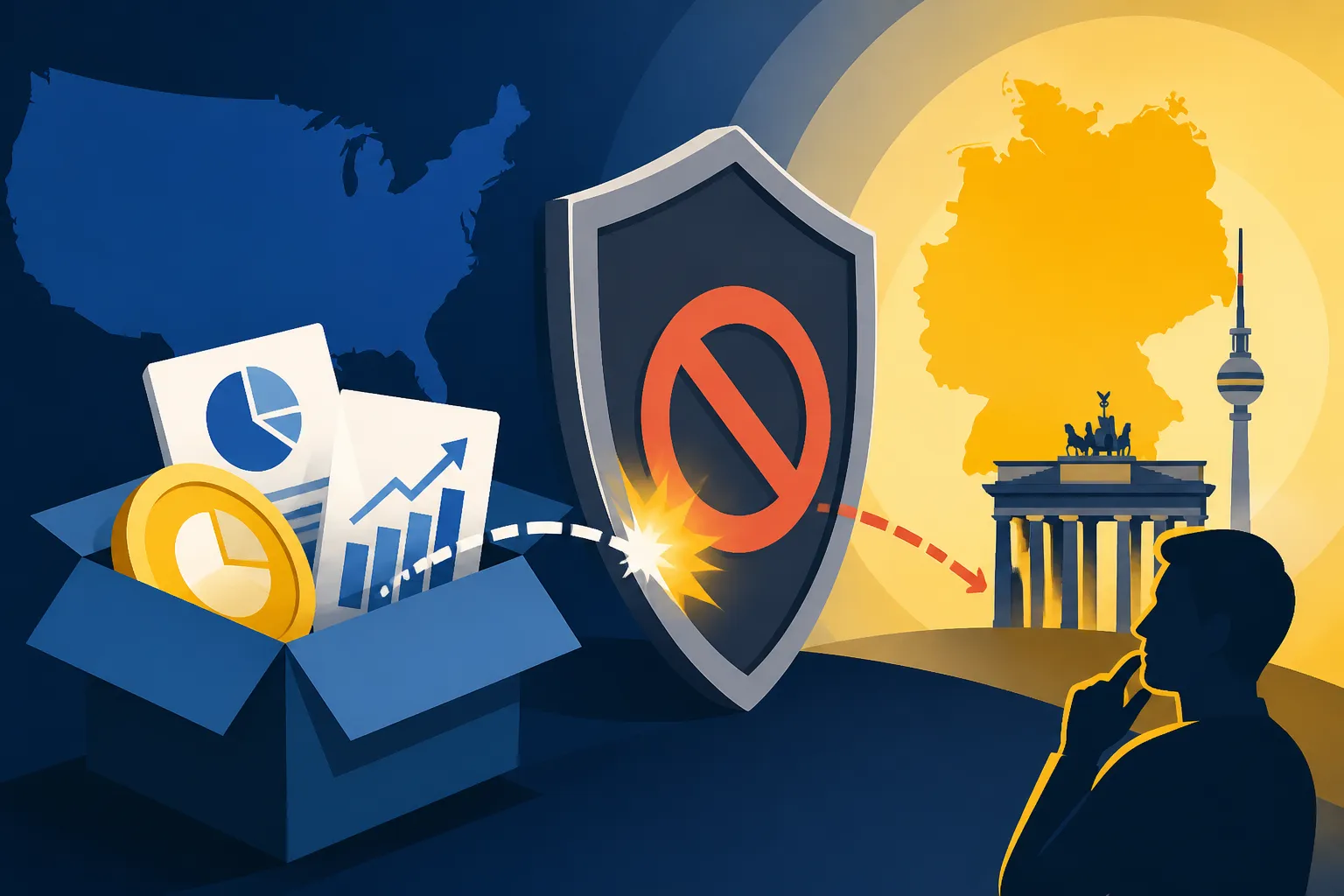
The issue for US expats, however, lies in one specific aspect of this directive: the requirement for a "Key Information Document" (KID) for what are called Packaged Retail and Insurance-based Investment Products (PRIIPs). A KID is a standardized, easy-to-understand document that clearly outlines the risks, costs, and potential returns of an investment product. It's supposed to help everyday investors make informed decisions. The problem is, many US-domiciled ETFs, and other American investment funds, simply haven't bothered to create these KIDs specifically for the European market. From their perspective, the administrative burden of complying with EU regulations for what is a relatively small segment of their investor base (EU retail investors) isn't worth it. This leaves you, the American expat in Germany, in a frustrating bind. You're considered a "retail investor" by EU standards, and without that KID, EU financial institutions are legally prohibited from selling you these products. It feels like a Catch-22, doesn't it? You want to invest in products that are tax-efficient for US citizens, but EU rules make them inaccessible.
Why US-Domiciled ETFs Are Problematic
The cornerstone of many American investment portfolios, especially for long-term growth and diversification, is often low-cost, broadly diversified ETFs. These funds track indices like the S&P 500 or global markets, offering a simple and efficient way to invest. For US citizens, holding these US-domiciled ETFs is generally straightforward from a tax perspective, as they are not considered Passive Foreign Investment Companies (PFICs) by the IRS – a designation that comes with incredibly onerous reporting requirements and punitive tax rates. More on PFICs later, but suffice to say, avoiding them is paramount for US expats.
The crux of the problem arises when you live in Germany. When you try to buy these very same US-domiciled ETFs through any broker operating under EU jurisdiction, they'll likely refuse. Why? Because those US ETFs don't have the MiFID II-mandated KIDs. Your German bank or brokerage, acting entirely within EU law, simply cannot offer them to you. This means that even if you have a significant chunk of your savings you want to invest, your options become severely limited if you want to stick with the familiar, US-tax-efficient instruments you know. Many expats find themselves staring at a trading platform only to see "unavailable for purchase" or outright blocked trades, which can be incredibly disheartening. If you already owned these ETFs before moving to Germany, the situation can be even more confusing, as some brokers might allow you to hold or even sell them, but certainly not buy more.
Understanding the MiFID II Restrictions on US ETFs
It's not enough to know there's a problem; understanding why this problem exists is crucial for navigating it. The European Union, with MiFID II and the related PRIIPs regulation, has created a robust framework for investor protection. While well-intentioned, it has undeniably created a headache for non-EU investment products that haven't adapted to these specific requirements.
The PRIIPs Regulation and Key Information Documents (KIDs)
The PRIIPs Regulation (Packaged Retail and Insurance-based Investment Products) is the specific legislation under MiFID II that demands the Key Information Document (KID). Think of a KID as a standardized label, much like nutrition facts on food, but for investment products. It must be short, clear, and provide comparable information on:
- What the product is
- What the risks are
- What the costs are
- How it might perform under different scenarios
For EU retail investors, this is a significant step forward, offering transparency and enabling easier comparison between various investment products like investment funds, structured products, and certain types of insurance policies. However, herein lies the rub for US-domiciled ETFs: most US fund providers have simply not produced these KIDs for their US-based products for the European market. Why would they? The cost of compliance, translation, and ongoing updates for a market segment that represents a tiny fraction of their overall assets under management is often deemed uneconomical.
This business decision by US fund providers directly impacts you. Your broker in Germany, whether it's a traditional bank like Deutsche Bank or a digital platform, is legally bound by EU regulations. If they can't provide you with a KID for a specific product, they cannot, by law, sell that product to you, a "retail investor" in the EU. This isn't them being difficult; it's them complying with a strict regulatory environment designed to protect investors.
How Brokers and Banks Enforce the Ban
The enforcement of these MiFID II rules by brokers and banks in Germany is quite uniform and, for many expats, quite frustratingly absolute. When you try to place an order for a US-domiciled ETF that lacks a KID, you'll typically encounter an error message, a blocked trade, or simply find the product isn't listed as available for purchase on the platform at all. This applies to almost all financial institutions operating within the EU, even those with an international focus.
What does this mean in practice? It means your options for purchasing new US-domiciled ETFs are essentially nil if you're trying to do it through a German-regulated entity. Many brokers explicitly state on their websites or in their terms and conditions that they cannot offer non-EU PRIIPs to EU retail clients. This isn't just about buying; it can also affect transfers. While some brokers might allow you to hold existing US-domiciled ETFs you transferred from a non-EU account, and even sell them, they won't let you buy more or transfer new ones in. The policy can vary slightly from broker to broker, but the general principle remains: no KID, no trade for retail investors. This leaves many feeling like their hands are tied, unable to pursue their preferred, US-tax-efficient investment strategy from their new home in Germany.
The Tax Implications: Why This Gets Even More Complicated
Now, if the MiFID II problem wasn't enough of a headache, let's layer on the tax implications. For US expats, tax planning is already a multi-dimensional chess game, trying to balance US citizenship-based taxation with German residency-based taxation. Throw in investment choices, and it becomes truly complex. This is precisely why specialized guidance from Taxes for Expats professionals is not just helpful, but often essential.
US Tax Obligations for Expats (FATCA and PFICs)
The US has a unique system of "citizenship-based taxation," meaning that if you're a US citizen, you're generally required to file US tax returns and report your worldwide income, no matter where you live. This already sets American expats apart from most other nationalities who only pay taxes in their country of residence. Add to this the Foreign Account Tax Compliance Act (FATCA), which requires foreign financial institutions (like your German bank) to report financial accounts held by US persons to the IRS. This transparency means Uncle Sam knows about your German accounts, whether you like it or not.
But the real monster in the closet for US expats investing abroad is the Passive Foreign Investment Company (PFIC) rule. This insidious piece of legislation was designed to prevent US citizens from deferring taxes by investing in passive foreign corporations. However, it inadvertently captures most non-US mutual funds and, crucially for our discussion, many EU-domiciled ETFs (UCITS funds). If an investment is classified as a PFIC, the reporting requirements are incredibly burdensome (Form 8621, often requiring professional help), and the tax treatment is punitive, often leading to significantly higher taxes than on regular investments, with interest and penalties for any "excess distributions" or gains. This is why US expats desperately try to avoid PFICs. US-domiciled ETFs are not PFICs, which is why they are often the preferred investment vehicle for Americans abroad. The MiFID II ban directly prevents access to these non-PFIC, tax-efficient options, forcing expats into a dilemma. Navigating these rules requires expert knowledge, making a service like Taxes for Expats invaluable for proper compliance and strategic planning.
German Tax Considerations for Investments
On the German side, you're also subject to their investment tax rules. Germany has an Abgeltungsteuer (flat capital gains tax) on investment income, which is currently a specific percentage plus the Solidaritätszuschlag (solidarity surcharge), and potentially Kirchensteuer (church tax) if you're registered with a church.
For German-domiciled or EU-domiciled funds, the tax treatment generally depends on whether they are "distributing" or "accumulating" funds. Distributing funds pay out dividends and capital gains, which are then taxed. Accumulating funds reinvest these earnings, but Germany still often taxes a Vorabpauschale (advanced lump sum) annually, an imputed gain on the fund's value, even if you haven't sold it. This pre-taxation is then offset against future gains when you eventually sell the fund.
The critical challenge here for US expats is that the ideal investment product for German tax purposes (e.g., a German or EU-domiciled UCITS ETF with specific features) often turns into a PFIC nightmare for US tax purposes. Conversely, the ideal product for US tax purposes (a US-domiciled ETF) is now largely unavailable due to MiFID II. This creates a deeply frustrating situation where optimizing for one country's tax system inevitably complicates the other. Trying to unravel this Gordian knot of regulations on your own is a recipe for stress and potential financial penalties. This is where a knowledgeable Taxes for Expats specialist truly shines, helping you understand the German rules and how they intersect (or collide) with your US obligations.
| Feature | US-Domiciled ETFs (e.g., SPY, VOO) | EU-Domiciled UCITS ETFs (e.g., VUAA, EUNL) |
|---|---|---|
| MiFID II Compliant? | No (No KID for EU retail investors) | Yes |
| Accessible in Germany? | Generally No (for new purchases by retail) | Yes |
| PFIC for US Expats? | No (generally preferred by US citizens) | Yes (usually a PFIC nightmare) |
| German Tax Treatment | Can be complex, depends on broker/reporting | Standard Abgeltungsteuer + Vorabpauschale |
| Reporting for US | Simpler (Form 8938 for FATCA) | Highly complex (Form 8621 for PFIC) |
| Costs/Liquidity | Often lower fees, higher liquidity | Potentially higher fees, less liquidity |
| Investment Options | Broad, diverse range of US market funds | Broad range of EU/global market funds |
| Overall Complexity | High (due to inaccessibility) | High (due to PFIC reporting for US) |
Navigating the Investment Landscape: Strategies for US Expats
So, what's a US expat in Germany to do? Feeling caught between a rock and a hard place is a common sentiment. While there isn't a single magic bullet, there are various strategies and considerations you can explore to continue building your wealth, even within these restrictive parameters. It often requires creativity and, let's be honest, professional guidance.
The "Accredited Investor" Loophole
MiFID II's strict requirements primarily apply to "retail investors." The regulation does have provisions for "professional clients" or "eligible counterparties," often referred to as "accredited investors" in other contexts. If you can qualify as one of these, some of the restrictions might be lifted, potentially allowing you access to a broader range of investment products.
However, the criteria for being classified as a professional client in the EU are quite stringent and out of reach for most expats. Generally, you need to meet at least two of the following three criteria:
- Portfolio Size: You must hold a financial instrument portfolio (including cash) exceeding €500,000.
- Transactions: You must have carried out transactions of significant size (at least €20,000) on the relevant market with an average frequency of 10 per quarter over the previous four quarters.
- Professional Experience: You must work or have worked in the financial sector for at least one year in a professional position that requires knowledge of the transactions or services envisaged.
As you can see, this isn't a simple workaround for the average expat. While it's technically a "loophole," it's more like a very narrow, high-hurdle gate for a select few. For the vast majority, trying to qualify as an accredited investor is not a realistic solution.
Alternative Investment Options Available in Germany
Given the difficulties, many US expats explore alternative avenues for their investments:
- EU-Domiciled ETFs (UCITS Funds): These funds are MiFID II compliant and readily available through German brokers. They track various indices, just like their US counterparts, but are structured under EU regulations.
- Pros: Easy to buy and sell, wide variety of options, perfectly compliant with German regulations.
- Cons: This is where the PFIC issue rears its ugly head for US taxpayers. Most UCITS funds are considered PFICs by the IRS, leading to those punitive tax treatments and complex Form 8621 reporting. This means while they are easy to buy, they are often a tax nightmare for Americans.
- Direct Stock Investments: Investing directly in individual stocks, whether German, EU, or even US stocks, is generally not subject to the same MiFID II/PRIIPs restrictions. You can typically buy shares of companies like Siemens, BMW, Apple, or Google through your German brokerage account.
- Pros: No MiFID II KID issue for individual stocks, no PFIC issue for US-listed companies.
- Cons: Lack of diversification (unless you buy many stocks), higher risk than a diversified ETF, requires more research and active management. For truly broad market exposure, you'd need to build your own portfolio of hundreds of stocks, which is impractical for most.
- Real Estate: Germany offers opportunities for real estate investment, though it comes with its own set of complexities, capital requirements, and illiquidity. It's a very different asset class than a stock market ETF.
- Private Equity or Specific Investment Products: Some niche private investment opportunities might exist, but these usually require significant capital, are illiquid, and come with their own regulatory hurdles.
The challenge is evaluating these alternatives not just for their investment potential, but for their combined US and German tax efficiency. A seemingly straightforward investment in Germany can become incredibly complicated once the IRS gets involved. This is precisely where professional advice from Taxes for Expats becomes invaluable, helping you understand the tax consequences of each alternative before you commit.
Brokerage Solutions for US Expats in Germany
Finding a brokerage that will cater to US expats in Germany is a bit like searching for a unicorn – they exist, but they are rare and often come with caveats. The landscape is constantly changing as regulations tighten.
- US-Based Brokers (with a catch): Some US-based brokers might still allow US citizens residing abroad to maintain accounts. However, many have tightened their policies, especially concerning clients living in the EU, due to MiFID II and other compliance burdens. It's becoming increasingly difficult to open new accounts or even maintain existing ones if your EU address is known. If you manage to find one that still serves you, these would typically allow you to invest in US-domiciled ETFs without the MiFID II issue. The challenge then shifts to how easily you can transfer funds from Germany to these US accounts and whether the US broker will report your activity to Germany (which they usually don't, meaning you still have to report everything manually to the Finanzamt).
- Specialized Brokers/Advisors: A small number of financial advisors and brokers specialize in serving US expats in Germany. They might have bespoke solutions or access to specific platforms that are compliant. These services often come with higher fees but offer the peace of mind of compliance on both sides of the Atlantic.
- "Professional Investor" Accounts: As mentioned, if you meet the extremely high thresholds for a professional investor, some brokers might offer you access. This is generally not a viable route for the vast majority of expats.
The complexities of finding a suitable broker that understands both MiFID II and US tax law, while allowing you to invest in a tax-efficient manner, cannot be overstated. This is a crucial area where the expertise of a service like Taxes for Expats can provide clarity and actionable strategies, helping you navigate the options and avoid potential pitfalls.
The Role of Expert Advice and "Taxes for Expats"
Let's face it, trying to figure all of this out on your own is not just difficult, it's virtually impossible for anyone not deeply embedded in both US and German tax and investment law. The financial landscape for US expats in Germany is incredibly complex, fraught with regulatory traps and potentially expensive mistakes. This is where professional guidance moves from a luxury to an absolute necessity.
Why DIY is Not Recommended
The temptation to "just figure it out" or "I'll do my own research" is strong, especially if you're used to managing your own finances. However, for US expats in Germany, the stakes are simply too high for a DIY approach when it comes to investments.
- Dual-Country Tax Laws: You're not just dealing with one set of tax laws, but two – and they often contradict or interact in unexpected ways. What's tax-efficient in the US might be a disaster in Germany, and vice-versa.
- PFIC Reporting: The Passive Foreign Investment Company (PFIC) rules for US taxes are notoriously complex. Mismanaging PFIC reporting can lead to punitive tax rates, interest, and penalties that can severely erode your investment gains. Many tax professionals in the US don't even fully understand PFIC, let alone the interaction with German investment rules.
- MiFID II Compliance: Ignorance of MiFID II is no excuse for brokers. They will simply refuse your trades. And attempting to bypass regulations through unofficial channels could lead to account closures or other issues.
- Risk of Non-Compliance: Mistakes can be costly. The IRS and the German Finanzamt are not shy about levying fines and penalties for incorrect or incomplete filings. An audit in either country is a nightmare you want to avoid.
- Emotional Toll: The constant worry about doing something wrong, missing a deadline, or incurring unforeseen taxes can be incredibly stressful. Expats already deal with so much administrative burden; your investments shouldn't add to it.
Trust me, you're not alone in feeling overwhelmed by this. The system isn't designed for easy navigation by individuals, which is precisely why expert help is so crucial.
How "Taxes for Expats" Can Help
This is where a specialized service like Taxes for Expats truly becomes your most valuable asset. These aren't just generic tax advisors; they are professionals who understand the intricate intersection of US and German tax law, specifically for individuals living abroad. They can provide comprehensive solutions, saving you stress, time, and ultimately, money.
Here's how Taxes for Expats can be your ultimate guide:
- Integrated Tax Planning: They provide holistic advice that considers both your US and German tax obligations simultaneously. They can help you structure your investments in a way that minimizes your overall tax burden across both countries, rather than optimizing for one and creating problems for the other.
- MiFID II and Investment Guidance: While they can't magically make US ETFs available, they can guide you on which types of investments are generally compliant with MiFID II and which are less problematic from a US tax perspective. They can help you evaluate EU-domiciled UCITS funds for PFIC implications or suggest alternative non-PFIC investment strategies available through compliant channels.
- PFIC Reporting Expertise: If you do end up with PFICs (which is likely if you invest in EU-domiciled funds), they possess the specialized knowledge to correctly file Form 8621 and other necessary documents, ensuring you stay compliant and avoid punitive taxation as much as possible.
- FATCA Compliance: They ensure all your foreign accounts are correctly reported to the IRS, helping you avoid penalties associated with FATCA non-compliance.
- Optimizing Investment Structures: Beyond just ETFs, they can help you understand the tax implications of other investment vehicles, such as direct stock ownership, retirement accounts (both US and German), or even real estate, so you can make informed decisions.
- Brokerage Navigation: While they don't endorse specific brokers, they often have experience with which platforms or types of accounts are most viable for US expats given the current regulatory environment, saving you countless hours of research and frustration.
Don't let these complex rules derail your financial future. The peace of mind that comes from knowing your investments are being managed in a compliant and tax-efficient manner, advised by specialists who live and breathe this stuff, is truly invaluable. Reach out to a specialist in Taxes for Expats today to ensure your financial journey in Germany is as smooth as possible.
Disclaimer
This article is for general informational purposes only and does not constitute professional advice. Laws, prices and regulations vary by location and change over time. Consult a qualified professional for guidance on your specific situation.