Berghutten and Mountain Huts: How Booking Works in the German Alps
Oh, the call of the German Alps! If you've spent any time here, you know there's nothing quite like trading the city bustle for crisp mountain air and panoramic views. But for many expats and tourists, the dream of staying in an authentic Berghütte (mountain hut) can quickly turn into a bureaucratic nightmare of confusing websites and German-only booking forms. Fear not, fellow adventurers! This guide will cut through the alpine fog and show you exactly how to book these magical retreats, making your high-altitude dreams a reality, especially by leveraging the global ease of platforms like Booking.com.
Disclosure: This post may contain affiliate links. We may earn a commission at no extra cost to you if you make a purchase through these links. Read full disclosure.
The Allure of Berghütten: Why Huts are a Must-Try Experience
There's something uniquely German, and profoundly European, about the tradition of Berghütten or Alpenhütten. These aren't just rustic hotels; they are vital waypoints for hikers, climbers, and nature lovers, offering refuge, sustenance, and a hearty dose of camaraderie high above the valleys. If you've ever dreamt of waking up to a sunrise over a sea of peaks, stepping outside directly onto a hiking trail, and sharing stories with fellow adventurers over a steaming bowl of Goulashsuppe, then a mountain hut stay is an absolute must.
More Than Just Accommodation: The Hütten Culture
Staying in a Berghütte is an experience in itself, far removed from the anonymity of a typical hotel. It's about stripping back to basics, appreciating simple comforts, and embracing a shared spirit of adventure. You'll often find communal sleeping arrangements in Matratzenlager (dormitories), with basic washing facilities, and a common dining area where everyone gathers to eat, drink, and chat. The food is usually hearty, traditional, and exactly what you need after a long day of hiking – think local cheeses, smoked meats, and carb-rich meals. It’s a chance to disconnect from digital life and truly immerse yourself in the natural surroundings, often with no phone signal or Wi-Fi to distract you. This unique, down-to-earth atmosphere is a cornerstone of the German mountain experience and something everyone should try at least once.
The Hüttenwirte (hut keepers) are often the heart and soul of these places, managing everything from cooking to logistics, and sharing local knowledge with guests. They create an incredibly welcoming environment, despite the occasional language barrier for non-German speakers. It’s a place where shared experiences trump individual luxuries, fostering a sense of community that you rarely find elsewhere. Imagine evenings spent playing cards, sipping local schnapps, and gazing at star-filled skies unmarred by city lights – that’s the essence of Hütten culture. You'll find that these huts are strategically placed along popular hiking routes, making them perfect for multi-day treks where you can truly escape into the wilderness and embrace slow travel in Germany.
Who Are Berghütten For?
Berghütten cater to a wonderfully diverse crowd, reflecting the universal appeal of the mountains. Primarily, they are a haven for hikers and mountaineers, providing essential overnight stops on challenging multi-day treks or comfortable bases for exploring specific peaks. Whether you’re tackling the famous Watzmann ascent in Berchtesgaden or simply enjoying a leisurely walk through the Bavarian foothills, there's a hut for you. Many huts are also accessible via shorter, less strenuous walks, making them perfect for families with children who want to introduce their little ones to the joys of mountain life without committing to extreme challenges. The varying levels of accessibility mean that while some huts require serious climbing prowess, others are practically reachable by a scenic stroll, often marked clearly on local trail maps.
Beyond the active types, Berghütten are also for anyone seeking a unique escape from the ordinary. Perhaps you're a photographer chasing the perfect alpine sunrise, a writer looking for solitude and inspiration, or simply someone who craves a digital detox in a breathtaking natural setting. The German Alps offer an incredible array of landscapes, from gentle rolling hills to jagged, dramatic peaks, and the huts are sprinkled throughout these diverse terrains. From the picturesque surroundings of the Allgäu to the dramatic vistas of the Bavarian Alps, these huts provide an unparalleled connection to nature. Even if you're not an experienced hiker, many of these huts are reachable by cable car or short, well-maintained paths, making the experience accessible to a broader audience.
Navigating the Booking Labyrinth: Traditional vs. Online
Booking a Berghütte can feel a bit like cracking a secret code, especially if you're used to instant online reservations. Traditionally, the system has been steeped in local customs and affiliations, which can be confusing for newcomers. However, the world is evolving, and with it, the options for securing your spot in the clouds. Understanding both the traditional avenues and the increasingly convenient modern solutions will help you plan your perfect mountain getaway. This is where modern platforms like Booking.com really come into their own, simplifying what used to be a rather opaque process for international visitors.
The Traditional Way: DAV and Alpine Club Huts
Many of the most popular and well-located Berghütten in the German Alps are operated by the Deutscher Alpenverein (DAV), the German Alpine Club, or one of its regional sections. These huts are often rustic, well-maintained, and strategically placed for serious mountaineering. Booking a DAV hut traditionally involves contacting the hut keeper directly, often by phone or email, which can be daunting if your German isn't up to par. You might need to navigate websites that are entirely in German, understand specific hut rules, and be prepared for less-than-instant confirmation. Membership in the DAV offers significant benefits, including discounted overnight stays, preferential booking, and even certain insurance coverages.
While the DAV system is fantastic for seasoned German hikers, it can present a formidable barrier for expats. Imagine trying to explain your booking needs over the phone in German, only to be met with quick-fire questions about your DAV membership number or specific arrival times. It's not impossible, but it certainly adds a layer of stress to what should be a relaxing experience. For those contemplating multi-day treks, understanding how to read and use the DB Navigator App in Germany can help you reach the more remote trailheads, but the booking of the huts themselves often remains a challenge. If you're passionate about delving deep into German mountain culture, learning some key phrases for communication might be worthwhile, as explained in resources on German Language and Everyday Communication for Visitors.
The Modern Solution: Simplifying Your Search with Booking.com
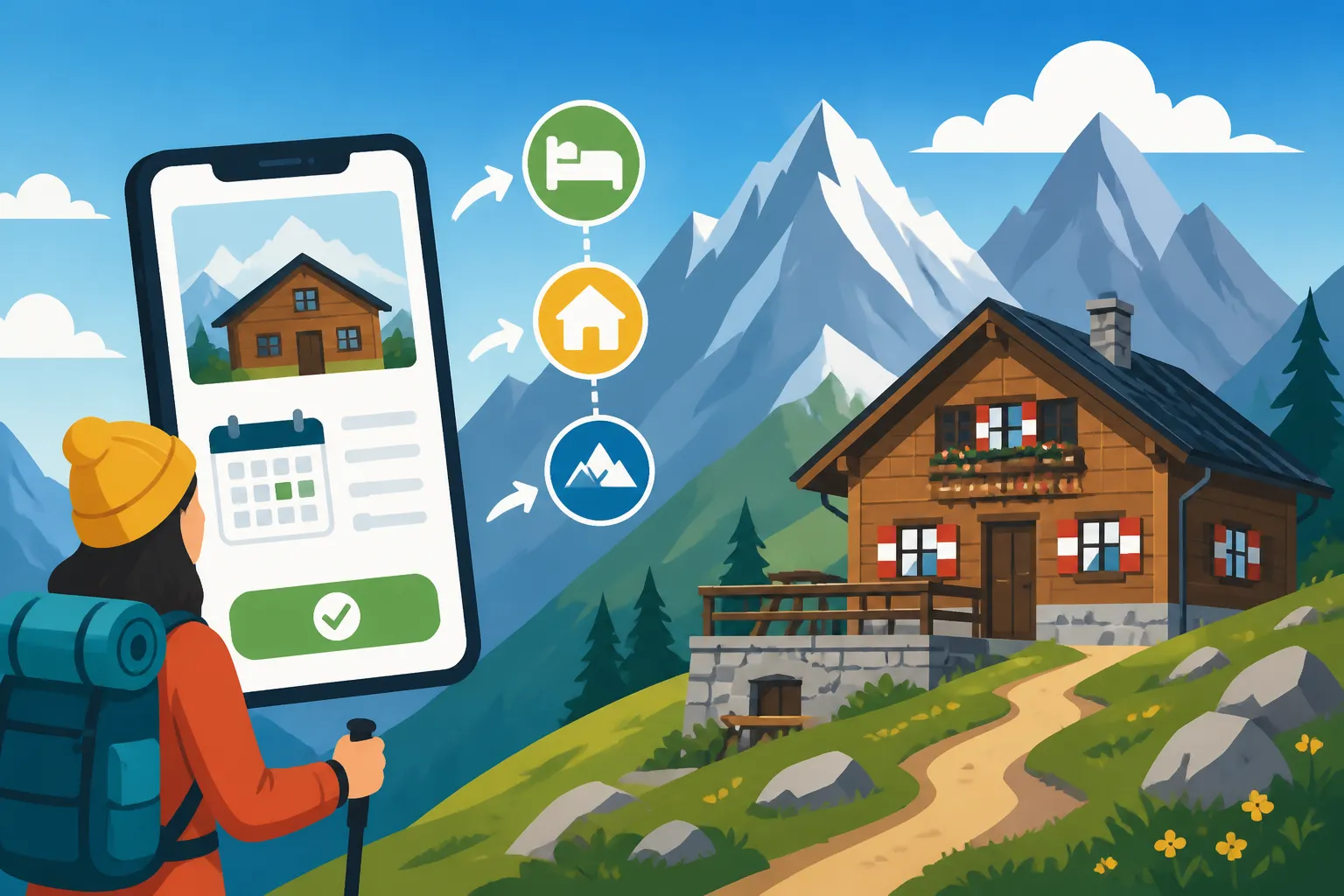
For those who find the traditional DAV booking system a bit too much to chew, especially if you're not a German speaker, there's a hero in the digital age: Booking.com. This platform has revolutionized how expats and tourists can access these incredible mountain experiences, making it significantly easier and less stressful. Many Berghütten, even some traditional ones, now list their availability on Booking.com, opening them up to a global audience. The English-language interface and straightforward booking process eliminate the language barrier, providing clear information on amenities, prices, and availability without needing to make a phone call or decipher complex German forms.
With Booking.com, you get instant confirmation, secure payment options, and the convenience of managing your reservation all in one place. You can read reviews from other international travelers, see photos, and get a realistic sense of what to expect from each hut. This is a game-changer for anyone wanting to experience the magic of the German Alps without the administrative hurdles. Instead of wrestling with a German website, you can confidently book your Berghütte directly through a platform you already know and trust. It genuinely is the simplest path to booking these often-elusive accommodations, saving you time and stress, and allowing you to focus on the joy of your upcoming adventure in the stunning The German Alps: Garmisch, Zugspitze, and Berchtesgaden. Booking.com acts as your personal translator and guide in this often-challenging aspect of German travel logistics.
| Feature | Traditional DAV Booking | Booking.com Experience |
|---|---|---|
| Language | Often German-only | English interface (and many others) |
| Confirmation | Via phone/email, can be slow/manual | Instant digital confirmation |
| Payment | Often bank transfer, cash on arrival | Secure online payment, credit card |
| User Reviews | Relies on word-of-mouth, German forums | Extensive user reviews in multiple languages |
| Selection | Primarily DAV-owned huts, direct contact | Broader range, including private huts |
| Accessibility | Requires understanding of German system | Intuitive search filters, global reach |
| Cancellation | Varies by hut, direct communication | Standardized cancellation policies (often flexible) |
| Membership Benefits | Discounted rates for DAV members | No direct membership benefits, but wider availability |
Your Step-by-Step Guide to Booking a Berghütte with Booking.com
Now that you're convinced that experiencing a Berghütte is an essential part of your German adventure, and you're ready to embrace the simplicity of online booking, let's walk through the process using Booking.com. It's surprisingly straightforward, allowing you to focus on planning your Hiking in Germany: The Black Forest, Alps, and Beyond route rather than wrestling with reservation forms. Remember, a little preparation goes a long way in the mountains, both in terms of your physical readiness and your booking strategy.
Finding Your Perfect Hut: Filters and Features on Booking.com
The beauty of Booking.com lies in its powerful search and filtering capabilities. Start by entering your desired location, such as "Garmisch-Partenkirchen," "Berchtesgaden," or simply "Bavarian Alps," into the search bar. Then, specify your dates and the number of guests. Crucially, in the accommodation type filter, you'll want to look for "Hostels" or sometimes "Guest Houses" or even "Hotels," as Berghütten often fall under these categories due to their shared sleeping arrangements. You might need to scroll through results and look for listings that explicitly use terms like "Berghütte," "Alpenhütte," or feature photos clearly showing a mountain setting.
Once you have a list of potential huts, dive into the individual listings. Pay close attention to the descriptions and amenities. While Berghütten are generally basic, some might offer private rooms (though often still with shared bathrooms), while others are exclusively Matratzenlager. Look for mentions of "Halbpension" (half-board), which usually includes dinner and breakfast, a fantastic convenience in remote locations. Filters for "pet-friendly" or "family rooms" can also narrow down your options if you're traveling with furry friends or little ones. The intuitive layout of Booking.com truly shines here, letting you compare options side-by-side and quickly pinpoint a hut that matches your needs, ensuring you find suitable Accommodation in Germany: Hotels, Pensionen, and Hostels for your mountain stay.
What to Expect: Understanding Berghütte Amenities and Logistics
It's important to set realistic expectations when booking a Berghütte. These are not luxury hotels, and their charm lies in their simplicity and functional design. Most huts offer dorm-style sleeping (the Matratzenlager), where you'll share a large room with other hikers. You'll typically be provided with a pillow and blanket, but bringing your own lightweight hut sleeping bag liner (a Hüttenschlafsack) is mandatory for hygiene reasons – many huts require them. Shared bathrooms are the norm, often with cold water and sometimes coin-operated hot showers, so be prepared for a quick wash!
Food-wise, you can usually expect delicious, hearty, and locally sourced meals. Half-board options (dinner and breakfast) are common and highly recommended for convenience. For lunch or snacks, most huts have a small menu or kiosk. A crucial point, especially for more remote huts, is that while you might book and pay a deposit online through Booking.com, many will still prefer cash for any additional purchases like drinks, snacks, or even the full balance if no deposit was taken. Always carry enough euros in small denominations. Cell service can be spotty or non-existent, which is part of the appeal, but means you should download maps or important information beforehand. Be aware of the Ruhezeit (quiet hours), typically from 10 PM to 6 AM, ensuring everyone gets a good night's rest.
Here's a breakdown of what to expect, comparing traditional DAV huts with those commonly found on Booking.com:
| Aspect | General Berghütte Expectation | Nuances for Booking.com Bookings |
|---|---|---|
| Sleeping | Matratzenlager (dormitory) is common, private rooms sometimes available. Bring a hut sleeping bag liner. | Listing on Booking.com will clearly state room type (dorm, private room). Still bring a liner! |
| Bathrooms | Shared, often basic. Cold water common, hot showers usually coin-operated. | Details on shared/private bathrooms and shower costs should be in the Booking.com listing. |
| Food | Hearty, traditional German/Alpine cuisine. Half-board (Halbpension) often available/recommended. | Booking.com allows you to see if meals are included or as an optional extra. Check reviews for food quality. |
| Connectivity | Limited to no cell service, Wi-Fi rare. | Assume no Wi-Fi/signal unless explicitly stated by the hut on Booking.com. Prepare for a digital detox. |
| Payment (On-site) | Cash preferred for extras, sometimes for full payment, especially in remote huts. | While deposit might be card on Booking.com, always carry cash for additional purchases at the hut itself. |
| Rules | Strict Ruhezeit (quiet hours), no shoes inside, respect for communal areas, waste disposal. | Hut rules are usually posted; adherence is expected regardless of booking method. |
| Accessibility | Varies from easily reachable to multi-hour strenuous hikes. | Check map location and access description on Booking.com. Supplement with hiking apps/guides. |
Essential Tips for a Smooth Berghütte Stay (Pre-Booking & On-Site)
Booking your Berghütte through Booking.com is the first crucial step, but a few additional tips will ensure your stay is as enjoyable as the hike itself. Firstly, book well in advance, especially if you're planning a trip during peak hiking season (summer and early autumn) or on a weekend. Popular huts fill up quickly, and relying on last-minute availability is a gamble you don't want to take when you're several hours into a mountain trek. Booking.com often shows availability several months out, so get ahead of the curve.
Secondly, once your Booking.com reservation is confirmed, take a moment to re-read all the details on the hut's page, including any special instructions from the hut owner. Some huts might require you to contact them directly a few days before arrival to confirm your exact estimated arrival time, even if you booked online. This is especially true if you might be arriving late. Prepare by finding all contact information and perhaps even translating a short email or message into German if needed. Remember, while Booking.com smooths the path, these are still often small, family-run establishments.
On the day of your hike, pack light but smart. You’ll need a What to Pack for Hiking in the German Alps list including appropriate layers, sturdy hiking boots, rain gear, a headlamp, toiletries, and that all-important Hüttenschlafsack. Don't forget a small first-aid kit. When you arrive at the hut, check in with the Hüttenwirt or staff, find your sleeping spot, and settle in. Be mindful of others, especially during Ruhezeit, and respect the hut's communal ethos. You'll often find that the shared experience of dining together and swapping stories is one of the most rewarding parts of your adventure. Knowing some basic German Etiquette: Do’s and Don’ts in Social and Professional Settings will also help you navigate the social dynamics in the communal areas. Don't forget that Money for Travel in Germany: Cash, Cards, and ATMs is essential for those unexpected hut purchases.
The German Alps offer an unparalleled opportunity to connect with nature, challenge yourself, and experience a unique facet of German culture. While the traditional booking methods for Berghütten can present a challenge for expats and tourists, platforms like Booking.com have opened up these incredible mountain retreats to a wider audience, simplifying the process and making your alpine dreams more accessible than ever. So, lace up your boots, pack your Hüttenschlafsack, and get ready to create unforgettable memories high above the clouds. Your adventure awaits, and Booking.com is there to help you book your perfect mountain escape.
Disclaimer
This article is for general informational purposes only and does not constitute professional advice. Laws, prices and regulations vary by location and change over time. Consult a qualified professional for guidance on your specific situation.