Buying vs Renting a Home: Financial Factors to Consider in Germany
Sitting in a tiny, overpriced Berlin rental, calculating how many years it would take to buy an apartment, is a uniquely frustrating expat experience. I once spent months agonizing over whether my rent money was being wasted, only to discover the massive hidden costs of local real estate. This guide decodes the financial realities of buying versus renting in Germany.
Disclosure: This post may contain affiliate links. We may earn a commission at no extra cost to you if you make a purchase through these links. Read full disclosure.
The German Housing Mindset and Cultural Reality
A Nation of Renters Explained
When expats arrive in the country, they often carry the deeply ingrained cultural belief that homeownership is the ultimate marker of financial success and adulthood. In many Anglo-American and Southern European cultures, renting into your thirties or forties is viewed as a temporary stepping stone or a sign of financial instability. In Germany, you must immediately abandon this mindset. This is historically a nation of lifelong renters, with the federal statistical office frequently citing a homeownership rate hovering well under fifty percent, which is among the lowest in the entire European Union.
This cultural preference for renting is not a modern accident; it is the deliberate result of post-war housing policies designed to rebuild a decimated nation. The government heavily subsidized high-quality social and private rental housing, creating a market where renting was affordable, incredibly secure, and completely stripped of any social stigma. You will routinely meet highly paid corporate executives, doctors, and engineers who have happily rented the exact same apartment for twenty years without the slightest desire to purchase property.
For a newly arrived expat, shedding the pressure to buy a home immediately is a vital psychological adjustment. The urgency you feel to jump onto the property ladder is largely an imported anxiety. Adapting to the local perspective allows you to objectively evaluate your housing choices without feeling like you are somehow failing at adulthood. Understanding this cultural baseline is an essential first step when planning your long-term budget.
Tenant Protections and Rental Security
The strongest argument for remaining a lifelong renter in Germany is the unparalleled power of domestic tenancy law. In many countries, signing a twelve-month lease brings a lingering anxiety about whether the landlord will arbitrarily refuse to renew the contract or suddenly hike the rent by thirty percent. The German legal system heavily favors the renter, treating housing as a fundamental human right rather than a purely speculative commodity.
When you sign a standard rental contract here, it is almost always open-ended and unlimited. Once you are handed the keys, it is notoriously difficult for a landlord to evict you. They cannot simply ask you to leave because they wish to sell the property or find a higher-paying tenant. Evictions are generally only permitted if you stop paying rent for multiple months or if the landlord can definitively prove a legally recognized claim of personal need for the space, known as Eigenbedarf.
Because of this profound legal security, renting an apartment feels remarkably close to owning one. You can paint the walls, drill holes for your shelving, and build a customized living space without the constant fear of being uprooted. This stability completely negates the primary emotional argument for homeownership. Navigating these bulletproof contracts is a complex but highly rewarding process detailed in our Understanding German Tenancy Agreements article.
The Illusion of Missing Out
A common source of anxiety for foreigners is the terrifying illusion that by renting, they are quite literally throwing their money out the window while missing out on explosive real estate appreciation. This fear is exacerbated by listening to friends back home brag about their property values doubling over a few years. While German real estate in major hubs has indeed seen significant price hikes recently, the market historically operates on slow, steady, and heavily regulated growth rather than aggressive boom-and-bust cycles.
The belief that rent is wasted money ignores the immense opportunity cost of tying up massive amounts of liquid capital in a single, illiquid asset. German renters traditionally use the surplus cash they save on down payments and maintenance costs to invest in the broader economy. By keeping their assets liquid, they maintain absolute financial flexibility. If you are terrified of missing out, you must calculate whether the potential appreciation of a German apartment truly outpaces a diversified, global investment portfolio over a ten-year horizon.
Furthermore, the domestic real estate market is violently regional. While buying an apartment in Munich or Frankfurt might yield appreciation, purchasing a home in a rural, demographically declining region can result in severe financial stagnation. You cannot apply a blanket assumption that all German real estate is a guaranteed path to wealth. Accurately assessing your specific regional market requires intensive local research and patience.
The Brutal Hidden Costs of Buying Real Estate
Unpacking the Kaufnebenkosten Closing Costs
If you decide that homeownership is the right path for your family, you must immediately confront the most brutal financial reality of the German real estate market: the Kaufnebenkosten. These are the ancillary closing costs associated with purchasing a property, and they are astronomically high. Depending on the federal state, you must prepare to pay anywhere from ten to fifteen percent of the total purchase price in absolute, unrecoverable sunk costs the moment you sign the contract.
These costs fundamentally alter the mathematics of buying a home. If you purchase an apartment for five hundred thousand euros, you will spend roughly fifty to seventy-five thousand euros on fees that add absolutely zero equity to your new asset. Furthermore, German banks are notoriously conservative and almost never allow you to roll these closing costs into your mortgage. You are expected to pay these massive fees entirely in cash out of your own pocket.
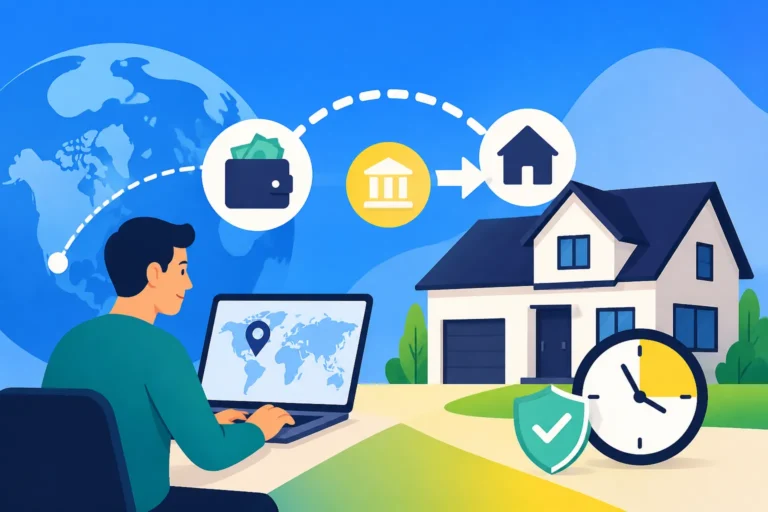
When securing your property, transferring your life savings across borders presents a massive logistical hurdle. Traditional banks will quietly drain your down payment through terrible exchange rate markups and hidden swift fees. By routing your international capital transfers through Wise, you lock in the real mid-market exchange rate, saving thousands of euros on your initial real estate transaction. This ensures that your hard-earned capital goes toward securing your home, rather than padding a corporate bank’s profit margins.
Real Estate Transfer Tax and Notary Fees
To understand why the closing costs are so devastatingly high, you must break down the mandatory legal components. The largest chunk is the Grunderwerbsteuer, or real estate transfer tax. The rate is dictated by the specific federal state where the property is located, ranging from a relatively mild 3.5 percent in Bavaria up to a punishing 6.5 percent in states like North Rhine-Westphalia or Brandenburg. You have no legal way to avoid or reduce this tax.
Next, you must account for the strict legal requirement to use a state-appointed notary. In Germany, a property transaction is only legally binding if the contract is read aloud, verified, and sealed by a Notar. The notary fees, combined with the administrative costs of updating the official land registry, will add roughly another two percent to your bill. The notary does not represent you or the seller; they represent the state, ensuring the transaction is mathematically and legally flawless.
Finally, if you utilize a real estate agent to find the property, you must pay their commission. Following recent legislative changes, the agent’s fee is usually split evenly between the buyer and the seller, but this still frequently leaves the buyer paying over three percent of the purchase price. Paying these immediate invoices from overseas accounts before you have fully relocated is stressful. Using Wise to settle initial notary bills transparently helps bypass predatory bank exchange markups when handling cross-border legal fees.
Maintenance Reserves and Homeowners Associations
The financial obligations of buying do not stop when you are handed the keys. If you purchase an apartment rather than a freestanding house, you automatically become a member of the Wohnungseigentümergemeinschaft (WEG), the homeowners association. You are now legally and financially responsible for the upkeep of the entire building, not just your specific unit.
Every month, you must pay Hausgeld, a maintenance fee that covers the building’s insurance, communal heating, waste management, and the crucial Instandhaltungsrücklage (maintenance reserve). The maintenance reserve is a mandatory communal savings account used to fund massive future repairs, such as replacing a leaking roof or upgrading a failing heating system to comply with strict new environmental regulations. If the reserve is poorly funded, you can be hit with a sudden, devastating special assessment bill requiring thousands of euros in cash immediately.
Once you own the property, the ongoing maintenance costs require ruthless personal budgeting to ensure you are never caught empty-handed. Operating a primary account with N26 allows you to utilize their integrated sub-account features, creating dedicated digital envelopes specifically for your emergency maintenance fund. Automatically routing a portion of your salary into an N26 space guarantees that when your boiler inevitably breaks, the funds are instantly available without disrupting your monthly living budget. Managing these complex household outflows is a primary focus of our Cost of Living in Germany Budgeting Guide.
Navigating Mortgages as an Expat
Down Payments and Strict Lending Criteria
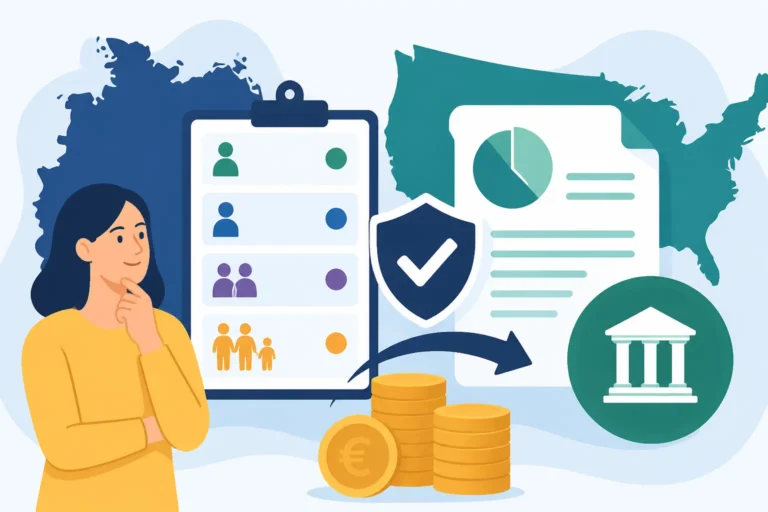
Securing a mortgage as a foreigner in Germany is an exercise in extreme patience and bureaucratic endurance. Local banks are exceptionally risk-averse, completely rejecting the high-leverage, low-deposit lending models seen in other western countries. To even be considered for a competitive interest rate, you must bring a minimum of twenty percent of the property’s purchase price as a cash down payment, strictly in addition to the cash required for the massive closing costs.
Your immigration status plays a massive, often discriminatory role in your lending options. If you hold a temporary work visa or an EU Blue Card, banks view you as a severe flight risk. Many major institutions will flatly refuse to lend to you unless you hold a permanent settlement permit. Those banks that are willing to lend to temporary residents will often demand a significantly higher down payment or charge a steep premium on the interest rate to offset their perceived risk.
Furthermore, your local credit score is the absolute bedrock of your application. The bank will pull your SCHUFA report to verify your financial trustworthiness. If you have only been in the country for a few months, your SCHUFA file will be dangerously thin, causing automated lending algorithms to reject you. Building a robust, pristine credit history before approaching a mortgage broker is absolutely vital. You can learn exactly how to cultivate this score by studying our Understanding the German Credit System guide.
The Security of Fixed Interest Rates
If you successfully pass the intense scrutiny of the underwriting process, you will benefit from one of the most stable, consumer-friendly mortgage structures in the world. The German mortgage market is overwhelmingly dominated by the Zinsbindung, which is a rigidly fixed interest rate period.
Unlike markets where variable interest rates can cause your monthly payment to explode overnight during an economic crisis, a German bank will lock in your interest rate for a period of ten, fifteen, or even twenty years. This guarantees that your monthly housing payment will remain absolutely identical for decades, effectively immunizing you against inflation and central bank volatility. This profound financial predictability allows you to budget your family’s future with mathematical certainty.
However, this unparalleled security comes at the cost of flexibility. If you sign a fifteen-year fixed contract and decide to sell the house and leave the country after five years, the bank will hit you with an early repayment penalty. This penalty is designed to compensate the bank for the interest they expected to earn over the life of the loan, and it can amount to tens of thousands of euros. You must be absolutely certain of your long-term geographic stability before locking into these rigid contracts.
Overcoming Bureaucratic Financing Hurdles
The actual process of getting the loan approved is a paperwork nightmare. The bank will demand to see your last three payslips, your employment contract to verify you have passed your probation period, extensive tax returns, and a mountain of technical documentation regarding the property itself. Because all of these documents, and the subsequent negotiations, are conducted exclusively in complex financial German, many expats rely on independent, bilingual mortgage brokers to advocate on their behalf.
During this vulnerable phase, the logistics of moving your money into position must be flawless. Banks will scrutinize the source of your down payment to comply with aggressive local anti-money laundering regulations. If you suddenly wire fifty thousand euros from an obscure foreign account, the transaction may be frozen indefinitely, causing your property purchase to collapse. Utilizing a highly transparent platform like Wise to route your international capital ensures that your transfer receipts are clean, traceable, and instantly verifiable by local compliance officers.
Once the mortgage is finalized, the monthly deductions will begin. Ensuring these massive direct debits are never bounced requires a banking interface you can actually understand and trust. Utilizing a modern digital bank like N26 ensures you receive immediate push notifications the second your mortgage payment clears, providing intense psychological relief. Mastering these administrative banking flows is a critical skill set outlined in our Setting Up a German Bank Account tutorial.
Renting as a Strategic Wealth Building Tool
The Power of Investing the Difference
If you calculate the massive sunk costs of closing fees and the rigid demands of a German mortgage, you might logically decide to remain a renter. This is not a financial failure; it is a highly viable wealth-building strategy, provided you are disciplined. The core philosophy of this strategy is “renting and investing the difference.”
When you rent, your monthly housing cost is a ceiling; when you buy, your mortgage is merely the floor, as maintenance costs will continuously demand more capital. By choosing to rent, you protect the massive pile of cash you would have otherwise surrendered to the notary, the state tax office, and the real estate agent. If you take that initial hundred thousand euros, along with the monthly surplus you save on maintenance, and deploy it intelligently into the financial markets, compound interest will perform heavy lifting for your net worth.
Leaving your would-be down payment in a domestic savings account guarantees it will slowly lose its purchasing power to inflation. Financially savvy expats who choose the rental route frequently utilize Interactive Brokers to build a globally diversified ETF portfolio. Because Interactive Brokers provides incredibly low-cost access to international equity markets, you can invest your surplus cash aggressively, allowing your capital growth to outpace the slow, steady grind of the local real estate market. This strategy is central to the concepts in our Managing Expat Finances and Investments blueprint.
Leveraging Brokerage Accounts for Expat Mobility
The greatest hidden danger of buying real estate as a foreigner is the total destruction of your geographic mobility. Expat life is inherently unpredictable. You might receive a lucrative job offer in Switzerland, or you might need to suddenly return to your home country to care for an aging parent. If you own a German property, executing a rapid international exit is a logistical and financial catastrophe.
Selling an investment property in Germany within ten years of purchasing it triggers the punitive Spekulationssteuer (speculation tax), which taxes your property gains at your personal income tax rate. While this tax is waived if you personally inhabited the property for the required continuous period, the process of finding a buyer, paying the early mortgage cancellation fees, and liquidating the asset takes agonizing months. You can dive deeper into how these property taxes impact your annual filings in our How to File Taxes in Germany as an Expat guide.
Real estate acts as a heavy anchor, chaining you to a specific city. By choosing to rent and invest your capital in liquid equities, you preserve your ultimate freedom. An investment portfolio held with Interactive Brokers moves across international borders with you seamlessly. If your visa expires or your career path shifts globally, you can liquidate your entire net worth in seconds from your smartphone, or simply transfer your Interactive Brokers account to your new country of residence.
Avoiding the Opportunity Cost of Trapped Equity
Another financial factor unique to the German market is the difficulty of accessing the equity trapped inside your home. In countries like the United States, homeowners routinely treat their houses like massive ATM machines, utilizing cash-out refinances or home equity lines of credit to fund business ventures, university tuition, or luxury renovations.
The German banking system heavily frowns upon this practice. Extracting equity from a local property without selling it is an incredibly complex, restrictive, and unpopular process. If your property increases in value by two hundred thousand euros, that wealth is effectively locked behind a brick wall. You appear wealthy on paper, but you cannot actually use that money to improve your daily life or fund new investments.
By remaining a renter, every euro you save and invest remains entirely accessible. You can rebalance your portfolio, extract dividends to fund a sabbatical, or deploy your capital into a sudden business opportunity without asking a bank for permission. Understanding the profound opportunity cost of trapped domestic equity is a vital concept when evaluating your long-term wealth strategy.
Making the Final Financial Decision
Calculating Your Personal Break Even Point
Deciding whether to buy or rent ultimately requires stripping away the emotional noise and focusing on a ruthless mathematical calculation: the break-even horizon. Because the closing costs immediately erase ten to fifteen percent of your wealth, buying a property only makes mathematical sense if you plan to hold and inhabit it for a very long time.
Financial advisors in Germany universally recommend that you should not purchase a home unless you are absolutely certain you will live in it for a minimum of ten to fifteen years. If you sell before this break-even point, the property appreciation will likely not have outpaced the massive initial closing costs, the mortgage interest paid, and the early repayment penalties, meaning you will exit the transaction having lost money compared to a renter who invested their capital.
To help visualize the distinct paths, expats must weigh the core differences between the two housing lifestyles before committing their capital.
| Financial Factor | Buying a Home in Germany | Renting a Home in Germany |
| Upfront Capital Required | Massive (20% Down + 10-15% Closing Costs) | Minimal (Standard 3 Months Cold Rent Deposit) |
| Long-Term Flexibility | Highly Restrictive (Selling takes months, incurs penalties) | Maximum Mobility (Standard 3 months notice to leave) |
| Monthly Budget Predictability | High Base (Fixed Mortgage) but vulnerable to repair costs | Very High (Rent control laws protect against wild hikes) |
| Wealth Generation Vehicle | Forced savings through illiquid property equity | Liquid growth if surplus cash is actively invested in ETFs |
| Maintenance Burden | 100% Owner Liability (Must fund the WEG reserves) | 100% Landlord Liability (Tenant only covers minor wear) |
Emotional Return on Investment Versus Financial Logic
While the mathematics of the German market frequently favor the disciplined renter, you cannot entirely discount the emotional return on investment. Sometimes, the spreadsheet dictates that you should rent, but your heart demands a permanent sanctuary. The psychological weight of owning the roof over your family’s head is a valid, measurable metric of success for many expats.
If buying a home allows you the deep psychological relief of finally drilling holes in the walls without asking permission, adopting a large dog without a landlord’s scrutiny, and designing a bespoke kitchen that you will use for decades, then the massive closing costs might be a worthwhile price to pay for your happiness. Renting, even in the highly secure local market, will always require some level of compromise with a property owner, especially when navigating the notoriously bare-bones nature of local rentals, detailed in our Furnished vs Unfurnished Apartments in Germany guide.
Ultimately, there is no universal right answer. Your decision must be dictated by your visa stability, your career trajectory, and your family’s desire to permanently integrate into local society. Utilizing N26 to effortlessly track your daily expenses and shared household bills makes either path financially sustainable. Whether you choose to leverage the unparalleled security of a domestic rental contract via Finding an Apartment in Germany Best Websites and Tips or navigate the intense bureaucracy of a local mortgage, ensuring you deeply understand the financial rules of engagement is the only way to protect your future.
References
Primary sources (official)
- Federal Statistical Office (Destatis) – 2022 Census: 57% of families living in their own home: https://www.destatis.de/EN/Press/Census2022_press_releases/PM_census2022_48.html
- Make it in Germany (Official Portal) – Housing and registration: https://www.make-it-in-germany.com/en/living-in-germany/housing-mobility/housing-registration
- BaFin (Federal Financial Supervisory Authority) – Bauspar plans made simple: https://www.bafin.de/EN/verbraucherinnen-verbraucher/themen-finanzprodukte/kredite-immobilienfinanzierung/immobilienfinanzierung/bausparen/bausparen_en.html
Other helpful sources
- Aetna International – Moving to Germany Expat Guide: https://www.aetnainternational.com/en/health-wellness/destination-guides/expat-life-in-germany/moving-to-germany.html
- Investropa – Buying a Property for Residency in Germany: https://investropa.com/blogs/news/germany-property-residency
Disclaimer
The real estate taxation rules, statutory closing costs (Kaufnebenkosten), and mortgage lending regulations detailed in this article are based on federal German laws and standard banking practices at the time of publication. Property transfer tax (Grunderwerbsteuer) rates and local homeownership legislation are subject to frequent changes and vary significantly between individual federal states (Bundesländer). Financial platforms, international banking features, and brokerage regulations are subject to change. Always consult a certified tax advisor (Steuerberater), an accredited mortgage broker (Baufinanzierungsberater), or a qualified legal professional to assess your specific financial situation before signing binding real estate contracts.