Child Visa and Family Reunion: Bringing Kids to Germany
Staring at a rejected visa application because my child’s birth certificate lacked one specific notary stamp was the most helpless I have ever felt. I spent months separated from my toddler while fighting the German immigration bureaucracy. This guide breaks down exactly how to navigate the child visa process so you can reunite your family without the heartbreaking delays.
Disclosure: This post may contain affiliate links. We may earn a commission at no extra cost to you if you make a purchase through these links. Read full disclosure.
The Administrative Reality of Bringing Your Children
Moving your life to a new country is stressful enough, but coordinating a family relocation amplifies the complexity exponentially. The German immigration system operates on strict rules regarding family reunification (Familiennachzug). They do not just hand out visas because you miss your kids; you must legally prove that you have the right to bring them, the space to house them, and the money to feed them.
Age Limits and Crucial Deadlines
The most terrifying trap in the German child visa process revolves around the age of your child. The German legal system draws a massive, unforgiving line at a child’s 16th birthday. If your child is under the age of 16 and you hold a valid residence permit, EU Blue Card, or settlement permit, they generally have a statutory right to join you in Germany, provided all financial and housing criteria are met.
However, the moment your child turns 16, the rules change drastically. If you attempt to bring a 16 or 17-year-old child to Germany, the immigration office (Ausländerbehörde) will apply a much stricter integration forecast. Your teenage child will likely be required to prove C1 level German language proficiency—a near-fluent level that is practically impossible to achieve quickly from abroad—or prove that they can adapt and integrate into the German way of life exceptionally easily.
If you have a 15-year-old, the clock is ticking loudly. You must submit their visa application well before their 16th birthday to lock in the lenient rules. Missing this deadline by even a single day can permanently jeopardize your teenager’s ability to join you. It is a harsh reality that forces many families to drastically accelerate their relocation timelines.
Sole Custody vs Joint Custody Nightmares
If you are moving to Germany as a married couple and bringing your children together, the custody aspect is relatively straightforward. However, if you are divorced, separated, or a single parent, bringing your child to Germany is an absolute administrative minefield. The German authorities are incredibly vigilant about preventing international child abduction.
If you share joint legal custody with a parent who is remaining in your home country, you cannot simply put your child on a plane. The German embassy will demand a legally binding, heavily notarized letter of consent from the other parent explicitly granting permission for the child to move to Germany permanently. If the other parent refuses to sign, your child cannot get a visa.
If you hold sole legal custody, you must prove it with an official court decree. A simple divorce paper stating the child lives with you is often not enough; the document must explicitly state that you hold 100% of the legal decision-making rights (Sorgerecht). I have seen expats spend thousands on international family lawyers just to get a court order formatted in a way that satisfies the German consulate. You must finalize your legal custody situation before you even think about booking a visa appointment.
Exemptions for Blue Card and EU Citizens
Not all expats face the same grueling uphill battle. German immigration law offers significant leniency to highly skilled workers and citizens of the European Union. If you are holding an EU Blue Card, an ICT Card, or a specific researcher visa, the authorities are generally much more accommodating regarding family reunification.
For EU Blue Card holders, the process is streamlined. While you still have to prove you can financially support your child, you bypass many of the strict integration hurdles that standard skilled workers face. Furthermore, if your spouse is applying alongside your child, the spouse is exempt from the A1 German language requirement, which is a massive relief.
If you are an EU citizen exercising your right to freedom of movement, the rules are even more relaxed under EU law rather than German national law. You do not even need to apply for a traditional family reunion visa; your child simply registers their residence upon arrival. Understanding your exact legal standing is critical. If you are also managing your partner’s paperwork simultaneously, make sure to read Spouse Visa for Germany: Bringing Your Partner as a Dependent.
| Child’s Age / Status | Key Visa Requirement | Exceptions |
| Under 16 | Proof of parent’s legal residence, funds, and housing | None (Right of return applies generally) |
| 16 to 18 Years Old | Proof of C1 German OR positive integration forecast | Joining parents who hold an EU Blue Card |
| Child of a Single Parent | Proof of sole legal custody or notarized consent from other parent | None (Strictly enforced to prevent abduction) |

Navigating the Financial and Housing Requirements
You cannot bring your child to Germany if you intend to squeeze them into a tiny studio apartment or if your salary leaves you below the poverty line. The German state requires absolute proof that your family will not rely on social welfare benefits.
Proving Adequate Living Space
Before the embassy will issue a visa for your child, you must prove that you have secured ausreichender Wohnraum (adequate living space) in Germany. The general legal benchmark requires at least 12 square meters of living space for every family member over the age of six, and 10 square meters for every child under six, excluding the kitchen and bathrooms.
This creates a terrifying catch-22 for expats. You cannot get the visa without an apartment, but German landlords are notoriously reluctant to rent large, expensive apartments to foreigners who are still on probation at work or whose families have not even arrived yet. You must secure a legitimate, long-term rental contract (Mietvertrag) and often a specific letter from your landlord (Wohnungsgeberbestätigung) confirming exactly how many square meters the apartment is and that the landlord explicitly permits your children to live there. To prepare yourself for the financial shock of paying deposits on a multi-bedroom German flat, read Cost of Living in Germany: Budgeting for Your First Year as an Expat.
Demonstrating Financial Stability for a Family
The Ausländerbehörde will scrutinize your finances relentlessly. They will take your net monthly income and subtract your “warm rent” (rent plus heating costs). The remaining amount must be sufficient to cover the standard living expenses for you, your spouse, and your children, based on the current federal social security rates.
If your salary does not meet this threshold, your child’s visa will be rejected. This is why attempting family reunification on an entry-level salary or a part-time contract is incredibly risky. You must bring your last three to six months of German payslips, your employment contract, and bank statements to your appointment. If you are still in your six-month probationary period (Probezeit) at work, some strict immigration officers may actually pause your family’s visa application until you pass probation to ensure your income is truly stable.
Blocked Accounts for Family Situations
If you are a student, a PhD candidate on a stipend, or a job seeker attempting to bring a child to Germany (which is legally possible but practically very difficult), standard payslips will not work. Because you lack a traditional employment contract, the state will demand that you prove your financial stability by locking away the entire year’s living expenses for your child in advance.
When the embassy demands a blocked account (Sperrkonto) for a dependent child, the traditional banking route will cause you endless headaches. Legacy banks struggle with opening blocked accounts for minors or dependents. Instead, using a specialized digital platform like Expatrio is your best strategy. Expatrio allows you to configure a blocked account tailored specifically to the financial thresholds demanded by the embassy, generating the official confirmation PDF instantly once the funds clear. Securing this digital vault via Expatrio removes the single biggest financial roadblock in your dossier. For a deep dive into the mechanics of these accounts, review Student Visa Blocked Account Sperrkonto: What It Is and How to Set It Up.
The Document Translation and Legalization Maze
German bureaucracy demands absolute legal precision. You cannot simply hand over a hospital birth certificate in English and expect the visa officer to accept it. The document gathering phase is where most applications stall.
Legalizing Birth Certificates and Custody Decrees
A foreign birth certificate is fundamentally meaningless to the German government until it has been properly authenticated. For many countries, this requires securing an Apostille stamp—an international certification under the Hague Convention that proves the signature on the birth certificate is real.
If your home country is not part of the Apostille convention, you face the grueling process of consular legalization. This means your home country’s foreign ministry must verify the document, and then the local German embassy must verify the foreign ministry’s verification. This chain of authentication can take months. Furthermore, if you are divorced, your custody decrees must go through this exact same legalization process. Do not book your visa appointment until these stamps are physically on your documents.
The Sworn Translation Bottleneck
Once your child’s birth certificate is covered in legalization stamps, you hit the language barrier. The German immigration authorities operate exclusively in German. If you submit a birth certificate, custody agreement, or school record in Hindi, Spanish, or English, it will be rejected.
You are legally required to provide certified translations. However, you cannot just hire a local translation agency in your home country. The German government strictly mandates that translations be performed by an officially sworn translator (vereidigter Übersetzer) recognized by a German regional court.
Finding a certified sworn translator from abroad is deeply frustrating and causes massive delays. To bypass this, veteran expats rely on digital translation platforms like Lingoking. You just upload the scanned, legalized birth certificates to Lingoking, and they route them to a certified German sworn translator. The legally binding, officially stamped translations are then mailed directly to your address, guaranteeing they will pass the embassy’s relentless document checks. Ensuring your paperwork is flawless via Lingoking is the smartest investment you can make in this process.
Compiling the Perfect Application Dossier
When you finally arrive at the German embassy for your child’s visa interview, presentation matters. The consular officers appreciate pristine organization. You must bring the original legalized documents, the sworn translations, and usually two complete sets of physical photocopies.
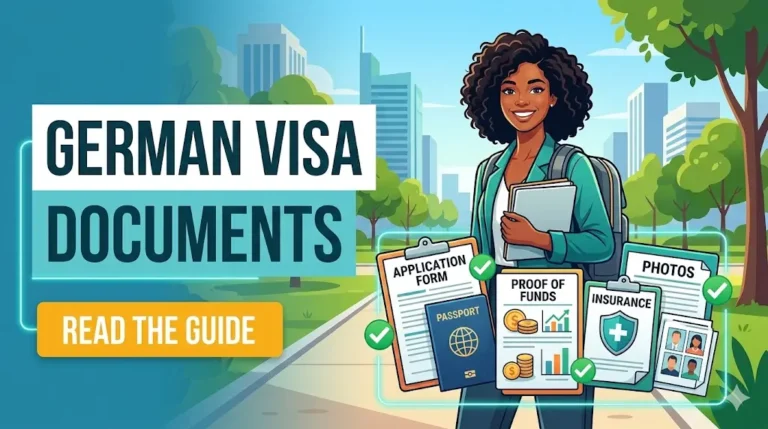
Never staple your documents. The officers need to scan them individually. The dossier should include your child’s passport, your passport and German residence permit, the birth certificates, your rental contract, your financial proof, and biometric passport photos of your child that meet the incredibly strict German biometric standards. If your child is older, the officer may ask them basic questions to assess their integration capability.
Health Insurance and Pediatric Care for Incoming Kids
You cannot get a German visa without proof of health insurance. Navigating how to cover your children medically when they arrive is a massive administrative puzzle that you must solve before they board the plane.
Public Family Insurance vs Private Policies
If you, the sponsoring parent, are enrolled in the statutory public health insurance system (Gesetzliche Krankenversicherung or GKV), you have hit the jackpot. The German public system offers Familienversicherung (family insurance).
This means your dependent children can be added to your public health insurance policy entirely for free. They receive their own electronic health card, free pediatrician visits, and free prescriptions, and your monthly premium does not increase by a single cent. However, the bureaucracy to activate this requires filling out extensive German-only family questionnaires.
If you manage your public policy through a digital broker like Feather Insurance, their English-speaking support team will handle the entire Familienversicherung application for your children. Bypassing the German call centers and letting Feather Insurance process the paperwork ensures your kids are covered the second they register in the country.
Conversely, if you are a high-earner who opted for private health insurance (Private Krankenversicherung or PKV), free family coverage does not exist. You must purchase a separate, full-priced private health insurance policy for each of your children. This requires medical underwriting and can add hundreds of Euros to your monthly expenses.
Securing Visa Compliant Incoming Coverage
The free public family insurance only officially kicks in once your child arrives and registers their address in Germany. However, for the actual embassy visa interview, you still need to prove they have health coverage for their initial entry.
Standard travel insurance from your home country is almost always rejected by the embassy because it is considered insufficient. You must provide specific “Incoming Travel Health Insurance” that meets Schengen visa requirements. You can instantly purchase these specialized, visa-compliant incoming policies through Feather Insurance to satisfy the consular officer. Once your child is safely in Germany and registered, Feather Insurance will help you transition them onto your main public policy.
Navigating Pediatric Care Upon Arrival
Once your child is insured and safely in Germany, the cultural differences in medical care become immediately apparent. German pediatricians (Kinderarzt) are incredibly thorough, but their clinics operate very differently from what you might be used to.
Upon your first visit, you will be handed a yellow booklet called the U-Heft (Untersuchungsheft). This is a strictly scheduled log of preventative medical checkups. From the day they are born until they are teenagers, the German state tracks their developmental milestones through these “U-examinations.” You must bring this yellow book to every appointment. If you miss these mandatory checkups, the local health department or youth welfare office may actually send you a warning letter.
Arrival and Long Term Integration
Receiving the visa sticker is a triumph, but arriving in Germany triggers a new wave of bureaucratic and integration challenges for your family.
The Anmeldung and Activating Tax Benefits
Within the first two weeks of your child arriving in Germany, you must take them to the local citizens office (Bürgeramt) to register their presence at your address. This process, the Anmeldung, is the foundation of their legal existence in Germany.
Without the Anmeldung certificate, your child cannot be added to your permanent health insurance, they cannot enroll in school, and you cannot apply for child benefits. Furthermore, having a child in Germany changes your tax situation. You can claim child tax allowances (Kinderfreibetrag) which can slightly lower your overall income tax burden.
Applying for Kindergeld and Parental Benefits
One of the greatest financial benefits of raising a family in Germany is Kindergeld (child benefit). Regardless of your income, the German state pays parents a monthly stipend to help with the costs of raising children. As of recent years, this is a flat rate of 250 Euros per month, per child.
As a legal resident with a valid work permit and registered children, you are fully entitled to this money. You must apply for it through the Family Benefits Office (Familienkasse) of the Federal Employment Agency. The application is entirely in German and requires your child’s new Tax ID and your registration certificates.
If you happen to have a new baby after arriving in Germany, you are also entitled to Elterngeld (parental allowance), which replaces a significant portion of your income if you take state-mandated maternity or paternity leave. The social safety net for parents here is incredibly strong once you push past the initial paperwork.
Enrolling in Kita or German Schools
The final and arguably most stressful integration hurdle is securing childcare or schooling. Germany is currently facing a massive crisis regarding daycare (Kita) spots. Finding an open spot for a toddler can take over a year of being on waiting lists. You must start emailing Kitas in your neighborhood months before your child even arrives in the country.
If your child is six years or older, they fall under the strict German Schulpflicht (compulsory schooling). Homeschooling is highly illegal in Germany. Your child must attend a state-recognized school. When you arrive, you will coordinate with the local school authority (Schulamt). If your child does not speak German, they will usually be placed in a Willkommensklasse (welcome class) designed specifically for immigrant children. These classes focus intensely on language acquisition for the first year before integrating the child into the standard curriculum.
Bringing your children to Germany is an exhausting test of your patience, organization, and resilience. But by understanding the strict custody laws, utilizing Lingoking for flawless document translation, securing your finances with Expatrio, and leaning on Feather Insurance for medical coverage, you can conquer the bureaucracy and give your family an incredible new life in Europe.
References
Primary sources (official)
- Make it in Germany: The federal government’s official portal outlining the exact legal requirements, age limits, and housing space regulations for bringing children to Germany.https://www.make-it-in-germany.com/en/living-in-germany/family-life/children-joining-citizens-non-eu
- Federal Foreign Office (Auswärtiges Amt): The ultimate legal authority detailing the consular requirements for family reunification visas, including strict custody and Apostille procedures.https://www.auswaertiges-amt.de/en/visa-service/buergerservice/faq
Other helpful sources
- Federal Employment Agency (Bundesagentur für Arbeit): The official portal for the Familienkasse, providing the application forms and current rates for the monthly Kindergeld (child benefit).https://www.arbeitsagentur.de/en/financial-support/child-benefit
Disclaimer
The information provided in this article is for general informational and educational purposes only and does not constitute professional legal, financial, or immigration advice. German visa policies, the statutory financial requirements for blocked accounts via providers, health insurance transitions managed by brokers and sworn translation rules for services are highly complex and subject to continuous legislative updates. Always consult directly with your local Ausländerbehörde (Foreigners Office) or a certified immigration lawyer (Fachanwalt für Migrationsrecht) regarding your specific visa transition and employment status in Germany.