How to Apply Under StAG Section 5 (Citizenship by Declaration)
Discovering that you are legally entitled to a German passport because of a historical loophole is one of the most exciting moments for any member of the German diaspora. I remember the first time I sat down with a mountain of old birth certificates, feeling completely overwhelmed by the conflicting rules of "descent" versus "marriage." This guide solves that confusion by breaking down exactly how to navigate the Fourth Act to Amend the Nationality Act, specifically the life-changing StAG Section 5, which allows you to claim citizenship by declaration.
Disclosure: This post may contain affiliate links. We may earn a commission at no extra cost to you if you make a purchase through these links. Read full disclosure.
The Historical Context of Citizenship by Declaration
For decades, German citizenship laws contained what many now recognize as profound gender-based discrimination. Before 1975, children born to a German mother and a foreign father did not automatically become German citizens if they were born in wedlock. The law essentially dictated that the father's nationality took precedence. Similarly, German women often lost their citizenship entirely simply by marrying a non-German, a rule that didn't apply to German men marrying foreign women. This left thousands of people "almost German" but legally excluded from their heritage.
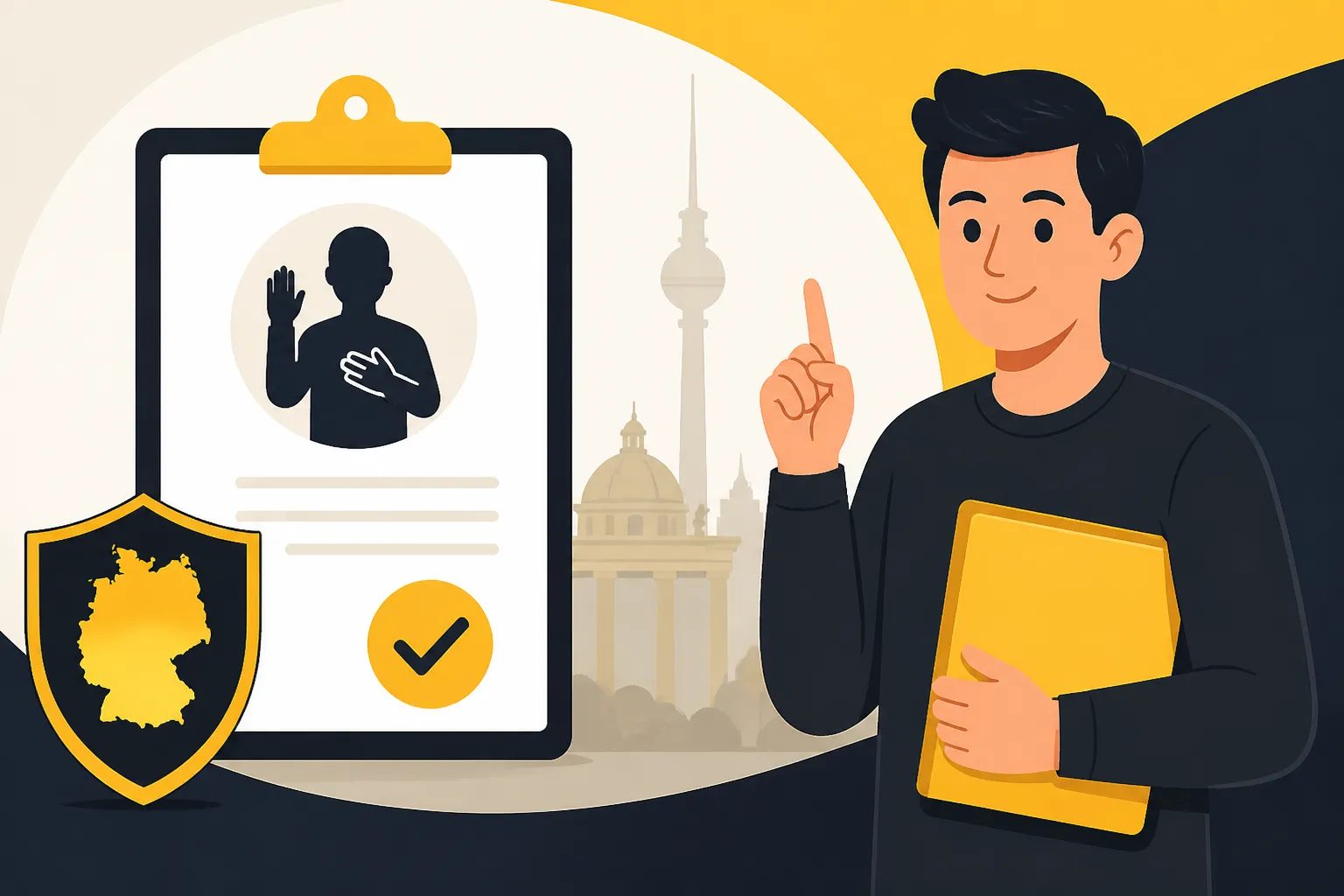
The 2021 amendment to the Nationality Act (Staatsangehörigkeitsgesetz) was a landmark moment of reparation. It acknowledged that these rules were unconstitutional and created a ten-year window—closing in August 2031—for those affected and their descendants to "declare" their citizenship. Unlike the standard path of German Citizenship by Naturalization: Eligibility and Application Steps, this process is much simpler because it assumes you should have been German all along. It’s not about earning a new status; it’s about claiming one that was unfairly denied to your lineage.
Living in Germany as an expat, I have seen many friends struggle with the Navigating the Ausländerbehörde: Tips for Dealing with German Immigration Offices for years, only to realize they actually qualified for this declaration path. The beauty of StAG Section 5 is that it bypasses many of the hurdles found in other immigration routes. You don't need to live in Germany, you don't need to pass a complex integration test, and most importantly, you don't have to give up your current nationality. This is a massive win, especially considering the broader context of Dual Citizenship in Germany (2024 Law Update): What Expats Should Know, which has recently made life easier for many other foreigners too.
Eligibility Criteria for Section 5 StAG
Determining if you fall into the "Section 5" bucket is the first and most critical step. The law identifies four specific groups of people who can benefit from this declaration. It is a common misconception that you only qualify if your parents were the ones directly affected; in reality, the law extends to all subsequent generations. If your grandmother was the one who lost her citizenship or couldn't pass it on, you likely have a path forward.
The first group includes children born to a German parent who did not acquire German nationality at birth. This usually applies to those born after May 23, 1949 (the date the German Basic Law came into effect). If your mother was German but married your foreign father before you were born, and you were born before January 1, 1975, you are the classic candidate for this group. I've spoken to many applicants in this position who spent years thinking they were purely American or Canadian, only to find their German roots were legally salvageable.
The second group covers children whose mothers lost their German citizenship through marriage to a foreigner before the child was born. This was a particularly harsh rule that effectively stripped women of their identity. Group three involves children born out of wedlock who did not become German because the father was German and the mother was a foreigner, in cases where the father's citizenship couldn't be passed down due to legal technicalities at the time. Finally, the fourth group includes the descendants of anyone in the first three groups. This is where most younger applicants find themselves, tracing a line back to a mother or grandmother whose rights were restricted by the old laws.
Understanding your specific category is vital because it dictates the "proof of lineage" you must provide to the Bundesverwaltungsamt (BVA), which is the Federal Administration Office handling these cases. If you are already in Germany on a National Visa (D-Visa) vs Schengen Visa: Understanding the Difference, you might be tempted to go to your local city hall, but be aware that for those living abroad, the BVA in Cologne is the ultimate gatekeeper.
The Paperwork Mountain and Essential Documentation
Once you’ve confirmed you are eligible, the real work begins: the document hunt. German bureaucracy is legendary for its love of stamped, certified, and original papers. You cannot simply show a photo of an old passport. You will need a continuous chain of documents from the ancestor who was originally German all the way down to yourself. This usually includes birth certificates, marriage certificates, and proof of the "German-ness" of that ancestor—such as an old Reisepass, a Heimatschein (citizenship certificate), or military records.
One of the biggest hurdles is ensuring these documents are in a format the BVA will accept. Any document not in German must be professionally translated. This is a non-negotiable step. In my own administrative journeys, I’ve found that using a specialized service like Lingoking for certified translations is the only way to ensure the nuances of legal terminology are preserved. The BVA is notoriously picky; if a translation is "loose" or performed by a non-certified translator, they may reject the entire file, adding months to your wait time. Lingoking provides the specific certified standard that German authorities expect, which can save you a world of frustration.
Beyond family documents, you will also need a clean criminal record. This usually involves getting a How to Get a Police Clearance Certificate for a German Visa or the equivalent from your home country. Since the BVA checks if you have any serious convictions that would disqualify you from citizenship, this document must be recent. Don't order it too early, as they usually want it to be no more than six months old by the time they review your file.
| Document Type | Purpose in StAG 5 Application | Where to Obtain |
|---|---|---|
| Ancestor's Birth Cert | Establishes the start of the German line | German Standesamt (Registry Office) |
| Ancestor's Marriage Cert | Proves if citizenship was lost or passed via marriage | Registry Office or Archives |
| Proof of Citizenship | Validates the ancestor was actually German | Old Passports, Melderegister, or Archives |
| Your Birth Certificate | Links you to the previous generation | Vital Statistics in your birth country |
| Police Clearance | Shows "good character" for citizenship | FBI (USA), RCMP (Canada), etc. |
| Translations | Makes foreign documents legal in Germany | Professional services like Lingoking |
Navigating the Application Process and Timeline
The actual application is called an "Erklärung zur Staatsangehörigkeit." If you live outside Germany, you will submit this through your local German embassy or consulate. They act as a mailroom and initial vetting station before sending your packet to the BVA in Cologne. If you are already living in Germany, you would technically deal with your local Staatsangehörigkeitsbehörde, but the process is largely the same. Just ensure your Address Registration (Anmeldung) is up to date, as they will check this first.
The current wait times for StAG 5 are significant. When the law first passed in 2021, the BVA was flooded with applications. Currently, you should expect to wait anywhere from 12 to 24 months for a decision. It feels like an eternity, but remember that once the "Declaration" is processed, you are a citizen from the moment they receive your signed form, provided you meet the criteria. While waiting, you might still need to manage your life as a foreigner. If you are a student, for example, ensure you are keeping up with your Health Insurance for Students in Germany: Affordable Options and Requirements until your German status is finalized.
Once the BVA approves your application, you will receive a "Urkunde über den Erwerb der deutschen Staatsangehörigkeit durch Erklärung" (Certificate of Acquisition of German Nationality by Declaration). This is your golden ticket. With this paper, you can walk into any embassy or Bürgeramt and apply for a German passport and ID card. For those planning an immediate move to the Fatherland, you'll need to think about logistics. Services like Expatrio are incredibly helpful here. Even though you'll be a citizen, you may still need to set up basics like health insurance or financial accounts before you have a German salary. Expatrio specializes in helping people get their foot in the door with the necessary financial structures, which can be a bridge between your old life and your new one as a German.
Common Pitfalls and Expert Tips for Success
The most common reason for a StAG 5 rejection isn't that the person isn't eligible, but that they failed to bridge a gap in the timeline. If you cannot prove your grandfather was German at the exact moment your mother was born, the chain is broken. This often requires digging into the "Arolsen Archives" or contacting small-town Standesämter in Germany. Don't be afraid to send emails in broken German; most clerks are helpful if you have specific dates and names.
Another pitfall is the "Apostille." Many applicants forget that birth and marriage certificates from outside the EU often require an Apostille to be recognized in Germany. For more on this, check out our guide on Apostilles and Certified Translations for German Immigration. Without this, the BVA might view your foreign documents as unofficial. Again, this is where a professional partner like Lingoking comes in handy, as they can often advise on whether your translation needs to include the Apostille text itself.
Finally, remember that StAG 5 is a "one-shot" window. You have until 2031. It seems like a long time, but as someone who has dealt with German archives, I can tell you that finding a birth certificate from 1920 in a town that was bombed during the war can take a year on its own. Start now. Even if you are just starting to explore Family Reunification in Germany: Ultimate Guide for Bringing Your Loved Ones, getting your own citizenship sorted via StAG 5 is the ultimate way to secure your family's future in Europe. And once you're here, companies like Expatrio can help you navigate the transition from a "paperwork applicant" to a fully settled resident with all the right protections in place.
Disclaimer
This article is intended for informational purposes only and does not constitute legal advice. German citizenship laws are complex and subject to change. For specific legal questions regarding your eligibility or application, please consult with a qualified immigration lawyer or the official resources provided by the Bundesverwaltungsamt (BVA).