How to Apply for Family Reunification in Germany
Waiting months for a visa appointment while your spouse is thousands of miles away is a unique kind of German bureaucratic torture. I remember staring at the empty side of the bed in my Berlin flat for half a year before the system finally caught up, and it was the most isolating experience of my move. This guide breaks down exactly how to navigate the family reunification process so you can bring your loved ones home.
Disclosure: This post may contain affiliate links. We may earn a commission at no extra cost to you if you make a purchase through these links. Read full disclosure.
The Emotional and Legal Reality of Family Reunification
When you move to Germany, the initial excitement of a new job or a fresh start often masks the looming shadow of the Familienzusammenführung. This is the formal process of bringing your non-EU family members to join you on German soil. It is not a simple "plus one" addition to your residence permit. It is a separate, rigorous application process that requires patience, a mountain of paperwork, and a deep understanding of the Resident Act (AufenthG).
I often tell newcomers that the German system doesn't care about your feelings; it cares about your numbers. Are you earning enough? Is your apartment large enough? Can your spouse say more than "Guten Tag"? Validating your frustration is the first step because, believe me, every expat has felt that sting of helplessness when dealing with the Ausländerbehörde.
Who Qualifies for Reunification
In the eyes of the German government, the "core family" consists of spouses, registered partners, and minor, unmarried children. If you are trying to bring over a parent, a sibling, or a cousin, the bar is set significantly higher, often requiring proof of "exceptional hardship." For most of us, however, the focus is on the Spouse Visa for Germany and the A1 German Requirement.
For a spouse to join you, you must typically hold a valid residence permit, an EU Blue Card, or be a German citizen. The relationship must have existed at the time you entered Germany, or you must have held your permit for at least two years if you married after arriving. There are exceptions for those on highly skilled visas, but for the average worker, these timelines are strict.
The A1 Language Requirement and Why It Matters
One of the biggest hurdles is the "Basic German" requirement. Your spouse usually needs to prove they have reached at least the A1 level of the Common European Framework of Reference for Languages. This isn't just about passing a test; it’s a gatekeeping mechanism designed to ensure "integration."
I’ve seen families delayed by six months because a spouse failed their Goethe-Institut exam by two points. However, there are exemptions. If you hold an EU Blue Card, or if your spouse has a university degree, they might be exempt. Always check the current status of your specific visa category before making your partner sign up for intensive language drills. If they do need documents translated for the application, services like Lingoking are essential for ensuring that certificates from their home country are recognized by the embassy.
The Practical Prerequisites for Success
Before you even book an appointment, you need to ensure your "house is in order"—literally and figuratively. The German state wants to be 100% certain that your family will not rely on social welfare (Bürgergeld) once they arrive. This means your financial and housing situation must be impeccable.
Financial Means and the Subsistence Rule
The most common reason for a rejection or a "delay for further clarification" is insufficient income. You must demonstrate that your net income covers the living costs of every person in the household after rent and utilities are paid. To get a head start on proving your financial health, How to Prove Income for a German Residence Permit provides a detailed breakdown of what the authorities look for.
When calculating this, the Ausländerbehörde uses a formula based on the standard rates of social assistance. If you are a freelancer, this is even more scrutinized. You will need a profit-and-loss statement (BWA) certified by a tax advisor. Using a platform like Expatrio can be incredibly helpful during the early stages of relocation to manage blocked accounts or health insurance proof, which are vital components of the financial checklist.
Living Space Requirements
Germany has specific laws about how many square meters a human being needs to live with dignity. Generally, you need about 12 square meters per person aged six and over, and 6 square meters for children under six. A studio apartment is rarely enough to bring a spouse and two children.
You will need to provide a lease (Mietvertrag) and a specific form called a Wohnungsgeberbestätigung signed by your landlord. If your landlord is hesitant to allow more people into the flat, you may need to move before applying. For more details on the logistics of this, see How to Prove Accommodation for a German Visa.
Health Insurance Standards for the Family
You cannot bring a family member to Germany without proof of health insurance. If you are in the public system (Gesetzliche Krankenkasse), this is actually one of the few "easy" parts of the process. You can usually add your spouse and children to your plan at no extra cost through family insurance.
However, during the visa application phase at the embassy, they will often require "Incoming Insurance" or travel health insurance that covers the first 90 days. Expatrio offers tailored insurance packages that meet the exact requirements of German embassies, ensuring you don't get rejected on a technicality. Once they arrive, you can transition them to Family Health Insurance: Adding Your Spouse and Kids to Your Plan.
The Document Checklist and Translation Struggle
The paperwork for family reunification is legendary. You aren't just proving a relationship; you are proving the legality of that relationship across two different legal systems. Every foreign document must be legalized, usually via an Apostille or a legalization process through the German Embassy in your home country.
Vital Records and Legalizations
You will need the original marriage certificate and birth certificates for all children. If these documents are not in German or English, they must be translated. This is where Lingoking becomes a lifesaver. They provide certified translations that are accepted by all German authorities, which is a non-negotiable requirement. A standard translation from a random website won't work; it must be a "sworn" translation.
| Document Type | Requirement | Expat Tip |
|---|---|---|
| Marriage Certificate | Apostille + Certified Translation | Get the Apostille before leaving your home country. |
| Birth Certificates | Original + Translation | Needed for every child joining the application. |
| Proof of Language | A1 Certificate (Goethe/Telc) | Check if your visa type allows for an exemption. |
| Lease Agreement | Signed by Landlord | Ensure the square footage is clearly listed. |
| Salary Slips | Last 3–6 months | Freelancers need a tax advisor's statement. |
| Health Insurance | Coverage Proof | Use Expatrio for embassy-approved travel insurance. |
Translation Standards and the Role of Lingoking
I cannot stress enough how often I’ve seen people try to save 50 Euros by using a cheap translation service, only to have the Ausländerbehörde reject the file. In Germany, the stamp of a sworn translator is a sacred thing. When using Lingoking, you ensure that the specific terminology used by German bureaucrats is handled correctly. For a deeper dive into this, read Apostilles and Certified Translations for German Immigration.
The Step-by-Step Application Process
The process generally happens in two places at once: the German Embassy or Consulate in your family's home country and the local Ausländerbehörde in your German city. It is a pincer movement of bureaucracy.
Booking the Appointment (The Termin Game)
Your family members must apply for the National Visa (D-Visa) at the German mission where they currently live. Booking this appointment can take months. In high-demand locations like India, Turkey, or the US, the wait times for a slot can be staggering.
While they wait for the embassy appointment, you should be preparing the local side of things. Once the embassy receives the application, they will send a digital (and sometimes physical) file to the Foreigners' Office (Ausländerbehörde): How to Deal With It in the city where you reside. The local officer will then check your income and housing.
The Interview and Processing Times
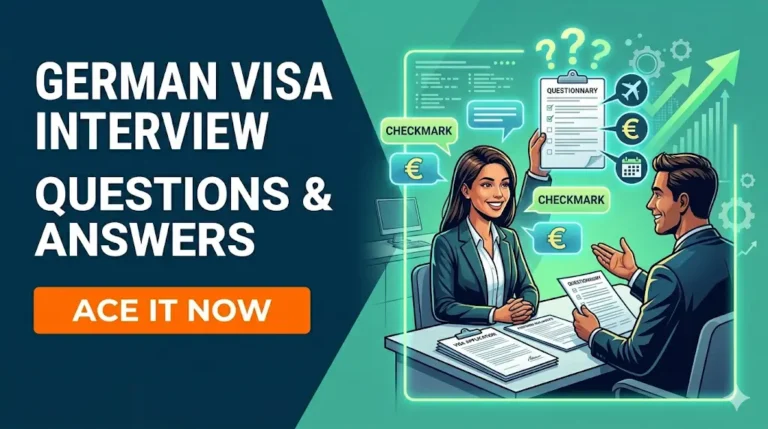
The interview at the embassy is usually straightforward but can be nerve-wracking. They may ask questions to ensure the marriage is not one of convenience (Scheinehe). They will ask about how you met, where you live in Germany, and what your plans are.
Once the local office in Germany gives the "green light," they notify the embassy, and the visa is issued. This entire cycle can take anywhere from three to nine months. During this time, your family can't usually visit you on a tourist visa if their intent is to stay, so be prepared for a long-distance stretch.
Moving and Post-Arrival Steps
Once the visa is stamped and your family arrives in Germany, the work isn't quite over. You have a few immediate tasks to ensure their stay remains legal and comfortable.
- Anmeldung: Within two weeks of arrival, you must take your family to the Bürgeramt to register their address. You can find out more at How to Register Your Address (Anmeldung) in Germany.
- Health Insurance Card: Apply for the German Health Insurance Card (Gesundheitskarte): Uses and How to Get One so they can visit doctors without stress.
- Residence Permit (Aufenthaltstitel): The visa in their passport is usually only valid for 90 days. You must visit the local immigration office to convert this into a long-term plastic residence card.
- Integration Course: Many spouses are mandated to attend an integration course to improve their German to B1 level. This is often subsidized by the state.
Bringing your family to Germany is a marathon, not a sprint. Using tools like Expatrio for your financial and insurance proof and Lingoking for your translations can shave weeks off the process by eliminating errors. Hang in there—the moment you finally see your family at the airport in Frankfurt or Berlin makes every single form worth it.
Disclaimer
This article is for informational purposes only and does not constitute legal advice. Immigration laws in Germany are subject to frequent changes, and individual cases can vary significantly based on nationality and specific visa types. Always consult with the official German Embassy or a qualified immigration lawyer before proceeding with your application.