How to Choose Between Online and In-Person German Classes
Trying to master the German language while balancing a full-time job and the endless paperwork of the Ausländerbehörde is a struggle that can leave you feeling completely defeated. I spent my first six months in Germany alternating between expensive evening classes and half-hearted app sessions before finally finding a rhythm that worked. This guide breaks down whether you should commit to a physical classroom or embrace the digital world to finally conquer your German goals.
Disclosure: This post may contain affiliate links. We may earn a commission at no extra cost to you if you make a purchase through these links. Read full disclosure.
The Administrative Weight of German Language Learning
In Germany, learning the language is rarely just a hobby; for most of us, it is a legal or professional necessity. Whether you are here on a family reunification visa or a skilled worker permit, the government often has a say in how and when you study. Understanding this context is the first step in choosing the right path because sometimes the "choice" is influenced by what the state will subsidize or recognize.
Visas and Language Requirements
Many expats arrive in Germany and quickly realize that their residency status is tied to their linguistic progress. If you are applying for permanent residency or citizenship, you will need to prove your proficiency through standardized tests. For these high-stakes goals, you might find yourself looking at German Language Certificates: TestDaF, DSH, and Goethe to ensure the path you choose aligns with official requirements.
If your visa specifically mandates an "Integration Course," your options might be limited to government-approved in-person schools. These courses are designed to help you reach a B1 level while also teaching you about German history and culture. While the structure is rigid, the heavy subsidies make them the most affordable way to learn if you qualify. However, for those on a standard work visa, the flexibility of choosing between a private school and an online platform remains open.
The Integration Course Experience
The "Integrationskurs" is a staple of the expat experience in Germany. These are almost exclusively in-person and are held at institutions like the Volkshochschule (VHS) or private language centers. I remember the exhaustion of attending these five days a week, but the intensity is precisely why they work for so many people. You are forced to interact with others who are in the exact same boat, coming from all corners of the globe.
If you are currently Working in Germany Without Knowing German: Tips and Realities, you might find that the government-mandated hours of an integration course conflict with your shift schedule. In these cases, you’ll need to negotiate with your employer or look for "Berufssprachkurse" (professional language courses) that are sometimes offered in the evenings or via hybrid models.
Why In Person German Classes Still Rule the Volkshochschule
There is something quintessentially German about the Volkshochschule. These community adult education centers are found in almost every town and offer some of the most consistent Learning German: Top Language Schools and Resources for Expats available to foreigners. Even in the age of high-speed internet, the physical classroom offers advantages that a laptop screen simply cannot replicate.
Social Immersion and Networking
The biggest selling point for in-person classes is the immediate social circle they provide. When you move to a new city like Stuttgart or Leipzig, making friends can be notoriously difficult. A language class becomes your primary social hub. You aren't just learning cases and declensions; you are finding out which bakeries have the best Brötchen and which doctors speak English.
In-person classes allow for "side-talk"—those little whispers to your neighbor asking "Wait, did she say 'der' or 'die'?"—which helps reinforce learning through peer support. You also get to experience the teacher’s body language and immediate corrections, which are vital for mastering those guttural "ch" sounds and the tricky "u" umlaut. If you struggle with isolation, the physical presence of a group can be the difference between sticking with German or giving up entirely.
Forced Discipline and Routine
Let’s be honest: many of us lack the self-discipline to study after a long day of work. When you sign up for How to Find Intensive German Courses for Newcomers at a physical school, you are paying for a schedule. You have to put on shoes, leave your house, and show up at a specific time. This physical transition from "home mode" to "study mode" is a powerful psychological tool.
In a physical classroom, there are no browser tabs to distract you. You can't "quickly check an email" while the teacher is explaining the passive voice. This forced focus is often what leads to faster progress in the early stages (A1 to B1). The routine of the commute, the coffee break with classmates, and the physical act of writing on a whiteboard creates a multi-sensory experience that helps the language "stick" in a way that digital flashcards often don't.
The Flexibility of Online German Learning
For many modern expats, the traditional 9-to-5 classroom model is a relic of the past. If you are a freelancer, a digital nomad, or a parent, your schedule might change from week to week. This is where online platforms have revolutionized the way we integrate. Platforms like Lingoda have become a lifeline for people who need to fit German into the cracks of a busy life.
Learning from Anywhere Even Your Couch
The most obvious benefit of online classes is the lack of a commute. In winter, when the German sun sets at 4 PM and the rain is sideways, the last thing you want to do is navigate a delayed S-Bahn to get to a drafty classroom. Online learning allows you to create a comfortable, low-stress environment. You can have your own tea, your own comfortable chair, and your own specialized dictionary apps open beside you.
Furthermore, online platforms give you access to teachers from all over Germany, not just the ones who live in your specific neighborhood. This exposes you to different accents and regional dialects, which is incredibly helpful if you plan on traveling across the country. For specific needs, like preparing a CV or practicing for an interview, using a service like iTalki allows you to find a tutor who specializes in business German, helping you learn How to Improve Your German for the Workplace with 1-on-1 precision.
Tailoring Your Schedule to a Busy Career
If you work in a high-pressure environment, the rigidity of a 6 PM in-person class can actually become a source of stress. If a meeting runs late, you miss the class and fall behind. Online learning solves this through modular scheduling. With a platform like Lingoda, you can often book classes 24/7. If you have a burst of energy at 10 PM on a Tuesday, you can find a qualified teacher ready to go.
This flexibility is also vital for those navigating the German Education System: Universities, Vocational Training, and More Explained. Students often have irregular lecture schedules, and being able to book a session during a two-hour gap between seminars is a game-changer. It allows for a more "bite-sized" approach to learning, which can be more effective for long-term retention than a single, grueling four-hour block once a week.
Comparing the Practical Realities
Choosing between these two formats often comes down to a cold, hard look at your lifestyle and finances. It isn't just about the tuition fee; there are hidden costs and benefits to both that you only notice after a few months of commitment.
| Feature | In-Person Classes | Online Classes |
|---|---|---|
| Cost | Often cheaper per hour (especially VHS) | Can be more expensive, but saves on travel |
| Social | High; great for making local friends | Low; limited to screen interaction |
| Flexibility | Rigid; set times and locations | High; book sessions anytime/anywhere |
| Focus | High; limited external distractions | Variable; requires high self-discipline |
| Commute | Required; adds 30-90 mins to your day | None; start instantly |
| Materials | Physical textbooks and hand-outs | Digital PDFs and interactive portals |
Financial Costs and Materials
When you look at the price tag of a Volkshochschule course, it often looks like a bargain—sometimes as low as 150 to 200 Euro for an entire module. However, you have to add the cost of the "Monatskarte" (monthly transit pass) and the physical textbooks, which can run another 30-50 Euro. You also lose time, and as the saying goes, time is money.
Online classes might have a higher upfront subscription cost, but you save on transit and expensive cafeteria snacks. Additionally, digital platforms often provide all the materials as part of the fee. If you need specialized help, such as translating your foreign diplomas to prove your educational background for Vocational Training (Ausbildung) in Germany: Can Foreigners Apply?, you might use a service like Lingoking to handle the certified translation of your documents, which is a separate but necessary expense in your integration journey. Lingoking is particularly helpful when you need fast, official translations that the German authorities will actually accept.
The Commute and Energy Burnout
Do not underestimate the "German winter effect." From November to March, your energy levels will naturally dip. If your language school is a 30-minute tram ride away, the "barrier to entry" for attending class becomes very high when it’s dark and snowing. I’ve seen many expats drop out of in-person evening courses in February simply because they couldn't face the commute anymore.
Online classes have a "zero-friction" start. You can be in your pajamas five minutes before the lesson starts. This significantly reduces the likelihood of skipping class. On the flip side, if you work from home all day, an online class might feel like just "more screen time," which can lead to digital fatigue. In that specific scenario, the walk to a physical school might actually be the mental break you need to refresh your brain before diving into German grammar.
How to Choose Based on Your Learning Style
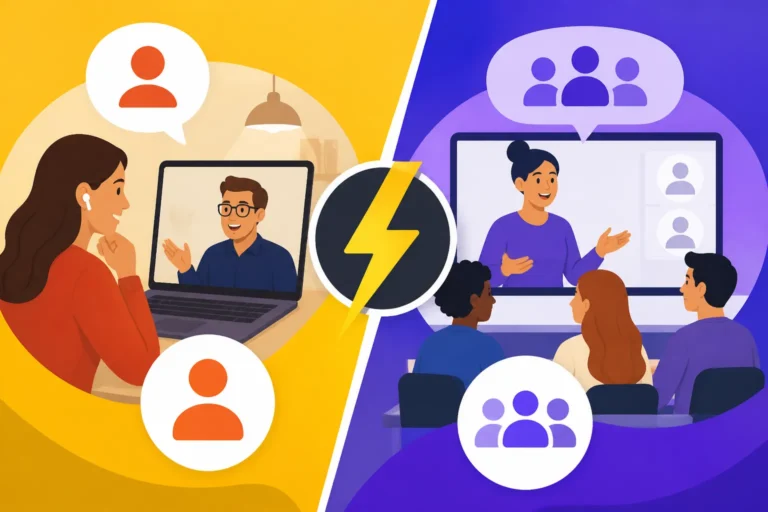
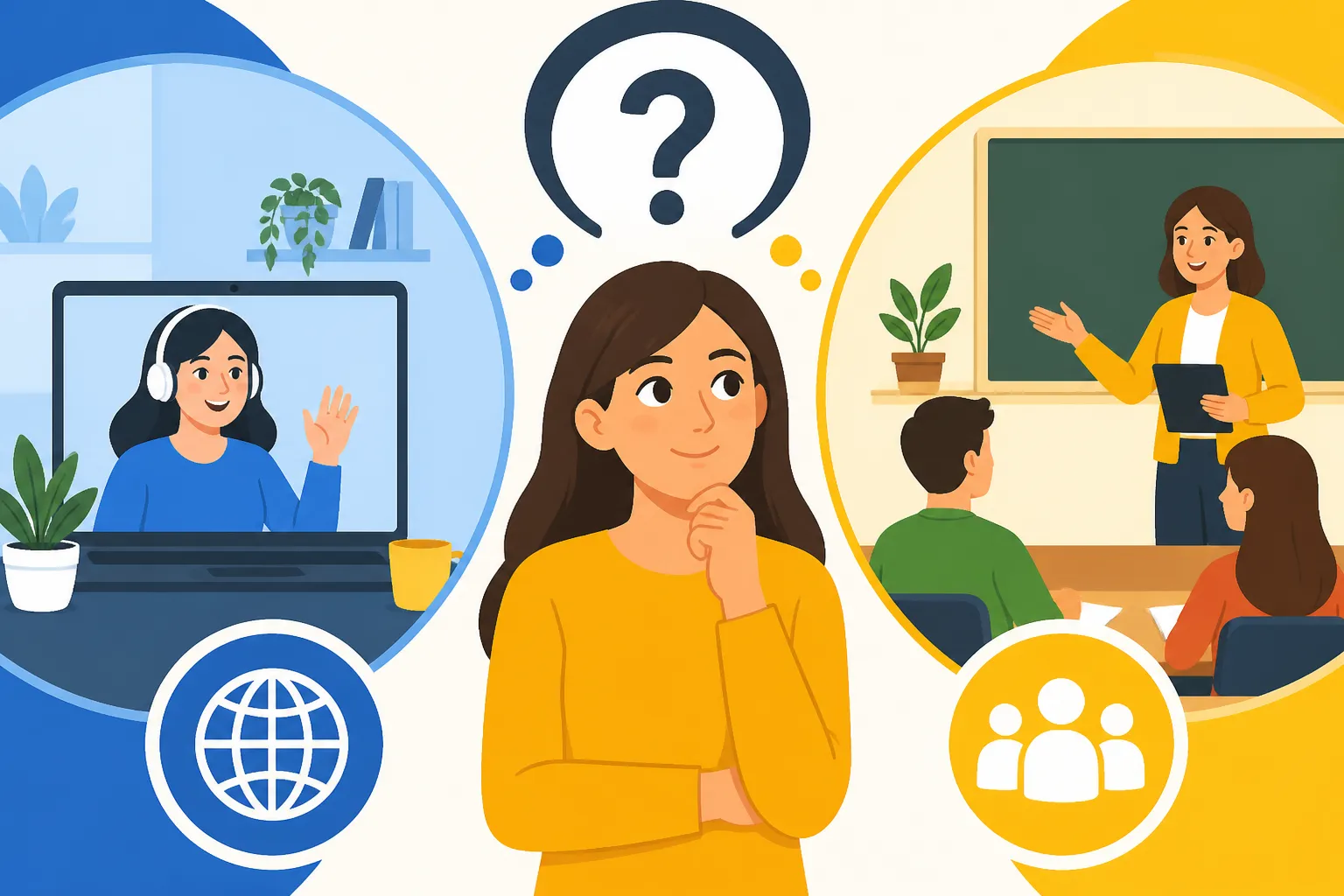
Ultimately, the best way to learn German is the way that you will actually stick with for more than a month. I always tell new arrivals to take a "hybrid" approach if possible. Start with an intensive in-person course to get the basics and meet some people, then transition to online tutoring to refine your skills and maintain your level.
The "Extrovert" vs. "Introvert" Framework
If you are someone who draws energy from being around people, in-person classes are a no-brainer. You will thrive on the group energy and the competitive nature of a classroom environment. You’ll find yourself going for a "Feierabendbier" (after-work beer) with your classmates, which is where the real learning happens anyway.
If you are more introverted or suffer from "language anxiety," the privacy of an online session can be a blessing. It can be terrifying to make a mistake in front of 15 strangers. In a 1-on-1 session on a platform like iTalki, it’s just you and the tutor. You can ask "stupid" questions without feeling judged, and the tutor can focus entirely on your specific weak points, whether it’s the dative case or your pronunciation of "Eichhörnchen."
Long Term Integration Goals
Consider where you want to be in two years. If you want to work in a traditional German "Mittelstand" company where only German is spoken, you need the social nuance that only comes from in-person interaction. You need to learn how to read the room, how to interrupt politely, and how to use the formal "Sie" in a natural setting.
If your goal is to work in a global tech hub in Berlin where the office language is English, but you want enough German to handle the "Bürgeramt" and buy groceries, online classes are perfectly sufficient. They provide the functional language skills you need without the massive time commitment of a traditional school. No matter which path you choose, remember that consistency is your only real path to success. The German language is a marathon, not a sprint, so choose the shoes that feel most comfortable for the long haul.
Disclaimer
The information provided in this guide is for informational purposes only and does not constitute legal or professional advice. Requirements for visas, residency, and citizenship in Germany are subject to change, and you should always consult the official website of the Federal Office for Migration and Refugees (BAMF) or a qualified immigration lawyer for the most up-to-date regulations.