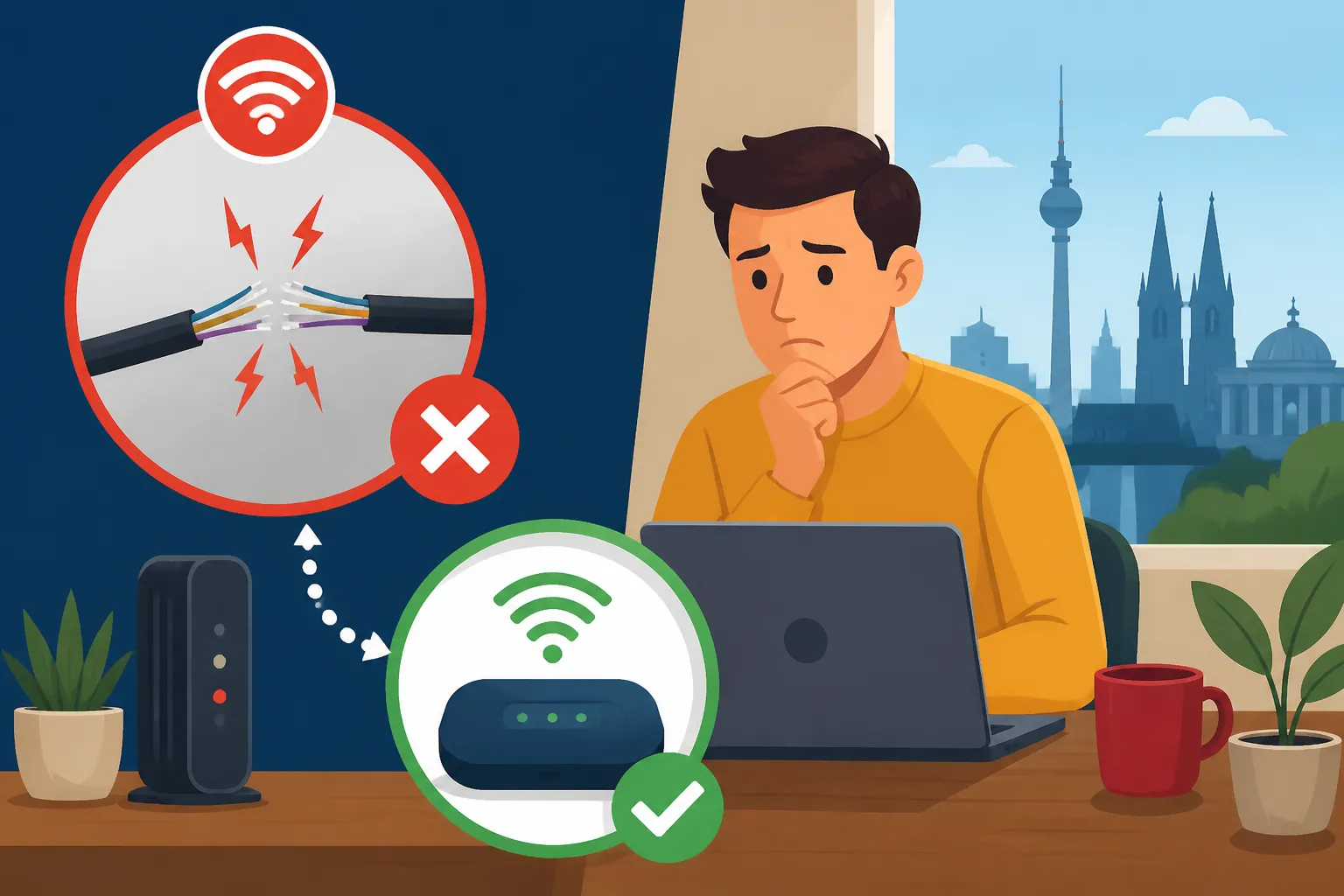
Backup Connectivity for Remote Workers in Germany: When Your Fibre Goes Down
Picture this: You’re deep into a crucial video call, presenting to clients or collaborating with your team across time zones, and then – poof – your internet connection drops. The spinning wheel of doom appears, your video freezes, and that familiar wave of panic washes over you. In Germany, where the internet infrastructure can sometimes feel like a charming but unpredictable old friend, fibre outages, while rare, do happen, and for remote workers, they can be an absolute catastrophe. This guide is here to equip you with the knowledge and the best backup solutions, so you’re never left in the digital dark again, ensuring your productivity and peace of mind.
Disclosure: This post may contain affiliate links. We may earn a commission at no extra cost to you if you make a purchase through these links. Read full disclosure.
The Remote Worker's Nightmare: Why Internet Outages Hit Hard in Germany
Living and working remotely in Germany offers incredible opportunities, from the beautiful cities to the efficient public transport. However, it also comes with its unique set of challenges, and few are as disruptive as a sudden internet outage. When your primary fibre connection goes down, it's not just an inconvenience; it can bring your entire workday to a grinding halt and even impact your professional standing.
The Reality of German Internet Infrastructure and Its Quirks
Ah, German internet. It's a topic that can spark lively debates among expats, isn't it? While Germany boasts a highly developed infrastructure, particularly in major cities, the reality on the ground can sometimes feel… inconsistent. Many expats move here expecting lightning-fast, uninterrupted service akin to what they might have experienced in other highly digitalized nations, only to find that even fibre optic cables can be surprisingly susceptible to local construction work, technical glitches, or even just the vagaries of a forgotten regional cable. You've signed up for a top-tier fibre plan, meticulously comparing providers and packages, perhaps even grappling with the German-only signup process as detailed in How to Set Up Internet in Germany Without German Skills (English-Friendly Providers). You expect seamless connectivity, but then a digger hits a cable down the street, or a router decides to stage a silent protest, and suddenly, you're offline.
It’s not necessarily that German internet is bad; it’s often reliable most of the time. The issue is that when it fails, it tends to do so without warning, and getting it fixed can involve navigating customer service lines, waiting for technicians, and generally feeling like you've fallen into a bureaucratic black hole. This isn't always a quick fix, and a day or two without internet is simply not an option for someone whose livelihood depends on constant online presence.
Impact on Productivity and Professional Reputation
For the remote worker, internet is literally the lifeline to your job. Every email, every video conference, every project file shared, every line of code written – it all flows through that connection. When it vanishes, your productivity doesn't just dip; it plummets to zero. Imagine being in the middle of a crucial brainstorming session, or about to submit a tight deadline report, and suddenly your screen freezes. The ripple effect is immediate: missed deadlines, delayed communications, and a frantic scramble to explain yourself to colleagues and clients who might not understand the peculiarities of your local internet situation.
Beyond the immediate workload, repeated or lengthy outages can subtly chip away at your professional reputation. While your team might be understanding the first time, frequent disruptions can lead to perceptions of unreliability, regardless of whose fault it truly is. In the structured and often highly professional German work culture, consistency and dependability are paramount. Being consistently online and responsive is not just a convenience; it's a fundamental expectation. This is why having a robust backup plan is not just smart, it's a non-negotiable part of setting up a successful Remote Work in Germany: Setting Up Your Home Office Legally and Effectively.
Essential Backup Strategies: Don't Get Caught Off Guard
So, how do you prepare for the inevitable "blackout" days? The key is to have a multi-layered approach, a safety net that catches you when your main connection inevitably falters. While some solutions are better than others, any backup is infinitely better than no backup.
Leveraging Your Smartphone: Tethering and Mobile Hotspots
Your smartphone is probably already your most versatile gadget, and it’s often the first line of defense when your home Wi-Fi dies.
Tethering, or using your phone as a personal hotspot, turns your mobile data into a Wi-Fi signal that your laptop or other devices can connect to. It's incredibly convenient because you likely already have your phone and a data plan. Many German mobile providers, like Telekom, Vodafone, and O2, offer decent data packages, and you can usually find flexible options for Setting Up a Phone Plan in Germany: Prepaid vs Contract.
However, tethering has its limitations. Firstly, it can drain your phone's battery remarkably fast, so you'll need to keep it plugged in. Secondly, while 5G coverage is expanding, the speed and stability of your connection depend entirely on your mobile network signal in your specific location. If your apartment building is a "dead zone" for a particular provider, your tethered connection might be frustratingly slow or unreliable, especially for bandwidth-heavy tasks like video conferencing. Lastly, traditional German mobile data plans, while improving, can still be a bit stingy with truly unlimited data, and exceeding your allowance can lead to throttling or unexpected costs, adding to your Cost of Living in Germany: Budgeting Guide for Expats.
A dedicated mobile hotspot device, like a pocket Wi-Fi router, is another option. These are small, portable gadgets that run on a SIM card and create a Wi-Fi network. They have their own battery, often lasting longer than a phone, and can sometimes offer more stable connections. You'd typically buy a separate data SIM for it, which could be a prepaid option. The downside? It's another device to buy, charge, and carry, and you're still relying on the same mobile network infrastructure with its associated data caps and potential signal issues. While it offers a bit more separation from your primary phone, it's not a fundamentally different technology from tethering in terms of reliance on traditional mobile networks.
Public Wi-Fi and Co-working Spaces: A Last Resort?
When all else fails, seeking refuge outside your home office might seem like a viable plan. Germany has a growing number of public Wi-Fi hotspots, though they're not always as ubiquitous or as robust as in some other countries. You can often find free Wi-Fi in cafes, train stations, libraries, and shopping centers. However, relying on public Wi-Fi for critical work tasks comes with significant drawbacks.
Security is a major concern. Public networks are inherently less secure, making your data vulnerable to snoopers. For sensitive work, this is a definite no-go. Speed and reliability are also highly variable; you might find yourself battling for bandwidth with dozens of other users, leading to frustratingly slow connections, especially if you need to upload large files or participate in video calls. And let's not forget the sheer inconvenience of having to pack up, commute to a location, and then hope for a decent connection, all while trying to maintain your Work-Life Balance in Germany: How Germans Balance Work and Leisure.
Co-working spaces offer a much more professional alternative. Cities like Berlin, Munich, and Hamburg are brimming with modern co-working options that provide reliable, high-speed internet, ergonomic desks, and a productive atmosphere. This is an excellent solution for occasional use or if you anticipate a longer outage. Many offer day passes, providing a temporary escape from your internet woes. The catch? Cost. Day passes can add up, and the spontaneity of a sudden outage means you might not always find a spot, especially if you need to travel to one, which cuts into your precious working hours. It's a fantastic solution for intentional work outside the home, but less ideal as an immediate, seamless backup for unexpected outages.
The Modern Solution: eSIMs and Portable Connectivity
Now, let's talk about a game-changer that has revolutionized how expats like us stay connected, especially when our primary internet decides to take a Kaffeepause. Enter the eSIM. This technology offers incredible flexibility and can be a true lifesaver for remote workers in Germany.
Understanding eSIM Technology and Its Benefits for Expats
An eSIM, or embedded SIM, is essentially a digital SIM card that's built directly into your compatible smartphone, tablet, or smartwatch. Unlike a traditional physical SIM card that you have to insert and swap out, an eSIM allows you to activate a cellular plan from a provider without needing a physical chip. You simply download a data plan profile onto your device.
The benefits for expats and remote workers in Germany are huge:
- Instant Activation: No more waiting for a physical SIM card to arrive in the mail, no more trips to a phone store to sign a contract, especially if you're still navigating the initial Anmeldung process or sorting out your Internet and Mobile Phone Plans in Germany: Getting Connected Fast. You can purchase and activate a data plan almost instantly, often within minutes, right from an app.
- Dual SIM Functionality: Most eSIM-compatible phones allow you to use both a physical SIM (for your regular German number) and an eSIM simultaneously. This means you can keep your primary phone number active for calls and texts while using the eSIM purely for backup data, ensuring you're always reachable.
- Flexibility and Freedom: You're not tied to long-term contracts. eSIM data plans are typically pay-as-you-go or short-term packages. Need 10GB for a week because your fibre is down? Buy it. Need more? Top up. This flexibility is invaluable for unpredictable situations.
- Cost-Effective for Backup: Instead of paying for a redundant, full-price mobile contract you rarely use, an eSIM allows you to buy data only when you truly need it. This makes it a smart and economical backup choice.
- Global Reach: While we're focusing on Germany, the beauty of eSIMs is their global nature. If you travel frequently for work or leisure, as many expats do (perhaps on a quick weekend trip you planned using insights from Mobile Data and eSIMs for Travel in Germany), you can easily switch to local data plans in other countries without roaming fees or hunting for local SIMs.
This technology essentially decouples your data connectivity from a single physical chip and long-term commitment, making it an incredibly agile and efficient tool in your remote work arsenal.
Why Airalo Stands Out for Reliable Backup in Germany
When it comes to eSIM providers, there are a few players out there, but for sheer ease of use, extensive coverage, and transparent pricing, Airalo consistently emerges as a top choice, especially for the expat community in Germany. Think of Airalo as your digital guardian angel for connectivity.
Airalo works with local German mobile networks like Telekom and Vodafone, giving you access to their established infrastructure. This means you’re not getting some second-rate connection; you’re tapping into the very same networks that millions of Germans use every day. What makes Airalo particularly compelling for backup connectivity is its straightforward approach. You download the Airalo app, browse available data packages for Germany (they offer various sizes and durations, from small top-ups to larger bundles), purchase what you need, and follow simple instructions to activate it on your eSIM-compatible device. The entire process can take less time than it takes to make a cup of coffee.
Here's why Airalo is such a hero for remote workers:
- Seamless Integration: The Airalo app is intuitive and user-friendly. You can monitor your data usage, top up, or even switch to a new plan with just a few taps. No more deciphering complex German menus or dealing with customer service in a language you're still mastering.
- Flexibility on Demand: Your fibre just went down? Hop onto the Airalo app, buy a data package, and you’re back online for your important video call. The sheer speed of getting connected is its biggest advantage. You’re not locked into anything you don’t need, which is perfect for an unpredictable backup scenario.
- Cost Transparency: With Airalo, what you see is what you get. There are no hidden fees or surprise charges. You pay for the data you select, for the duration you choose. This helps with budgeting, which is always a concern when you're managing your finances as discussed in Cost of Living in Germany: Budgeting Guide for Expats.
- Reliable Network Access: Because Airalo partners with strong local carriers in Germany, you can expect a reliable connection, often with 4G or 5G speeds where available. This is crucial for maintaining productivity and participating in online meetings without glitches.
- Customer Support: While setting up Airalo is generally a breeze, knowing that you have access to their support team (often in English) is another layer of reassurance when you’re already stressed about an internet outage.
In essence, Airalo provides a fast, flexible, and reliable bridge to keep you productive when your primary internet connection goes offline. It’s not just for travel; it’s an indispensable tool for maintaining continuous connectivity right here in your German home office.
Comparing Your Backup Options: A Deep Dive into Practicality
Choosing the right backup solution isn't a one-size-fits-all situation. It depends on your specific needs, budget, and the nature of your remote work. Let's stack up the common options against what an eSIM like Airalo offers to give you a clearer picture.
Cost-Effectiveness and Data Plans: What to Consider
When evaluating backup options, cost is naturally a significant factor, especially when you're already paying for your primary internet connection.
- Smartphone Tethering: This is often perceived as "free" because you're using your existing phone plan. However, that's only true if you have a genuinely unlimited data plan (which are less common or more expensive in Germany) or if your current allowance is generous enough to handle a full day or more of heavy work. If you exceed your data cap, you might face speed throttling or, worse, expensive overage charges. The cost here is often hidden in potential penalties or the need to upgrade your primary mobile plan unnecessarily.
- Dedicated Mobile Hotspot Device: You're looking at an upfront cost for the device itself, which can range from €50 to €150 or more. Then, you still need a separate data SIM card and a plan for it, adding another recurring monthly expense or regular top-ups. While it provides a dedicated device, it's essentially a separate version of tethering but with an initial hardware investment.
- Public Wi-Fi/Co-working Spaces: Public Wi-Fi is free but comes with security and reliability compromises. Co-working spaces, while excellent, typically charge a daily or hourly fee. A day pass in a German city can easily run you €20-€40. If your internet is down for a few days, this quickly becomes a very expensive solution. The "cost" here also includes your time and transportation to get there.
- eSIM (e.g., Airalo): This option has a clear, pay-as-you-go pricing structure. You only buy data when you need it. Airalo offers plans that might range from a few euros for a small, short-term data package (e.g., 1GB for 7 days) up to larger bundles (e.g., 20GB for 30 days for around €20-€30, depending on current offers). The flexibility means you’re not spending money on data you don’t use, making it incredibly cost-effective for an occasional backup. There's no hardware cost (assuming you have an eSIM-compatible phone), and you avoid unexpected overage charges from your primary mobile provider.
Here's a quick comparison of the financial aspect:
| Backup Option | Initial Cost | Data Plan Cost (typical) | Best For |
|---|---|---|---|
| Smartphone Tethering | €0 (if you own phone) | Usage of existing mobile plan, potential overages/throttling | Short, infrequent outages; light usage |
| Dedicated Mobile Hotspot | €50 – €150+ | Separate data SIM, recurring monthly fees or frequent top-ups | Users wanting separate device; moderate usage |
| Public Wi-Fi | €0 | Free, but risks to security & reliability | Very short, non-critical tasks; emergency checks |
| Co-working Space | €0 (no device) | €20-€40/day pass | Longer, planned outages; collaborative tasks |
| eSIM (e.g., Airalo) | €0 (no device) | Pay-as-you-go, typically €5-€30 per package (depending on data/duration) | Immediate, flexible backup for any outage length; critical work |
Speed, Reliability, and Ease of Setup
Beyond cost, the performance and practicality of your backup solution are paramount.
- Smartphone Tethering:
- Speed & Reliability: Highly dependent on your phone's signal strength and network congestion. Can be good for basic browsing but might struggle with sustained video calls or large downloads if the signal is weak.
- Ease of Setup: Very easy. Just a few taps in your phone settings.
- Battery Impact: Significant battery drain on your phone.
- Dedicated Mobile Hotspot Device:
- Speed & Reliability: Generally similar to smartphone tethering, as it uses the same mobile networks. Might offer slightly better antenna performance than some phones, but not a huge difference.
- Ease of Setup: Requires inserting a SIM, initial configuration, and charging. Slightly more effort than tethering.
- Battery Impact: Has its own battery, freeing up your phone.
- Public Wi-Fi/Co-working Spaces:
- Speed & Reliability: Highly variable for public Wi-Fi (often slow, unreliable, and insecure). Co-working spaces are usually excellent, but require physical presence.
- Ease of Setup: Public Wi-Fi can be hit-or-miss with captive portals and login issues. Co-working spaces are straightforward but require registration.
- Battery Impact: Uses your device's battery directly, potentially less drain on your phone if using a laptop.
- eSIM (e.g., Airalo):
- Speed & Reliability: Airalo leverages Germany's strong mobile networks, offering speeds (4G/5G where available) comparable to or even better than what you might get from your primary mobile provider, depending on coverage in your area. It’s designed for seamless data use.
- Ease of Setup: Extremely easy and fast. Download the Airalo app, choose your German data package, and activate. No physical SIM swapping, no store visits. You can literally get connected in minutes from the comfort of your (offline) home.
- Battery Impact: When tethering via an Airalo eSIM on your phone, the battery drain is similar to regular phone tethering. However, the key is the flexibility and reliability of the data source itself. Since you're likely using your phone for other things in Germany, perhaps navigating with apps mentioned in Top 10 Apps for Living in Germany: Navigating Daily Life with Your Smartphone, keeping it charged is already a habit.
For remote workers who value immediate, reliable, and flexible backup without breaking the bank or compromising security, an eSIM solution like Airalo clearly offers significant advantages. It's the most modern and agile way to ensure you're always connected, even when your fibre decides to take an unexpected break.
Pro Tips for Seamless Connectivity in Germany
Even with the best backup plan, a little foresight and preparation can go a long way in minimizing the stress of an internet outage. As a veteran expat, I've learned a thing or two about anticipating those bureaucratic and technical hiccups that can derail your day.
Planning Ahead: Testing Your Backup and Data Needs
Don't wait for a crisis to discover your backup plan isn't quite as robust as you thought. Proactive testing is crucial.
First, identify your critical data needs. Are you primarily doing video calls? Do you need to upload large files? Or is it mostly email and light browsing? This will determine how much data you might need in a pinch. A typical hour-long video call can consume anywhere from 500MB to 1.5GB, depending on quality. If you're doing several of those a day, a small 1GB plan won't cut it.
Next, set up your chosen backup option before you need it. If you're going with an eSIM, download the Airalo app, understand how to purchase a plan, and even activate a small, cheap plan just to ensure your phone is compatible and the process works smoothly for you. Test tethering your laptop to your phone using that Airalo connection. Does it work? Is the speed acceptable? Try it in the exact spot in your home where you typically work, as signal strength can vary even within a single apartment.
Make sure all your devices are charged – phone, laptop, and any mobile hotspot devices. Keep a power bank handy. There's nothing worse than having a backup data plan but no power to use it.
Also, keep important contact numbers accessible offline. This includes your primary internet provider's customer service (if you need to report the outage), any co-working spaces you might consider, and even your emergency contacts. Trying to find numbers when you're already offline and stressed is a recipe for more frustration.
Optimizing Your Workflow During an Outage
When your main internet connection fails and you're running on backup data, every megabyte counts. Here are some strategies to optimize your workflow:
- Prioritize Tasks: Immediately identify the most critical tasks that absolutely require an internet connection. Can some work be done offline first, like drafting emails, writing reports, or working on documents locally? Save bandwidth for essential communications like client emails or team check-ins.
- Minimize Bandwidth Usage:
- Video Calls: If possible, switch off your video feed and encourage others to do the same, especially if your backup is just for yourself. Audio-only calls use significantly less data. If you're using a tool like Zoom or Google Meet, explore settings to reduce video quality.
- Downloads/Uploads: Postpone large downloads or uploads until your fibre is restored. If it's absolutely critical, start it and monitor data usage closely.
- Streaming: Avoid any personal streaming (music, videos) – save that for when your main connection is back.
- Background Apps: Close any unnecessary apps or browser tabs that might be consuming data in the background (cloud syncing services, software updates, social media feeds).
- Communicate Proactively: Inform your team and clients as soon as you realize you're having an outage. Let them know you're switching to a backup (like your Airalo connection) and might experience slightly different connectivity or response times. This manages expectations and maintains your professional image, adhering to the principles of good German Work Culture: Etiquette, Hierarchy, and Office Norms. A quick message from your phone using your Airalo data can prevent hours of anxiety and misunderstandings.
- Use Offline Versions: Many productivity tools (Google Docs, Microsoft Office) have offline modes. Ensure you've enabled them so you can continue working on documents even without a live connection, then sync them when connectivity is restored.
By planning ahead and being strategic with your backup data, you can turn a potential disaster into a minor blip, ensuring you remain productive and professional even when Germany’s internet decides to take a little nap. With Airalo in your pocket, you're not just buying data; you're buying peace of mind.
Disclaimer
The information provided in this guide is for general informational purposes only and does not constitute professional advice. While we strive to ensure the information is accurate and up-to-date, rules, regulations, and service offerings in Germany can change. We recommend verifying any critical information with official sources or seeking professional advice. We are not responsible for any actions taken based on the information in this guide.