Is It Rude Not to Tip in Germany?
Disclosure: This article contains affiliate links. If you buy through them, we may earn a commission at no extra cost to you. Read our full disclosure.
If you’ve ever sat in a Munich beer hall with the bill in your hand and no idea whether to leave nothing, a few coins, or an American-sized tip, you’re not alone. This guide explains what Germans actually expect, when skipping a tip is fine, when it comes across badly, and how to handle the payment moment without looking like a confused tourist.
Is It Actually Rude Not to Tip in Germany? The Honest Answer
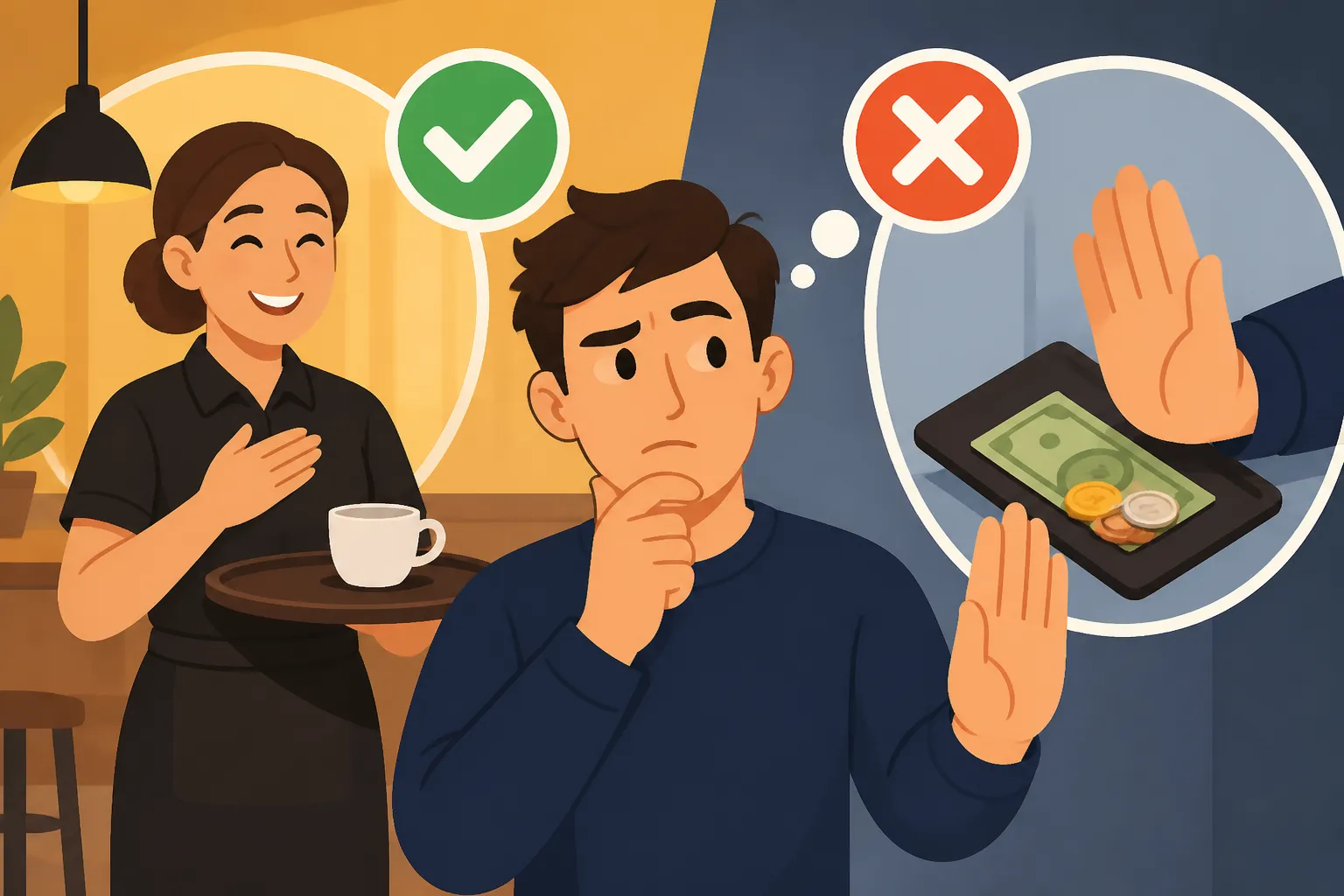
The short answer is no. Not tipping is not considered rude in the way it would be in New York or Toronto. The longer answer is that leaving nothing after decent table service will look a little stingy, and locals do notice it. The useful middle ground is to tip modestly when someone has served you, and not to worry about it anywhere else.
I remember my first proper dinner out in Germany. It was a small Gasthaus in Franconia. I had been warned that “Germans don’t tip,” so I paid the exact amount, smiled, and left. The waitress was perfectly polite, but she paused slightly when I paid. A German friend later told me that pause meant “that was a bit cheap.” Nobody was offended. It was just a small social signal that I had missed.
Tipping in Germany is called Trinkgeld, which literally means “drink money.” The name tells you a lot. It is a small thank-you on top, not a wage subsidy that the server depends on to pay rent.
Why Germans See Tipping Differently
Prices on German menus already include service and VAT. The number you see is the number you pay, with no surprise service charge added at the end. Restaurant staff are paid a wage that does not rely on tips, so the guilt-driven tipping culture of North America never really took hold here.
Because of this, Germans think of a tip as a reward for service that was friendly and attentive, not an obligation. A good tip says “that was nice, thank you.” A small tip or no tip says “that was fine” or “that wasn’t great.” It is a quieter system, and many expats find it refreshing once they understand it.
There is also a cultural preference for things being fair and proportional. Throwing down a huge tip for an ordinary meal can actually feel a bit odd to Germans, almost showy. Rounding up thoughtfully fits the local mindset much better than generosity for its own sake. If you’re curious about other unwritten rules like this, What Should You Not Do in Germany as a Visitor? covers the bigger picture.
When Skipping the Tip Does Come Across Badly
There are a few situations where paying the exact amount stands out. The main one is a sit-down meal where a server took your order, brought your food, checked on you, and handled the bill. In that setting most Germans round up or add a modest amount, so paying to the cent will read as a mild complaint.
The same goes for a café where you were served at the table for a long, relaxed Kaffee und Kuchen session, or a bar where the same person brought rounds to your group all evening. In each case someone did work specifically for you, and a small gesture is expected.
Where it does not matter at all: buying a pretzel at a Bäckerei, grabbing a Currywurst from a stand, ordering at a counter, or picking up groceries. Nobody expects Trinkgeld there, and some staff will look puzzled if you try to leave one.
How Tipping Works at the Table: Restaurants, Cafés and Beer Halls
Restaurants are where most visitors stumble, and the mechanics confuse people more than the amount does. In Germany you usually don’t leave money on the table and walk away. The tip is handled live, in conversation with the server, at the moment you pay. Getting comfortable with that exchange is most of the battle. For a fuller look at manners at the table, see German Dining Etiquette: Eating Out, Tipping, and Table Manners.
The Golden Rule: Tell the Server the Total Out Loud
Here’s how a typical payment goes in a German restaurant:
- Catch the server’s eye and ask for the bill. “Die Rechnung, bitte” or “Zahlen, bitte” both work. Servers rarely bring the bill unprompted, so you have to ask.
- The server comes to your table with a wallet or handheld terminal and tells you the amount.
- You work out your total, including the tip, in your head.
- You say the total you want to pay. For example, if you want to round up, you name the higher figure.
- Hand over your cash or card. The server takes the amount you named and gives change from that.
The phrase locals use when they want the server to keep all the change is “Stimmt so,” which roughly means “that’s right as it is.” If you hand over a note and say “Stimmt so,” you are telling the server to keep the difference.
A real-life scenario: you and a friend have dinner in Cologne. The bill comes to a slightly awkward figure. You hand over a larger note and say the rounded-up amount you want to pay. The server nods, thanks you, and gives you change for the rest. Smooth, quick, and completely normal. If you want the details on getting the bill in the first place, How to Ask for the Bill in a German Restaurant walks through it.
One trap catches almost everyone: saying “Danke” as you hand over the money. In Germany, saying “thank you” at that moment is often understood as “keep the change.” If you hand over a large note, say “Danke,” and expect change back, you may find the server has already pocketed the lot. Wait until you have your change before thanking them.
Card Payments and the Awkward Terminal Moment
Card payment is far more common than it used to be, but plenty of traditional restaurants, Kneipen and smaller cafés still prefer cash or have a card minimum. It’s worth carrying some cash, especially in smaller towns. Cash vs Card in Germany: What Visitors Should Know explains where you’re likely to need it.
When you do pay by card, the terminal often does not have a tip prompt like the ones you see in the US. Instead, you tell the server the total you want charged before they type it in. Say something like “Machen Sie bitte…” followed by your total, and they will enter that amount. If you forget, and the exact bill is already on the screen, you can either leave a few coins in cash or simply accept it. Nobody will chase you down.
Some newer places, particularly in Berlin and other big cities, do have terminals with built-in tip options. Treat those suggestions as optional. Choosing a small amount or no tip on a counter-service order is completely fine.
Beer Gardens, Christmas Markets and Self-Service Spots
Bavarian beer gardens are often partly self-service. You queue up, grab your Maß and your Obatzda, and pay at the counter. No table service, no tip expected. In the big Munich beer halls with waiters in traditional dress carrying armfuls of steins, it’s different: you’re being served, so round up when you pay. How to Order Beer in Germany Like a Local covers the ordering side.
At Christmas markets you pay at the stall for Glühwein, bratwurst or roasted almonds. Tipping isn’t expected. You’ll also notice a mug deposit, which is not a tip, and you get it back when you return the mug. If the deposit system confuses you, How German Christmas Markets Work: Food, Drinks, and Gifts has the breakdown.
Imbiss stands, kebab shops, bakeries, takeaway counters and supermarkets all fall into the same category: no tip needed. Some counters have a small tip jar by the till. Dropping a coin in is a nice touch if someone was especially friendly, but it is genuinely optional.
Tipping Beyond Restaurants: Taxis, Hotels, Tours and Toilets
Outside of restaurants the rules relax even further. The table below gives a quick overview of what’s typical, so you can glance at it before heading out.
| Situation | Is a Tip Expected? | What Locals Usually Do |
|---|---|---|
| Sit-down restaurant with table service | Yes, modestly | Round up or add a small amount when paying |
| Café with table service | Usually | Round up to a convenient figure |
| Counter service, bakery, Imbiss | No | Pay the exact price, maybe a coin in the jar |
| Beer hall with waiters | Yes, modestly | Round up when paying the waiter |
| Self-service beer garden | No | Pay at the counter, no tip |
| Taxi | Commonly | Round up the fare, a little more for help with luggage |
| Hotel housekeeping | Optional | Leave a small amount for longer stays |
| Hotel porter | Optional | A small tip per bag if they carry it |
| Tour guide | Appreciated | A modest tip if the tour was good |
| Toilet attendant | Expected where present | Leave coins in the dish |
| Hairdresser | Usually | Round up or add a small amount |
| Food delivery driver | Appreciated | Round up, especially in bad weather |
| Long-distance bus or train staff | No | No tip |
Taxis and Ride-Hailing
For taxis, rounding up the fare is the norm. If the driver helps you load heavy suitcases into the boot or navigates a tricky drop-off near the Hauptbahnhof, a bit extra is a kind gesture. If the driver was rude or took an obviously long route, you can pay the meter amount exactly and nobody will think twice.
Ride-hailing apps work in the cities where they operate, and the app may offer a tip option afterward. It’s optional in the same way as a taxi.
If you’re travelling between cities by train or long-distance bus, perhaps booked through a comparison platform like Omio, there’s no tipping at all. Train conductors and bus drivers aren’t tipped in Germany, so you can relax on that front.
Hotels and Accommodation
Hotel tipping is light in Germany. Housekeeping tips are not standard for a one- or two-night stay, though leaving a small amount on the pillow or desk at the end of a longer stay is appreciated, especially if you’ve made a mess. A note saying “Für das Zimmermädchen” or “Danke” makes it clear the money is intended as a tip and not forgotten change.
Porters at bigger hotels may carry your bags. A small tip per bag is a friendly gesture. Concierges who go out of their way, say by securing a restaurant table you couldn’t get yourself, can also be thanked with a tip, but it’s never demanded.
Smaller family-run Pensionen and guesthouses rarely expect tips at all. If you’re weighing up the two styles of stay, see How to Choose Between a Hotel and a Pension in Germany. If you’ve booked through Booking.com, you won’t see any tipping guidance on the listing, so rely on these local norms rather than habits from home.
Tour Guides and Day Trips
Walking tours are an interesting case. Many cities have “free” walking tours where the guide works entirely for tips. Here, a tip isn’t optional in spirit. If you joined and enjoyed it, pay what you think the tour was worth. Walking off without paying anything on a tip-based tour genuinely is rude.
For paid tours, whether a day trip to Neuschwanstein, a Rhine boat tour or a guided visit to Berlin’s Wall memorials, a modest tip for a good guide is appreciated but not required. If you booked through GetYourGuide, the tour price covers the service. Tipping the guide at the end is your choice, usually done in cash. A friendly, knowledgeable guide who kept a group of tired tourists engaged for hours deserves a little extra. A guide who read from a script and rushed you along does not.
Toilet Attendants, Hairdressers and Deliveries
Public toilets in train stations, motorway service areas and some restaurants or clubs may have attendants who keep them clean. You’ll often see a small dish with coins in it at the entrance. Leaving coins there is expected, and walking past without paying anything can earn you a look. In some stations there are turnstiles instead, which you pay to pass. How to Use Public Toilets When Traveling in Germany explains what to expect.
At hairdressers, rounding up or adding a small amount is common, particularly if you’re happy with your cut. If someone different washed your hair, you can tip them separately, though many people simply include it in the total.
Food delivery drivers, whether from a local pizzeria or an app, appreciate a tip, especially if they cycled through rain and climbed four flights of stairs to reach your Altbau flat. Rounding up is the usual approach.
Handling Bad Service and Awkward Situations
This is the part where many visitors worry the most. You don’t want to insult anyone, but you also don’t want to reward a server who ignored you for forty minutes. The good news is that German tipping norms give you room to express exactly that.
Is It OK to Leave Nothing After Bad Service?
Yes. In Germany, tips are genuinely tied to service quality. If your server was rude, forgot your order, or disappeared for long stretches, paying the exact bill is a recognised and accepted way to show you weren’t satisfied. You don’t need to explain yourself, and you don’t need to apologise.
There is one small caution. German service can seem brisk or reserved to people from countries where servers are trained to be chatty and attentive. A waiter who doesn’t check on you every five minutes isn’t being rude. That’s normal here. Many Germans actually prefer to be left alone to eat and talk. Before you decide service was bad, ask yourself whether it was actually poor or just different from home.
Consider this scenario. You’re in a busy Frankfurt Apfelwein tavern. Your server is curt, slams the Bembel jug down, and doesn’t smile. But your food arrived quickly, your glasses were refilled, and the bill came promptly when asked. By local standards that was good service, just delivered in a gruff regional style. A small round-up would be fair. Compare that to a café where you waited a long time, had to flag someone down repeatedly, and got the wrong order. Paying exactly the bill there is completely reasonable.
Common Mistakes First-Timers Make
Here are the slip-ups I see visitors make most often, and that I made myself in my early months:
- Leaving money on the table and walking out. In most German restaurants the server expects to settle with you directly. Money left on the table can create confusion about whether it was a tip or payment. Hand it over instead.
- Saying “Danke” too early. As covered above, it can be read as “keep the change.” Save your thanks until the change is in your hand.
- Over-tipping out of habit. Tipping very generously for an ordinary meal won’t offend anyone, but it can come across as unusual. Modest and thoughtful fits better.
- Assuming every place takes cards. Get caught without cash at a traditional Kneipe and the whole tipping question becomes awkward. Carry some euros.
- Waiting forever for the bill. Servers often won’t bring it until you ask. Sitting quietly hoping it appears can make you think service is slow when it isn’t.
- Splitting the bill confusion. Germans often pay separately, with the server asking “Zusammen oder getrennt?” which means “together or separate?” If you pay separately, each person adds their own tip to their own share.
Tipping is just one of many small habits that surprise newcomers. If you want to get ahead of the others, Common Cultural Surprises for First-Time Visitors to Germany is a good next read, and How to Tip in Germany: Customs for Restaurants, Taxis, and More goes deeper into individual situations.
The bottom line: in Germany, a tip is a thank-you, not a tax. Tip modestly when someone has served you well, skip it when nobody served you, and hold back when service was genuinely poor. Say your total out loud, keep a few coins handy, and you’ll fit right in.
Disclaimer
This article is for general informational purposes only and does not constitute professional advice. Laws, prices and regulations vary by location and change over time. Consult a qualified professional for guidance on your specific situation.