Jobs That Don’t Require German: Fields Where English Is Enough
Finding yourself in the middle of a job hunt in Germany when your language skills are still at the "ordering a croissant" level can be an isolating and terrifying experience. I remember sitting in a tiny cafe in Neukölln, refreshing job boards for three hours, and feeling my heart sink every time I saw the words "Verhandlungssicher" or "C1 German" required for a position I was otherwise overqualified for. This guide breaks down the specific industries and strategic pathways where English is not just accepted, but often the primary language of business, so you can stop panicking and start applying.
Disclosure: This post may contain affiliate links. We may earn a commission at no extra cost to you if you make a purchase through these links. Read full disclosure.
The Reality of the English-Speaking Job Market in Germany
The German labor market is undergoing a massive shift, driven by a desperate need for skilled labor and an increasingly globalized economy. While the traditional German "Mittelstand"—the small-to-medium-sized family businesses that form the backbone of the economy—still largely operates in German, a parallel universe exists in the major cities. In hubs like Berlin, Munich, Frankfurt, and Hamburg, the working language is frequently English. This is particularly true for companies that compete on a global scale or have international teams.
When I first arrived, I made the mistake of thinking that every company required German because, well, we are in Germany. But the truth is more nuanced. International corporations (the DAX companies) and tech-heavy startups often prioritize technical skill over linguistic fluency. They know that if they only hired German speakers, they would lose out on 90% of the world's top talent. This creates a massive opening for expats who are still working through their GermanPod101 lessons in their spare time but need to earn a living now.
However, you must be realistic about the trade-offs. Working in an English-speaking environment can sometimes feel like living in a bubble. You might spend eight hours a day speaking English at the office, only to realize you still can't understand your neighbor’s complaints about the trash sorting. It is a brilliant way to get your foot in the door, but it can slow down your integration if you aren't careful. For many, this is where a flexible platform like Lingoda becomes a lifesaver, allowing you to bridge the gap between your English-speaking professional life and your German-speaking social reality.
The Tech Sector: A Haven for English Speakers
If you are a developer, data scientist, or UX designer, you are in luck. The tech industry is the most prominent sector where English is the undisputed lingua franca. In Berlin, it is almost rare to find a software engineering team that conducts its daily stand-ups in German. Companies are pulling talent from Brazil, India, the US, and across Europe, and English is the only common denominator.
Within this space, specialized roles are even more open to English speakers. If you are exploring Working in Tech in Germany: Opportunities for IT Professionals, you will find that the deeper you go into niche technologies, the less the language barrier matters. Companies are so eager for experts in Cloud Architecture, AI, or Cyber Security that they will often pay for your relocation and even provide "relocation German" classes as a perk. The technical requirements are the high bar here; the language requirement is often a mere footnote.
Even if you aren't a coder, the tech ecosystem needs "adjacent" roles. Product Managers, Scrum Masters, and Technical Recruiters often operate entirely in English. These roles require high-level communication, but because the teams they manage are international, that communication happens in English. I have friends who have worked as Product Owners in Munich for five years without ever needing to write an email in German. While I wouldn't recommend that for long-term integration, it proves that the English-Speaking Jobs in Germany: Finding Work When You Don’t Speak German market is robust and sustainable for the right skill sets.
Digital Marketing, Sales, and Content Creation
Beyond tech, the digital economy offers significant opportunities for English speakers, particularly those who are native or near-native. Many German companies use Germany as their base but target the UK, US, or Scandinavian markets. They need people who understand the cultural nuances of those regions and can write copy, manage ad campaigns, or handle sales in perfect English.
In the world of Performance Marketing or SEO, the data speaks for itself. If you can show a company that you know how to scale their presence in international markets, they won't care if you struggle to talk to the office receptionist. Content marketing is another goldmine. Companies need high-quality English blogs, whitepapers, and social media management to compete globally. Your native English becomes a "hard skill" that is highly valued and difficult for local German speakers to replicate perfectly.
International Sales and Business Development roles also frequently bypass the German requirement. If your "Territory" is North America or EMEA (Europe, Middle East, and Africa), your daily life will be spent on Zoom calls and emails in English. These roles often come with high commission structures and can be found in almost every major German city. If you are struggling to find these, looking into Career Coaching in Germany: When You Need Extra Help to Find a Job can help you identify headhunters who specialize in placing international sales talent.
Academia and Research Roles
Germany is a global powerhouse for research and higher education. At the PhD and Post-Doctoral levels, English is almost always the language of instruction and publication. This is especially true in the STEM fields (Science, Technology, Engineering, and Mathematics). Many international research institutes, such as the Max Planck Institute or various Fraunhofer institutes, operate in an environment that is entirely international.
In these roles, your colleagues will be from all over the world. Your papers will be published in international journals, and the conferences you attend will be in English. This also extends to university administration in international offices. While some administrative roles at universities are bogged down in traditional German bureaucracy, many "International Student Coordinator" or "Expat Researcher Support" roles are designed for people who can navigate the English-speaking world effectively.
However, be prepared for a bit of a "two-tier" experience in academia. While the research is in English, the university’s HR and payroll departments will likely send you letters entirely in German. This is where you might need to lean on colleagues or use translation apps to ensure you are meeting your German Workplace Rights: Overtime, Breaks, and Vacation Days Explained. It is a peculiar experience to be a world-leading expert in astrophysics in English during the day and then feel like a confused toddler trying to read your pay stub in the evening.
Specialized Hospitality and International Tourism
While most "service" jobs in Germany—like working at a local bakery or a neighborhood pharmacy—require German, the high-end and international segments of hospitality are much more flexible. Luxury hotels that cater to international business travelers frequently hire English-speaking staff for front-desk, concierge, or management roles. They value the international mindset and the ability to make global travelers feel at home.
Similarly, the tourism industry in places like Berlin or Munich has a high demand for English-speaking tour guides, event planners, and hostel staff. If you have a deep knowledge of history or a specific niche (like street art or craft beer), you can often find freelance or contract work. Many expats use this as a "bridge job" while they are getting settled.
Another interesting niche is the "English-speaking service" market. In major cities, there are expat-focused gyms, yoga studios, and even kindergartens. These businesses explicitly target the international community and hire staff who can provide services in English. While these jobs might not always offer the high salaries of the tech sector, they provide a great social environment and a way to earn money while you are navigating the Startup Scene in Germany: Overview and Resources for Entrepreneurs or looking for more permanent career roles.
Comparing English-Friendly Sectors in Germany
| Industry | Language Flexibility | Top Locations | Common Job Titles |
|---|---|---|---|
| Tech & Software | Very High | Berlin, Munich, Hamburg | Developer, Data Scientist, UX Designer |
| Digital Marketing | High | Berlin, Cologne, Hamburg | SEO Manager, Copywriter, Growth Hacker |
| Academic Research | High | Heidelberg, Aachen, Munich | PhD Researcher, Post-Doc, Lab Manager |
| International Sales | Medium-High | Frankfurt, Munich, Berlin | Account Executive, BDR, Territory Manager |
| Hospitality | Medium | Berlin, Munich, Frankfurt | Front Desk, Event Coordinator, Concierge |
Navigating the Application Process in English
Just because the job is in English doesn't mean the application process is identical to what you might experience in London or New York. German companies, even the international ones, often have specific expectations for how information is presented. You need to ensure your application stands out by following local conventions where they make sense, while still highlighting your international value.
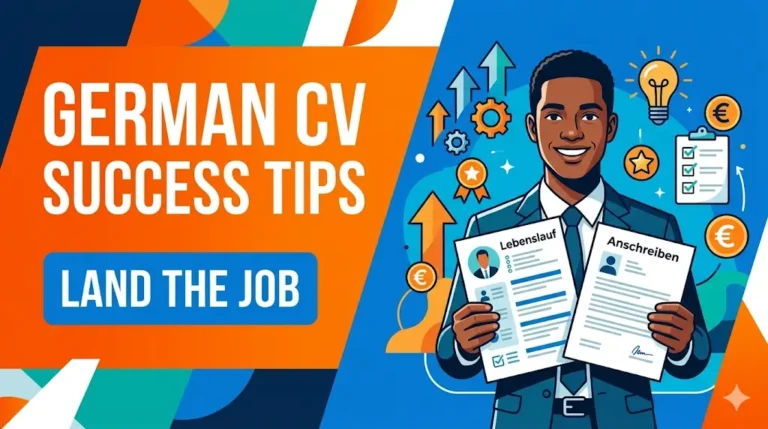
One of the biggest hurdles is the CV. Even for English-speaking roles, some companies still prefer a more structured, chronological format. Taking the time to research Writing a German-Style CV and Cover Letter: Tips for Success is essential. It isn't about changing your language to German; it's about changing the structure of your presentation to match what a German HR manager is used to seeing. This shows respect for the local culture and proves that you have done your homework.
Furthermore, you need to be aware of the legalities of your stay. If you are a non-EU citizen, your ability to work is tied to your visa. English-speaking employers who are used to hiring expats are generally more comfortable with this, but you should still be proactive. Understanding Work Visas and Sponsorship: What Employers Need to Know to Hire Foreigners will allow you to answer questions confidently during an interview. If you can tell a recruiter exactly what type of permit you need, you remove a major "friction point" that might prevent them from hiring you. Many English-speaking roles in high-demand fields are eligible for Blue Card Benefits at Work: Fast PR and Family Work Rights, which makes the administrative process much smoother for both parties.
Strategies for Long-Term Success
While finding a job that doesn't require German is a great first step, you shouldn't view it as a permanent escape from the language. Almost every expat I know who has stayed in Germany for more than three years eventually hits a "ceiling" if they don't learn the language. This ceiling isn't just professional; it's social and administrative. You might be fine in your English-speaking office, but your life will be infinitely easier once you can handle the "Finanzamt" (tax office) or the "Ausländerbehörde" (foreigners' office) without a translator.
My advice is to use the financial stability of your English-speaking job to invest in your language skills immediately. Don't wait until you "feel ready." Use tools like GermanPod101 for your commute and sign up for evening classes with Lingoda to keep yourself accountable. Being the person in the office who is "trying" to learn German goes a long way with your local colleagues. They will appreciate the effort, even if you mostly communicate in English for work tasks.
Ultimately, Germany is a land of opportunity for those with the right skills, regardless of their mother tongue. By focusing your search on tech hubs, international corporations, and specialized service sectors, you can build a thriving career here. Just remember that while English might get you the job, a little bit of German will get you the "Heimat" (home) feeling that makes living here truly special.
Disclaimer
The information provided in this guide is for informational purposes only and does not constitute legal, financial, or professional career advice. While every effort has been made to ensure the accuracy of the details provided, the job market and immigration laws in Germany are subject to frequent change. Always consult with official government sources or qualified professionals before making significant life or career decisions.