Medical Tourism in Germany: Do People Travel Here for Treatment?
Trying to figure out if your visiting parent can get treated in Germany without bankrupting you is a bureaucratic nightmare. I remember the sheer panic of navigating international patient billing when my father needed emergency cardiac care during a visit. This guide breaks down the reality of medical tourism in Germany, explaining why people come here and how non-residents can access care.
Disclosure: This post may contain affiliate links. We may earn a commission at no extra cost to you if you make a purchase through these links. Read full disclosure.
Why Germany is a Top Destination for Medical Tourists
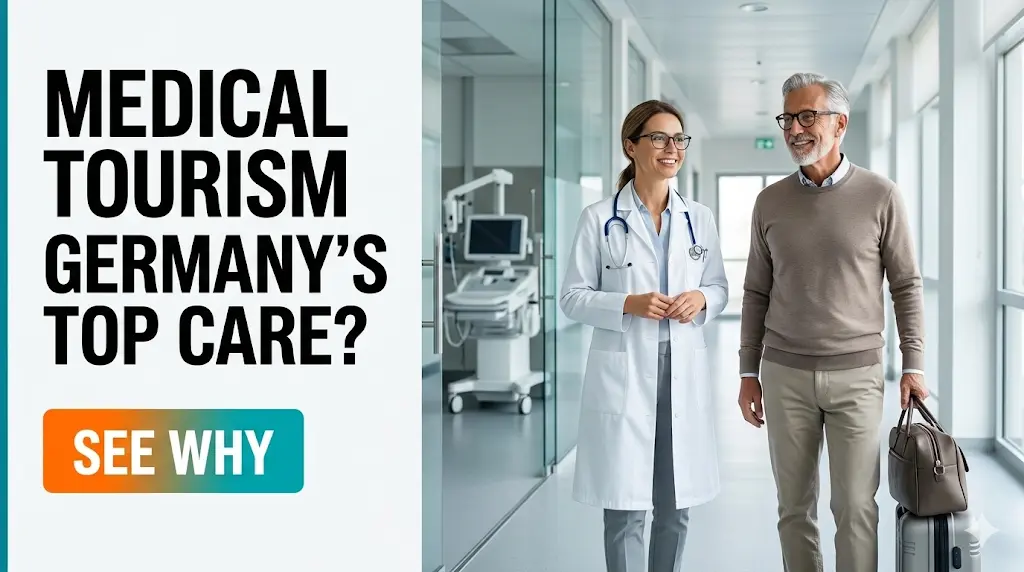
When we live here and deal with the notoriously grumpy receptionist at our local doctor’s office, it is easy to forget that Germany has one of the most advanced healthcare systems on the planet. For thousands of international patients every year, Germany is the ultimate destination for complex medical procedures, drawing people from the Middle East, Eastern Europe, the US, and the UK.
World Class Specialists and Technology
The primary driver for medical tourism in Germany is clinical excellence. German university hospitals, such as the Charité in Berlin or Heidelberg University Hospital, are global leaders in oncology, neurosurgery, orthopedics, and cardiology. People do not fly to Germany for cheap cosmetic surgery or dental veneers; they come for life-saving cancer treatments, complex spinal surgeries, and access to cutting-edge medical trials that simply are not available or approved in their home countries.
If you are an expat working here, you actually have access to this same world-class infrastructure, which is a massive perk of the local system. However, learning how to tap into this network requires understanding how referrals work, a topic we cover extensively in Finding a Doctor in Germany: How to Choose a Hausarzt.
The Cost Factor Compared to the US and UK
For Americans, medical tourism to Germany is often driven by pure economics. Even when paying completely out of pocket as an international private patient, complex surgeries in Germany can cost 40% to 60% less than they do in the United States. German medical billing is strictly regulated by the official fee schedule for doctors, preventing hospitals from charging arbitrary, astronomical sums.
For British patients, the motivation is usually time. When facing a two-year waiting list for a hip replacement on the NHS, flying to Germany and paying privately is a reliable way to bypass the queue and get back to living pain-free.
| Medical Procedure | Estimated Cost in the US | Estimated Cost in Germany (Private) | Motivation for Travel |
| Hip Replacement | €35,000 – €45,000 | €12,000 – €18,000 | Cost savings, faster access |
| Heart Bypass Surgery | €80,000 – €120,000 | €20,000 – €30,000 | Massive cost savings |
| Complex Oncology | Highly variable | Highly variable (Often cheaper) | Access to advanced clinical trials |
| Spinal Fusion | €70,000 – €90,000 | €15,000 – €25,000 | Precision engineering, cost |
How Medical Tourism Actually Works Here
If a non-resident wants to come to Germany for planned medical treatment, they cannot simply hop on a plane and show up at an emergency room. The process is intensely bureaucratic and requires significant upfront capital.
Getting a Medical Visa for Germany
Patients traveling from non-EU countries must apply for a specific Schengen Visa for medical treatment. The German embassy requires an overwhelming amount of paperwork for this. The patient must present a confirmed treatment plan from a German hospital and, crucially, a receipt proving that the estimated medical costs have already been paid in full directly into the hospital’s bank account. The German government absolutely will not issue a visa if there is any risk that the state will be stuck with unpaid medical bills.
This upfront deposit is often a massive hurdle. Hospitals usually estimate on the high side to cover potential complications. If you are trying to help a relative abroad navigate this, you will likely find yourself acting as their local translator and financial intermediary. Navigating the clinical terminology is tough enough in your native language; to help bridge the gap, keep our guide on Common German Medical Terms: A Mini Dictionary for Patients bookmarked.
International Offices at German Hospitals
To handle the influx of wealthy medical tourists, almost every major university hospital in Germany has established a dedicated “International Patient Office.” These departments operate entirely separately from the standard public admission desks.
They cater exclusively to self-paying foreigners, offering services like dedicated translators, VIP hospital suites, customized meal plans, and direct liaisons with the senior chief physicians. The catch is that these hospitals charge a significant administrative markup for these services. If you are an expat residing here permanently, you do not use these offices, but seeing their luxurious waiting rooms can definitely highlight the two-tiered nature of the system. To understand the baseline of what standard residents experience, review Healthcare in Germany: A Comprehensive Guide for Expats.
What This Means for Us Expats
Does It Increase Wait Times for Locals
One of the most common frustrations I hear from fellow expats is: “If thousands of medical tourists are flying in to see specialists, is that why I have to wait three months to see a dermatologist?”
The reality is nuanced. International patient offices generally operate with their own dedicated staff and administrative quotas. However, because medical tourists pay highly lucrative private rates, top-tier physicians are incentivized to dedicate a portion of their schedule to them. This can put a squeeze on the availability of highly specialized surgeons for the general public.
Navigating Insurance and Private Care
The truth is, the fast-track, VIP treatment that medical tourists experience is largely identical to the treatment local residents receive if they possess private health insurance. If you are enrolled in the statutory public system, your care is excellent, but you are subject to budget caps and waiting lists.
If you are a high-earning expat, switching to a premium private insurer like Ottonova essentially grants you that same priority access to chief physicians and single-bed hospital rooms, but at a regulated local premium rather than an inflated medical tourist rate. Providers like Ottonova are specifically tailored for expats, offering digital-first, English-language support that completely eliminates the administrative headaches of German medical billing.
For those of us navigating the complexities of settling here, having an insurance partner that actually speaks our language is vital. Even if you stay in the public system, utilizing specialized expat brokers like Feather Insurance ensures you are matched with a public provider that offers robust English support, protecting you from getting lost in the paperwork.
Planning a Visit for Overseas Family Members
There is a massive legal and financial difference between a medical tourist flying to Germany for a planned surgery and your mother visiting you for Christmas and unexpectedly breaking her ankle on an icy sidewalk.
Finding the Right Coverage for Guests
If your family is visiting, they must have dedicated incoming travel health insurance. You cannot rely on their domestic coverage from back home, and the German embassy will demand proof of this insurance if they require a visitor visa. If your guest requires sudden emergency surgery and does not have proper coverage, you—as their host—could be held financially liable.
To prevent this nightmare, you must secure proper visitor coverage. Providers like Feather Insurance offer specific “Incoming” policies that are perfectly calibrated to meet German visa requirements. They cover unexpected emergency room visits, acute treatments, and medical repatriation, allowing you to host your family without the underlying anxiety of a potential financial disaster.
Supporting Recovery with Familiar Supplements
Whether your family member is recovering from an unexpected emergency during their visit, or you are personally recovering from a procedure, navigating German pharmacies post-treatment can be deeply frustrating. Local pharmacies keep tight control over inventory, and you will rarely find the high-dose vitamins, specific joint supplements, or familiar holistic recovery aids you might be used to in the US or Asia.
To bridge this gap, expats routinely rely on borderless wellness platforms. By ordering through iHerb, you can easily source familiar, high-quality international supplements, immune support formulas, and recovery aids, having them shipped directly to your German apartment. When my father was recovering from his cardiac scare here, being able to order his specific, preferred dietary supplements via iHerb provided a massive sense of comfort and normalcy during an incredibly stressful time.
If your own medical treatment requires you to miss significant time at work, you must ensure you follow the strict local labor laws to protect your salary while you heal.
Germany’s reputation as a medical powerhouse is well-deserved. By understanding how the system accommodates international patients, optimizing your own resident insurance strategy with partners like Feather Insurance or Ottonova, and sourcing your necessary wellness tools globally via iHerb, you can navigate this complex healthcare landscape with absolute confidence.
References
Primary sources (official)
- Federal Foreign Office (Auswärtiges Amt): Official guidelines and documentation requirements for applying for a Schengen Visa specifically for medical treatment in Germany.https://www.auswaertiges-amt.de/en/visa-service/buergerservice/faq/18-medicaltreatment/606680
- Federal Statistical Office (Destatis): Comprehensive data and statistical reports regarding inpatient hospital care and the demographics of international patients treated in German facilities.https://www.destatis.de/EN/Themes/Society-Environment/Health/Hospitals/_node.html
Other helpful sources
- Make it in Germany: The federal government’s official portal for international professionals, providing broad context on the structure, quality, and accessibility of the German healthcare system.https://www.make-it-in-germany.com/en/living-in-germany/health-healthcare
- German Medical Association (Bundesärztekammer): Information on the official fee schedule for physicians (GOÄ), which regulates how private and international patients are billed for medical services.https://www.bundesaerztekammer.de/en/
Disclaimer
The information provided in this article is for general informational and educational purposes only and does not constitute professional medical, legal, or financial advice. The legal requirements for securing a medical visa, the upfront financial deposits required by German hospitals, and the specific terms of incoming visitor policies or private health insurance plans from providers highly complex and subject to continuous updates by German authorities. Always consult directly with the German embassy, a qualified medical facility, or a certified insurance broker regarding your specific healthcare and immigration situation.