Moving with Your Company: Intra-Company Transfers to Germany (What to Know)
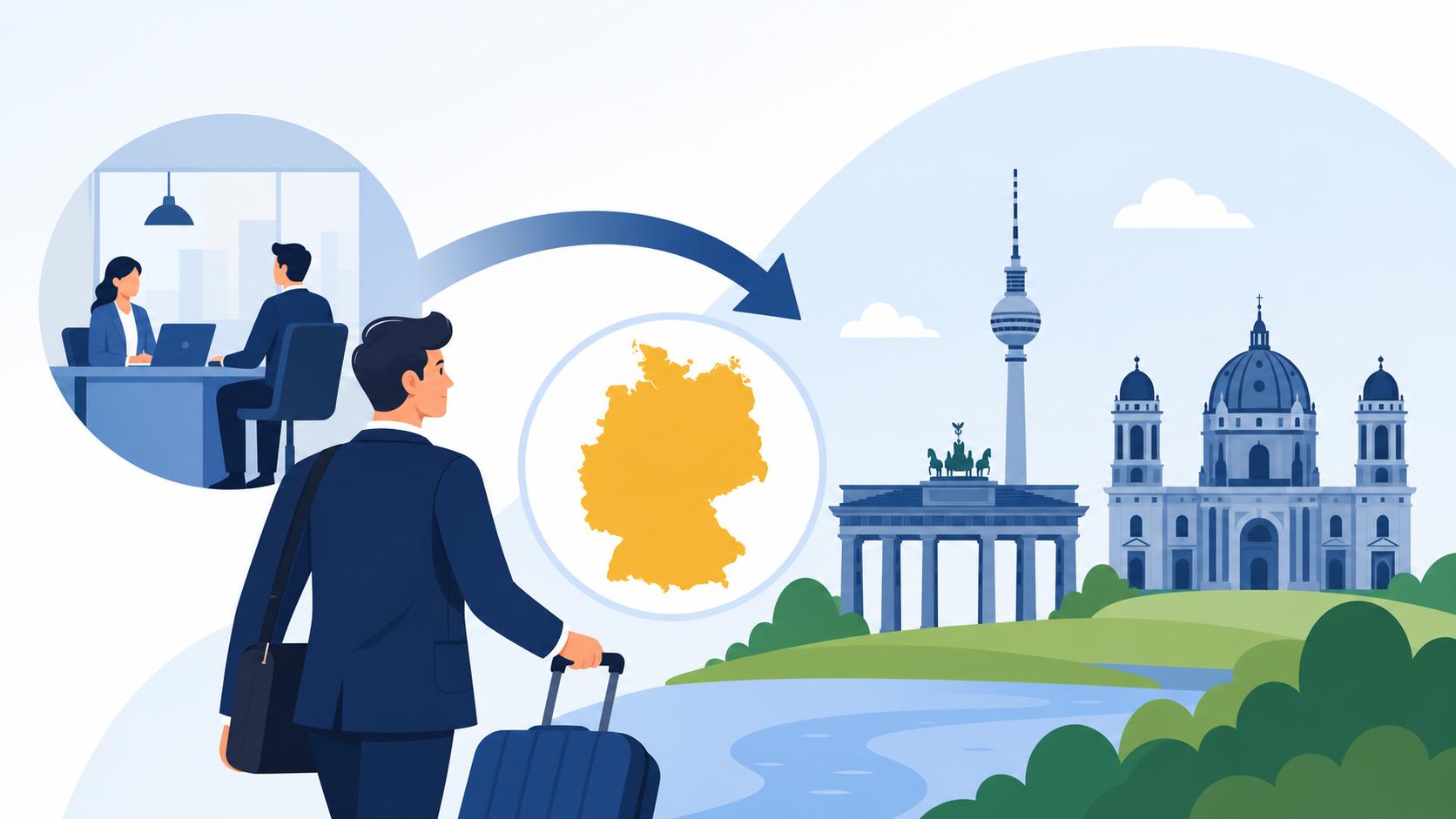
The assumption that an intra-company transfer is a simple "plug-and-play" move is one of the biggest myths in the expat world. When my company first suggested a move to their Munich office, I thought the internal approval was the finish line, but I quickly learned it was just the starting block for a marathon of German bureaucracy. This guide demystifies the ICT Card process, explains the legal requirements, and provides a realistic roadmap for your professional relocation to Germany.
Disclosure: This post may contain affiliate links. We may earn a commission at no extra cost to you if you make a purchase through these links. Read full disclosure.
Understanding the ICT Card vs. Standard Work Visas
The Intra-Company Transfer (ICT) Card is a specific type of residence permit designed for employees of companies located outside the European Union who are being "posted" to a German branch. Unlike a local hire who signs a direct German contract, you remain tethered to your home-country employer, even if you are physically sitting in an office in Frankfurt or Hamburg. This distinction is vital because it dictates everything from your health insurance to your long-term residency rights.
Who Qualifies for an Intra-Company Transfer?
The German government doesn't hand out ICT Cards to just anyone. The system is strictly tiered into three categories: managers, specialists, and trainee employees. A manager is defined as someone leading the organization or a specific department, while a specialist is someone possessing "uncommon" knowledge essential to the company’s specific services, research, or management. Trainees are usually recent graduates participating in a career development program.
To qualify, you generally must have been employed by your company for at least six months (for managers and specialists) or three months (for trainees) before the transfer. This prevents companies from hiring people specifically to bypass standard immigration routes. I've seen colleagues try to skip this requirement by claiming "urgent business needs," but the German authorities are famously rigid on these timelines. If you're looking for a different path, you might want to compare this with the EU Blue Card Germany: Eligibility, Benefits, and Application Process to see which fits your career level better.
Differences Between the ICT Card and the EU Blue Card
A common point of confusion is whether to choose the ICT Card or the EU Blue Card. The ICT Card is temporary by nature. For managers and specialists, the maximum stay is usually three years; for trainees, it’s one year. Once that time is up, you are technically expected to return to your home country. In contrast, the Blue Card is a local hire visa that often leads to permanent residency much faster.
The ICT Card’s main advantage is "mobility." If you have a German ICT Card, you can work in other EU branches of your company much more easily than with a standard work permit. However, if your goal is to stay in Germany forever, the ICT route can feel like a dead end because the time spent on an ICT Card doesn't always count toward the years needed for a Permanent Residence Permit (Niederlassungserlaubnis): How to Qualify in Germany. Always ask your HR department if they are willing to transition you to a local contract later if you decide the German lifestyle is for you.
| Feature | ICT Card | EU Blue Card |
|---|---|---|
| Contract Type | Foreign (Home Country) | Local (German Entity) |
| Max Duration | 1 to 3 Years | Unlimited (with renewals) |
| Path to PR | Difficult/Restricted | Accelerated (21-33 months) |
| EU Mobility | High (intra-EU transfer) | Moderate |
| Salary Threshold | Comparable to locals | High (fixed statutory limits) |
The Application Process: From Home Country to German Residency
The application for an ICT Card typically begins at the German embassy or consulate in your home country. Even though your company's HR and legal teams will likely "handle" the paperwork, you are the one who will stand in the interview line. I remember the stress of making sure every single stamp was in the right place. German bureaucrats do not appreciate "approximate" documentation.
Essential Documents for the ICT Card
You will need a mountain of paperwork. This includes your valid passport, biometric photos, and proof of your professional qualifications. Most importantly, you need an "assignment letter" (Entsendeschreiben). This letter must detail the duration of the transfer, the location of the German branch, your job description, and your salary.
The salary is a sticking point. Germany requires that you are paid at least as much as a German employee in a comparable position. You cannot be "cheap labor" just because you are coming from a country with a lower cost of living. You will also need to provide the Documents Required for German Visa Applications: Complete Guide to ensure you haven't missed any of the finer details, such as the specific German-sized photos or the correct health insurance proof.
The Role of the Federal Employment Agency (ZAV)
Before the embassy can issue your visa, they usually have to check with the Bundesagentur für Arbeit (Federal Employment Agency), specifically the ZAV. They perform a "labor market test" to ensure your transfer doesn't negatively impact the German job market and that your work conditions are fair.
This is often where the "black hole" of waiting happens. Your application might sit on a desk in Bonn or Berlin for weeks. My advice? Stay in constant contact with your internal HR. Sometimes the ZAV requires a more detailed explanation of why you specifically are the specialist needed in Germany. While you wait, it is a great time to start using GermanPod101 to get a handle on basic office vocabulary. Being able to say "I am waiting for my work permit" in German won't speed up the process, but it certainly helps your confidence during your first week in the office.
Living and Working in Germany as an ICT Professional
Once you arrive, the reality of "living in two places at once" sets in. Because you are an ICT holder, you are a bit of an outlier in the German system. You have a residence permit, but your paycheck might still be coming from London, New York, or Tokyo. This creates unique hurdles in daily life that local hires don't face.
Managing Your Local Payroll and Taxes
Taxes in Germany are complicated, and as an ICT transferee, you might fall under "shadow payroll." This means that while your home country pays you, the German entity must report those earnings to the German tax office (Finanzamt). You will likely still be subject to German income tax if you spend more than 183 days in the country.
You must also deal with social security. If your home country has a social security agreement with Germany, you might be able to remain in your home country's pension and unemployment scheme using an "A1 Certificate" (for EU/EEA) or a "Certificate of Coverage" (for the US/Canada). If no such agreement exists, you might be forced to pay into the German system. This is where Understanding Your German Payslip: Gross vs Net Salary Explained becomes essential reading, as the deductions can be a massive shock to your expected take-home pay.
Adapting to German Work Culture
Transferring within the same company doesn't mean the culture will be the same. I transitioned from a very "casual Friday" US office to a German branch where the hierarchy was much more pronounced. In Germany, "directness" is a sign of respect, not rudeness. If your work is sub-par, a German colleague will tell you plainly. They aren't trying to hurt your feelings; they are trying to fix the problem.
Learning the nuance of the workplace is easier if you have a structured approach to the language. Using Lingoda for business-specific German classes can help you navigate the difference between "Du" and "Sie" in a professional setting. Small things, like knowing not to talk about work during the "Mittagspause" (lunch break) or understanding the sanctity of "Feierabend" (the end of the work day), will make your integration much smoother. You should also brush up on Work Culture in Germany: Etiquette, Hierarchy, and Office Norms to avoid the common pitfalls that make expats look "unprofessional" in German eyes.
Long-Term Outlook: Can You Stay After the Transfer?
The biggest heartbreak for many ICT holders is falling in love with Germany—the bread, the punctuality, the forests—only to realize their visa has a hard expiration date. Because the ICT Card is meant for temporary "postings," it is not inherently a "settlement" visa. However, there are ways to pivot if you decide you don't want to leave.
Mobile ICT Cards and Cross-Border Transfers
If your company has branches in France, Spain, or Poland, your German ICT Card allows for "short-term mobility" (up to 90 days) or "long-term mobility" (over 90 days) to work in those other EU countries. This is a huge perk for regional managers. However, each country has its own notification process. Don't assume you can just hop on a train and start working in Paris. You usually need to notify the authorities in the second country. Understanding the European Health Insurance Card (EHIC): Using It in Germany and Abroad is vital during these cross-border stints to ensure you are covered for medical emergencies outside of your German base.
Transitioning to Permanent Residency
If you want to stay in Germany after your three-year ICT limit, you generally have to switch to a different residence permit, like a standard Germany Work Visa & Immigration Guide for Professionals. This usually requires getting a local German employment contract.
The catch? Not all the time you spent on the ICT Card counts toward the five-year requirement for permanent residency. This is a gray area that often requires a specialized immigration lawyer to navigate. If you find yourself in this position, start the conversation with your company at least a year before your ICT Card expires. Switching visas from within Germany is much easier than going back home and starting over. You might also want to look into German Citizenship by Naturalization: Eligibility and Application Steps if you see yourself becoming a permanent part of the German fabric, though that is a much longer road.
Moving to Germany Expat Checklist
Before you get on that plane, make sure you have these specific "ICT-related" tasks handled. Standard expat checklists often miss the nuances of a company transfer.
- A1 or Certificate of Coverage: Ensure your HR has applied for this months in advance.
- Shadow Payroll Setup: Confirm with a tax advisor how your foreign salary will be taxed in Germany.
- Apostilled Degrees: Even for an internal transfer, the German authorities may want to see your original degrees with an official apostille.
- Health Insurance: If your home insurance doesn't meet German "comprehensive" standards, you'll need "Incoming Insurance" for the first few weeks.
- Address Registration: You still need to do your Anmeldung (Address Registration) vs Visa: Why Both Are Needed in Germany within 14 days of moving into your temporary or permanent flat.
Moving with your company is a privileged way to enter Germany, but it doesn't exempt you from the "German Way" of doing things. Embrace the paperwork, start the language lessons early with GermanPod101 or Lingoda, and remember that every stamp on your documents is one step closer to your new life in the heart of Europe.
Disclaimer
This article is for informational purposes only and does not constitute legal or professional tax advice. Immigration laws in Germany, especially regarding the ICT Card and the Residence Act (AufenthG), are subject to frequent changes. Always consult with a qualified immigration lawyer or your company's designated relocation specialist before making any legal decisions or submitting visa applications.