Paypal, Apple Pay, Google Pay in Germany: Digital Wallets Usage
Tapping your phone at a Berlin bakery and receiving a harsh “Nur Bargeld” stare is an expat rite of passage. I vividly remember abandoning my morning coffee because my foreign Apple Pay was entirely useless. This guide decodes the confusing reality of digital wallets in Germany, explaining where mobile payments work, why PayPal rules online, and how to survive this cash-first culture.
Disclosure: This post may contain affiliate links. We may earn a commission at no extra cost to you if you make a purchase through these links. Read full disclosure.
The German Payment Paradox Cash Versus Digital Wallets
When you relocate to Europe’s largest economy, you expect hyper-modern infrastructure. The reality of the German payment landscape is profoundly different. The country operates on a deeply entrenched dual system where cash is revered, but digital wallets are slowly, almost grudgingly, carving out their territory.
Overcoming the Cash Only Mentality
To understand why your digital wallet fails so frequently, you have to understand the German psychological attachment to physical money. The phrase “Nur Bargeld lacht” (only cash laughs/counts) is not just a saying; it is a cultural pillar. Historically, Germans favor cash because it guarantees absolute privacy, prevents them from spending money they do not actually have, and leaves zero data trails for financial institutions or the government to track.
While the global pandemic aggressively accelerated the adoption of contactless payments across the country, massive blind spots remain. Small businesses, independent bakeries, local pubs, and late-night corner stores (Spätis) frequently refuse digital payments entirely. Even if they have a card reader hidden under the counter, they will often demand cash for purchases under ten euros to avoid merchant processing fees. Knowing when to carry physical cash is a core component of managing your daily budget, a skill explored deeply in Cost of Living in Germany: Breakdown of Expenses Rent Food Transport. You must fundamentally rewire your brain to always check the shop window for card stickers before ordering.
The Girocard Monopoly
When a German store finally does accept card payments, you will run into the second massive barrier: the Girocard monopoly. Formerly known as the EC-Karte, the Girocard is the domestic debit card system unique to Germany. It operates on a completely different network than Visa or Mastercard.
Many traditional German retailers, especially neighborhood pharmacies and older supermarkets, have payment terminals configured exclusively to accept Girocards. If you double-click your smartphone to open Apple Pay or Google Pay, and your digital wallet is linked to a Visa or Mastercard issued by your home country, the terminal will instantly reject the payment with an aggressive beep. The cashier will look at you, point to a “Keine Kreditkarten” (no credit cards) sign, and demand a Girocard or cash.
To break this cycle of rejection, you must secure a localized bank account that issues cards compatible with both the global Visa/Mastercard network and domestic German systems. Integrating into this local banking infrastructure is an absolute necessity, and you can learn how to bypass the traditional brick-and-mortar wait times by reading Mobile Banking Apps in Germany: N26, Revolut, and More.
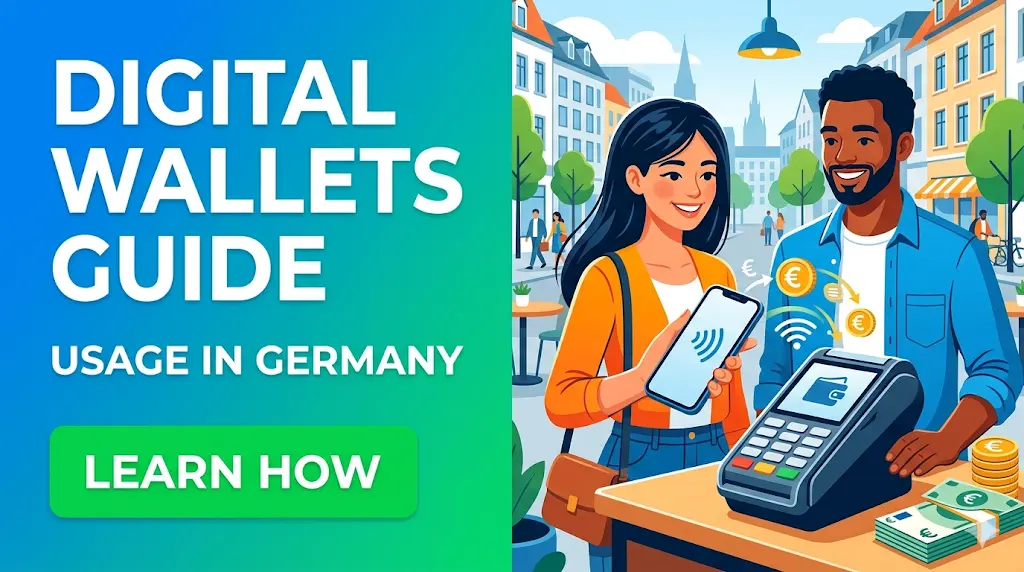
How Apple Pay and Google Pay Actually Work Here
Despite the hurdles, using your smartphone to pay is absolutely possible and increasingly common in Germany, provided you set up your digital wallet with the correct local financial tools.
Linking Your German Bank Account
The secret to making Apple Pay or Google Pay work flawlessly in Germany is ensuring the underlying card is issued by a German or SEPA-compliant European bank. Trying to run your daily life using a digital wallet linked to your old American or British checking account is a recipe for disaster. Not only will domestic terminals reject it, but the few that do accept it will trigger catastrophic foreign transaction fees from your home bank.
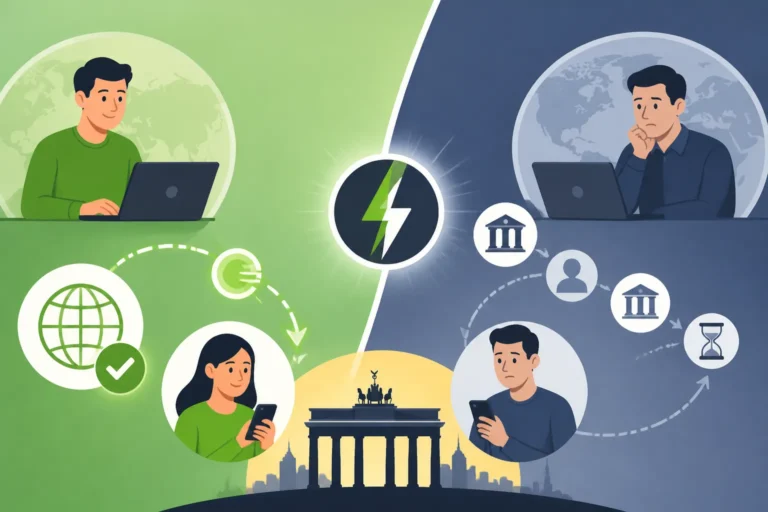
This is why setting up a modern digital bank account immediately upon arrival is critical. Using a mobile-first bank like N26 solves this issue instantly. Because N26 provides a recognized German IBAN and issues a Mastercard debit card, you can add it to your Apple Wallet or Google Pay app the very same day your account is approved, long before the physical plastic card arrives in the mail. When you tap your phone at a major retailer, the terminal reads the localized N26 digital card and processes the payment without friction. Having this instant digital access is a lifeline when you are trying to buy groceries during your first week, a transitional phase mapped out in German Bureaucracy 101: Understanding the Anmeldung, Schufa, and Tax ID.
The NFC Terminal Lottery at Checkouts
Once your local digital wallet is active, you have to play the terminal lottery. Every time you approach a checkout counter, you need to quickly scan the card reader for the contactless wave symbol or specific brand logos.
Major supermarket chains like Rewe, Edeka, Aldi, and Lidl have upgraded their entire infrastructure. You can tap your smartphone at these locations with near 100% success. Massive retail chains, international fast-food franchises, and corporate gas stations are similarly reliable. However, the moment you step out of corporate retail and into an independent restaurant or a boutique, the reliability plummets.
If the terminal looks ancient or only displays the red and blue “Girocard” logo without a Visa or Mastercard symbol, your Apple Pay or Google Pay will likely fail. It is an incredibly frustrating dance. When navigating these situations, understanding how failed transactions or blocked payments are documented is vital, which you can decode by studying Understanding German Bank Statements: Fees and Transactions Explained.
| Payment Method | Acceptance Rate in Major Supermarkets | Acceptance Rate in Small Bakeries/Pubs | Linked Account Requirement |
| Apple Pay / Google Pay | Very High | Low to Moderate | Needs local Visa/Mastercard or digital Girocard |
| Physical Girocard | Universal | High | Traditional German Bank Account |
| Foreign Credit Card | Moderate | Very Low | Will incur FX fees if accepted |
| Cash (Bargeld) | Universal | Universal | None (ATM withdrawal needed) |
PayPal The Undisputed King of German Online Shopping
While Apple Pay and Google Pay are fighting a trench war for physical retail dominance, PayPal has already conquered the German internet. If you are an expat accustomed to using Venmo, CashApp, or Zelle, you must delete them; PayPal is the singular digital wallet that matters here.
Buying on Kleinanzeigen and Online Retailers
When you shop online in Germany, almost every single e-commerce checkout page prominently features a bright yellow PayPal button. It is deeply trusted by the German consumer base because of its robust buyer protection policies (Käuferschutz). Germans hate giving out their direct credit card numbers to random websites, preferring PayPal to act as a secure intermediary shield.
This dominance extends powerfully into the peer-to-peer economy. If you are furnishing your empty apartment with used goods, you will spend hours messaging locals on the digital classifieds app, Kleinanzeigen. When you arrange to buy a used couch or a bicycle, the seller will almost exclusively ask you to pay via PayPal. Understanding the nuances of how to safely transfer money to strangers without falling victim to local internet scams is a survival skill deeply analyzed in Second-Hand Shopping in Germany: How to Save Money with Used Goods Flohmarkt, eBay Kleinanzeigen.
Splitting Bills with Friends
Because Venmo does not exist in Germany, splitting a restaurant bill or pitching in for a colleague’s birthday gift relies entirely on PayPal. The phrase “Ich paypal es dir” (I’ll PayPal it to you) has become a standardized German verb.
When sending money to friends, you must ensure you select the “Geld senden an Freunde und Familie” (Send money to friends and family) option in the app. If you accidentally select the “Goods and Services” option, PayPal will deduct a seller’s fee from your friend’s receiving amount, which is considered incredibly rude in local social etiquette.
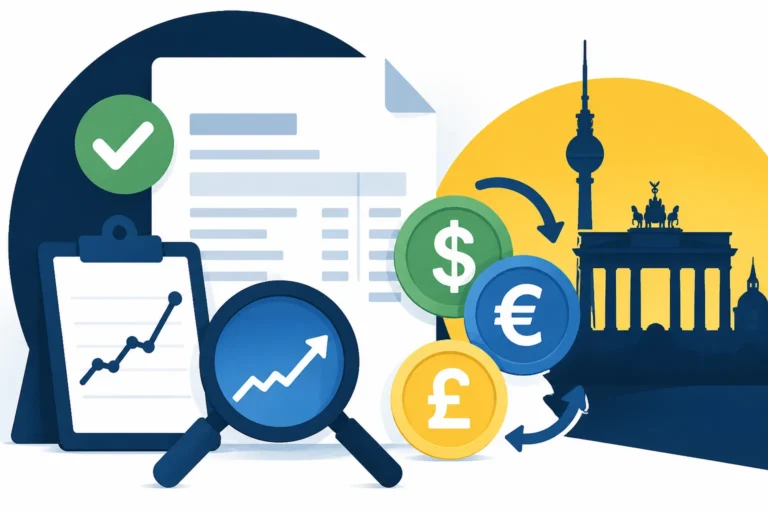
However, you must be exceptionally careful about how you fund your PayPal account. If your PayPal is still linked to your home country’s bank account, every time you send euros to a German friend, PayPal will execute a silent currency conversion using their own terrible exchange rate, shaving off 3% to 4% of your money. To prevent this, you should use Wise to convert your home currency to euros at the real mid-market rate. You can then transfer those euros from Wise directly to your localized German checking account to fund your PayPal transactions seamlessly. Mastering this cross-border flow prevents invisible money leaks, a strategy explored in Moving Money to Germany: Declaring Savings and Large Transfers.
Best Practices for Expats Managing Digital Payments
Surviving the fragmented German payment ecosystem requires setting up a resilient, multi-layered financial defense. You cannot rely on a single app or a single piece of plastic.
Bypassing Foreign Transaction Fees
The most expensive mistake an expat can make is attempting to live in Germany using the digital wallets they brought from home. If your Apple Pay is linked to a US Chase card or a UK Barclays card, every time you buy groceries at Aldi, your home bank will hit you with a foreign transaction fee, usually around 2.5% to 3%.
You must sever your daily consumer spending from your international accounts immediately. Setting up your smartphone to utilize N26 as the default card in Apple Wallet ensures that you are paying in native euros, completely bypassing any international transaction fees. If you need to pay recurring bills in your home country, you should actively push the funds out of Germany on your own terms. Balancing these competing international liabilities requires a dedicated strategy, which is covered in Cross-Border Banking: Managing Your Home Country Account While in Germany.
Redundancy is Your Best Defense
Because the German payment landscape is so unpredictable, redundancy is your only defense against being stranded at a checkout counter.
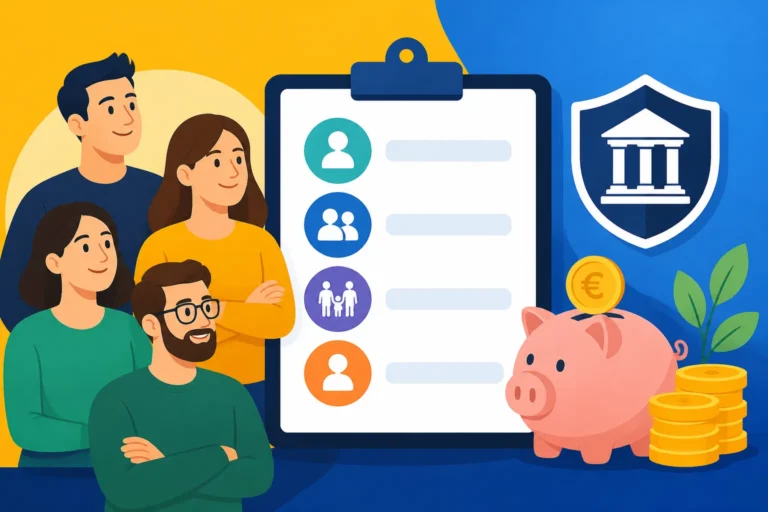
The ideal expat setup involves three tiers: your smartphone loaded with a local digital wallet (Apple/Google Pay linked to N26) for modern supermarkets and transit apps; a physical debit card in your wallet as a backup for terminals that reject contactless mobile waves; and exactly 50 euros in physical cash tucked into your pocket for the inevitable moment a bakery or a rural train station refuses digital payments entirely. Setting up the automated direct debits for your larger, immovable expenses is a separate administrative hurdle mapped out in How to Pay Rent and Bills in Germany: Banking Tips for Expats.
Keeping Long Term Wealth Separate
Once you have mastered your daily digital payments, you must secure the capital you are not actively spending on groceries and train tickets. Leaving thousands of euros in your daily mobile banking app exposes you to unnecessary risk if your phone is stolen or your digital wallet is compromised.
The safest strategy is to aggressively sweep your surplus income out of your localized N26 account at the end of every month. By pushing your long-term savings into a heavily encrypted, globally compliant brokerage like Interactive Brokers, you physically separate your true wealth from your daily digital spending habits. Interactive Brokers allows you to deploy that capital into global markets with extremely low fees, providing the necessary European tax reporting documents without tying your life savings to a mobile app you casually tap at a coffee shop. By compartmentalizing your finances, you conquer the German payment paradox while aggressively protecting your financial future.
References
Primary sources (official)
- Deutsche Bundesbank – Payment Behaviour in Germany: The official central bank study detailing the exact statistical usage of cash versus digital wallets, and the ongoing dominance of the Girocard system. https://www.bundesbank.de/en/publications/reports/studies/payment-behaviour-in-germany-738024
- Apple Pay – Participating Banks in Germany: The official, up-to-date roster from Apple listing every German financial institution and digital bank that natively supports Apple Wallet integration. https://support.apple.com/en-us/100654
Other helpful sources
- Make it in Germany – Bank Account: The federal government’s guide explaining the differences between Girocards, credit cards, and the fundamental expectations for point-of-sale transactions in German retail. https://www.make-it-in-germany.com/en/living-in-germany/money-insurance/bank-account
- Settle in Berlin – German Banking Guide: A highly practical expat resource explaining the cultural obsession with cash and why traditional banking infrastructure rejects foreign digital wallets. https://www.settle-in-berlin.com/best-bank-germany-expat-english/
Disclaimer
The information provided in this article is for general informational and educational purposes only and does not constitute professional financial or legal advice. Retail payment acceptance, including the availability of NFC terminals for Apple Pay and Google Pay, varies drastically by region and individual merchant policy in Germany. Utilizing foreign credit cards within digital wallets may incur significant dynamic currency conversion (DCC) costs and foreign transaction fees depending on your home country bank’s specific Terms and Conditions.