Next Steps After Getting Your German Visa: Arrival and Registration Guide
Stepping off the plane with your entry visa feels like a victory, but the inability to open a bank account without a registered address is paralyzing. I spent my first weeks living out of a suitcase, desperately hunting for a landlord to issue a registration letter. This guide decodes the exact timeline to register your address, activate your funds, and finalize your German residence permit.
Disclosure: This post may contain affiliate links. We may earn a commission at no extra cost to you if you make a purchase through these links. Read full disclosure.
The Anmeldung Catch-22: Address Registration
The foundation of your entire existence in Germany is the Anmeldung (address registration). You cannot simply exist in the country; the local municipality must know exactly where you sleep every night.
Finding Temporary Housing that Allows Registration
The absolute most critical document you need upon arrival is the Wohnungsgeberbestätigung. This is a legally binding landlord confirmation letter stating that you have officially moved into a specific physical address. Without this single piece of paper, the entire German administrative system remains locked to you.
Many expats book an Airbnb or a temporary hotel for their first month, assuming they can figure out the paperwork later. The brutal reality is that hotels and short-term vacation rentals almost never issue a Wohnungsgeberbestätigung. If you cannot legally register your address, you cannot open a local bank account, receive your tax ID, or finalize your health insurance contracts.
To survive this catch-22, you must aggressively filter your temporary housing search before you even board your flight. Look specifically for furnished “aparthotels” or specialized expat housing platforms that explicitly advertise that an Anmeldung is possible. Securing this foundational address allows you to navigate the hurdles outlined in German Bureaucracy 101: Understanding the Anmeldung, Schufa, and Tax ID.
The Bürgeramt Appointment and Required Documents
Once you have your landlord confirmation letter, you must physically register your presence at the local citizens’ office (Bürgeramt). By law, you are required to complete this registration within 14 days of moving into your permanent or temporary residence.
The challenge is that booking a Bürgeramt appointment in major cities like Berlin, Munich, or Frankfurt is notoriously difficult. The online appointment portals are perpetually fully booked for weeks in advance. Veteran expats know to wake up at 6:00 AM and constantly refresh the booking page, as municipal offices release cancelled appointments early in the morning.
When you finally secure a slot and arrive at the office, you must bring a comprehensive dossier. You need your physical passport containing your entry visa, the signed Wohnungsgeberbestätigung from your landlord, and a completed registration form (Anmeldeformular). If you are moving with your spouse or children, you must bring their passports and your original marriage and birth certificates.
Because German bureaucrats are legally bound to process official documents in the German language, bringing foreign civil documents can cause immediate rejections. Utilizing Lingoking ensures your marriage and birth certificates are accurately translated by sworn professionals recognized by the German state. Handing the clerk a certified Lingoking translation guarantees your marital status is correctly registered, which dictates your future tax bracket.
Unlocking Your Finances and Health Coverage
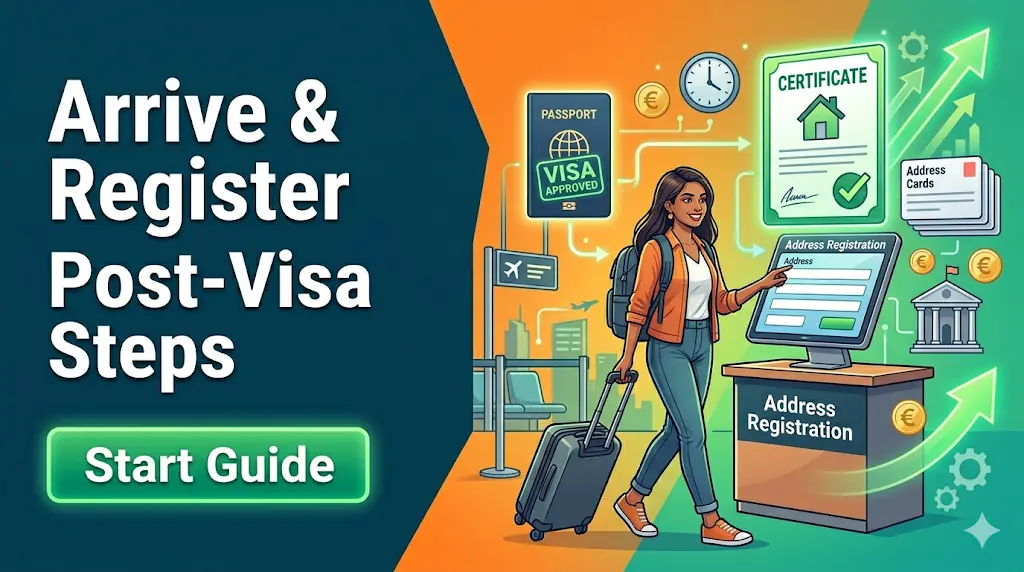
Once you hold the holy grail of German bureaucracy—your registration certificate (Meldebescheinigung)—you can finally begin unlocking the funds and services you need to survive.
Activating Your Blocked Account
If you arrived in Germany on a student visa or a job-seeker visa, your financial survival depends on a blocked account (Sperrkonto). You were required to deposit over 11,000 euros into this frozen account simply to get the entry visa sticker from the embassy in your home country.
However, that money is entirely inaccessible when you first step off the plane. The German government mandates that the funds can only be released in strict monthly increments, and they can only be paid out to a localized SEPA checking account. This means you must have enough unblocked cash in your pocket to survive your first few weeks of rent and groceries.
The moment you receive your Meldebescheinigung from the Bürgeramt, you can open a standard German checking account. Once you have your new local IBAN, you can activate your blocked funds. If you utilized Expatrio to set up your blocked account from abroad, this activation is a seamless, digital process.
By simply uploading a scan of your Anmeldung and your new local bank details to the Expatrio portal, your monthly living allowance is released directly into your checking account within days. Securing this continuous cash flow is essential for surviving the expensive initial months, a process decoded in Job Seeker Visa: Your Ticket to Finding Work in Germany.
Validating Your Statutory Health Insurance
Your entry visa was likely approved using incoming travel insurance or temporary expat coverage. However, the German state does not consider basic travel insurance sufficient for long-term residency. You are legally required to transition to comprehensive statutory (gesetzliche) or fully compliant private health insurance immediately after arrival.
Navigating the German healthcare system is incredibly confusing, especially because the major public providers frequently communicate entirely via physical letters written in dense legal German. Failing to activate your policy correctly means you might find yourself uninsured when a medical emergency strikes, or facing massive back-payment fines.
To streamline this critical transition, veteran expats use Feather Insurance. Because Feather Insurance caters specifically to the international community, their entire platform and customer support are in English. Once you have a registered address, Feather Insurance can rapidly finalize your enrollment in the public system or set you up with compliant private coverage. More importantly, the immigration office will demand absolute proof of this comprehensive coverage when you apply for your long-term residence permit. Feather Insurance generates the exact German-language confirmation PDFs required by the bureaucrats. Deciding which coverage tier fits your salary is deeply explored in Public vs Private Health Insurance in Germany: Which is Right for You?.
Converting Your Entry Visa to a Residence Permit
The visa stamped in your passport is a National D-Visa. It is strictly a temporary entry document, usually valid for only 90 days or up to six months. You must convert this sticker into a physical plastic card.
Booking the Ausländerbehörde Appointment
This conversion takes place at the Ausländerbehörde (Foreigners’ Authority). Just like the Bürgeramt, securing an appointment here requires extreme patience and persistence. You should begin checking the online appointment portal the exact week you arrive in Germany, as wait times can stretch for months.
If your entry visa is dangerously close to expiring and you still cannot secure an appointment, you must contact the Ausländerbehörde via their official contact form or email. If you can prove you attempted to book an appointment before your visa expired, they will issue you a Fiktionsbescheinigung (Fiction Certificate). This bridging document legally extends your current entry visa rights until your actual appointment date.
Navigating the complex transition from a temporary entry sticker to a permanent plastic card dictates your long-term rights in the country. Understanding how these documents interact is a foundational survival skill outlined in Understanding the Different Types of German Visas and Residence Permits.
Preparing Your Bureaucratic Dossier
The Ausländerbehörde operates on a culture of absolute paper compliance. If a single document is missing from your application folder, the caseworker will simply send you home and force you to re-enter the months-long waiting list. You must bring original copies and photocopies of every piece of evidence.
Your dossier must include your physical passport, biometric passport photos, your Meldebescheinigung (registration certificate), your comprehensive health insurance certificate from Feather Insurance, and your financial proof (such as your employment contract or your Expatrio payout schedule).
If you are converting a job-seeker visa into a full work permit, or if you are applying alongside dependent family members, your foreign university degrees and marriage certificates must be translated. Using Lingoking provides the sworn, legally binding translations required by the Ausländerbehörde to verify your qualifications and family ties without frustrating administrative rejections. Understanding the logistics of bringing your dependents is thoroughly mapped out in Bringing Your Family to Germany: The Family Reunification Visa.
Once your application is approved, it takes approximately four to six weeks for the federal printing office to manufacture your plastic residence card. When you finally receive it, you must carefully check the supplementary green sheet (Zusatzblatt) to understand your specific working rights and restrictions, a process decoded in Understanding German Residence Permit Labels 18 19c etc.
Essential Post-Arrival Administrative Steps
With your registration and visa conversion underway, a few automated bureaucratic dominoes will fall. You must catch them quickly to avoid financial penalties.
Getting Your Tax ID and Paying the Broadcasting Fee
Completing your Anmeldung triggers a massive, automated data sharing process across the German government. Within two to three weeks of registering your address, you will receive a physical letter from the Federal Central Tax Office (Bundeszentralamt für Steuern) containing your 11-digit Steueridentifikationsnummer (Tax ID).
You must provide this unique Tax ID to your employer immediately. If you fail to give your HR department this number before your first payroll run, the tax office will forcefully place you in Tax Class 6. This is the highest possible tax bracket, which will temporarily seize nearly half of your gross salary until the bureaucratic error is corrected.
Shortly after your Tax ID arrives, you will receive another letter from the Beitragsservice. This is the mandatory German broadcasting fee (Rundfunkbeitrag). It currently costs €18.36 per month and applies to every single registered household in the country, regardless of whether you actually own a television or consume public media. Ignoring this letter will result in escalating late fees and aggressive debt collection that can ruin your local credit score. Integrating these mandatory domestic payments into your monthly budget is an essential step detailed in How to Pay Rent and Bills in Germany: Banking Tips for Expats.
| Administrative Step | Ideal Timeline | Required Documents | Primary Authority |
| Anmeldung (Address Registration) | Within 14 days of moving in | Passport, Wohnungsgeberbestätigung | Bürgeramt |
| Open Bank Account | Immediately after Anmeldung | Passport, Meldebescheinigung | Local/Digital Bank |
| Activate Health Insurance | Immediately after Anmeldung | Passport, Meldebescheinigung | Insurance Provider |
| Apply for Residence Permit | Within first 90 days | Passport, Anmeldung, Financial Proof, Insurance | Ausländerbehörde |
| Pay Broadcasting Fee | Upon receiving the letter | Registration Reference Number | Beitragsservice |
References
Primary sources (official)
- Make it in Germany – Housing and Registration: The official federal government portal detailing the legal obligation to register your address (Anmeldung) and obtain a Wohnungsgeberbestätigung upon arrival. https://www.make-it-in-germany.com/en/living-in-germany/housing-mobility/housing-registration
- Federal Foreign Office – Residence Visa: Official guidelines explaining the necessity of converting a National D-Visa into a localized residence permit at the immigration office after entering Germany. https://www.germany.info/us-en/service/visa/residence-visa-922288
Other helpful sources
- All About Berlin – The Anmeldung Guide: An incredibly detailed, step-by-step expat guide on how to survive the Bürgeramt appointment, including translated forms and tips for finding temporary housing that allows registration. https://allaboutberlin.com/guides/anmeldung-in-english
Disclaimer
The information provided in this article is for general informational and educational purposes only and does not constitute professional legal, tax, or immigration advice. German immigration procedures, specifically the strict 14-day Anmeldung deadline and the requirements for converting a National D-Visa to a residence permit (Aufenthaltstitel), are rigorously enforced by local municipalities (Bürgerämter) and immigration offices (Ausländerbehörden). Processing times and required documentation can vary significantly by federal state and individual case complexity. Always consult a certified German immigration lawyer (Fachanwalt für Ausländerrecht) regarding your specific visa transition timeline.