Household Appliance Guide: Voltage, Adapters, and Buying Electronics in Germany
Moving to Germany often involves wrestling with endless paperwork, but nothing prepares you for the literal spark of frustration when your favorite kitchen gadget dies because of a voltage mismatch. I still vividly remember the smell of ozone and the "pop" of my expensive stand mixer on my first morning in Munich because I ignored the technical specs. This guide solves the mystery of German electrical standards, explains what to bring versus what to buy, and highlights where to find the best electronics locally.
Disclosure: This post may contain affiliate links. We may earn a commission at no extra cost to you if you make a purchase through these links. Read full disclosure.
The Technical Reality: Voltage, Frequency, and Plugs
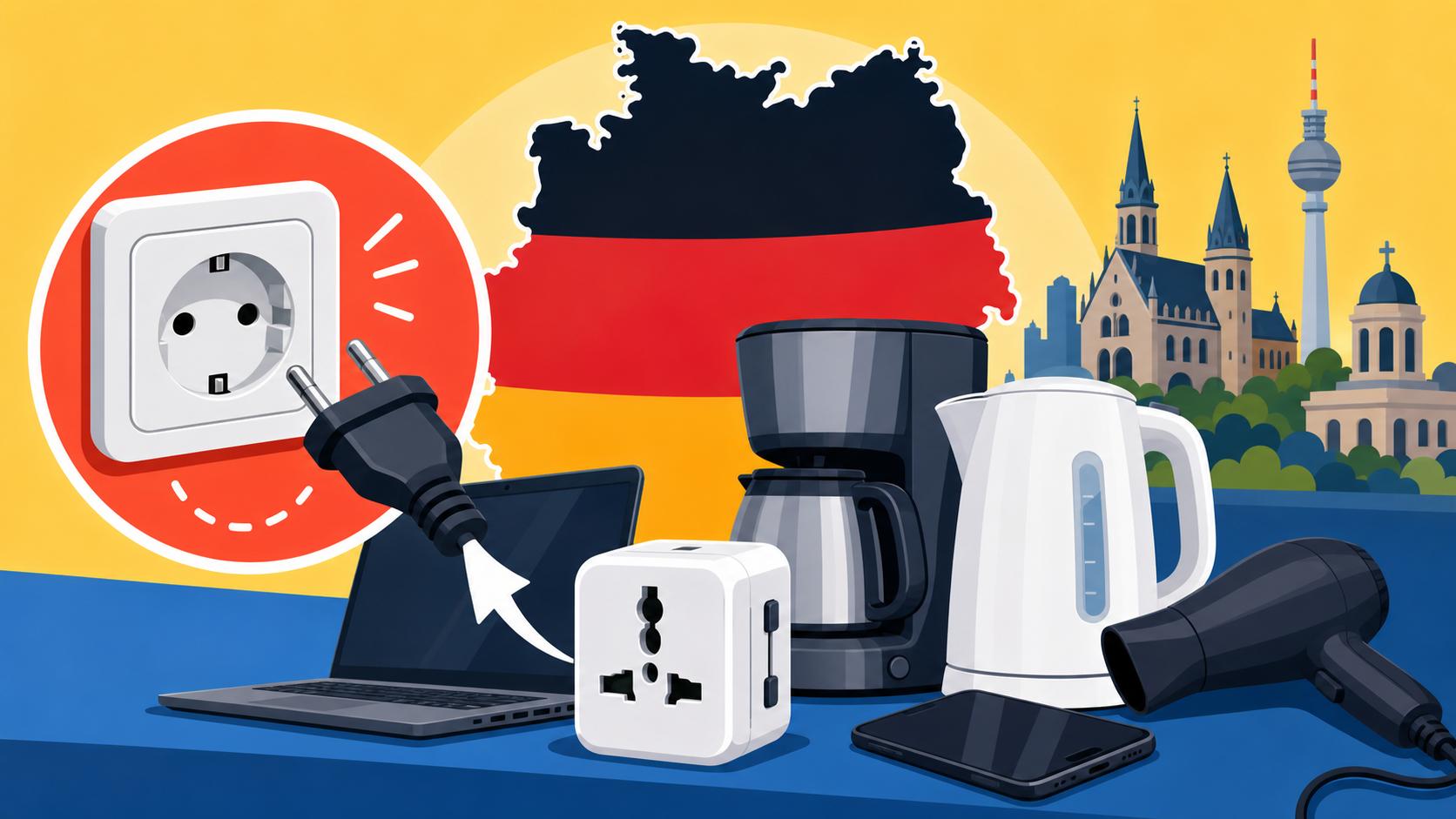
The most immediate hurdle you will face is the difference in the electrical current itself. Germany, like most of Europe, operates on a 230V supply voltage and a frequency of 50Hz. If you are moving from North America or parts of South America where 110V/120V is the standard, simply using a plastic plug adapter is a recipe for disaster. When you plug a 110V appliance into a 230V German outlet, you are essentially doubling the power flowing into the device, which usually results in a fried circuit board or even a small fire.
Understanding German Voltage and Frequency
It is not just about the voltage; the frequency matters too. Germany’s 50Hz frequency is slower than the 60Hz used in the US or Canada. For devices with internal clocks or motors, such as older microwaves or record players, this frequency shift can cause them to run at the wrong speed or overheat. Even if you use a heavy-duty transformer, the frequency remains a problem for precision electronics. Before you commit to Moving Your Belongings to Germany: Customs Duties and Tax-Free Imports for New Residents, you must check the fine print on the power bricks of every device you own.
Look for the "Input" label. If it says "100-240V, 50/60Hz," the device is dual-voltage and will work perfectly fine with a simple physical adapter. If it only lists 110V, leave it behind. Trying to run a high-wattage 110V item like a hairdryer or a space heater on a voltage converter is often more expensive and dangerous than just buying a new one locally once you have finished Opening a Bank Account in Germany: Step-by-Step for Newcomers and have the funds ready.
Types of Plugs and Outlets (Type C and F)
In Germany, you will encounter two main types of plugs: the "Europlug" (Type C) and the "Schuko" plug (Type F). The Europlug is flat with two round pins and is used for low-power devices like lamps or phone chargers. It is designed to fit into almost any European socket. The Schuko plug, however, is the standard for anything requiring more power or a grounded connection. It is round, has two pins, and two metal grounding strips on the sides.
The Schuko system is actually quite a marvel of engineering—it is designed so that the ground connection is made before the live pins touch the electricity, making it very safe. If you are moving into a temporary apartment via Wunderflats, you will likely find these outlets everywhere. Physical adapters are easy to find, but for permanent living, you will eventually want to replace the power strips on your dual-voltage computers with German versions to avoid a mess of wobbly adapters behind your desk.
To Bring or Not to Bring: Moving Your Electronics
Deciding what to ship across the ocean is a major part of your relocation strategy. Shipping costs are high, and the risk of damage is real. Beyond the physical space, the electrical compatibility should be your primary filter. Many expats make the mistake of bringing every small appliance they own, only to realize that their kitchen counter in Germany doesn't have the space or the right voltage capacity for a collection of international gadgets.
High-Wattage Appliances: Kitchen and Bathroom
As a general rule, if an appliance generates heat or has a powerful motor, do not bring it if it isn't native to 230V. This includes hairdryers, straighteners, kettles, coffee makers, and blenders. Even with a voltage transformer, these items draw so much current that they often blow the fuses in older German buildings. German apartments, especially those in older "Altbau" buildings, may have lower amperage limits than you are used to.
Furthermore, the Cost of Living in Germany: Breakdown of Expenses (Rent, Food, Transport) is high enough without having to pay for the massive energy loss that occurs when using a voltage transformer. It is much more efficient to buy a local kettle for 20 Euros at a shop or via Amazon Germany. These local appliances are optimized for the 230V system, meaning they often boil water or heat up significantly faster than their 110V counterparts anyway.
Dual-Voltage Gadgets: Laptops, Phones, and Cameras
Most modern personal electronics—laptops, smartphones, tablets, and DSLR cameras—are designed for global travel. Their power "bricks" (the black boxes on the charging cables) are almost always dual-voltage. For these items, you do not need a voltage converter; you only need a physical plug adapter so the pins fit into the wall.
However, be wary of desktop computers. While most modern PC power supplies have an internal switch or are auto-switching, some older models require you to manually flip a small red switch on the back from 115V to 230V. If you forget to flip that switch before plugging it in, you will hear a loud pop and likely destroy the power supply. For gamers or professionals bringing high-end rigs, it is often safer to simply buy a new, European-standard power supply unit (PSU) once you arrive and swap it out.
| Feature | Germany (Schuko/Euro) | North America (NEMA) |
|---|---|---|
| Voltage | 230V | 120V |
| Frequency | 50Hz | 60Hz |
| Plug Type | Type C & F (Round pins) | Type A & B (Flat blades) |
| Standard Amperage | 16A | 15A / 20A |
| Safety Features | Grounding clips, recessed sockets | Grounding pin (optional) |
Buying Electronics and Appliances in Germany
Once you land and complete your Registering Your Address (Anmeldung): Step-by-Step Guide, you will likely need to go shopping. Germany has a very structured retail landscape for electronics. While you can find small items in supermarkets, major purchases are usually handled by specialized "Elektromärkte" or online platforms.
Retailers and Online Giants
The two biggest names in physical electronics retail are MediaMarkt and Saturn. Interestingly, they are owned by the same parent company, but they often compete with each other on price. These stores are great because you can see the appliances in person, which is vital if you are trying to figure out if a washing machine will actually fit in your small German bathroom. For many expats, Amazon Germany is the go-to for convenience, especially since they offer a wide range of international brands and have a very reliable delivery system for bulky items.
If you are renting a place through Wunderflats, many of these large appliances will be provided, but if you are moving into a long-term rental, you might be shocked to find that Why Are German Apartments Often Unfurnished? Understanding the Culture often means the apartment doesn't even have a kitchen installed. This means you might have to buy your own oven, stovetop, and refrigerator. In these cases, look for "Einbaugeräte" (built-in appliances) if you are fitting them into a kitchen cabinet system, or "Standgeräte" (freestanding) if you just need them to sit in a corner.
Warranties and Consumer Rights
One of the best things about buying electronics in Germany is the "Gewährleistung." By law, retailers must provide a 2-year warranty on new goods. This is not a manufacturer's warranty, but a legal obligation of the seller to ensure the product works as advertised. If your washing machine breaks after 18 months, the store is generally responsible for fixing it or replacing it.
Make sure you understand Consumer Rights in Germany: Returns, Refunds, and Warranty Laws Explained before making a big purchase. Always keep your "Kassenbon" (receipt) or digital invoice. In Germany, the paper trail is everything. If you lose that slip of thermal paper, getting a repair under warranty becomes significantly more difficult. Most major stores will also offer "Altgeräte Mitnahme," which means when they deliver your new fridge, they are legally required to take your old, broken one away for recycling, usually for a small fee or even for free.
Setting Up Your German Home for Efficiency
German culture places a high value on "Nachhaltigkeit" (sustainability). This extends directly into how appliances are marketed and used. When you walk into an electronics store, you won't just see the price; you will see a prominent color-coded label ranging from A to G.
The Energy Efficiency Label (A to G)
The EU energy label is a mandatory sticker on all "white goods" (fridges, washers, dryers). The scale was recently updated to be stricter, so a machine that was "A+++" under the old system might only be a "C" or "D" now. Do not be discouraged by a "C" rating; it is often still very efficient.
Pay close attention to the water consumption and noise levels listed on these labels. Because many Germans keep their washing machines in the kitchen or bathroom rather than a basement, a quiet motor (measured in decibels or dB) is worth the extra 50 Euros. Also, remember that electricity in Germany is quite expensive compared to many other countries, so investing in an energy-efficient appliance will save you a significant amount on your monthly "Nebenkosten" (utility bills) over the long run.
Furnished vs. Unfurnished Challenges
The appliance situation depends heavily on your housing type. If you are in a short-term furnished apartment, you won't need to worry about the technical specs of a stove. However, if you have signed one of the many Understanding German Rental Contracts: Key Terms and Conditions, you may be responsible for every light fixture and appliance.
A common trap for newcomers is the "EBK" (Einbauküche). If an apartment listing says "ohne EBK," it means there are literally just pipes and wires sticking out of the wall in the kitchen. You will need to buy the cabinets, the sink, the oven, and the fridge. When buying these, ensure you hire a professional for the "Anschluss" (connection). In Germany, if you connect an electric stove yourself and it causes a fire, your Liability Insurance (Haftpflicht): The Most Important Insurance in Germany? might not cover the damages because you weren't a certified technician. Always prioritize safety over saving a few Euros on installation.
Important Information for Expats
Navigating the world of German electronics requires a mix of technical knowledge and cultural adaptation. Always double-check your voltage, invest in high-quality power strips once you arrive, and don't be afraid to ask for a "Rabatt" (discount) if you are buying multiple large appliances at once in a physical store—it doesn't always work, but it's worth a shot! Buying locally not only ensures safety and compatibility but also gives you the peace of mind that comes with a solid 2-year European warranty.
Disclaimer
The information provided in this guide is for general informational purposes only and does not constitute professional electrical or legal advice. Electrical standards and regulations in Germany may change, and individual circumstances vary. Always consult with a qualified electrician for installations and refer to official government or manufacturer resources for the most current technical specifications and consumer rights.