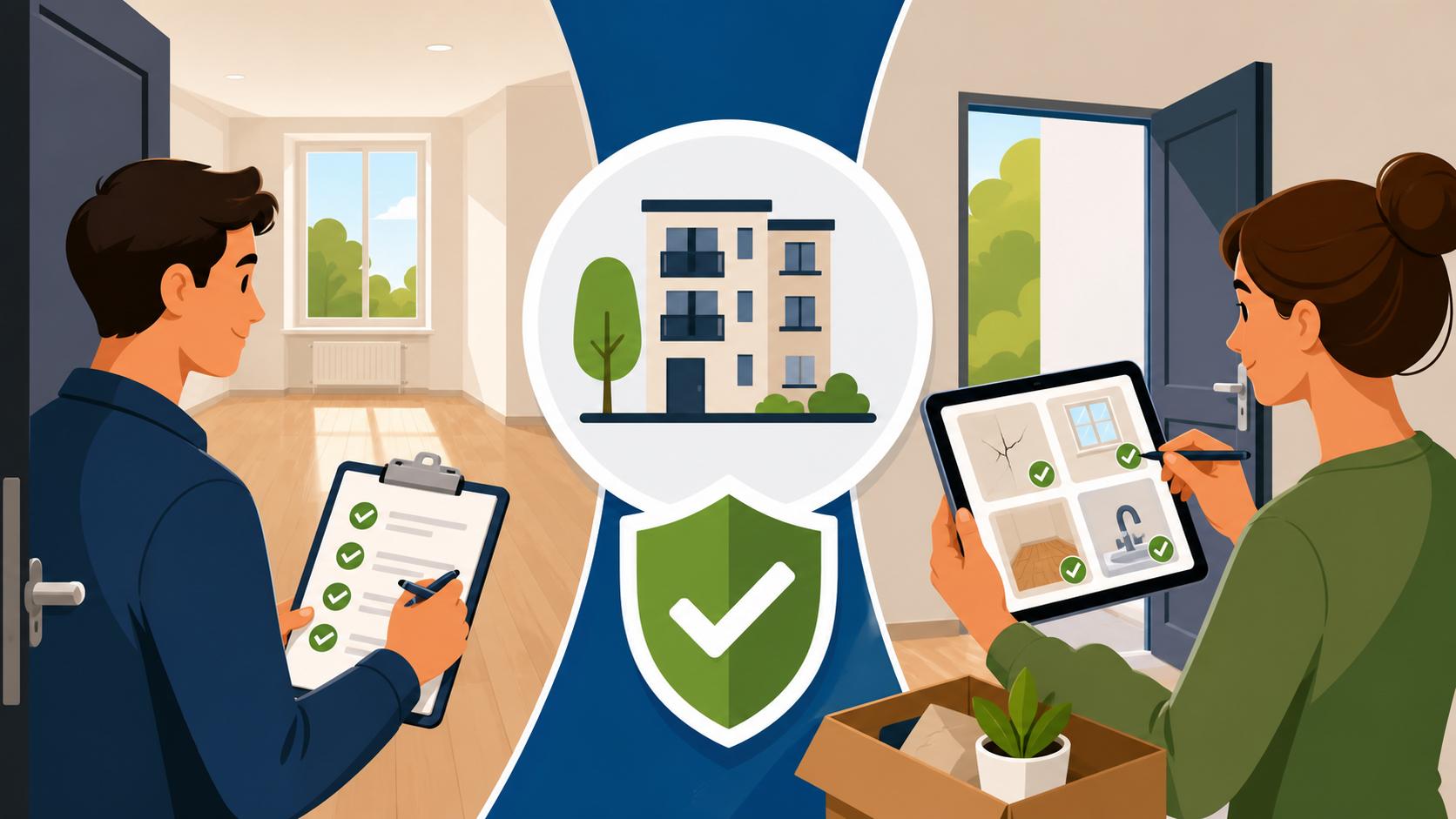
Apartment Handover Protocol: Documenting Condition When Moving In/Out
Finding out that your security deposit is being withheld because of a scratch you didn't cause is a rite of passage no expat wants to experience. I still remember standing in my first empty Berlin apartment, blinking back tears as my landlord pointed to a tiny watermark on the parquet that was definitely there when I moved in three years prior. This guide provides the exact roadmap to documenting your apartment condition so you never lose a cent of your Kaution.
Disclosure: This post may contain affiliate links. We may earn a commission at no extra cost to you if you make a purchase through these links. Read full disclosure.
What is an Übergabeprotokoll and Why is it Essential
In the German rental market, the Übergabeprotokoll, or apartment handover protocol, is the most powerful document you will ever sign. It is a detailed, written record of the state of the property at the exact moment the keys change hands. Whether you are moving into a long-term unfurnished flat or a temporary serviced apartment through a provider like Wunderflats, this document serves as your legal shield. Without it, the "he-said, she-said" battle regarding damages will almost always be won by the landlord, as they hold the financial leverage of your deposit.
The Legal Weight of the Handover Protocol
Under German law, a signed handover protocol is considered "binding evidence." This means that any defect not listed in the protocol at the time of moving in is presumed to have been caused by the tenant. Conversely, any damage not noted during the move-out inspection cannot usually be charged to the tenant later. I have seen expats lose thousands of euros because they were "too tired" or "too polite" to insist on a meticulous walkthrough. You must treat this document as a legal contract, not a formality. It is the practical application of Understanding German Rental Contracts: Key Terms and Conditions that protects your bank account.
Protecting Your Security Deposit
The primary purpose of the protocol is the preservation of your Kaution. In Germany, landlords are legally allowed to hold your deposit for up to six months (and sometimes longer for utility reconciliations) after you move out. If there is a dispute about a broken tile or a stained carpet, they can deduct the repair costs directly from that fund. By having a move-in protocol that clearly states "tile in guest bathroom is cracked," you effectively neutralize their ability to charge you for it three years later. This is the cornerstone of Security Deposits (Kaution) in Germany: Getting It Back and Protecting Yourself and should be your top priority on day one.
Moving In: The Initial Handover Process
The day you receive your keys is not just for celebrating; it is for detective work. You should arrive at the apartment during daylight hours. Natural light is your best friend when spotting faint wall scuffs, floor scratches, or mold spores in the corners of the ceiling. If the landlord or "Hausverwaltung" (property management) tries to rush you, firmly but politely state that you need 45 minutes to ensure everything is documented correctly for both your protection and theirs.
Spotting Common Defects and Hidden Issues
Don't just look at the walls; interact with the apartment. Open every window to ensure the handles don't stick and the seals are intact. Turn on every faucet to check for leaks and water pressure. In my second flat in Hamburg, I forgot to check the oven, only to find out a month later that the bottom heating element was dead. Because it wasn't on my protocol, I had a months-long struggle to prove I hadn't broken it. Check the "Einbauküche" (EBK) thoroughly, especially if you are decoding listings like those found in Understanding Apartment Listings: Decoding Abbreviations (2-Zi, EBK, etc.) Explained. Look for:
- Scratches or dents in the flooring (even under the radiator).
- Limescale buildup on showerheads and faucets.
- Functionality of all kitchen appliances (stove, fridge, dishwasher).
- Condition of the cellar or "Keller" space.
- Number of keys provided (including cellar, mailbox, and trash area).
The Role of Photos and Video Documentation
While the written protocol is the primary legal document, digital evidence is your secondary line of defense. Take high-resolution photos of every single room, even if they look perfect. For any specific damage, place a coin or a ruler next to the defect to show the scale. I always recommend taking a continuous video walkthrough of the entire apartment, including the insides of cabinets and the balcony. Store these files on a cloud drive and send a link to the landlord via email on the same day. This creates a time-stamped record that is very difficult to dispute. If you need specialized cleaning supplies or a high-quality measuring tape for this process, you can find everything you need on Amazon Germany for quick delivery to your new address.
Moving Out: Navigating the Final Inspection
Moving out is arguably more stressful than moving in because the burden of proof shifts. You are now the one trying to prove the apartment is being returned in the "contractually agreed state." This often involves the dreaded "Schönheitsreparaturen" (cosmetic repairs), which usually means painting the walls white and filling any drill holes.
Cosmetic Repairs and the Rental Contract
The requirement to paint or perform repairs is one of the most litigated areas of German housing law. Many older contracts contain "rigid" clauses that have since been ruled invalid by the Federal Court of Justice (BGH). However, you shouldn't assume you are off the hook. You must refer to German Tenant Rights and Laws: What Expats Need to Know to see if your specific painting clause is enforceable. If the walls were white when you moved in and you painted them "funky purple," you will almost certainly have to paint them back to a neutral color. Using professional-grade paint from Amazon Germany is often cheaper than paying the landlord’s professional painter.
Negotiating Damages with the Landlord
During the move-out handover, the landlord will be looking for "wear and tear" versus "damage." Small scuffs on the floor from walking are usually considered normal wear and tear and cannot be deducted from your deposit. However, a deep gouge from dragging a sofa is "damage." If the landlord insists a scratch is damage, try to negotiate a fixed repair fee on the spot rather than leaving it open-ended. If you have followed my advice and have Liability Insurance (Haftpflicht): The Most Important Insurance in Germany? then many accidental damages to the rental property might be covered by your insurance rather than your deposit.
Key Elements of a Valid Handover Protocol
A valid protocol needs specific data points to be effective. Do not use a scrap of paper; use a formal template. If you are using a platform like Wunderflats, they often provide a digital or PDF handover assistant that ensures all bases are covered. If you are doing it manually, ensure the following table's items are included.
| Feature | Move-In Focus | Move-Out Focus |
|---|---|---|
| Meter Readings | Electricity, gas, and water (take photos). | Final readings for the final bill. |
| Wall Condition | Note every drill hole and scuff. | Confirm holes are filled and painted. |
| Floor Condition | Document scratches and stains. | Check for new damage vs. wear and tear. |
| Kitchen/Appliances | Check if clean and functional. | Ensure grease-free and fully working. |
| Keys | Count every key (door, mail, cellar). | Return every key listed in the move-in. |
| Sanitary Facilities | Check for cracks and limescale. | Ensure deep-cleaned and no leaks. |
Essential Checklist Items for the Document
The protocol must include the date, the address of the apartment, and the names of all parties present. Every room should have its own section. Don't be afraid to use descriptive language. Instead of writing "floor scratched," write "3cm deep scratch in parquet near the balcony door." Ensure the document explicitly states the number of keys handed over. Losing a "Sicherungskarte" (security key) for a German apartment building can result in a bill for several hundred euros to replace the entire building's locking system.
Meter Readings for Utilities
Perhaps the most common source of post-move-out friction is the "Nebenkostenabrechnung" (utility statement). You must record the meter numbers and the current readings for electricity, water, and heat during the handover. This ensures you are only paying for what you actually consumed. This data is vital for Utilities Setup: How to Get Electricity, Gas, and Water in Your New Home and will be the only way to prove to your provider that you aren't responsible for the previous tenant's 24-hour sauna habit.
Handling Disputes and Legal Protection
Sometimes, despite your best efforts, a handover goes south. A landlord might refuse to sign the protocol because they disagree with your assessment of a defect, or they might try to add "invisible" damages after you have left.
Mieterverein and Legal Insurance
If you are living in Germany for more than a year, joining a Mieterverein (Tenants' Association) is non-negotiable. For a small annual fee, you get access to legal advice and representatives who can even attend the handover with you if you anticipate trouble. This is especially helpful if you are still working on your Registering Your Address (Anmeldung): Step-by-Step Guide and aren't fully fluent in the local bureaucracy yet. Alternatively, having private legal insurance can cover the costs if a deposit dispute ends up in court.
What to Do if the Landlord Refuses to Sign
If the landlord refuses to sign the protocol because you've documented a scratch they want to ignore, do not panic. You can still create your own protocol, sign it, and have a witness (a friend who is not moving in with you) sign it as well. Send this "unilateral protocol" along with your photos to the landlord via "Einschreiben" (registered mail). This shows that you attempted to document the state in good faith and provides a paper trail for future disputes, including those related to Apartment Hunting Scams in Germany: Red Flags and How to Avoid Them.
Final Handover Etiquette and Best Practices
In Germany, the concept of "Besenrein" (broom-clean) is the standard for moving out. This doesn't mean the apartment needs to be clinically sterile, but it must be swept, the windows should be reasonably clean, and all trash must be removed. I always leave a small "thank you" note if the relationship was good, but I never leave behind furniture or "gifts" like curtains unless specifically agreed upon in writing. In many cases, a landlord will charge you to dispose of a "perfectly good" shelf you left behind.
Ensure that the protocol is signed in duplicate—one for you and one for the landlord. If the protocol is digital, ensure you receive the signed PDF via email before you leave the premises. Once those keys are handed over and the document is signed, your liability for the physical state of the apartment generally ends. You can then focus on your next chapter, perhaps even Moving Furniture and Belongings: Tips for an Easy Move to Germany as you settle into your new home.
Disclaimer
This article is for informational purposes only and does not constitute legal advice. Housing laws in Germany are complex and subject to change. For specific legal issues or disputes with your landlord, please consult a qualified legal professional or your local Mieterverein.