Waste Sorting in Germany (Mülltrennung) and Pfand
Standing in front of a row of colorful bins with a single yogurt cup, feeling the intense gaze of a neighbor from their balcony, is a rite of passage for every newcomer. I remember my first week in Berlin, paralyzed by a pizza box—half greasy cardboard, half paper—wondering if a mistake would lead to a formal eviction notice. This guide will demystify the complex world of German waste management, ensuring you never face the "trash police" unprepared.
Disclosure: This post may contain affiliate links. We may earn a commission at no extra cost to you if you make a purchase through these links. Read full disclosure.
The German Philosophy of Mülltrennung
To understand waste sorting in Germany, you first have to understand that it is not a suggestion; it is a civic duty woven into the fabric of daily life. For many expats, the sheer number of bins is the first sign of Living in Germany: Essential Guide to Daily Life for New Expats. While it might seem like overkill, the system is designed to maximize recycling efficiency and minimize the amount of waste that ends up in incinerators or landfills.
In many countries, you have "trash" and "recycling." In Germany, we have a meticulously subdivided hierarchy. If you are moving into a temporary apartment found via Wunderflats, you will likely find a guide in your welcome folder, but the local rules can still vary slightly by municipality. The core principle remains: the producer pays for the packaging, and the consumer is responsible for getting that packaging into the right stream. This is why you will see the "Green Dot" (Der Grüne Punkt) on almost everything you buy at the supermarket.
The social pressure is real. Germans take pride in their environmental stewardship, and a contaminated bin can lead to the entire building’s trash not being collected. When this happens, the waste management company (like BSR in Berlin or AWM in Munich) charges extra fees, which eventually show up in your Household Bills in Germany: Understanding Nebenkosten and Monthly Costs. To avoid being the person who raises everyone's rent, you need to master the colors.
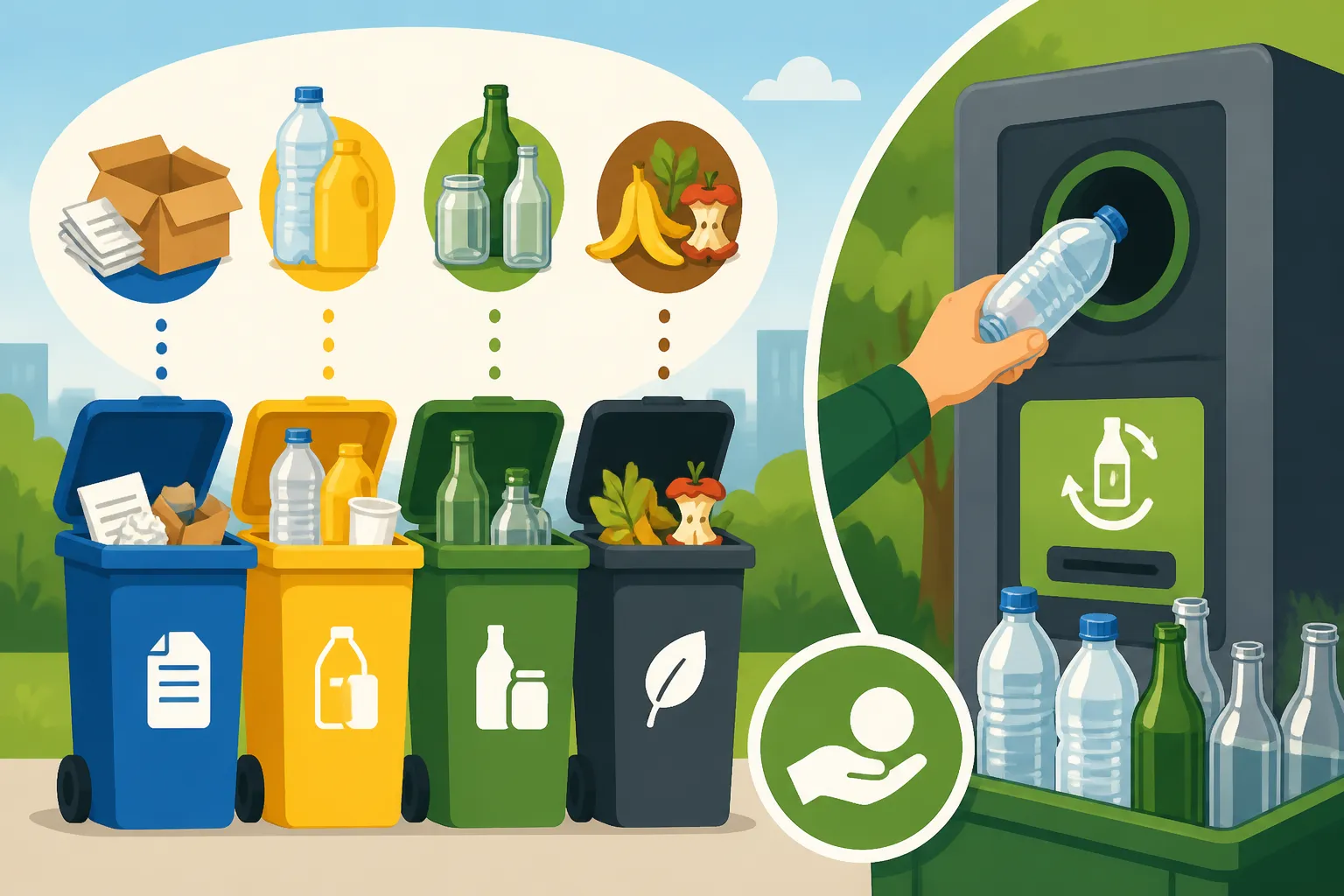
The Standard Bin System at a Glance
Before we dive into the nitty-gritty of every material, let’s look at the basic infrastructure you will find in the courtyard (Hinterhof) of your apartment building.
| Bin Color | German Name | What Goes In | What Stays Out |
|---|---|---|---|
| Yellow (or Orange) | Gelbe Tonne / Sack | Plastic, metal, composites | Battery, wood, paper |
| Blue | Altpapier | Paper, cardboard, magazines | Pizza boxes with grease, receipts |
| Brown or Green | Biomüll | Food scraps, garden waste | Plastic bags, diapers, meat (sometimes) |
| Black or Grey | Restmüll | Everything else (non-recyclable) | Electronics, hazardous waste, glass |
Mastering the Yellow Bin and the Plastic Dilemma
The Gelbe Tonne (Yellow Bin) or the Gelber Sack (Yellow Bag) is perhaps the most confusing for newcomers. This bin is part of the "Dual System." It is specifically for sales packaging that isn't glass or paper. If you are ordering kitchen supplies or organizers from Amazon Germany to set up your new home, you’ll likely have a lot of plastic film and bubble wrap to deal with. These belong here.
What Counts as Packaging
The rule of thumb is: if it wrapped something you bought, it probably goes in the yellow bin. This includes plastic tubs from yogurt, margarine containers, milk and juice cartons (Tetra Paks), aluminum foil, tin cans from soup, and the plastic wrap around your cucumbers. You do not need to wash these items until they shine—that’s a waste of water—but they should be "spoon clean" (löffelrein).
The Composite Material Trap
The trickiest items are composites. Think of a coffee bag that feels like plastic but has a foil lining, or a blister pack for pills. These are perfectly fine for the yellow bin. However, a common mistake is nested materials. If your yogurt has a plastic cup with a cardboard sleeve, you must separate them. The plastic goes in the yellow, and the cardboard goes in the blue. If you leave them together, the infrared scanners at the recycling plant can't "see" the plastic, and the whole thing gets tossed into the incinerator.
Common Mistakes in the Yellow Bin
Do not put "non-packaging" plastic in here. If you buy a plastic toy or a plastic bucket and it breaks, it actually goes into the Restmüll (Black Bin) because it wasn't "packaging." It sounds counterintuitive, but the yellow bin is funded by the companies that produce the packaging, not by your local taxes. Putting a plastic laundry basket in there is technically "cheating" the system.
Paper and Cardboard: The Blue Bin Secrets
The Blue Bin (Altpapier) is for paper and cardboard, but it has its own set of strict rules. This is usually the first bin to overflow, especially if you are frequently ordering online and receiving many delivery boxes.
The Pizza Box Controversy
The most debated item in German waste history is the pizza box. Here is the definitive answer: if the box is clean and dry, it goes in the blue bin. If it has grease stains, cheese stuck to the bottom, or oil seeping through, it must go in the Restmüll. Grease ruins the recycling process for paper. The same goes for used tissues, paper towels, and napkins. Even though they are paper, they are contaminated and belong in the general waste.
What About Receipts
Surprisingly, many receipts (especially the shiny thermal paper ones) do not belong in the blue bin. They contain BPA or other chemicals that shouldn't enter the recycled paper cycle. Unless the receipt specifically says it is "blue" eco-paper, it’s safer to put it in the black bin. This is the kind of detail that will help you pass any unofficial "integration" test with your neighbors.
Breaking Down Boxes
One of the fastest ways to annoy your neighbors is to throw a whole, un-flattened cardboard box into the blue bin. It takes up 80% of the space and leaves no room for anyone else. Always break down your boxes. If you have a massive amount of cardboard after moving in, don't jam it all in. Most cities have recycling centers (Wertstoffhof) where you can drop off large amounts for free. You can use your Airalo data to quickly look up the nearest center's opening hours on your phone while you're out.
Organic Waste and the Biotonne
The Brown Bin (Biomüll) is where the magic of composting happens. Germany is a leader in turning food scraps into biogas and fertilizer. However, this is also the bin that can get the most "disgusting" if not managed correctly, particularly in the summer.
What Is Allowed
You can put fruit and vegetable scraps, coffee grounds (including the paper filter!), tea bags, and eggshells in here. Most regions also allow cooked food leftovers, though some specific municipalities discourage meat and bones because they can attract rats. If you have a garden, garden waste like weeds and small branches also go here.
The Problem with "Bio-Plastic" Bags
This is the biggest trap for expats. Many supermarkets sell "compostable" plastic bags. Do not use these in your Biotonne. Even though they are labeled as compostable, they often take much longer to break down than the industrial composting cycle in Germany allows. Most waste management companies will see a plastic-looking bag in the brown bin and refuse to empty it. Instead, use old newspapers to line your small kitchen compost bin or buy dedicated brown paper bags.
Odor Management
To keep your kitchen from smelling, empty the small bio-bin frequently. In the winter, this is easy, but in the summer, it can attract fruit flies. A little tip from a veteran: sprinkle some sawdust or dry flour over the top of your scraps to absorb moisture, which is the primary cause of odors. If you are setting up your new life, you’ll find that a clean kitchen goes a long way in reducing the stress of the move.
Glass Disposal and the Rule of Silence
In Germany, glass is not collected at your doorstep. Instead, you will find large igloo-shaped containers on street corners. This is part of the broader German Culture & Etiquette: A Guide to Social Life and Customs. You are expected to carry your glass bottles to these bins and sort them by color: White (Clear), Green, and Brown.
Blue or Yellow Glass
If you have a bottle that is blue or an odd yellow-orange color, it always goes into the Green container. Green glass is the most forgiving during the melting and recycling process, so it can handle "impurities" from other colors better than white or brown glass can.
Respecting the Ruhezeit
This is the most important part of glass disposal. Glass containers are loud. Therefore, there are strict hours during which you are allowed to dump your bottles. Generally, this is Monday through Saturday from 8:00 AM to 8:00 PM. Dumping glass on a Sunday or a public holiday is a massive social taboo and can actually result in a fine if someone reports you. Be mindful of Neighborhood Noise Rules: Understanding Ruhezeit (Quiet Hours) in Germany to keep the peace.
What Not to Throw in the Igloos
Window glass, mirrors, and light bulbs do not go in the street containers. They have a different chemical composition and melting point than bottle glass. These must be taken to a recycling center or, in the case of light bulbs, often to special collection boxes in drugstores like Rossmann or DM.
The Pfand System: How to Get Your Money Back
The Pfand (deposit) system is one of the most brilliant parts of living in Germany. It’s a circular economy in action. When you buy a drink, you aren't just paying for the liquid; you are "renting" the bottle. This will be a significant factor in your Grocery Prices in Germany: How Much to Budget for Food.
Einweg vs. Mehrweg
There are two main types of deposits:
- Einwegpfand (Single-use): Usually €0.25. These are thin plastic bottles or aluminum cans. They are crushed and recycled after one use. You can recognize them by the logo of a bottle and a can with an arrow.
- Mehrwegpfand (Multi-use): Usually €0.08 for beer bottles or €0.15 for sturdy plastic soda bottles and some yogurts. These bottles are washed and refilled up to 50 times.
Using the Reverse Vending Machine
Most Navigating German Supermarkets: Grocery Shopping Tips and Tricks involve a trip to the Leergutautomat (empty bottle machine). You feed your bottles into the hole, one by one. If the machine rejects a bottle, it’s usually because it’s not a bottle that specific store sells, or the label is too damaged for the scanner to read. Once you're done, press the button, and you’ll get a voucher. You can use this voucher to get cash at the register or have the amount deducted from your grocery bill.
Leaving Bottles for Others
You will often see bottles sitting neatly at the base of public trash cans on the street. This is a common practice. Instead of throwing a deposit bottle into a public bin where it’s lost, people leave them outside for "Pfandsammler" (bottle collectors). These are often people in need who collect the bottles to earn a bit of extra money. It’s considered a polite and socially conscious way to "recycle" while on the go.
Bulky Waste and Hazardous Materials
What happens when your IKEA chair finally gives up the ghost or your old toaster dies? You cannot simply put these next to the bins in your courtyard. This is called "Sperrmüll" (bulky waste).
Organizing a Sperrmüll Pickup
Most cities allow you to schedule one or two free bulky waste pickups per year. You call the city's waste department, tell them what you have (couch, mattress, old shelf), and they give you a date. On that evening, you place the items on the sidewalk. Do not put them out days in advance, as this is considered illegal dumping. If you are currently Registering Your Address (Anmeldung): Step-by-Step Guide, you might want to check your city's website for their specific Sperrmüll policy.
Hazardous Waste and Electronics
Batteries, old paint, chemicals, and electronics are "Sondermüll" (special waste). Batteries can be dropped off in small green boxes found at the entrance of almost every supermarket. Small electronics can often be returned to large electronics retailers (like Saturn or MediaMarkt). For larger items like refrigerators, you must take them to a Wertstoffhof. Dumping an old fridge in the woods isn't just a crime; it’s an environmental disaster that Germans take very seriously.
Practical Setup for Your German Kitchen
Living the Mülltrennung lifestyle requires some organization. Most German kitchens are built with this in mind, featuring under-sink pull-out drawers with three or four compartments. If your apartment doesn't have this, you can find great sorting systems on Amazon Germany.
Tips for Success
- Separate as you go: Don't wait until you have a pile of mixed trash. Have a bin for paper, one for yellow waste, and one for Restmüll.
- The Lid Rule: If you have a yogurt cup with a foil lid, tear the lid off completely. If they are attached, the machine can't separate the aluminum from the plastic.
- Check the App: Many cities have an "Abfall-App" (Waste App) that tells you exactly when each bin will be collected and has a "waste ABC" where you can type in an item and see where it goes.
Understanding these rules is more than just about avoiding fines; it’s about participating in the local culture. Once you’ve successfully navigated your first month of sorting, you’ll find yourself unconsciously peeling labels off cardboard and cringing when you see someone throw a bottle in the wrong bin. You’ve officially become a part of the system.
Troubleshooting Common Issues
Even with the best intentions, things go wrong. Perhaps you missed the collection day, or your neighbor left an anonymous note on your door. Don't panic. If you are unsure about a specific item, the safest bet is always the Restmüll (Black Bin). It is better to "waste" a recyclable item in the general trash than to contaminate a recycling bin with something that shouldn't be there.
If you find yourself in a dispute with a landlord over waste, make sure you understand your rights by reading up on Understanding German Rental Contracts: Key Terms and Conditions. Usually, issues can be resolved with a simple "Entschuldigung" and a commitment to follow the rules more closely. Avoiding Apartment Hunting Scams in Germany: Red Flags and How to Avoid Them is hard enough; you don't want to lose a good apartment because of a misplaced banana peel.
Disclaimer
The information provided in this guide is for informational purposes only and based on general practices across Germany. Waste disposal regulations are determined at the municipal level and can vary significantly between different states and cities. Always check with your local waste management company (Abfallwirtschaft) or your landlord for the specific rules applicable to your residence. This guide does not constitute legal advice.