Beer, Wine, and German Drinking Culture
Walking into a Munich beer hall for the first time and accidentally clinking glasses without making eye contact can feel like a social death sentence. I remember my first week in Berlin, staring blankly at a drink menu that felt longer than the Grundgesetz, terrified of ordering the "wrong" thing or violating a centuries-old unspoken rule. This guide demystifies the complex rituals of German drinking so you can toast with confidence and avoid the dreaded "foreigner stare."
Disclosure: This post may contain affiliate links. We may earn a commission at no extra cost to you if you make a purchase through these links. Read full disclosure.
The Soul of the Stein: Understanding German Beer Culture
When you first move here, you realize very quickly that beer isn't just a beverage; it’s a foundational pillar of the social fabric. In my early days, I made the mistake of thinking all German beer was just "lager." I was wrong. The diversity is staggering, and it is deeply tied to regional identity. If you order a Kölsch in Munich or a Weissbier in the heart of Cologne, you might get a cheeky comment from the waiter. Understanding these regional ties is the first step toward integration.
The Reinheitsgebot: Why German Beer is Purity in a Glass
The first thing every expat learns about is the Reinheitsgebot, or the German Beer Purity Law. Dating back to 1516, this regulation originally dictated that beer could only be made from three ingredients: water, barley, and hops (yeast was added to the list later once it was actually discovered). While modern EU laws have loosened things slightly for imports, German brewers take immense pride in sticking to these traditional standards.
What this means for you as a consumer is a lack of the "chemical" taste or the pounding headaches often associated with mass-produced beers elsewhere that use corn or rice as fillers. I’ve found that even after a long evening at a local festival, the quality of the ingredients makes a massive difference in how you feel the next morning. It’s not just a marketing gimmick; it’s a cultural commitment to quality that you can taste in every sip.
When exploring the history of these breweries, I highly recommend using GetYourGuide to find specialized brewery tours. Many of the oldest monastic breweries have incredible stories that go back nearly a thousand years. Learning the history of the monks who brewed "liquid bread" during Lent completely changed my perspective on the heavy Doppelbocks you see in the winter months.
Regional Varieties: From Helles to Kölsch
The sheer variety of beer can be overwhelming. In the south, specifically Bavaria, the king is the Helles—a bright, malty pale lager that is incredibly drinkable. Then there is the Weissbier (wheat beer), served in those tall, curvy glasses. Pro tip from someone who learned the hard way: never, ever drink a Weissbier from the bottle. It’s considered a minor tragedy. The yeast needs to be swirled and poured properly to get that signature cloudy look and banana-clove aroma.
As you head north, the beer gets crispier and more bitter. In Westphalia and the North, Pilsner is the dominant force. But then you have the outliers. Cologne has Kölsch, a light, top-fermented beer served in small 0.2L glasses called Stangen. The tradition here is that the waiter (the Köbes) will keep bringing you fresh glasses until you place a coaster on top of your glass to signal you’re finished.
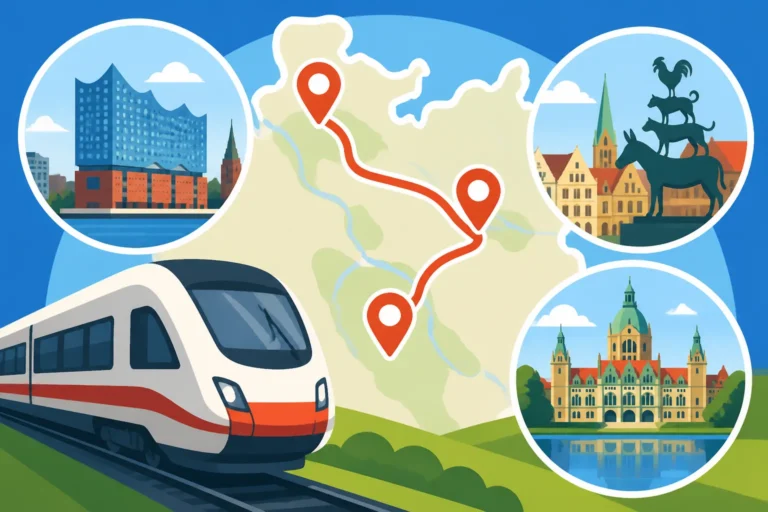
If you’re traveling between these cities to taste the difference, I usually check Omio for train schedules. It’s often cheaper and faster than driving, especially since it allows you to actually participate in the tastings without worrying about the strict German drink-driving laws. For more details on the specific types, you should definitely read about German Beer Culture: Styles, Beer Gardens, and Breweries.
Beer Garden Etiquette: Finding Your Place at the Bench
The Biergarten is perhaps Germany’s greatest gift to the world. It is a space of "Gemuetlichkeit"—that uniquely German word for coziness and social belonging. One of the most important rules to understand is the "Self-Service" area vs. the "Wait-Service" area. Usually, if there are tablecloths on the benches, a waiter will come to you. If the wooden benches are bare, you head to the counter to get your own drinks and food.
In traditional Bavarian beer gardens, there is an old rule that you are actually allowed to bring your own food. As long as you buy your drinks from the brewery, you can spread out a massive picnic of pretzels, cheese, and meats. I’ve spent many Saturdays in Munich’s Englischer Garten doing exactly this. It’s a wonderful way to save money while still enjoying the premium atmosphere of the city.
However, sharing is expected. If a beer garden is crowded, don't be surprised if a group of strangers asks, "Is this seat free?" (Ist dieser Platz noch frei?). The correct answer is always "Yes," assuming there's physical space. You aren't expected to have a deep conversation with them, but a polite nod and a "Prost" when your drinks arrive is the standard. If you want to know more about how to act in these social settings, check out German Etiquette and Social Life for Visitors.
Beyond the Bubbles: The Sophisticated World of German Wine
While beer gets all the international glory, Germany is secretly a wine superpower. I moved here thinking I’d only be drinking pilsner, but then I spent a weekend in the Pfalz region and my world shifted. The wine culture here is just as old as the beer culture, particularly in the southwest where the Romans first planted vines along the steep river banks.
The Riesling Empire and the Moselle Valley
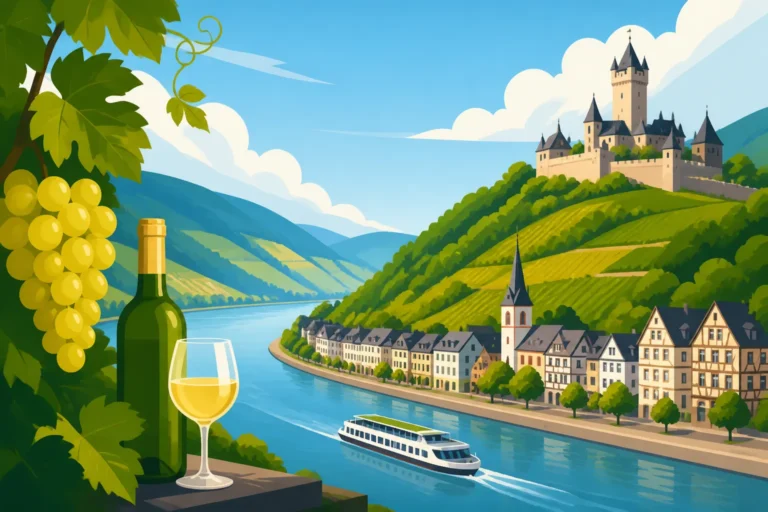
Riesling is the undisputed queen of German grapes. Forget the overly sweet, cheap stuff you might have tried back home; a true German Riesling is a masterclass in balance, acidity, and minerality. The Moselle (Mosel) Valley is world-famous for its incredibly steep vineyards—some of the steepest in the world—where grapes must be harvested by hand because machinery simply cannot navigate the terrain.
Living here, I’ve learned to appreciate the different "Prädikat" levels, which tell you how ripe the grapes were at harvest. From the dry Trocken wines to the late-harvest Spätlese and the dessert-like Eiswein, there is a Riesling for every palate. If you’re planning a trip to the vineyards, Booking.com often has great deals on boutique hotels and guest houses right in the middle of the vines.
The wine regions are also some of the most beautiful parts of the country. Hiking through the vineyards of the Rheingau or the Ahr Valley followed by a tasting at a local "Straußwirtschaft" (a seasonal wine tavern run by the growers themselves) is an quintessential expat experience. You can find more about these areas in our guide on German Wine Regions: Riesling and Beyond.
Weinfeste: Local Wine Festivals You Can't Miss
If you think beer festivals are intense, wait until you visit a German Weinfest. Throughout the summer and autumn, wine-growing villages host festivals that bring the entire community together. Unlike the massive, commercialized feel of some big beer events, wine festivals often feel much more local and intimate. You’ll find long tables set up in the market square, live Oompah bands or local rockers, and plenty of regional snacks like Zwiebelkuchen (onion cake).
The biggest of them all is the Wurstmarkt in Bad Dürkheim. Despite the name (which means Sausage Market), it is actually the world's largest wine festival. I remember being stunned by the "Dubbeglas"—a heavy, 0.5L glass used for wine spritzers. In most of the world, a half-liter of wine is a carafe meant for sharing; in the Pfalz, it’s a single serving.
Attending these festivals is one of the best ways to practice your German and meet locals who are usually much more open after a glass or two of Grauburgunder. If you're coming from another city, look into Regional Trains and the Deutschland-Ticket Explained to make the journey easy and sustainable.
Schorle Culture: The Refreshing Middle Ground
One thing that surprised me as a newcomer was the Weinschorle. This is a mix of wine and sparkling mineral water. While some wine purists abroad might shudder at the thought, in Germany, it is the ultimate summer drink. It’s refreshing, lower in alcohol, and keeps you hydrated while sitting in the sun.
In the wine regions, you’ll see people of all ages drinking Schorle. It’s a very practical drink. If you’re at a festival and want to last the whole day without falling over, switching to Schorles is the veteran move. It’s also quite common to see "Sauer-Schorle" (with sparkling water) or "Süß-Schorle" (with lemonade), though the water version is far more traditional.
Social Rules and the Art of the Toast
German drinking is governed by a set of social rules that can feel a bit rigid at first, but once you master them, you’re "in." These rituals are about respect and communal bonding. Ignoring them doesn't just make you look like a tourist; it can actually be seen as quite rude.
The Unbreakable Rule of Eye Contact
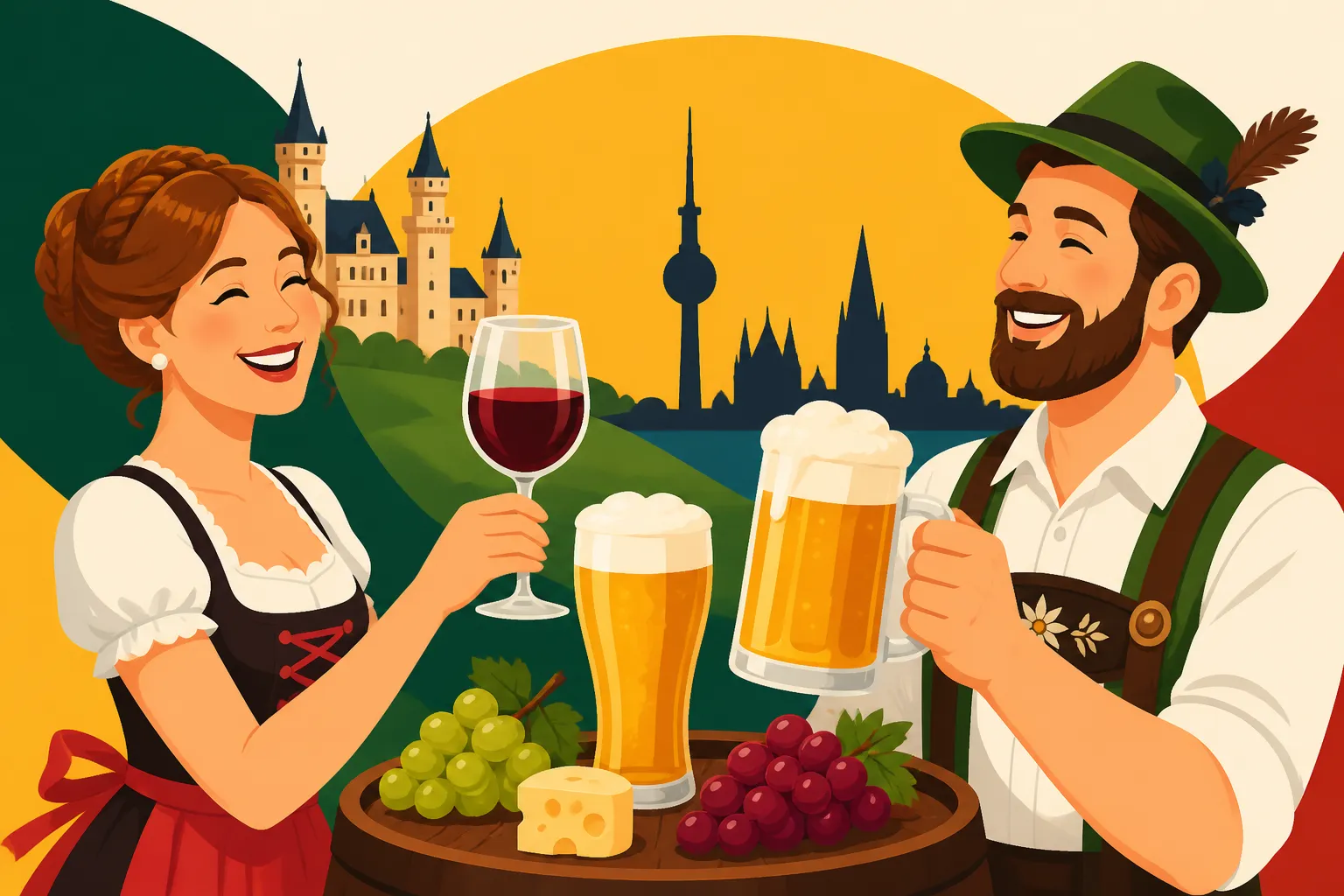
This is the one that trips up most Americans and Brits. When you clink glasses and say "Prost," you must make eye contact with the person you are clinking with. If you are in a group, you must clink and make eye contact with every single person individually.
The legend says that if you fail to make eye contact, you will suffer seven years of bad luck in your romantic life. While most Germans will just laugh if you forget, you will definitely notice that they take the eye contact very seriously. It’s a moment of acknowledgement. It says, "I am drinking with you, and I am present." For more on these subtle social cues, read German Social Etiquette for Visitors: Greetings and Punctuality.
Toasting Phrases: More Than Just Prost
While "Prost" is the universal standard for beer, wine culture often uses "Zum Wohl," which translates to "To your health." If you’re at a more formal dinner or a wedding, "Zum Wohl" is the more sophisticated choice.
There are also regional variations. In the North, you might hear "Moin Moin" even while drinking, or "Borg" in certain circles. However, as an expat, sticking to "Prost" for beer and "Zum Wohl" for wine will never lead you astray. Just remember to wait until everyone has their drink before you start. It is considered very impolite to take the first sip while someone else is still waiting for their glass to arrive.
Round Culture: When is it Your Turn to Pay?
The "round" system (where one person buys a drink for everyone, and then the next person does the same) exists in Germany, but it isn't as aggressive as it is in UK pub culture. In a casual Kneipe (neighborhood bar), people often just pay for their own drinks.
However, if someone says "Ich lade dich ein" (I invite you/my treat), they are paying for that round. The expectation is that you will return the favor at some point, perhaps not that same night, but eventually. When the bill comes at a restaurant, the waiter will usually ask "Zusammen oder getrennt?" (Together or separate?). It is perfectly normal, even among close friends, to pay separately. If you are the one paying, make sure you understand Tipping in Germany: When, Where, and How Much to avoid any awkwardness with the staff.
Navigating the Nightlife and Festivals
Drinking in Germany isn't just about the quiet glass of wine; it's also about the massive, world-famous festivals and the gritty, late-night bar scenes of cities like Berlin and Hamburg. Each has its own rhythm and set of expectations.
Oktoberfest and Beyond: Surviving the Big Volksfeste
Most people think of Oktoberfest as a giant party, but for locals, it’s a cultural marathon. If you’re heading to Munich in September, you need to plan months in advance. The tents are usually reserved by locals and companies a year out, though there are always sections for "walk-ins."
The beer served at Oktoberfest is special—it’s "Märzen" or "Festbier," which is stronger than your average Helles (usually around 6%). One "Maß" (a liter) is roughly equivalent to two or three standard beers in other countries. I’ve seen many tourists make the mistake of drinking two liters in the first hour and being escorted out before the sun goes down. Pace yourself. Eat a Hendl (roast chicken) or a massive pretzel to soak up the alcohol. For a complete survival guide, see Oktoberfest in Munich: A First-Timer's Guide.
Beyond Munich, every city has its own Volksfest. Stuttgart has the Cannstatter Wasen, which many locals actually prefer because it feels slightly less touristy. These festivals are family affairs during the day, with carnival rides and gingerbread hearts, turning into rowdy beer-hall singing sessions by night.
The Corner Kneipe: Germany's Living Room
The Kneipe is the local neighborhood bar. These are often smoky (though laws are changing), dimly lit, and filled with regulars who have been sitting on the same stools for thirty years. This is where you go for a "Feierabendbier"—the beer you have after work to signal the end of the day.
In a traditional Kneipe, don't expect a fancy cocktail list. You’re there for a draft beer and maybe a shot of Schnaps to "digest" your dinner. These bars are the soul of German cities. In Berlin, they are often open 24 hours a day. It’s a great place to see the "real" Germany away from the tourist traps. Just be aware that many of these smaller spots are still cash-only. I always make sure to read Cash vs Card in Germany: What Visitors Should Know before a night out to ensure I don't get stuck at the bar without a way to pay.
Drinking and the Law: Safety, Transport, and Public Consumption
One of the biggest shocks for expats from North America or Australia is that drinking in public is generally legal in Germany. You can buy a beer at a "Späti" (late-night shop) and drink it while walking to the club or sitting in a park. This leads to a much more relaxed atmosphere, but it also comes with a high expectation of personal responsibility.
Being "drunk and disorderly" is still a crime. If you’re making a scene, the police will intervene. Also, the blood-alcohol limit for driving is very low (0.05% for experienced drivers and 0.0% for those under 21 or in their probation period). My advice? Don't drive at all if you've had even one drink. The public transport system is so good that there’s simply no reason to risk it.
| Beverage Category | Typical Serving Size | Popular Regional Type | Glassware Name |
|---|---|---|---|
| Beer (South) | 0.5L or 1.0L | Helles / Weissbier | Maß or Willibecher |
| Beer (North) | 0.33L or 0.5L | Pilsner | Tulpe |
| Beer (Cologne) | 0.2L | Kölsch | Stange |
| Wine (Pfalz) | 0.5L | Riesling Schorle | Dubbeglas |
| Wine (General) | 0.1L or 0.2L | Riesling / Spätburgunder | Weinglas |
| Cider (Frankfurt) | 0.3L | Apfelwein | Geripptes |
Non-Alcoholic Options and Sobriety in Germany
You might worry that if you don't drink, you’ll be an outcast. Fortunately, Germany has one of the most robust non-alcoholic drinking cultures in Europe. Whether it's for health, pregnancy, or simply personal choice, you will always have excellent options that aren't just "tap water."
The Rise of Alkoholfrei Culture
German brewers have spent millions of euros perfecting alcohol-free beer. In fact, many German athletes use Alkoholfreies Weissbier as an isotonic recovery drink after races because it’s full of vitamins and minerals. I often order one during a business lunch when I need to stay sharp but want to participate in the "social" aspect of having a beer.
Brands like Erdinger and Clausthaler have become world leaders in this space. Most restaurants will have at least two or three alcohol-free options on tap or in bottles. They actually taste like beer, rather than the watery substitutes found elsewhere.
Spezi and Apfelschorle: The True National Drinks?
If you want to drink like a local without the booze, you have to try Spezi (a mix of cola and orange soda) and Apfelschorle (apple juice mixed with sparkling water).
Apfelschorle is the unofficial national drink of German children and hikers. It’s everywhere. It is refreshing, not too sweet, and considered a "healthy" alternative to pure soda. Spezi, on the other hand, is a cult favorite. There is even a long-standing "war" between different brands like Paulaner Spezi and Mezzo Mix. Ordering a Paulaner Spezi in a beer garden is a very "local" move that will earn you a nod of approval from the staff.
Practical Planning for the Thirsty Traveler
If you’re planning a trip specifically to explore Germany’s drinking culture, a bit of logistics will go a long way. The best regions for beer (Bavaria) and wine (Rhineland-Palatinate) are at opposite ends of the country, so you’ll need to decide on a focus or plan a solid route.
Booking Your Experience: Tours and Accommodation
I always suggest staying in the city centers if you plan on visiting beer halls, as it makes the "walk home" much safer. Booking.com is my go-to for finding hotels that are within walking distance of the main squares. In Munich, try to stay near the Marienplatz or the Hauptbahnhof. In Cologne, anything near the Cathedral (Dom) will put you in the heart of Kölsch territory.
For specific experiences like "Night Watchman" tours that end in a tavern or guided wine tastings, GetYourGuide has a fantastic selection of English-speaking guides. These tours are great because they often get you into smaller, family-owned cellars that don't usually open their doors to individual tourists.
Logistics: Getting Between the Best Drinking Regions
As mentioned, the train is your best friend. The high-speed ICE trains can get you from Munich to Frankfurt (the gateway to wine country) in just over three hours. I recommend booking your tickets through Omio as it compares the prices of the national rail (Deutsche Bahn) with regional bus lines like FlixBus.
If you’re on a budget, the buses are significantly cheaper, though they take longer. However, if you’re traveling through the Rhine Valley, the regional trains are a must. The tracks run right along the river, providing world-class views of the castles and vineyards for the price of a standard commuter ticket.
Essential Drinking Vocabulary
To help you navigate your first night out, here is a quick reference table of terms you’ll likely encounter on a menu or in conversation.
| German Term | English Translation | Usage Context |
|---|---|---|
| Prost! | Cheers! | The universal toast for beer and casual drinks. |
| Zum Wohl! | To your health! | A slightly more formal toast, common for wine. |
| Ein Bier, bitte. | A beer, please. | The basic ordering phrase. |
| Noch eins, bitte. | Another one, please. | For when you've finished your first glass. |
| Die Rechnung, bitte. | The bill, please. | When you are ready to pay. |
| Leitungswasser | Tap water | Rarely served for free; expect to pay for bottled water. |
| Trocken | Dry | Essential for ordering wine that isn't sweet. |
| Halbtrocken | Medium-dry | A good middle ground for German Rieslings. |
| Süß | Sweet | For dessert wines or very fruity styles. |
| Feierabendbier | After-work beer | A cultural concept of the "reward" beer after labor. |
Disclaimer
This guide is for informational purposes only. Alcohol consumption in Germany is subject to strict legal ages (16 for beer and wine, 18 for spirits). Always drink responsibly and be aware of local laws regarding public intoxication and driving. The cultural nuances described are based on general traditions and may vary by specific region or establishment.