Long-Distance Buses in Germany: FlixBus and Networks
It’s a familiar scenario for many expats in Germany: you want to explore this beautiful country or visit friends in another city, but then you look at the train ticket prices, and your jaw drops. Deutsche Bahn is fantastic for speed and comfort, but it can often feel like a luxury, especially if you’re on a budget. Trust me, I’ve been there, staring at those eye-watering ICE fares and wondering if I’d ever see outside my own city. But don't despair! Long-distance buses in Germany have emerged as an incredibly popular and affordable alternative, connecting virtually every corner of the nation and offering a lifeline for budget-conscious travelers. This comprehensive guide will walk you through everything you need to know about navigating Germany’s extensive bus networks, with a special focus on the dominant player, FlixBus, and how to make the most of your journey.
Disclosure: This post may contain affiliate links. We may earn a commission at no extra cost to you if you make a purchase through these links. Read full disclosure.
The Rise of Long-Distance Buses in Germany: A Game Changer for Travelers
For decades, long-distance passenger transport in Germany was virtually synonymous with Deutsche Bahn. Trains were king, and buses were primarily for local routes. But a significant shift in legislation opened the doors for a new era of travel, transforming the landscape and offering travelers a much-needed alternative. This deregulation was nothing short of a game-changer, especially for those looking to stretch their euros further.
A Brief History of Bus Travel Deregulation
Before 2013, Germany operated under a rather strict law that heavily favored rail transport. The Personenbeförderungsgesetz (Passenger Transportation Act) effectively prohibited intercity bus services from competing with the established railway network, especially for routes where a train journey of less than 50 kilometers was available. This meant that any new bus service had to prove it wasn't directly competing with the railway or that there was a "considerable need" not met by existing rail options, a hurdle that was almost impossible to clear. The reasoning was primarily to protect Deutsche Bahn and ensure the financial viability of its extensive network, which often included less profitable regional lines.
However, as the European Union pushed for greater market liberalization and consumer choice, Germany finally relaxed these regulations on January 1, 2013. This pivotal change allowed private bus companies to offer long-distance routes, paving the way for fierce competition and, crucially, much lower prices. Almost overnight, new operators sprang up, eager to fill the gap in affordable travel. This deregulation didn't just introduce new companies; it fundamentally altered how people thought about intercity travel, proving that a robust, low-cost option could thrive alongside the traditional rail system.
Why Buses Are a Go-To for Expats and Budget Travelers
The impact of this deregulation, especially for expats and budget travelers, cannot be overstated. Suddenly, traveling across Germany, whether it was from Berlin to Munich or Cologne to Hamburg, became significantly more accessible. The primary draw, without a doubt, is the cost-effectiveness. Bus tickets are almost invariably cheaper than train tickets, particularly if you book in advance or travel during off-peak hours. This price difference can be substantial, often saving you half or even two-thirds of the equivalent train fare. For students, those on a limited income, or families looking to explore without breaking the bank, this makes a huge difference.
Beyond the attractive pricing, long-distance buses offer an extensive network. While Deutsche Bahn connects major cities and smaller towns via its rail lines, bus companies have expanded to reach an incredible number of destinations, including many towns that might be less accessible by direct train. This allows for greater flexibility in planning your trips and often provides direct connections that would otherwise require multiple train changes. Environmentally conscious travelers also appreciate the bus option, as it generally has a lower carbon footprint per passenger kilometer compared to individual car travel or flying, contributing to more Sustainable Choices. It's a pragmatic and often greener way to see Germany, and it’s become a core part of how many expats manage their Cost of Living in Germany: Budgeting Guide for Expats while still exploring their new home.
FlixBus: The Green Giant Dominating the Market
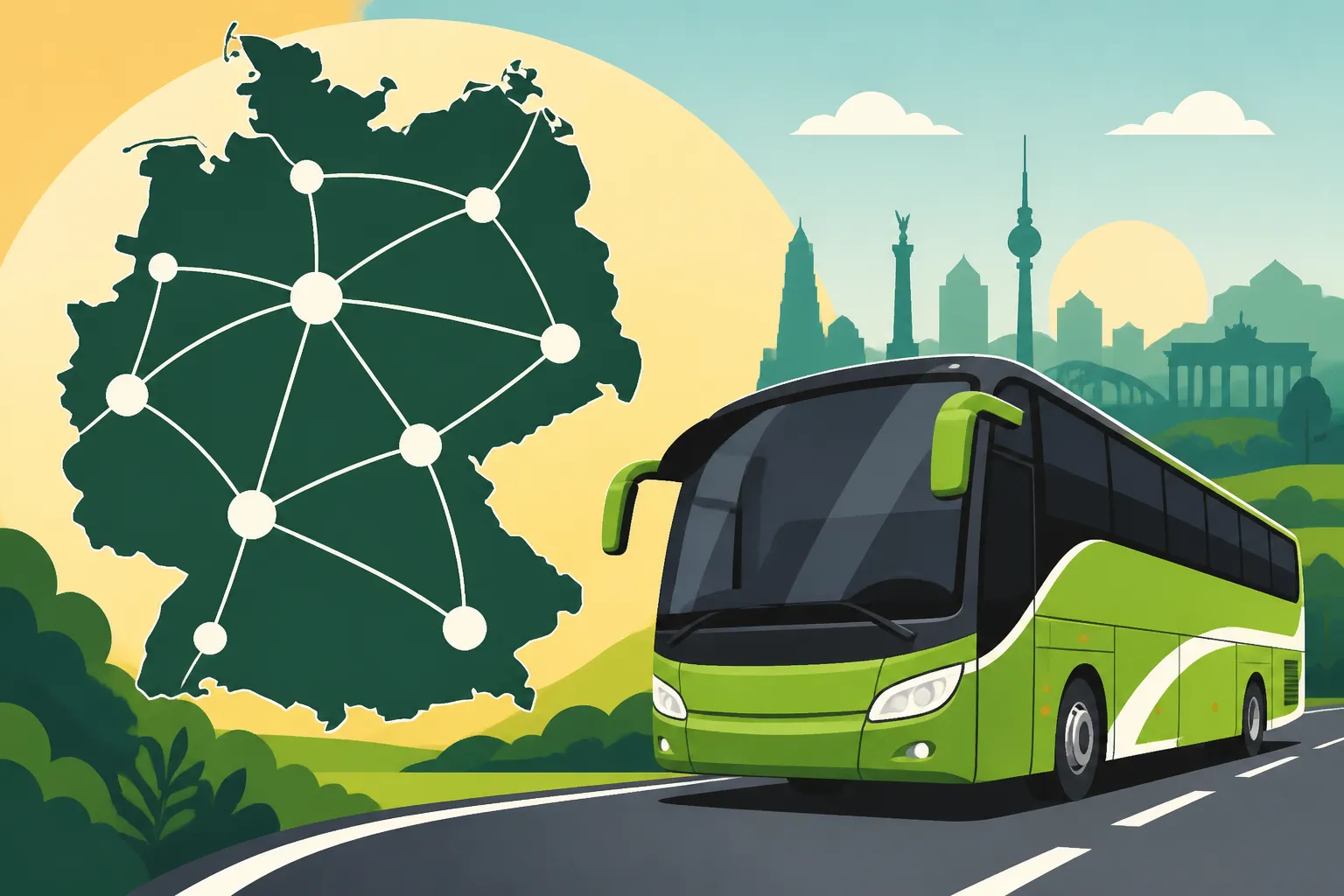
When you talk about long-distance buses in Germany, one name inevitably comes to mind: FlixBus. This company has not only revolutionized bus travel but has also become virtually synonymous with it, not just in Germany but across much of Europe. Their distinctive green buses are now a common sight on German highways and at bus stations, symbolizing an era of affordable, accessible intercity transport.
What is FlixBus and How It Operates
FlixBus started in Germany in 2013, right after the market was deregulated, and quickly became the dominant player. Its success lies in an innovative business model: instead of owning all its buses and employing all its drivers, FlixBus partners with regional bus companies. These local partners, often small or medium-sized businesses, handle the day-to-day operations, including providing the buses and drivers, while FlixBus takes care of the network planning, marketing, pricing, and customer service. This asset-light approach allows FlixBus to expand rapidly and efficiently, leveraging existing infrastructure and local expertise without the massive capital investment required to build and maintain its own fleet from scratch.
Today, FlixBus boasts an unparalleled network, covering thousands of destinations across Germany and over 40 countries in Europe, as well as parts of North America and Brazil. They operate routes with high frequency between major German cities like Berlin, Munich, Frankfurt, and Hamburg, but also connect countless smaller towns. Their schedules are designed to offer flexibility, with multiple departures throughout the day on popular routes, including overnight services. This extensive reach and consistent service have solidified FlixBus's position as the go-to provider for budget intercity travel.
Booking Your FlixBus Journey: A Step-by-Step Guide
Booking a FlixBus ticket is straightforward, designed to be user-friendly even if your German isn't perfect yet. Most expats find the process quite intuitive, thanks to their excellent English-language interface.
Here’s how you typically book your journey:
-
Choose Your Platform: You can book directly through the official FlixBus website (flixbus.de) or their highly functional mobile app (available for iOS and Android). Both offer the same features and real-time information. You can also sometimes book through third-party aggregators, like Omio, which can be useful if you're comparing bus, train, and even flight options all in one place. Using a platform like Omio can give you a quick overview of all available routes and prices across different modes of transport, helping you decide if the bus is indeed the most economical choice for your particular trip.
-
Enter Your Details: Input your departure city, destination city, travel dates, and the number of passengers. The system will then display all available routes, including any transfers, and their corresponding prices. You'll see options for direct routes and those with layovers, along with the total travel time for each.
-
Select Your Journey: Pick the departure time and route that best suits your schedule and budget. FlixBus prices often vary based on demand, so booking further in advance generally secures you a better deal. It's similar to booking train tickets on High-Speed Trains in Germany ICE Deutsche Bahn Routes and Savings – the earlier, the better.
-
Add Extras: During the booking process, you'll have the option to add extras such as a guaranteed seat reservation (useful during peak times or if you prefer a window/aisle seat), additional luggage beyond the standard allowance (usually one carry-on and one checked bag), or special items like bicycles. Be mindful of these costs as they can add up, though usually remain cheaper than alternative transport.
-
Passenger Information: Enter the names of all passengers. For most domestic German routes, a simple first and last name is sufficient. For international routes, you might need passport details.
-
Payment: FlixBus accepts various payment methods, including credit cards (Visa, MasterCard, American Express), PayPal, and sometimes SEPA direct debit. Once payment is confirmed, you'll receive your ticket via email. You don't usually need to print it; simply show the QR code on your phone to the driver when boarding.
This streamlined process means you can often book a trip from your phone just hours before departure, though, as mentioned, booking in advance usually yields the best prices.
The FlixBus Experience: Pros and Cons
Like any travel option, taking FlixBus comes with its own set of advantages and disadvantages. It’s important to weigh these before deciding if it’s the right choice for your next German adventure.
Pros of Traveling with FlixBus:
- Affordability: This is the biggest selling point. FlixBus tickets are often significantly cheaper than train tickets, especially for spontaneous travel or popular routes. This makes it an ideal choice for expats looking to save money while exploring Germany or visiting friends.
- Extensive Network: FlixBus connects an enormous number of cities and towns, both within Germany and across Europe. This wide reach means you can often find a direct route to your destination, even if it's not a major hub.
- Onboard Amenities: Most FlixBuses offer free Wi-Fi, power outlets at every seat (a lifesaver for long journeys!), and onboard toilets. While the Wi-Fi can sometimes be spotty, it's generally good enough for basic browsing and messaging. For those who rely on connectivity, it’s worth considering bringing a local SIM or eSIM for guaranteed Mobile Data and eSIMs for Travel in Germany
- Environmental Friendliness: Bus travel is generally considered a more eco-friendly option compared to flying or driving alone, as it boasts lower CO2 emissions per passenger.
- Comfort (Relative to Price): While not luxurious, the seats are generally comfortable enough for several hours of travel, and buses are kept clean. It's a far cry from a cramped economy airplane seat.
Cons of Traveling with FlixBus:
- Longer Travel Times: Buses, by nature, are slower than high-speed trains. They are subject to traffic and have to make stops, meaning journeys often take considerably longer than the equivalent train ride. This can be a significant drawback if you're on a tight schedule.
- Potential for Delays: Traffic jams, road closures, or operational issues can lead to delays. While FlixBus usually communicates these proactively via their app, it can still disrupt travel plans. It's advisable to factor in buffer time, especially if you have a connecting flight or an important appointment.
- Bus Station Locations: While major cities have central bus stations (like Berlin's ZOB or Munich's ZOB), some stops, particularly in smaller towns, might be less centrally located or not as well-connected to public transport as train stations. This could mean extra time and cost for local transfers.
- Comfort for Very Long Journeys: While seats are decent, very long journeys (6+ hours) can become tiring, especially if the bus is full. Legroom can be limited, and sleeping on a bus isn't for everyone.
- Limited Food Options: While some buses might have snacks or drinks for sale, it’s best to bring your own food and water, especially for longer trips. Unlike trains, there's no dining car, so plan ahead by visiting a local supermarket beforehand, perhaps using tips from Navigating German Supermarkets: Grocery Shopping Tips and Tricks.
Despite the cons, for many, the unparalleled affordability makes FlixBus an attractive, practical option for traveling within Germany and beyond.
Beyond FlixBus: Other Networks and Niche Providers
While FlixBus undeniably dominates the long-distance bus market in Germany, it's not the only player, though it often feels that way. The landscape is dynamic, with other companies operating international routes touching Germany or offering more specialized domestic services. Understanding these alternatives can sometimes provide more choice or cater to specific travel needs.
Smaller German and European Bus Operators
For a period after deregulation, several companies like MeinFernbus (which later merged with FlixBus) and Postbus (operated by Deutsche Post, also later acquired by FlixBus) emerged. Today, few direct long-distance competitors operate extensively within Germany on the same scale as FlixBus. The market consolidated heavily. However, you will find other operators, especially for international routes that include stops in Germany.
One notable competitor is BlaBlaCar Bus. While perhaps more prominent in France and other European countries, BlaBlaCar Bus (formerly Ouibus) does offer international routes that connect German cities to destinations like Paris, Brussels, Amsterdam, and more. Their service model and onboard amenities are quite similar to FlixBus, focusing on affordability and a modern travel experience. If you are traveling to or from Germany to a neighboring country, it's always worth checking BlaBlaCar Bus as well as FlixBus through comparison platforms like Omio to ensure you find the best deal.
Beyond these two major players, there are occasional smaller, niche operators that might run specific regional routes or seasonal services, perhaps connecting tourist destinations or catering to specific communities. These are less common for general long-distance travel across Germany's main routes but are worth being aware of. You might stumble upon them via local tourist information centers or by simply searching for bus routes between specific smaller towns.
The Role of Regional and Local Bus Services
While this guide focuses on long-distance buses, it's crucial to understand how regional and local bus services fit into the broader German transport ecosystem. These networks are vital for connecting smaller towns and rural areas to larger cities and major transport hubs, often serving as the "last mile" for travelers. Unlike long-distance buses, which are designed for intercity travel, regional buses operate within specific federal states or districts.
A significant development here is the Deutschland-Ticket (also known as the 49-Euro-Ticket). This popular monthly subscription allows unlimited travel on all local and regional public transport across Germany, including regional trains (RE, RB), S-Bahns, U-Bahns, trams, and regional buses. For expats, this ticket has been a game-changer for local exploration and connecting to long-distance hubs. If your long-distance bus journey starts or ends in a smaller town, the Deutschland-Ticket can seamlessly get you to or from the major bus station, often saving you money on individual tickets. It's a fantastic solution for making the entire journey, from your doorstep to your final destination, as cost-effective as possible. You can read more about its benefits and usage in our guide to Regional Trains and the Deutschland-Ticket Explained.
Comparing Alternatives: When to Choose What
Deciding between a long-distance bus, a train, or even carpooling depends heavily on your priorities for a given trip. Each mode of transport has its strengths and weaknesses.
-
Long-Distance Buses (e.g., FlixBus, BlaBlaCar Bus): These are your go-to for maximum affordability and a wide network, especially if you're not in a hurry. They are ideal for budget-conscious travelers, students, or those with flexible schedules. The trade-off is often longer travel times and potential for delays due to traffic. They also offer a direct connection to many places not easily accessible by train.
-
Trains (Deutsche Bahn): Trains excel in speed, comfort, and reliability, particularly the ICE high-speed services. They are perfect if time is of the essence, you value space and amenities (like a dining car), or you prefer arriving at central train stations. However, they are generally more expensive, especially if not booked far in advance. Deutsche Bahn offers great connectivity, but direct routes can be pricier. Our guide on Getting Around Germany: Trains, Buses, Flights, and Car Hire delves deeper into these options.
-
Carpooling (e.g., BlaBlaCar rideshare): For certain routes, especially those less serviced by direct public transport, carpooling can be a very flexible and social option. It can be quite affordable, similar to bus prices, and allows for door-to-door service. However, it relies on individual drivers, so reliability and availability can vary.
-
Regional Buses (with Deutschland-Ticket): While not long-distance in the traditional sense, using regional buses and trains with a Deutschland-Ticket is a fantastic way to explore regions and connect to smaller towns for a fixed monthly fee. If your journey involves multiple stops within a region, this might be more cost-effective and flexible than separate long-distance bus tickets.
Consider your priorities: is it cost, speed, comfort, or directness? This will usually point you toward the best travel option for your specific trip.
Practical Tips for Stress-Free Bus Travel in Germany
Even seasoned travelers can find navigating a new country's transport system a bit daunting. While long-distance bus travel in Germany is generally straightforward, a few practical tips can help ensure your journey is as smooth and stress-free as possible, allowing you to focus on the destination rather than the logistics.
Navigating Bus Stations and Stops
German bus stations, often called a Zentraler Omnibusbahnhof (ZOB) or simply Bushaltestelle (bus stop), can vary significantly in size and amenities. Major cities like Berlin, Munich, or Frankfurt have large, dedicated ZOBs that resemble mini-airports, complete with waiting areas, ticket counters, kiosks for snacks, and clear signage. In smaller towns, a bus stop might be a simple signpost by the roadside.
Here are some tips:
- Arrive Early: Always aim to arrive at least 15-20 minutes before your scheduled departure, especially at larger stations or during peak travel times. This gives you ample time to locate your correct bus bay, check for any last-minute platform changes, and load your luggage without feeling rushed. Buses generally depart on time, and they won't wait for latecomers.
- Check Your Ticket: Your ticket will usually specify the departure platform (Steig or Bussteig). Double-check this information on arrival at the station, as platforms can occasionally change. Electronic display boards are common at ZOBs and will show departure times and platforms.
- Luggage Loading: When your bus arrives, drivers will typically open the luggage compartment for passengers to load their larger bags. Be ready to quickly identify your bag and place it in the compartment. For carry-on luggage, ensure it fits in the overhead bins or under the seat in front of you.
- Amenities: At larger ZOBs, you'll often find vending machines, small cafes, and public restrooms. In smaller locations, these amenities might be absent, so plan accordingly by grabbing a snack or using facilities before you head to the stop.
Luggage, Comfort, and Onboard Amenities
Understanding what to expect regarding luggage and amenities can greatly enhance your bus travel experience. FlixBus and similar operators have fairly standardized policies.
- Luggage Allowance: Most long-distance bus tickets include a standard allowance of one piece of carry-on luggage (small enough to fit under your seat or in the overhead rack) and one piece of checked luggage (usually up to 20 kg, with specific dimensions). Always check the exact allowance on your ticket or the operator's website, as exceeding these limits can incur extra fees or even lead to your luggage being refused. If you need to bring more, it's almost always cheaper to pre-book additional luggage online during your ticket purchase than to pay at the station.
- Onboard Comfort: While not business class, modern long-distance buses are designed for reasonable comfort. Seats recline slightly, and there’s usually individual lighting and air conditioning vents. For long journeys, consider bringing a neck pillow, an eye mask, and earplugs. Comfortable clothing is also a must.
- Amenities: As mentioned, most buses offer free Wi-Fi, power outlets (often USB ports alongside traditional sockets), and a toilet. While these are great conveniences, remember that Wi-Fi signal strength can vary, especially in rural areas, and power outlets might not always be fully functional. It's wise to fully charge your devices beforehand or bring a portable power bank. For entertainment, download movies, podcasts, or e-books in advance, especially if you rely on Mobile Data and eSIMs for Travel in Germany for streaming.
Dealing with Delays and Cancellations
Even with the best planning, travel disruptions can occur. Knowing how to handle delays or cancellations can save you a lot of stress.
- Stay Informed: The FlixBus app is generally excellent for real-time updates. It will notify you of any significant delays or platform changes. Keep an eye on your booking status via the app or website before heading to the station.
- Minor Delays: For minor delays (up to an hour), simply wait. Buses usually catch up some time, and connections might be held if multiple FlixBus routes are involved.
- Significant Delays or Cancellations: In the event of a major delay (typically over 60-120 minutes, depending on the route and regulations) or a cancellation, you generally have rights under EU passenger regulations. These rights usually entitle you to:
- Reimbursement: A full refund for your ticket.
- Alternative Transport: Rerouting to your destination at the earliest opportunity under comparable conditions, which might include another bus, train, or even a flight if no other options are viable.
- Assistance: For long delays, this could include meals, refreshments, and even accommodation if an overnight stay becomes necessary.
- Contact Customer Service: If you experience a significant disruption, the first step is to contact the bus operator's customer service, either via phone, email, or their chat function on the app/website. They can advise you on your options for rebooking or reimbursement. Keep all your ticket information handy.
- Flexibility is Key: While operators strive to get you to your destination, sometimes the quickest solution involves finding alternative arrangements yourself. In such cases, if you find yourself stranded due to a significant delay, having quick access to booking platforms like Booking.com can be a lifesaver for finding last-minute Accommodation in Germany: Hotels, Pensionen, and Hostels or checking other transport options on Omio. If delays leave you with unexpected free time at your destination, perhaps checking out GetYourGuide for nearby attractions or activities could turn a frustrating wait into an impromptu adventure. Always keep your travel insurance information at hand as well, especially if you have Travel Insurance for Trips to and Within Germany that might cover unexpected costs.
Is Long-Distance Bus Travel Right for You?
Deciding whether to hop on a long-distance bus for your next trip in Germany often comes down to balancing cost, time, and comfort. It's not for everyone, but for a large segment of travelers, it's an absolute godsend. Understanding the typical profiles of those who benefit most and considering the broader impact can help you make an informed choice.
Cost-Benefit Analysis for Different Travel Styles
Long-distance buses truly shine for specific types of travelers and situations, but might not be the optimal choice for others.
Who Benefits Most:
- Budget Travelers & Students: This is the most obvious group. If saving money is your top priority, especially for trips within Germany or to neighboring European countries, buses are almost always the cheapest option. Students, in particular, often find bus travel indispensable for visiting home or exploring on a limited allowance.
- Travelers with Flexible Schedules: If you’re not bound by strict arrival times or tight connections, the longer journey times and potential for delays are less of a concern. The ability to choose off-peak times often brings even greater savings.
- Those Exploring Less-Traveled Routes: While trains connect major hubs, buses often have a more granular network, reaching smaller towns directly that might require multiple train changes and longer overall journeys with Deutsche Bahn. This can be great for exploring Germany’s diverse regions, perhaps even for a Best Day Trips From Berlin that might involve a lesser-known town.
- Groups and Families: For groups or families traveling together, the cumulative savings on bus tickets can be substantial, making a trip feasible where train travel might be prohibitively expensive.
Who Might Prefer Other Options:
- Time-Sensitive Travelers: If you need to be somewhere at a specific time (e.g., catching a flight, attending an important meeting), the speed and greater punctuality of trains, particularly high-speed ones like the ICE, will be preferable despite the higher cost.
- Comfort-Focused Travelers: While buses are decent, they don't offer the same level of space, ability to walk around, or dedicated dining options as trains. If you value more legroom, quieter surroundings, or onboard services, the train might be worth the splurge.
- Travelers with Excessive Luggage: While extra luggage can be booked, if you're traveling with a very large amount of baggage (e.g., moving, bringing specialized equipment), a car or train might offer more flexibility and less hassle.
Ultimately, it's a personal decision based on your priorities for each specific journey. Don't dismiss buses outright just because they're not trains; they fill a crucial niche for affordable and extensive travel.
Environmental Impact and Sustainable Choices
In an era of increasing environmental awareness, the ecological footprint of our travel choices is becoming more important. Long-distance buses present a compelling case as a more sustainable option for intercity travel.
- Lower Carbon Footprint: Compared to individual car travel or short-haul flights, buses generally have a significantly lower carbon footprint per passenger kilometer. A bus full of passengers is a highly efficient way to move people from one place to another. While electric buses are still less common for long-distance routes, even conventional diesel buses are more environmentally friendly than a single-occupancy vehicle.
- Reduced Road Congestion: By taking a bus, you're contributing to fewer individual cars on the road, which can help alleviate traffic congestion and associated emissions.
- Promoting Public Transport: Choosing bus travel supports the infrastructure of public transport, encouraging further investment in green technologies and expanded networks. This helps reduce reliance on private vehicles and fossil fuels in the long run.
For many expats living in Germany, a country with a strong emphasis on environmental protection and recycling (think of the rigorous Waste Sorting in Germany Mülltrennung and Pfand system), choosing public transport like long-distance buses aligns with a more sustainable lifestyle. It's a simple yet impactful way to contribute to greener travel habits while still enjoying the freedom to explore.
By making a conscious choice to use long-distance buses, you're not just saving money; you're often making a greener, more responsible travel decision. It's about finding the right balance for your needs and values.
Comparison of Travel Options in Germany
To help you decide which mode of transport is best for your next trip, here’s a quick comparison of the most common long-distance options in Germany:
| Feature | Long-Distance Bus (e.g., FlixBus) | Train (e.g., Deutsche Bahn ICE/IC) | Car (Own/Rental/Carpool) |
|---|---|---|---|
| Cost | Lowest (especially booked in advance) | Medium to High (can be low with early booking) | Variable (fuel, tolls, rental, parking) |
| Speed | Slowest (subject to traffic, more stops) | Fastest (especially ICE) | Medium (can be fast on Autobahn, but traffic dependent) |
| Comfort | Basic to moderate (reclining seats, limited space) | High (more legroom, walk around, dining car) | Variable (depends on car, can be very comfortable) |
| Network | Very extensive (major cities, smaller towns) | Extensive (major cities, regional connections) | Most flexible (door-to-door) |
| Luggage | Strict limits, fees for extra | Generous, easier with multiple bags | Very generous, no extra fees |
| Flexibility | Good (many departures on popular routes) | Good (frequent services) | Highest (depart anytime, custom routes) |
| Environmental Impact | Lower per passenger (if full) | Lower per passenger | Highest per passenger (if single occupant) |
| Onboard Amenities | Wi-Fi, power outlets, toilet | Wi-Fi, power outlets, toilet, dining, quiet zones | Dependent on vehicle |
| Likelihood of Delay | Medium to High (traffic dependent) | Low to Medium (technical issues, strikes) | Medium (traffic dependent) |
Disclaimer
The information provided in this guide is for general informational purposes only and is subject to change. While we strive to keep the content up-to-date and accurate, Germany's transport regulations, company policies, and service offerings can evolve. It is always recommended to check the official websites of transport providers like FlixBus, Deutsche Bahn, or other relevant authorities for the most current information before planning your journey. We are not responsible for any inaccuracies or changes that may occur.