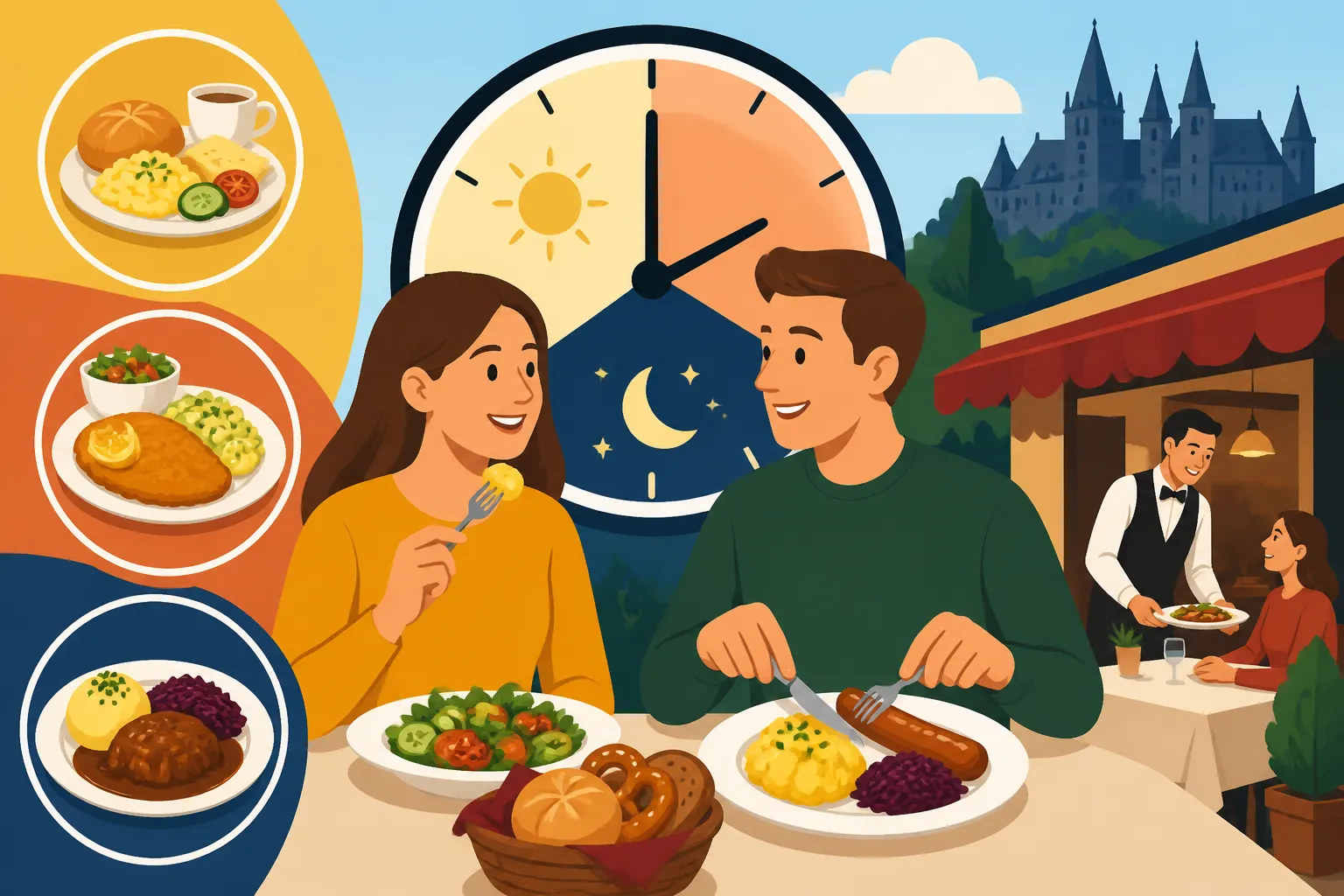
German Meal Times and Restaurant Basics for Visitors
Trying to figure out when and where to eat in a new country can feel like solving a secret code, and Germany is no exception. Trust me, I’ve been there, stomach grumbling, wondering why every restaurant seemed closed when I expected them to be open! This guide is designed to pull back the curtain on German meal times and restaurant etiquette, ensuring your culinary adventures here are filled with delight, not confusion.
Disclosure: This post may contain affiliate links. We may earn a commission at no extra cost to you if you make a purchase through these links. Read full disclosure.
Early Birds and Evening Owls: Understanding German Meal Times
The rhythm of eating in Germany might feel a little different if you're coming from a country with later dinner times or an all-day dining culture. Germans generally prefer to eat earlier, and you’ll notice distinct windows for each main meal, especially when it comes to restaurant kitchen hours. Missing these can mean a hungry wait, so let's break it down.
The Hearty German Breakfast (Frühstück)
Forget grabbing a sad croissant on the go; German breakfast is a serious, often leisurely affair, especially on weekends. Typically, Germans start their day with a substantial breakfast between 7:00 AM and 9:00 AM on weekdays, extending much later into the morning, sometimes even past noon, on Saturdays and Sundays.
A traditional German breakfast is a feast of fresh bread rolls (Brötchen), various cold cuts (Wurst and Aufschnitt), an assortment of cheeses, jams, honey, and often a soft-boiled egg. Coffee is almost universally consumed, though tea is also common. You'll rarely find a German breakfast without a selection of delicious breads. The sheer variety of breads and rolls available at any local bakery is astounding, from dense rye breads to light, crusty Brötchen. Many cafes offer special "Frühstück" menus that include a selection of these items, often served on a tiered platter. If you're staying in a hotel, especially one booked through platforms like Booking.com, you'll likely encounter a sprawling breakfast buffet designed to set you up for the day, featuring many of these classic items. It’s an experience in itself, showcasing the national love affair with baked goods and savory spreads. For a deeper dive into this delightful meal, check out our guide on Bread, Bakeries, and the German Breakfast.
The Midday Meal (Mittagessen): A Quick Affair or a Proper Pause?
Historically, Mittagessen (lunch) was the main meal of the day in Germany, a substantial, warm meal enjoyed around 12:00 PM to 2:00 PM. Families would gather, and school children would often come home to eat. While this tradition still holds true in some smaller towns or for older generations, urban life and modern work schedules have significantly shifted this pattern.
In today's fast-paced environment, particularly in larger cities like Berlin or Munich, Mittagessen for many working professionals is often a quicker, lighter affair. People might grab a sandwich, a salad, or a hot dish from a cafeteria (Kantine), an Imbiss (snack stand), or a quick service restaurant. However, traditional German restaurants (Gaststätten) and more formal establishments will still offer a full lunch menu, often with a "Mittagstisch" (lunch special) that provides good value. These specials usually run until around 2:00 PM or 2:30 PM. If you're looking for a hearty, warm meal, this is often a great time to find excellent deals. Don't be surprised if many places are bustling with office workers between 12:30 PM and 1:30 PM, then quiet down considerably. It’s less common now to have a multi-course, leisurely lunch on a workday unless it's a special occasion or a business meeting.
The Evening Feast (Abendessen or Abendbrot): When Germans Gather
The evening meal, Abendessen (dinner) or Abendbrot (evening bread), is typically eaten later than lunch, but generally earlier than in many Southern European or North American countries. You can expect Germans to sit down for their evening meal between 6:00 PM and 8:00 PM.
The concept of Abendbrot is particularly charming and reflects the shift in the main meal to midday. It literally means "evening bread" and often consists of a selection of bread, cold cuts, cheeses, pickles, and sometimes salads. It’s a lighter, often cold meal, quick to prepare after a long day. However, when dining out, Abendessen will certainly be a warm meal. Restaurant kitchens generally open for dinner service around 5:30 PM or 6:00 PM and usually take their last orders between 9:00 PM and 10:00 PM, though this can vary by establishment and city. In more touristy areas or bustling city centers, some restaurants might stay open a bit later, but it’s unwise to expect full dinner service much beyond 10:00 PM, especially on weekdays. If you show up at 10:30 PM, you'll likely find the kitchen closing down, even if the bar remains open for drinks. Always check opening hours if you plan a late meal, perhaps using an app that can help you find open restaurants.
Here's a quick overview of typical German meal times:
| Meal | Typical Time Range (Weekdays) | Description |
|---|---|---|
| Frühstück | 7:00 AM – 9:00 AM | Hearty breakfast of breads, cold cuts, cheese, jams, eggs, coffee. Often a more leisurely affair on weekends. |
| Mittagessen | 12:00 PM – 2:00 PM | Traditionally the main warm meal, now often a quicker, lighter option for workers, but restaurants still offer full meals and lunch specials. |
| Kaffeezeit | 3:00 PM – 4:00 PM | An afternoon coffee and cake break, particularly popular on weekends. A lovely tradition to partake in. |
| Abendessen | 6:00 PM – 8:00 PM | Evening meal, which can be Abendbrot (cold bread meal at home) or a warm meal at a restaurant. Restaurant kitchens typically close for orders by 9:00 PM – 10:00 PM. |
Navigating the German Restaurant Scene: From Biergarten to Michelin Star
Germany offers a diverse culinary landscape, from cozy traditional eateries to modern gourmet experiences. Understanding the different types of establishments and how to interact with them will make your dining experience much smoother. Remember, while the language might seem daunting, many menus in tourist-heavy areas will have English translations, or you can use your phone to help out. For more tips on getting by with German, check out German Language and Everyday Communication for Visitors.
Finding Your Spot: Types of Eateries
When you're out and about looking for a bite, you'll encounter a variety of places, each with its own character and offerings:
- Restaurants: This is your standard sit-down establishment offering a full menu, typically for lunch and dinner. They range from casual neighborhood spots to upscale fine dining. Here, you'll find a focus on traditional German dishes like Schnitzel, Bratwurst, or Sauerbraten, alongside international cuisine.
- Gaststätten / Gasthäuser: These are traditional German pubs or inns that also serve food. They often have a very local, cozy atmosphere (gemütlich) and are excellent places to try regional specialties and, of course, a good beer. The food is usually hearty and affordable. They might not always have separate lunch/dinner menus but rather an all-day offering.
- Biergärten: A true German institution, especially in Bavaria, Biergärten (beer gardens) are outdoor spaces where you can enjoy beer, often served in large steins, and simple, delicious food like pretzels, sausages, and roasted chicken. They're particularly popular in warmer months and offer a wonderfully relaxed atmosphere, often with self-service sections. They are a must-visit for experiencing German Beer Culture: Styles, Beer Gardens, and Breweries.
- Imbisse: These are fast-food stands or small shops, ubiquitous across Germany, offering quick and affordable snacks. Think Currywurst, Bratwurst, Döner Kebab, or Pommes (fries). They're perfect for a quick lunch or a late-night bite after the restaurant kitchens have closed. Don't underestimate an Imbiss for a tasty and authentic experience!
- Cafés: While primarily serving coffee and cakes, many German Cafés also offer light meals like sandwiches, soups, and salads, particularly around lunchtime. This is also where the beloved German tradition of Kaffee und Kuchen (coffee and cake) comes alive, usually in the mid-afternoon. If you're after a sweet treat, our guide on German Cafés and Kaffee und Kuchen Culture has you covered.
- Brauhäuser: Specifically found in regions with strong brewing traditions, like Cologne, Brauhäuser (brewery houses) are not just places to drink freshly brewed beer, but also to enjoy robust regional cuisine in a lively atmosphere. They often have long communal tables and a very social vibe.
Decoding the Menu (Speisekarte): A Linguistic Adventure
Even if you don't speak fluent German, navigating a Speisekarte (menu) is manageable. Many restaurants, especially in tourist areas, offer English menus. If not, don't hesitate to ask "Haben Sie eine Speisekarte auf Englisch?" (Do you have a menu in English?). Most Germans appreciate the effort, even if the answer is no. A translation app on your phone can also be your best friend here.
Look for these common categories on a menu:
- Vorspeisen: Appetizers.
- Suppen: Soups.
- Salate: Salads.
- Hauptspeisen: Main courses – this is where the heart of German cuisine lies.
- Beilagen: Side dishes (often potatoes, Spätzle, or vegetables). Sometimes you get to choose, sometimes they're pre-set.
- Spezialitäten: Specialties (often regional or seasonal).
- Vegetarisch / Vegan: Vegetarian / Vegan dishes. While once harder to find, many restaurants now clearly label or offer these options. If you're plant-based, dive into our Vegetarian and Vegan Dining in Germany guide.
- Desserts / Nachspeisen: Desserts.
- Getränke: Drinks (alcoholic and non-alcoholic).
Don't be shy to ask "Was empfehlen Sie?" (What do you recommend?) if you're feeling adventurous or overwhelmed. Waiters are usually happy to help guide you, even with limited English.
Making Reservations (Reservierung): Is It Necessary?
Whether you need a Reservierung (reservation) depends heavily on the type of restaurant, the day of the week, and the size of your group.
For casual Gaststätten or Imbisse, reservations are almost never required. You just walk in and find a free table. However, for more formal restaurants, popular spots, or dining with a larger group, especially on a Friday or Saturday evening, a reservation is highly recommended, if not essential. German restaurants, particularly traditional ones, often don't have a fast table turnover, so tables can remain occupied for longer periods. Turning up on a busy night without a booking might leave you waiting or, worse, turned away entirely.
To make a reservation, you can usually call the restaurant directly. If you're uncomfortable speaking German, many hotel concierges or even friendly locals at your accommodation (especially those booked via platforms like Booking.com) would be happy to call for you. Some restaurants, particularly in larger cities, also offer online booking through their websites or third-party platforms. It’s always best to play it safe, especially if you have a specific restaurant in mind that you don’t want to miss.
The Dining Experience: Service, Payments, and Tipping Etiquette
Dining in Germany comes with its own set of unspoken rules and customs. The service style, how you get the bill, and even tipping can differ from what you're used to, so let's clear up any potential awkwardness before you even sit down.
Grabbing the Waiter's Attention: Service Style Differences
German service can often be described as efficient and direct, rather than overly friendly or constantly hovering, which might be a cultural shock for some visitors. Don't expect your waiter to check on you every five minutes, or to engage in lengthy small talk. This isn't rudeness; it's simply a different approach to service, focusing on professionalism and allowing diners their space.
If you need something – another drink, the menu, or the bill – you might need to make eye contact and give a polite nod or a small hand gesture. Saying "Entschuldigung!" (Excuse me!) or "Herr Ober!" (Mr. Waiter!) / "Frau Oberin!" (Madam Waitress!), though the latter two are becoming a bit old-fashioned and simply "Entschuldigung!" is more common and polite, is perfectly acceptable if you can't catch their attention. Once you've made contact, state your request clearly. Don't be afraid to be direct. They won't think you're impolite for asking for what you need; they'll appreciate you being clear. This straightforward communication is a common thread in German Etiquette and Social Life for Visitors.
Paying the Bill (Die Rechnung): Cash or Card?
When you're ready to pay, you'll need to signal your waiter. Simply making eye contact and saying "Zahlen bitte!" (The bill, please!) or "Die Rechnung, bitte!" is sufficient. They will often bring the bill directly to your table rather than taking it to a central cashier.
Now, here's where it can get interesting: payment methods. While card payments are becoming more prevalent, Germany is still very much a cash-oriented society. Many smaller establishments, especially Imbisse or traditional Gaststätten, might be cash-only, or only accept German EC cards (Girocard), not international credit cards like Visa or MasterCard. Even larger restaurants might prefer cash for smaller amounts. Always carry some euros with you to avoid any uncomfortable situations. Our detailed guide on Cash vs Card in Germany: What Visitors Should Know will give you a clearer picture.
If paying by card, the waiter will often bring a mobile card terminal to your table. If you're paying with cash, they will typically tell you the total, you'll hand over your money, and they'll return with your change, at which point you can specify your tip. Splitting the bill is common; you can say "Wir möchten getrennt zahlen" (We'd like to pay separately) at the start or when asking for the bill. The waiter will then ask each person what they had.
Tipping in Germany (Trinkgeld): A Nuanced Approach
Tipping, or Trinkgeld, is customary in Germany, but it's not the same as in North America. There isn't a culture of leaving a large percentage as standard. Tipping is a way to show appreciation for good service, and it's typically rounded up, or a small percentage is added.
A common practice is to round up the bill to the nearest euro or to add 5-10% for good service. For exceptional service, 10% is generous. If your bill is €18.50, you might say "Machen Sie 20 Euro" (Make it 20 Euros) when paying with cash. If paying by card, tell the waiter the total amount you wish to pay, including the tip, before they process the payment on the machine. You won't typically leave cash on the table after paying by card. If the service was poor, it’s perfectly acceptable to leave no tip, or just round up minimally. Unlike some countries where tips are expected to supplement very low wages, German minimum wage laws mean staff are paid a living wage. Tipping is seen as an extra appreciation. For more in-depth advice on this, our Tipping in Germany: When, Where, and How Much guide offers even more details.
Beyond the Basics: Special Considerations for Visitors
As a visitor, you might have specific needs or encounter situations that require a little extra planning. From dietary preferences to navigating public holidays, being prepared will enhance your dining experience.
Dietary Restrictions and Allergies: Communicating Your Needs
Germany has become increasingly accommodating to various dietary needs, but it's always best to be clear about your requirements.
- Vegetarian and Vegan: Most restaurants, especially in larger cities, will offer at least one vegetarian option, and many now have dedicated vegan dishes. Look for "vegetarisch" or "vegan" on the menu. If you're unsure, ask "Ist das vegetarisch/vegan?" (Is this vegetarian/vegan?).
- Allergies: For serious allergies, it's crucial to communicate clearly. Have a translated note on your phone stating your allergy (e.g., "Ich habe eine Nussallergie" – I have a nut allergy). Say "Ich habe eine Allergie gegen…" (I have an allergy to…). Common allergens like gluten ("Glutenunverträglichkeit") or lactose ("Laktoseintoleranz") are generally understood. Many menus are also legally required to list common allergens with numbers next to dishes that correspond to a separate allergen legend. Don't be shy about asking; your health is paramount.
While traditional German cuisine is often meat-heavy, the culinary scene is evolving, and you'll find plenty of delicious choices no matter your dietary needs. Our article on Vegetarian and Vegan Dining in Germany is a great resource if you're navigating a plant-based diet here.
Eating Out with Kids: Family-Friendly Options
Germany is generally very family-friendly, and dining out with children is common and usually welcomed.
Most restaurants will have high chairs (Kinderstuhl or Hochstuhl) available; just ask. Many also offer a Kinderteller (children's plate) or smaller portions of adult meals. It's not uncommon to see children playing quietly (or not so quietly!) at tables, especially in more casual Gaststätten or Biergärten. However, a high-end, very quiet restaurant might not be the best choice for very young, energetic children.
The early dinner times also work well for families, allowing you to dine before children get too tired. Don't hesitate to bring snacks or quiet activities to keep younger ones entertained while waiting for food. In Biergärten, you'll often find playgrounds or open spaces where kids can burn off energy.
Sunday Closures and Public Holidays: Planning Your Meals
This is a big one for visitors: Sundays in Germany are traditionally a day of rest, and most shops, including grocery stores, are closed. The same applies to public holidays. This means that while some bakeries might open for a few hours in the morning, and train station shops might be open, dining options can be more limited, and restaurants can get very busy.
On Sundays and public holidays, many Germans enjoy a leisurely breakfast or brunch at home, or go out for a special Frühstück buffet. Restaurants will generally be open for lunch and dinner, but it's highly advisable to make reservations, especially for popular places or if you're dining with a group. If you're planning a trip around any of Germany's public holidays, make sure to check out German Public Holidays: How They Affect Life and Work to plan your meals and activities accordingly. You don't want to get caught without food options! It can be a real struggle if you're not prepared, particularly in smaller towns.
Common Misconceptions and Pro Tips for a Smooth Experience
Even with the best intentions, cultural differences can lead to misunderstandings. Here are a few final tips and clarifications to ensure your German dining experience is as enjoyable and stress-free as possible.
The "Kitchen Closed" Shock: Understanding Betriebszeiten
One of the biggest surprises for many visitors is the concept of a "closed kitchen" even when the restaurant itself appears to be open. German restaurants often have specific Betriebszeiten (operating hours) for their kitchen, which can differ significantly from the establishment's overall opening hours. For instance, a Gaststätte might be open from 11:00 AM to 11:00 PM, but its kitchen could be open only from 12:00 PM to 2:30 PM for lunch and then again from 5:30 PM to 9:30 PM for dinner.
If you arrive outside these kitchen hours, you'll likely be told that only drinks or perhaps a small selection of cold snacks (kleine Speisen) are available. This isn't flexible; when the kitchen closes, it closes. Always double-check the kitchen hours, especially if you're planning to eat outside of the traditional German meal windows. This is a common source of frustration for expats and tourists alike, but once you understand it, it's easy to plan around.
Leveraging Technology: Apps and Online Resources
In this digital age, your smartphone can be an invaluable tool for navigating the German restaurant scene.
- Restaurant Finder Apps: Apps like Google Maps, TripAdvisor, and local German apps can help you find restaurants, check their opening hours (including kitchen times, if listed), read reviews, and even make reservations. This is particularly useful for finding places that are open on Sundays or late at night.
- Translation Apps: As mentioned, a good translation app can bridge language gaps, helping you understand menus or communicate dietary needs.
- Booking Platforms: For tours that include food experiences or cooking classes, consider platforms like GetYourGuide. They often provide unique culinary insights that you wouldn't find just walking into a restaurant. If you're moving between cities to try regional foods, using Omio for train and bus tickets can simplify your travel logistics, allowing you to focus on the dining. These tools can truly enhance your culinary journey across Germany.
Embracing the Culture: Savoring the German Way
Ultimately, the best advice for dining in Germany is to relax, be open-minded, and embrace the local culture. Germans value good food, quality ingredients, and a sociable dining experience.
Don't rush your meals; enjoy the atmosphere, the conversation, and the flavors. Try regional specialties, even if they sound unfamiliar. Order a local beer or wine. Observe how locals interact with the staff and follow suit. A little patience, a willingness to adapt, and a smile will go a long way in ensuring you have wonderful, memorable meals throughout your visit. The German dining experience might have its quirks, but it's rich in tradition and offers genuinely delicious food and drink that's well worth exploring. Enjoy your Mahlzeit (meal)!
Disclaimer
Please note that while this guide provides comprehensive information based on current knowledge and typical practices in Germany, regulations, customs, and availability can change. It's always advisable to verify specific details, such as opening hours or payment methods, directly with individual establishments, especially for critical plans. Local experiences can vary, and this guide is intended for informational purposes only.