Nuremberg and Bavaria’s Historic Towns
If you've ever dreamt of stepping right into a storybook, then Germany's Bavaria region, beyond its bustling capital Munich, is calling your name. Too often, visitors rush through Bavaria, perhaps catching a glimpse of Munich’s Marienplatz or raising a stein at Oktoberfest, but they miss the true magic hidden in its smaller, historic towns. This guide is your personal invitation to slow down, explore the cobblestone streets, marvel at medieval architecture, and truly immerse yourself in the rich tapestry of history that these captivating towns offer.
Disclosure: This post may contain affiliate links. We may earn a commission at no extra cost to you if you make a purchase through these links. Read full disclosure.
Stepping Back in Time: The Allure of Bavaria's Historic Heartlands
When people imagine Bavaria, their minds often leap to visions of Lederhosen, sprawling beer gardens, and the grandeur of Munich. While these images certainly capture a vibrant part of the region, they only scratch the surface of what Bavaria truly has to offer. The real soul of this German state often lies nestled within its historic towns, places where time seems to have paused, preserving centuries of stories, struggles, and triumphs within their ancient walls.
More Than Just Munich: Unveiling Bavaria's Hidden Gems
It's completely understandable why Munich takes center stage for so many visitors. It’s a magnificent city, full of museums, parks, and lively cultural events. Yet, to limit your Bavarian adventure to just the capital would be like reading only the first chapter of an epic novel. Venture just a little further, and you’ll discover a constellation of smaller towns, each with its own distinct personality and a history that often predates Munich's prominence. These aren't just quaint villages; they are living museums, offering a much more intimate and authentic glimpse into German life and heritage. Think of the quiet charm of a town like Dinkelsbühl, where you can walk along fully preserved medieval ramparts, or the unique character of Bamberg, built on seven hills and renowned for its smoked beer. These places offer a tranquility and a depth that can be a welcome contrast to the energetic pace of bigger cities. You get to see the everyday life unfold against a backdrop of ancient fortifications and Baroque splendor, providing a different, often more profound, connection to the region.
Why History Buffs Flock to Bavaria's Old Towns
For those of us who get a thrill from walking through the annals of time, Bavaria's historic towns are nothing short of a pilgrimage. The region's history stretches back to Roman times, and many towns were vital hubs along medieval trade routes, witnessing the rise and fall of empires, the flourishing of crafts, and the evolution of European culture. What makes these towns particularly special is their incredible state of preservation. You’re not just looking at ruins; you're often walking through streets, squares, and buildings that have stood for hundreds of years, carefully maintained or lovingly restored after the ravages of war.
Take Regensburg, for example, with its stunning Stone Bridge and towering cathedral, a UNESCO World Heritage site that truly transports you back to the Middle Ages. Or consider the intricate half-timbered houses and imposing city walls of towns like Rothenburg ob der Tauber, which feels as though it’s been plucked straight from a fairytale. Beyond the aesthetics, these towns were often critical centers of political and economic power, each with its own compelling narrative. From the Wittelsbach dukes and kings who shaped Bavaria for centuries to the merchant families who amassed fortunes, their stories are etched into every stone. Exploring these places is not just about admiring beautiful architecture; it's about understanding the forces that shaped modern Germany and Europe, making it an incredibly rewarding experience for anyone with a keen interest in history.
Nuremberg: A City Forged by History and Resilience
Nuremberg, or Nürnberg as it’s known locally, stands as a testament to Germany’s complex past. It's a city that wears its medieval grandeur and its harrowing 20th-century history openly, offering visitors a profound and often moving journey through time. It's much more than just a destination; it’s an experience that demands reflection and appreciation for its enduring spirit.
Exploring Nuremberg's Medieval Core
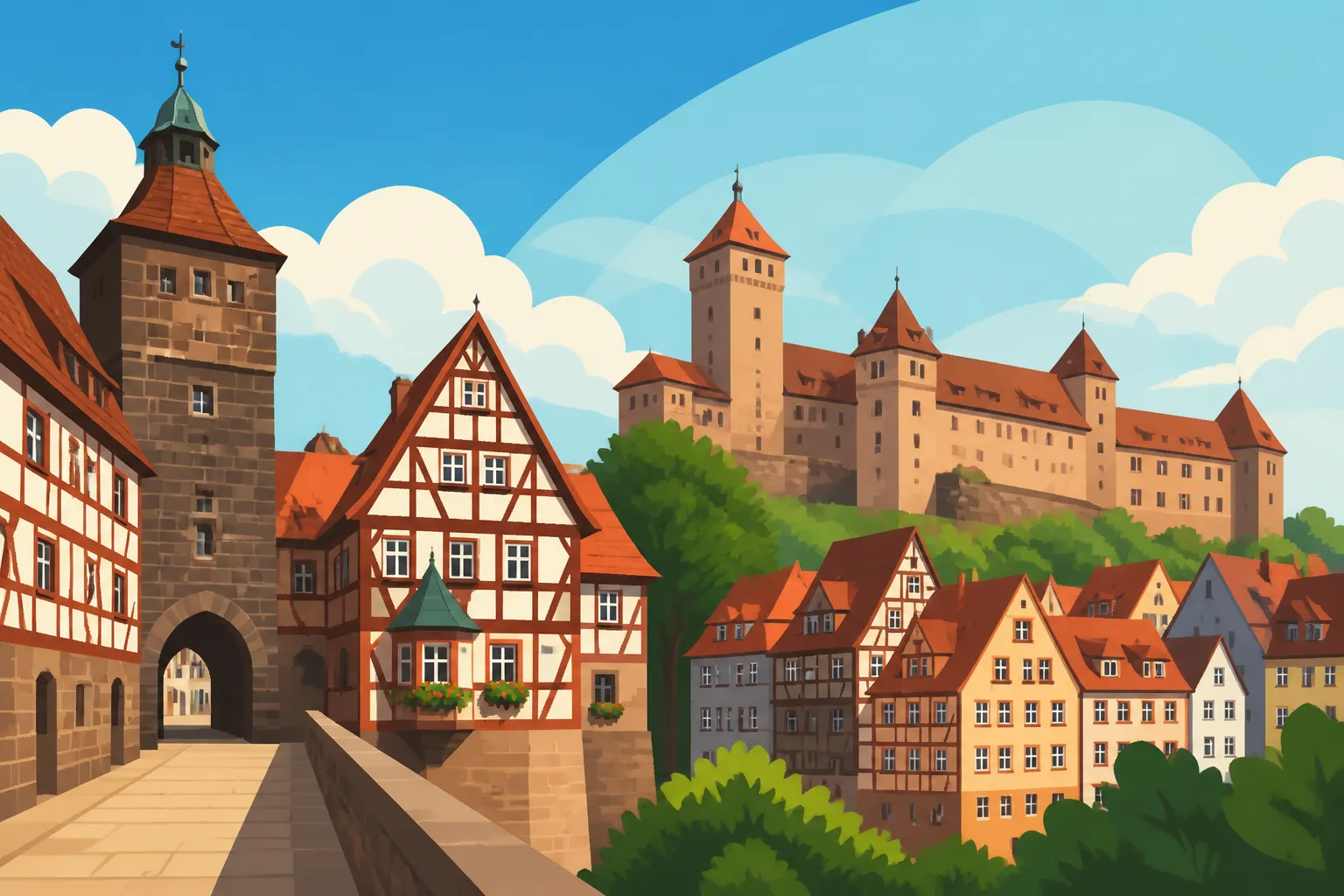
As soon as you step into Nuremberg's Old Town (Altstadt), you can feel the echoes of its imperial past. The mighty Kaiserburg, or Imperial Castle, dominates the city skyline, perched atop a sandstone rock. It was once one of the most important imperial palaces of the Holy Roman Empire, and walking through its grounds, courtyards, and climbing the Sinwell Tower offers not just incredible panoramic views of the city, but also a tangible connection to centuries of rulers. Imagine emperors and kings residing within these very walls, overseeing a thriving medieval city.
Below the castle, the Altstadt itself is a labyrinth of charming cobblestone streets, often lined with beautifully restored half-timbered houses and historic churches. The Hauptmarkt, or Main Market Square, is the pulsating heart of the old town. Here, you'll find the stunning Frauenkirche (Church of Our Lady), with its intricate mechanical clock, the Männleinlaufen, which performs daily at noon. Right next to it stands the Schöner Brunnen, a magnificent 14th-century fountain resembling a Gothic spire, where visitors often try to find the "golden ring" for good luck – a charming local tradition. Don't forget to wander through the Handwerkerhof, a small "craftsmen's courtyard" near the main train station. It's a delightful spot where you can see traditional artisans at work, pick up unique souvenirs, and grab a quick bite to eat. The sheer density of historical sites and the palpable sense of history make Nuremberg's medieval core an absolute joy to explore on foot, allowing you to discover hidden gems around every corner.
Nuremberg's Complex 20th-Century Legacy
Nuremberg's story, however, is not confined to its medieval splendor. The city also played a deeply disturbing role in the 20th century, becoming a central stage for the Nazi Party's propaganda rallies. The vast Reichsparteitagsgelände, or Nazi Party Rally Grounds, stands as a stark and sobering reminder of this dark period. It's an expansive and eerily preserved complex, where Hitler once addressed massive crowds, outlining his vision for a thousand-year Reich. The Documentation Centre Nazi Party Rally Grounds (Dokumentationszentrum Reichsparteitagsgelände) is an essential visit. Housed within the unfinished Congress Hall, this museum offers a meticulous and unflinching look at the causes, context, and consequences of Nazi Germany, providing crucial historical education and fostering reflection. It's a place that confronts you with history in a very direct way, ensuring that such atrocities are never forgotten.
Following the war, Nuremberg became the site of another pivotal moment in history: the Nuremberg Trials. Here, in Courtroom 600 of the Palace of Justice, leading Nazi war criminals were brought to justice. Today, you can visit the Memorium Nuremberg Trials, located directly in the courtroom itself, or in an exhibition above it, which vividly documents the trials, their significance, and their lasting impact on international law. It's an incredibly powerful experience to stand in the very room where justice was, to a degree, restored. These sites, while challenging, are absolutely vital for understanding not just Nuremberg's past, but also the broader lessons of history and the enduring importance of human rights.
Culinary Delights and Local Flavors in Nuremberg
No visit to Nuremberg is complete without indulging in its culinary traditions. The city is world-famous for its Nürnberger Rostbratwürste, those small, finger-sized grilled sausages, typically served three or six in a bun (Drei im Weggla, or Sechs im Weggla) with mustard, or as a main dish with sauerkraut and potato salad. Forget everything you thought you knew about sausages; these are distinct, flavorful, and utterly delicious. You'll find them at countless stalls around the Hauptmarkt, but also in traditional restaurants throughout the city.
Beyond the savory, Nuremberg also boasts a sweet claim to fame: Lebkuchen, the iconic German gingerbread. While available year-round, it truly shines during the festive season, with the famous Nuremberg Christkindlesmarkt being the ultimate place to find countless varieties. These aren't your average gingerbread cookies; they are typically softer, richer, and packed with spices and nuts. Wash it all down with a local beer, as Nuremberg has a proud brewing heritage. Many traditional restaurants brew their own, offering a taste of authentic Bavarian beer culture that complements the robust local cuisine perfectly. Exploring these local flavors is an integral part of understanding the city’s identity and enjoying your time here.
The Romantic Road: Fairytale Towns and Ancient Routes
Stretching from Würzburg in the north to Füssen in the south, the Romantic Road (Romantische Straße) is Germany’s oldest and most beloved themed route. It weaves through picturesque landscapes and, more importantly, connects a string of enchanting towns that feel as if they've sprung straight from the pages of a children's storybook. For those craving quintessential German charm and medieval aesthetics, this route is an absolute dream.
Rothenburg ob der Tauber: A Medieval Masterpiece
If you've ever seen a photo of a perfectly preserved medieval German town, chances are it was Rothenburg ob der Tauber. This town is the epitome of a fairytale setting, with its complete, walkable city walls, cobbled lanes, and vibrant half-timbered houses. The most iconic view is arguably the Plönlein, a small square featuring a charming fountain, two towers, and a delightful timber-framed house. It’s a scene that’s been immortalized on countless postcards and travel guides.
Walking the ramparts of Rothenburg is an absolute must. The covered walkway offers incredible views over the town’s red-tiled roofs and the surrounding Tauber Valley. Inside the walls, you can explore the various museums, including the Medieval Crime and Justice Museum, which offers a fascinating (and sometimes gruesome) insight into historical legal practices. Rothenburg is also home to Käthe Wohlfahrt’s Christmas Village, a year-round Christmas shop that is a wonderland of ornaments and festive cheer. While undeniably popular with tourists, Rothenburg’s charm is undeniable, especially if you visit early in the morning or late in the afternoon when the tour buses have departed, allowing you to soak in its magical atmosphere more peacefully. It's the kind of place where every corner feels like a photo opportunity, and every alleyway promises a new discovery.
Dinkelsbühl and Nördlingen: Gems of the Romantic Road
Beyond the undeniable fame of Rothenburg, the Romantic Road offers other exquisite, perhaps even more authentically preserved, medieval towns. Dinkelsbühl is often lauded as Rothenburg's quieter, less touristy sister, and for good reason. It boasts an equally impressive, fully intact medieval city wall that you can walk along, offering similar scenic vistas without the same crowds. What sets Dinkelsbühl apart is its genuine, lived-in feel; it’s not just a tourist attraction but a vibrant town where daily life unfolds amidst its historic beauty. Its half-timbered houses are beautifully maintained, and the charming streets are perfect for leisurely strolls. The annual Kinderzeche (Children's Festival) is a highlight, commemorating the town's legendary rescue during the Thirty Years' War. It's a true hidden gem that offers a more authentic medieval experience.
Further along the route lies Nördlingen, a town with a unique geological history. It is the only German city built entirely within a massive meteor crater, the Nördlinger Ries, formed about 15 million years ago. This geological quirk has given it a perfectly circular town plan and a fully preserved, walkable city wall that provides a distinctive perspective on the town and its surroundings. Climbing the 350 steps of the "Daniel" tower of St. Georg's Church offers breathtaking views over the town and the crater landscape. Nördlingen feels ancient and grounded, with a fascinating story embedded in its very foundations. Both Dinkelsbühl and Nördlingen offer a delightful contrast to the more bustling tourist centers, providing a tranquil and profoundly historic experience on the Romantic Road. If you're planning on driving this route, using a platform like Omio can help you compare car rental options to make the most of your journey and truly soak in these picturesque towns.
Augsburg: Roman Origins and Renaissance Grandeur
As you continue south on the Romantic Road, you encounter Augsburg, one of Germany's oldest cities, with roots stretching back to Roman times. Founded by the Roman emperor Augustus in 15 BC, it thrived as a key trade hub in the Middle Ages and blossomed into a magnificent center of wealth and art during the Renaissance. It was home to the Fuggers, one of Europe's most powerful merchant and banking families, whose influence is still deeply felt today.
Augsburg’s historical significance is evident in its grand architecture and impressive landmarks. The Fuggerei is a particularly remarkable site—the world's oldest social housing complex, founded in 1516 by Jakob Fugger "the Rich." It still provides affordable housing for needy citizens to this day, a truly pioneering social project that continues to inspire. Exploring the Fuggerei offers a unique glimpse into centuries of philanthropic tradition. The city's majestic Cathedral of Augsburg (Dom Mariä Heimsuchung) boasts stunning stained-glass windows, some of the oldest in Germany, dating back to the 11th century. Strolling along the grand boulevards and exploring the beautifully preserved Renaissance buildings provides a powerful sense of the city's past prosperity and cultural achievements. Augsburg offers a different kind of historical depth compared to the purely medieval towns, showcasing the evolution of a major European city from its Roman origins to its Renaissance peak, making it a vital stop on any extended Bavarian tour.
Further Bavarian Charms: Regensburg and Bamberg
While Nuremberg and the Romantic Road towns offer an incredible taste of Bavaria's past, two other cities stand out for their unique character and profound historical importance: Regensburg and Bamberg. Both are UNESCO World Heritage sites, and each offers a distinct blend of ancient beauty, vibrant culture, and local traditions that are utterly captivating.
Regensburg: A UNESCO World Heritage Treasure
Regensburg, nestled on the Danube River, is an extraordinary city that boasts one of Germany’s largest and best-preserved medieval city centers. In fact, its entire Old Town with Stadtamhof is a UNESCO World Heritage site, a testament to its architectural integrity and historical significance. When you walk through Regensburg, you are truly stepping back into the Middle Ages. Its narrow, winding alleys, towering patrician houses, and impressive churches paint a vivid picture of a bustling imperial city.
The iconic Stone Bridge (Steinerne Brücke), completed in the 12th century, is an engineering marvel of its time and was crucial for trade routes across Europe. Walking across it, with the powerful Danube flowing beneath, you can almost hear the footsteps of medieval merchants and crusaders. Dominating the skyline is the magnificent Regensburg Cathedral (Dom St. Peter), a prime example of German Gothic architecture, with its intricate facade and stunning stained glass. Inside, the sheer scale and beauty are breathtaking. What makes Regensburg even more captivating is its vibrant student life. This infusion of youthful energy means that while the city is steeped in ancient history, it also buzzes with modern cafes, lively pubs, and cultural events. It’s a place where you can easily imagine knights and scholars mingling with contemporary students, creating a unique atmosphere where history and present day coexist seamlessly. Taking a guided tour, perhaps booked through a platform like GetYourGuide, can help you truly appreciate the depth of its stories.
Bamberg: Imperial City of Seven Hills and Beer
Another Bavarian gem, Bamberg, is also recognized as a UNESCO World Heritage site, and for very distinct reasons. Often called the "Rome of Franconia" due to its location across seven hills, Bamberg is renowned for its unique blend of architectural styles, picturesque canals, and a truly exceptional beer culture. Its cityscape is dominated by four imposing Baroque and Romanesque structures: the Cathedral, the Old Town Hall, the New Residence, and the Michaelsberg Monastery.
The most striking image of Bamberg is undoubtedly its Old Town Hall (Altes Rathaus), which is famously built right in the middle of the Regnitz River, accessible by two bridges. This extraordinary location, adorned with frescoes, makes it one of Germany's most photographed buildings. Just a stone's throw away is Klein Venedig (Little Venice), a charming fishermen's settlement with small, colorful houses lining the riverbanks, where you can even take a gondola-like boat ride. But Bamberg's heart also beats to the rhythm of its breweries. The city is famous for its smoked beer, or Rauchbier, a distinctly malty brew with a smoky aroma and flavor that is an acquired taste but deeply beloved by locals and adventurous visitors alike. With over a dozen breweries within the city limits, Bamberg offers a unique opportunity to delve into traditional Bavarian beer-making. Each brewery has its own character and traditional Keller (beer garden/cellar), making a brewery crawl an essential part of any visit. It’s a city that promises both visual splendor and a hearty, flavorsome experience, truly an unforgettable stop on your Bavarian exploration.
Planning Your Historic Bavarian Adventure
Embarking on a journey through Bavaria's historic towns is an incredibly rewarding experience, but a little planning can go a long way in making your trip seamless and truly enjoyable. From navigating between these charming destinations to finding the perfect place to rest your head, thinking ahead ensures you can focus on soaking in the history and culture, rather than logistical worries.
Best Ways to Travel Between Towns
Germany boasts an excellent transportation infrastructure, offering several convenient ways to hop between these beautiful towns.
-
Public Transport (Deutsche Bahn): The most popular and often most efficient way to travel within Germany is by train. Deutsche Bahn (DB) operates a comprehensive network connecting even smaller towns. For regional travel, especially if you're visiting multiple towns in one day, look into regional tickets like the Bayern Ticket, which offers unlimited travel on regional trains and buses across Bavaria for a day. For longer distances, the high-speed ICE trains are incredibly comfortable and fast. You can easily check schedules and book tickets online or through apps. For a truly budget-friendly option, consider the Deutschland-Ticket (Germany Ticket), which for a flat monthly fee, allows unlimited travel on all local and regional public transport throughout Germany. This can be a fantastic option if your trip spans several weeks and you plan to move around a lot. Platforms like Omio can be incredibly helpful here, allowing you to compare train, bus, and even flight options, making it easier to plan multi-leg journeys and secure the best fares.
-
Car Rental: For ultimate flexibility, especially if you want to explore the more remote villages or stop at scenic viewpoints at your leisure, renting a car is an excellent choice. The German Autobahn system is famous for its lack of speed limits on certain sections, but be mindful that many smaller towns have strict speed restrictions and often pedestrian-only zones. Having your own vehicle allows you to create your own itinerary for the Romantic Road, for instance, stopping wherever a quaint church or a charming cafe catches your eye. Remember to familiarize yourself with German road rules and have the appropriate documentation. You can compare rental car prices through various online portals to find the best deal for your needs.
-
Organized Tours: If you prefer a hands-off approach to logistics, consider joining an organized tour. Many companies offer day trips or multi-day excursions to popular routes like the Romantic Road, or to specific cities like Nuremberg. This can be a great option for solo travelers or those who appreciate the convenience of having transport and often a knowledgeable guide taken care of. Websites like GetYourGuide offer a plethora of options, from bus tours that hit all the major highlights to more niche, themed experiences like a Nuremberg Christmas Market tour. This way, you can just sit back, relax, and enjoy the scenery and the insights provided by your guide.
Accommodation and Booking Tips
Finding the right place to stay can significantly enhance your experience. Bavaria offers a wide range of accommodation options to suit every budget and travel style.
- Hotels and Guesthouses (Gasthöfe): You'll find a mix of modern hotels, traditional Gasthöfe (guesthouses, often with a restaurant), and charming boutique hotels in both cities and smaller towns. Gasthöfe often provide a very authentic local experience, sometimes run by families for generations. They might be a bit more rustic, but often offer incredible regional food and a cozy atmosphere.
- B&Bs and Vacation Rentals: For a more personal touch, look for bed and breakfasts or vacation rentals (Ferienwohnungen). These can be particularly appealing if you're staying for several days and want a home-away-from-home feel, or if you prefer to self-cater some meals.
- Booking in Advance: Especially during peak tourist season (summer, Christmas markets) or major festivals (like Oktoberfest in Munich, or the Kinderzeche in Dinkelsbühl), accommodation can book up quickly. It's always a good idea to secure your lodging well in advance to ensure you have the best choice and potentially better prices.
- Online Platforms: Websites like Booking.com are invaluable tools for finding and comparing accommodation across Bavaria. You can filter by price, location, amenities, and guest reviews, helping you pinpoint the perfect spot for your adventure. Don't forget to check the specific policies regarding cancellations or changes, as these can vary.
Immersing Yourself in Local Culture
To truly experience Bavaria beyond the tourist brochures, make an effort to engage with its rich local culture.
- Try Local Food and Drinks: Don't just stick to what you know. Be adventurous! Sample the regional specialties in each town. Beyond Nuremberg's sausages and gingerbread, try the local Franconian wine, especially if you're near the Würzburg end of the Romantic Road, or Bamberg's famous Rauchbier. Seek out traditional Bavarian dishes like Schweinshaxe (pork knuckle) or Weisswurst (white sausage, traditionally eaten before noon). Dining at local Gasthöfe or beer gardens is a fantastic way to do this.
- Engage with Locals: Even if your German is limited, a friendly "Guten Tag" or "Danke schön" goes a long way. Germans generally appreciate the effort. Don't be shy about asking for recommendations – local insights can lead you to the best hidden spots. Many people in tourist areas, especially younger generations, will speak English, so don't let a language barrier deter you from interacting. This can add a truly memorable dimension to your trip. You might even want to check out some basic German Language and Everyday Communication for Visitors to help you get by.
- Attend Local Markets or Festivals: If your visit coincides with a local market day (Wochenmarkt), a wine festival (Weinfest), or a traditional folk festival (Volksfest), seize the opportunity! These events offer a fantastic insight into local life, traditions, and an abundance of regional food and crafts. The Christmas markets (Christkindlesmärkte) are, of course, a quintessential Bavarian experience in winter, transforming towns into festive wonders.
- Respect Local Customs: Remember to be mindful of local customs, such as "Ruhezeit" (quiet hours), especially on Sundays and in residential areas. Germans value peace and quiet, so keep noise levels down during these times. Understanding basic German Etiquette and Social Life for Visitors can help you navigate social situations smoothly.
By taking these planning tips to heart, you’ll be well on your way to a memorable and deeply enriching journey through the historic towns of Nuremberg and Bavaria.
| Feature | Nuremberg | Rothenburg ob der Tauber | Regensburg | Bamberg |
|---|---|---|---|---|
| Key Attractions | Imperial Castle, Hauptmarkt, Documentation Centre, Memorium Nuremberg Trials | Medieval City Walls, Plönlein, Christmas Village, St. Jakob’s Church | Stone Bridge, St. Peter's Cathedral, Old Town | Old Town Hall, Cathedral, Klein Venedig, Michaelsberg Monastery |
| Historical Focus | Imperial City, WWII & Nazi Trials | Medieval Trade City, Fairytale Atmosphere | Roman Origins, Medieval UNESCO Site | Imperial & Bishopric City, Baroque Architecture |
| Unique Feature(s) | Rostbratwürste sausages, Lebkuchen, complex modern history | Fully walkable walls, year-round Christmas shops | Oldest Stone Bridge, Danube River, vibrant student life | Rauchbier (smoked beer), Old Town Hall in river, Seven Hills |
| Best For | History buffs, foodies, reflection | Fairytale seekers, photographers, romantics | Architecture lovers, those seeking ancient beauty | Beer enthusiasts, UNESCO site visitors, picturesque views |
| Travel Time (from Munich, approx. by train) | 1 hour – 1 hour 15 min | 2 hours – 2 hours 30 min (with changes) | 1 hour 30 min | 2 hours – 2 hours 30 min (with changes) |
Disclaimer
Please remember that travel information, opening hours, and local regulations can change. While we strive to provide the most up-to-date and accurate advice based on publicly available information, it is always wise to double-check specific details with official sources or local tourism boards before and during your trip. This guide is for informational purposes only and does not constitute professional advice.