How to Travel Between German Cities Without a Car
When you first arrive in Germany, or even if you've been here a while but haven't taken the plunge into car ownership, that nagging question often pops up: "How on earth do I get from city to city without a car?" It's a completely valid concern, especially if you're used to driving everywhere in your home country. Germany, with its efficient and vast public transportation, offers a fantastic alternative, and this guide is here to walk you through all the ins and outs, so you can travel like a seasoned local.
Disclosure: This post may contain affiliate links. We may earn a commission at no extra cost to you if you make a purchase through these links. Read full disclosure.
Germany's Efficient Public Transport Network
Let's be honest, the thought of navigating German roads, understanding parking rules, and dealing with potentially icy autobahns can be daunting. Thankfully, Germany boasts one of the most comprehensive and reliable public transport systems in the world. You absolutely do not need a car to explore this amazing country, from its bustling metropolises to its charming small towns. In fact, many locals choose to forgo car ownership precisely because the alternatives are so good.
The Backbone: Deutsche Bahn Trains
Ah, Deutsche Bahn (DB). You'll quickly get to know this name, as it's the national railway company and the undisputed king of intercity travel in Germany. Whether you're zipping across the country at lightning speed or enjoying a scenic route through the countryside, DB has a train for you.
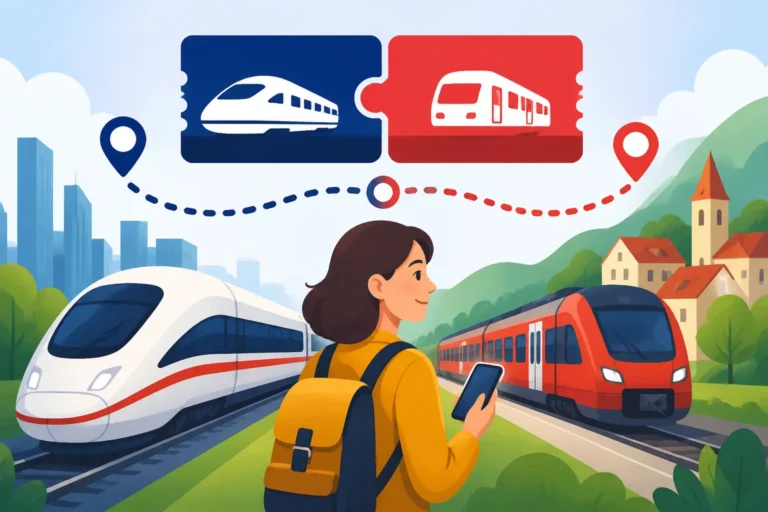
The crown jewel of the DB fleet is undoubtedly the ICE (Intercity-Express). These sleek, high-speed trains connect major cities like Berlin, Munich, Hamburg, and Frankfurt, often reaching speeds of up to 300 km/h. Traveling on an ICE is an experience in itself – comfortable, quiet, and equipped with amenities like Wi-Fi (though signal can be spotty in tunnels, as is often the case!). You can grab a coffee or a meal in the Bordrestaurant or Bordbistro, or simply gaze out the window as Germany flashes by. Booking these trains well in advance is almost always your best bet for snagging cheaper "Sparpreis" (saver fare) tickets, especially for popular routes. Waiting until the last minute can see prices skyrocket, turning a comfortable journey into a hefty expense. You might even consider investing in a BahnCard if you plan to travel frequently, as it offers discounts on all fares, often paying for itself within a few trips. For more detailed insights, you can explore our guide on High-Speed Trains in Germany ICE Deutsche Bahn Routes and Savings.
Then there are the IC (Intercity) and EC (Eurocity) trains. These are slightly slower than the ICE but still offer a comfortable, air-conditioned experience for longer distances. They often stop at more towns, making them a great option for reaching destinations that aren't on the direct high-speed lines. The comfort level is still high, with spacious seating and often catering services available. While not as flashy as the ICE, they're a reliable workhorse of the German rail network.
For connecting smaller towns, reaching local areas, or simply enjoying shorter trips, you'll rely on Regional trains (RE, RB, S-Bahn). These trains are slower, make more stops, and are the lifeline for local communities. They're often double-decker, offering great views, and are perfect for a day trip to a picturesque village or a regional park. The best part about regional trains, especially if you're doing multiple short hops in one day or traveling with a group, is the array of special tickets. For instance, the Deutschland-Ticket has been a game-changer. For a fixed monthly price (currently €49), you can use almost all local and regional public transport throughout Germany. It's an incredible deal for exploring broader regions or even taking longer journeys if you don't mind changing trains frequently and avoiding the high-speed ICE/IC/EC lines. Other regional tickets, like the "Ländertickets" (state tickets), allow unlimited travel within a specific federal state for a day, often valid for up to five people, making them exceptionally cost-effective for group outings. You can find more information about these options in our comprehensive guide on Regional Trains and the Deutschland-Ticket Explained.
| Train Type | Speed | Typical Routes | Key Features | Booking Strategy |
|---|---|---|---|---|
| ICE | Very High (300+ km/h) | Major city connections (Berlin-Munich) | Modern, Wi-Fi, Bordrestaurant, power outlets | Book well in advance for savings |
| IC/EC | High (160-200 km/h) | Intercity, international connections | Comfortable, air-conditioned, catering | Often cheaper than ICE, book ahead |
| RE/RB/S-Bahn | Medium-Low (80-160 km/h) | Regional, local, commuter routes | Double-decker, frequent stops, basic amenities | Deutschland-Ticket, Ländertickets |
When booking your train tickets, the official Deutsche Bahn website or their mobile app, DB Navigator, is your go-to. It's surprisingly user-friendly and available in English. You can check schedules, purchase tickets, and even track your train's real-time status, which is super handy for navigating unexpected delays (yes, even in Germany, they happen sometimes!). For a deeper dive into ticket purchasing, our post How to Buy Deutsche Bahn Tickets and Save Money is a fantastic resource.
Long-Distance Buses: The Budget-Friendly Alternative
While trains are fantastic, they're not always the cheapest option, especially if you're a last-minute planner or on a tight budget. That's where long-distance buses come in, offering a robust and increasingly popular alternative.
The undisputed leader in this field is FlixBus. You'll see their distinctive green buses everywhere, connecting literally hundreds of cities and towns across Germany and even into neighboring European countries. FlixBus operates a modern fleet, often equipped with Wi-Fi, power outlets, and comfortable seating. The main advantages of FlixBus are undeniably the price and, sometimes, direct routes that might be more convoluted by train. For example, a journey from Cologne to Munich might be significantly cheaper by FlixBus than by ICE if you haven't booked your train ticket weeks in advance.
However, there are trade-offs. Bus journeys are generally longer than train journeys for the same distance, as they're subject to road traffic and typically travel at lower average speeds. While most FlixBus stops are reasonably central, they might not always be as conveniently located as the main train stations, especially in smaller towns. If you're prone to motion sickness, trains generally offer a smoother ride. But for budget travelers, students, or those who simply prefer the bus, it's an excellent choice. Booking is usually done online via their website or app, and again, earlier booking often yields better prices. You can find more details in our guide on Long-Distance Buses in Germany FlixBus and Networks.
Urban Transport Networks
Once you've arrived in a German city by train or bus, your car-free journey doesn't end there! German cities pride themselves on their incredibly efficient and integrated urban public transport networks. This is where you'll encounter the U-Bahn (subway/metro), S-Bahn (suburban train), trams (Straßenbahn), and buses.
These systems are designed to get you virtually anywhere within the city limits quickly and easily. They run frequently, are generally clean, and connect seamlessly. You'll use them to get from the main train station (Hauptbahnhof) to your hotel, to museums, restaurants, and every corner of the city. Forget about parking headaches or navigating unfamiliar one-way streets – just hop on.
For getting around a specific city, you'll want to familiarize yourself with the local transport authority's offerings. Most cities, like Berlin with its BVG or Munich with its MVG, offer a variety of ticket options. A single ride ticket (Einzelfahrschein) is good for one journey, but if you plan on doing a lot of exploring, a day ticket (Tageskarte) or even a week ticket (Wochenkarte) will almost certainly save you money. Some cities also offer tourist passes that combine public transport with discounts on attractions. The key is that once you understand the system, you have complete freedom to roam. Learning how to navigate these systems is crucial for any expat or tourist, so checking out our article on Getting Around German Cities U-Bahn, S-Bahn, Trams, and Buses is highly recommended. Many local transport apps are also available in English and provide real-time information, making navigation a breeze.
Beyond Public Transport: Other Car-Free Options
While trains and buses are the heavy hitters, Germany offers even more avenues for car-free travel, some of which add a unique flavor to your exploration.
Ride-Sharing and Carpooling Services
If you're looking for a slightly more personalized or perhaps even social way to travel, especially to destinations that might be less well-connected by public transport, ride-sharing or carpooling platforms can be a great option.
BlaBlaCar is a popular platform in Germany where drivers offer spare seats in their cars for a fee, essentially sharing the cost of fuel for longer journeys. It's often cheaper than a train ticket and can sometimes be faster, depending on the route and traffic. Plus, it gives you a chance to meet locals (or other expats!) and practice your German or simply have interesting conversations. It's a fantastic way to bridge gaps, for example, if you're trying to reach a remote hiking trail or a small town that only has infrequent bus connections. Always check driver ratings and reviews before booking, and communicate clearly about luggage space and pick-up/drop-off points. From a safety perspective, it's generally well-regarded, but like any peer-to-peer service, exercise common sense.
There are also local carpooling groups, sometimes found on social media, for specific regions or events. These can be particularly useful if you're attending a festival or trying to get to a less accessible area.
Bike Travel and Cycling Routes
Germany is an incredibly bike-friendly country, with an extensive network of cycling paths that wind through cities, along rivers, and across stunning landscapes. If you're keen on an active way to travel between cities, combining train travel with cycling can be a truly rewarding experience.
Many regional trains allow you to bring your bicycle on board (though often for an extra fee and sometimes with restrictions during peak hours). This means you can take a train to a starting point and then cycle a beautiful route to your next destination. Imagine cycling along the Rhine River, passing medieval castles and vineyards, then hopping on a train to the next city! The country boasts numerous long-distance cycling paths, such as the Elbe Cycle Path or parts of the Romantic Road, offering breathtaking scenery and a unique perspective on the country.
Even within cities, bike-sharing services are prevalent. Companies like Call a Bike (operated by Deutsche Bahn) or various local providers offer bikes you can rent by the minute, hour, or day. This is perfect for exploring a city upon arrival or for short hops that might be a bit too far to walk but too close for a bus. Germany's commitment to cycling infrastructure means you'll find well-maintained paths and clear signage, making two-wheeled exploration a joy.
Planning Your Car-Free Journey: Essential Tips and Resources
Planning is key to any successful trip, and even more so when you're relying on public transport in a foreign country. But don't fret, with a few handy tools and a bit of foresight, you'll be zipping around Germany like a pro.
Booking Platforms and Apps
To truly master car-free travel in Germany, you need to arm yourself with the right digital tools.
First and foremost, the Deutsche Bahn Navigator app (often just called "DB Navigator") is indispensable. It's your ultimate companion for train travel, allowing you to search for connections, buy tickets, reserve seats, and get real-time updates on departures and arrivals. The app is available in English, making it incredibly user-friendly even if your German isn't fluent.
Next up, consider using Omio. This excellent platform (and app) is a lifesaver because it allows you to compare and book tickets for trains, buses, and even flights all in one place. Instead of jumping between the DB website and the FlixBus app, Omio pulls all the options together, letting you see at a glance which mode of transport is fastest, cheapest, or most convenient for your specific journey. It’s perfect for streamlining your planning and ensuring you get the best deal across different providers.
For broader travel planning, particularly if you're looking for organized excursions or activities once you reach your destination, GetYourGuide is a fantastic resource. While it's not a primary transport booking site, many of their tours include transportation from a central meeting point, often by bus. This means you can book a day trip from Munich to Neuschwanstein Castle, and the transport is all sorted for you, letting you enjoy the scenery without worrying about logistics. It's a great way to explore specific attractions or regions without needing to figure out the local bus connections yourself.
Finally, for accommodation, Booking.com is always a reliable choice. When traveling without a car, it's particularly important to consider the location of your lodging. Booking.com allows you to filter hotels and apartments by proximity to train stations or major public transport hubs, which can save you a lot of time and hassle, especially with luggage. Look for places with good transport links to ensure easy access to city centers and onwards travel.
For general directions, beyond transport-specific apps, Google Maps is surprisingly robust for public transport directions in Germany. It integrates real-time data from local transport networks and often provides accurate door-to-door itineraries using combinations of buses, trams, U-Bahns, and S-Bahns.
Navigating Language Barriers and Information
The fear of a language barrier is a common one for expats and tourists in Germany. While many Germans, especially younger generations and those in larger cities, speak excellent English, there will be times when you encounter less English. Don't let this deter you!
At major train stations (Hauptbahnhof), you'll almost always find information desks where staff can assist you in English. Station signage is also generally clear, using universal symbols for platforms, exits, and services. If you're on a regional train or bus in a more rural area, you might find that fewer people speak English.
This is where technology comes in handy. Have a good translation app on your phone (like Google Translate or DeepL) with offline capabilities. Being able to quickly translate a sign, a schedule, or even a short question can make a huge difference. Don't be afraid to use it! Germans generally appreciate the effort, even if your pronunciation isn't perfect. For more help, check out our guide on German Language and Everyday Communication for Visitors.
Furthermore, don't underestimate the power of simply asking for help. A polite "Entschuldigung, sprechen Sie Englisch?" (Excuse me, do you speak English?) can go a long way. Most Germans are incredibly helpful, even if they're a bit reserved at first. Be patient, use gestures, and have your destination written down if possible.
Packing Smart for Car-Free Travel
When you're constantly on the move, changing trains, navigating stations, and walking to your accommodation, your luggage becomes a significant factor. This is where the mantra "less is more" truly applies.
Try to pack light. A backpack or a smaller, easily maneuverable suitcase with wheels is ideal. Dragging a massive, heavy suitcase up and down stairs, onto crowded trains, or through cobblestone streets will quickly become tiresome. Consider using packing cubes to organize your belongings, making it easier to find things without rummaging through your entire bag.
Beyond your main luggage, a good daypack is essential. This will hold your water bottle, snacks, guidebooks, phone, and any layers of clothing you might need throughout the day, leaving your hands free for tickets or navigating. And speaking of walking, make sure you wear comfortable shoes! You'll be doing a lot more walking than you might anticipate, even with excellent public transport, so blister-free feet are paramount to enjoying your trip.
The Joy of Car-Free Exploration in Germany
Leaving the car behind isn't just a logistical solution; it’s an opportunity to transform your travel experience. It forces you to slow down, observe more, and interact with your surroundings in a way that driving often prevents.
Embracing the Journey
One of the greatest benefits of car-free travel in Germany is the sheer relaxation it offers. You don't have to worry about traffic jams, finding expensive parking, or the stress of navigating unfamiliar roads. Instead, you can sit back, relax, and truly enjoy the scenery. German train routes, especially in regions like Bavaria or along the Rhine, offer stunning views of mountains, forests, rivers, and charming villages that you'd miss if you were focused on driving.
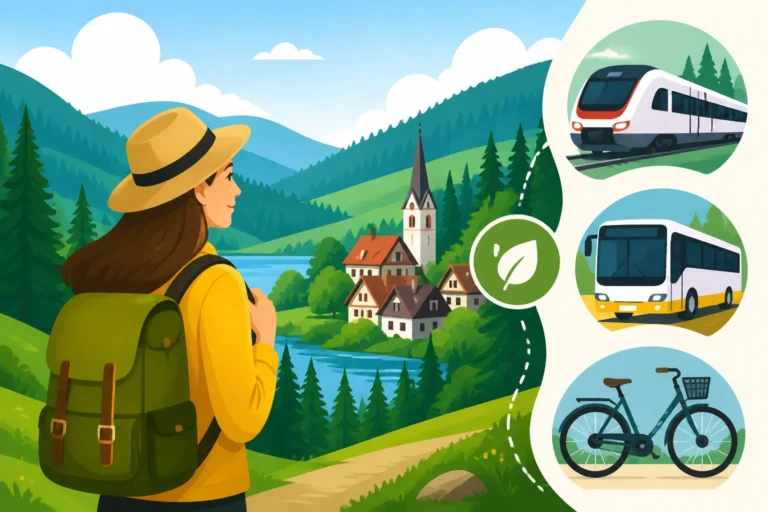
It’s also an inherently more environmentally friendly way to travel, which aligns well with Germany's strong focus on sustainability. By choosing public transport, you're reducing your carbon footprint, which is something you can feel good about. Plus, think of all the time you gain for reading, planning your next adventure, or simply unwinding, rather than battling traffic. The journey itself becomes part of the adventure. If you're looking for inspiration for such adventures, our guide to Day Trips and Weekend Getaways Across Germany offers plenty of ideas accessible by public transport.
Discovering Hidden Gems
Germany's public transport network isn't just about connecting big cities. It's so extensive that it opens up opportunities to discover smaller towns, nature parks, and cultural sites that might otherwise be overlooked. Many picturesque villages, often dubbed Germany's "most beautiful small towns," are perfectly accessible by regional train or bus, allowing you to wander their historic streets, visit local markets, and soak up the authentic atmosphere.
You'll find yourself walking more, stumbling upon charming cafés, local shops, and unexpected architectural wonders. This increased accessibility to city centers means you're always right in the heart of the action, whether it's the old town (Altstadt) or a bustling pedestrian zone. It also creates more opportunities for spontaneous interactions with locals, whether you're asking for directions, sharing a train carriage, or grabbing a beer in a small-town brewery. Ultimately, traveling car-free in Germany allows for a richer, more immersive, and wonderfully stress-free experience.
Disclaimer
Please note that while this guide provides comprehensive information, travel regulations, ticket prices, and service availability can change. Always check the latest information from official sources like Deutsche Bahn, FlixBus, and local transport providers before your journey. This information is for general guidance only and should not be taken as legal or financial advice.