How to See the Rhine Valley Castles in Two Days
Oh, the Rhine Valley! It's one of those quintessential German experiences that every expat and visitor simply must undertake. However, trying to cram centuries of history, picturesque villages, and more castles than you can shake a stick at into a short timeframe can feel utterly overwhelming. You want to soak in the romance and majesty, not rush through it like a whirlwind tour. This guide is here to help you navigate the stunning Rhine Valley, specifically focusing on how you can realistically experience its iconic castles and breathtaking scenery in a memorable two-day trip.
Disclosure: This post may contain affiliate links. We may earn a commission at no extra cost to you if you make a purchase through these links. Read full disclosure.
Setting the Stage for Your Rhine Adventure
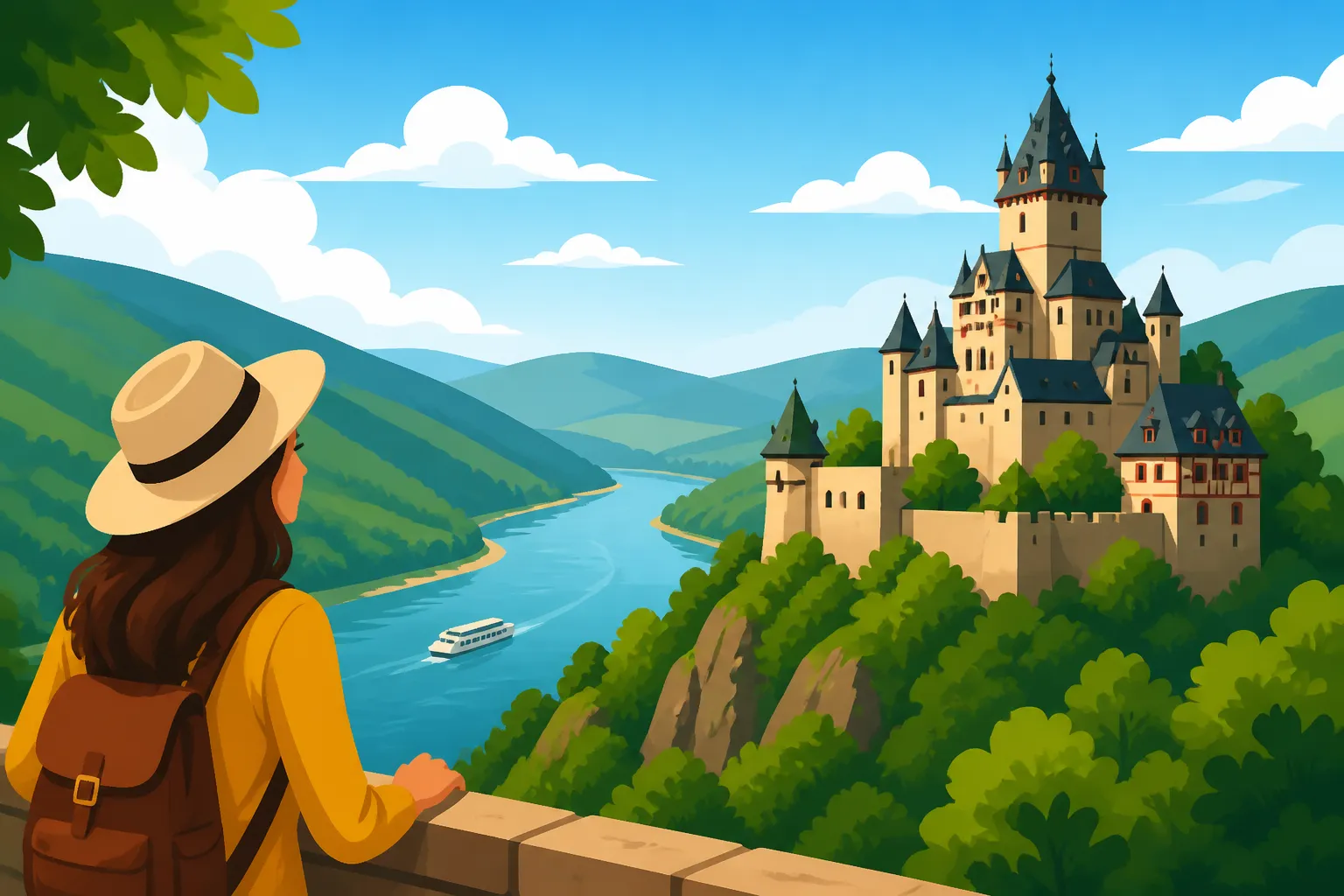
The Rhine Gorge, often referred to as the Middle Rhine Valley, is a true jewel of Germany, so much so that it's been designated a UNESCO World Heritage site. This isn't just a river; it's a dramatic landscape carved by history and legend, where steep vineyards cling to hillsides and ancient castles stand guard from rocky perches, seemingly around every bend. For centuries, this stretch of the Rhine, roughly between Koblenz and Rüdesheim, has captured imaginations, inspired poets, and served as a vital trade route. You'll find yourself mesmerized by the sheer density of history here, each castle telling its own tale of knights, sieges, and noble families.
Why the Rhine Valley is a Must-See
There's something uniquely magical about the Rhine. It's not just the castles, though they are undoubtedly the main attraction, standing like sentinels from a bygone era. It’s the way they blend with the natural beauty: the shimmering river, the terraced vineyards producing world-class Riesling, and the charming, half-timbered towns nestled along the banks. It’s a place where you can truly feel the weight of European history, a cultural landscape that has been shaped by Romans, medieval princes, and modern-day romantics. Forget crowded museums for a moment; here, the landscape itself is an open-air exhibition, inviting you to step back in time. You can spend hours just watching the barges float by, imagining the trade and turmoil that once characterized this watery highway.
The Charm of Castle Hopping
"Castle hopping" along the Rhine is an experience unlike any other. While many castles across Europe lie in ruins, a remarkable number in the Rhine Valley have been meticulously preserved or beautifully restored, allowing you to walk through their ancient halls. Each castle has a distinct personality, from the imposing Marksburg, the only major Rhine castle that has never been destroyed, to the romantic Stolzenfels Castle, a stunning example of Rhine Romanticism. Visiting these fortresses offers more than just historical insight; it's an immersive journey. You'll hear the whispers of the past in the courtyards, gaze upon breathtaking panoramic views from the battlements, and perhaps even enjoy a medieval feast in a castle restaurant. It's a fantastic way to engage with the stories of Germany and get a real feel for its rich heritage.
Day One: Northern Rhine's Majestic Highlights
Your first day will focus on the northern, more dramatic part of the Middle Rhine Valley, starting from a key transport hub and working your way through some truly iconic sights. This section is known for its steep cliffs and the sheer concentration of castles, offering stunning photo opportunities around every bend.
Starting Point: Koblenz and Deutsches Eck
Koblenz is an excellent starting point for your Rhine adventure. It's a city with a history spanning over 2,000 years, strategically located at the confluence of the Rhine and Moselle rivers, a spot famously known as the Deutsches Eck (German Corner). This is where a colossal equestrian statue of Emperor Wilhelm I stands, marking the spot where the two rivers merge. You can take a cable car ride up to the Ehrenbreitstein Fortress, which offers unparalleled panoramic views of Koblenz and the river junction below. The fortress itself is massive and impressive, housing various museums and exhibitions, making it a great place to spend a few hours immersing yourself in regional history.
From Koblenz, you'll want to head south, down the Rhine. This is where the true magic begins. Consider booking a boat trip with one of the local companies like Köln-Düsseldorfer (KD) or Bingen-Rüdesheimer for an unforgettable experience. Websites like GetYourGuide can often help you secure tickets in advance, which is especially useful during peak season. Cruising down the Rhine, you'll be treated to a continuous parade of castles, each more impressive than the last, as you glide past steep vineyards and charming riverside towns.
The Unconquered Marksburg Castle
As you journey further south from Koblenz, your first major castle stop should absolutely be Marksburg Castle. Perched high above the town of Braubach, Marksburg is a true marvel because it's the only one of the major Rhine castles that has never been destroyed, remaining largely intact since the Middle Ages. This means when you step inside, you're walking through authentic medieval architecture, not a romanticized reconstruction. The guided tours are incredibly informative, taking you through the kitchens, armory, living quarters, and even the chapel, offering a genuine glimpse into medieval life.
To reach Marksburg, you can take a regional train from Koblenz to Braubach. From the Braubach train station, there's usually a shuttle service or a walk up a steep path to the castle entrance. Allow at least 2-3 hours for the visit, including travel time and the tour itself. The views from the castle walls overlooking the Rhine are absolutely spectacular and well worth the effort.
Sailing Through the Rhine Gorge
After Marksburg, hop back on a river cruise to continue your journey through the most picturesque stretch of the Rhine Gorge. This segment, often called the "Romantic Rhine," is where the castles appear in rapid succession, crowning almost every hillside. You'll pass by Stolzenfels Castle, a gorgeous Gothic Revival castle, and the twin castles of Sterrenberg and Liebenstein, known for their legendary feud. Keep your camera ready, because the views are simply non-stop.
This part of the journey is best experienced from the water. Many boat tours allow you to hop on and off, giving you flexibility. If you're planning your train travel, websites like Omio can be a lifesaver for checking schedules and booking tickets across different modes of transport, making sure you don't miss a connection. For those considering other forms of transport, you might be interested in our guide on Getting Around Germany: Trains, Buses, Flights, and Car Hire.
Day Two: Southern Rhine's Romantic Charm
Day two shifts your focus to the southern part of the Middle Rhine, characterized by wider valleys, famous wine regions, and equally captivating castles. This area often feels a bit more relaxed, with more emphasis on picturesque towns and wine tasting experiences.
Rüdesheim am Rhein and Niederwald Monument
Begin your second day in Rüdesheim am Rhein, a vibrant and charming wine town often considered the gateway to the Upper Middle Rhine Valley. Rüdesheim is famous for its Drosselgasse, a narrow lane packed with wine taverns, restaurants, and shops, often featuring live music. It's a lively spot, perfect for soaking in the local atmosphere. From Rüdesheim, take the cable car up to the Niederwald Monument, a colossal statue commemorating the unification of Germany. The views from up here are absolutely breathtaking, stretching across the Rhine to the rolling hills and vineyards of the Rheingau region.
After taking in the views and exploring the monument, you can even take a scenic chairlift ride back down through the vineyards to Assmannshausen, another lovely wine village, and then catch a ferry back to Rüdesheim. This provides a different perspective of the landscape and a chance to experience the famous Riesling wine country up close. Speaking of which, if you're keen to learn more about the local produce, check out our guide on German Wine Regions: Riesling and Beyond.
Burg Pfalzgrafenstein and the Loreley Rock
From Rüdesheim, consider taking another boat trip. As you cruise downstream (north), you'll encounter some truly unique sights. One of the most iconic is Burg Pfalzgrafenstein, a customs castle situated on a tiny island in the middle of the Rhine. It looks like a stone ship floating on the water and is incredibly photogenic. It was strategically placed to collect tolls from passing ships, and its isolated location meant it never suffered significant damage.
Further along, you'll pass the legendary Loreley Rock, a dangerously narrow and deep part of the river where, according to folklore, a siren would lure sailors to their doom with her enchanting song. While the dangers are now mitigated, the beauty and legend of the Loreley remain. The views from the top of the rock are stunning, and if you have a car, it's worth a slight detour to experience the panoramic vista.
Options for More Castles: Bacharach or Burg Eltz
Depending on your pace and whether you have a car, you have a couple of options for fitting in more castles.
Option 1: Bacharach
The medieval town of Bacharach, just north of Rüdesheim, is another gem. Overlooked by Stahleck Castle (now a youth hostel, but still impressive from the outside), Bacharach boasts well-preserved town walls, half-timbered houses, and the ruins of Wernerkapelle. It's a delightful town to wander through, offering plenty of historical charm and opportunities to sample local wines. You can easily reach Bacharach by regional train or boat from Rüdesheim.
Option 2: Burg Eltz (Requires a Detour)
While not directly on the Rhine, Burg Eltz is arguably one of Germany's most beautiful and fairytale-like castles, often featured in travel brochures. It's a magnificent medieval castle nestled deep in a secluded valley, surrounded by lush forest, and has been continuously owned by the same family for over 850 years. Getting there involves a train journey to Hatzenport or Moselkern (on the Moselle river, which joins the Rhine at Koblenz) and then either a hike or a shuttle bus. If you have a rental car, it's a more straightforward drive. Given its slight detour from the main Rhine route, it's a fantastic option if you prioritize seeing this particular castle and are willing to dedicate a few extra hours. If you're renting a car, you might find our guide on Renting a Car and Driving on the Autobahn useful.
Logistics and Essential Tips for Your Trip
Planning a smooth trip along the Rhine requires a bit of foresight, especially when it comes to transportation and accommodation. The region is well-equipped for tourists, but knowing the ins and outs will make your adventure much more enjoyable.
Getting Around: Trains, Boats, and Cars
The Rhine Valley is incredibly well-connected by both rail and river, offering spectacular views regardless of your chosen mode.
- Trains: The regional trains (RE, RB) run frequently along both sides of the Rhine, connecting major towns and cities. They offer fantastic views, especially on the left bank (west side) route. The Deutschland-Ticket is an excellent option for unlimited regional travel if you're staying longer than two days or planning more extensive regional exploration. You can find more details in our article about Regional Trains and the Deutschland-Ticket Explained. For booking individual tickets or planning routes, Deutsche Bahn's website or the Omio app are indispensable.
- Boats: River cruises are a must for experiencing the Rhine Gorge's majesty. Companies like KD (Köln-Düsseldorfer Deutsche Rheinschiffahrt) offer services with hop-on, hop-off options, allowing you to tailor your itinerary. The section between Koblenz and Rüdesheim/Bingen is the most scenic. Consider looking at GetYourGuide for specific boat tour bookings, especially if you want to combine it with other activities.
- Cars: Renting a car provides ultimate flexibility, allowing you to stop at viewpoints, explore smaller villages, and easily reach places slightly off the main routes like Burg Eltz. However, parking can be a challenge in popular towns, and the driving experience might detract from the river views that are best enjoyed from a train or boat. If you opt for a car, ensure you understand German road rules.
Accommodation Along the Rhine
Finding a comfortable place to rest your head is crucial after a day of castle exploration. The Rhine Valley offers a wide range of accommodation, from grand hotels to cozy guesthouses (Pensionen) and even unique stays in actual castles.
- Key Towns for Overnight Stays:
- Koblenz: A larger city with a good selection of hotels, restaurants, and easy access to both the northern Rhine and the Moselle.
- Bacharach / Oberwesel / St. Goar: These smaller, picturesque medieval towns offer a more intimate experience with charming guesthouses and direct access to the river and train lines. They are perfectly situated in the heart of the castle-dense region.
- Rüdesheim am Rhein: A lively wine town with plenty of hotels, wine taverns, and easy access to the southern Rhine and the Niederwald Monument.
- Booking Tips: It's always a good idea to book your accommodation in advance, especially during peak season (summer, wine festivals, Christmas markets). Websites like Booking.com are incredibly useful for finding and securing rooms, offering a wide range of options to fit any budget and preference. Many hotels will offer breakfast, which is a great way to start your day before heading out to explore. You can dive deeper into options with our guide on Accommodation in Germany: Hotels, Pensionen, and Hostels.
What to Pack and Expect
The Rhine Valley weather can be unpredictable, so layers are always a good idea. Comfortable walking shoes are essential, as you'll be doing a lot of walking, often on uneven terrain or up steep paths to castles. Don't forget a camera – the photo opportunities are endless! In terms of currency, while credit cards are widely accepted in larger towns and hotels, it's always wise to carry some cash for smaller shops, market stalls, or entrance fees at some of the smaller attractions. Our article on Money for Travel in Germany: Cash, Cards, and ATMs has more detailed financial advice for visitors.
Prepare for some awe-inspiring views, a generous dose of history, and perhaps a glass or two of delicious local Riesling. The Rhine Valley truly is a timeless region that continues to enchant all who visit, and with a bit of planning, you can make the most of its splendor in just two days.
| Transportation Method | Pros | Cons | Best For |
|---|---|---|---|
| Regional Trains | Scenic, frequent, affordable (Deutschland-Ticket), connects towns | Less flexible for spontaneous stops, fixed schedules | Efficient town-to-town travel, river views |
| River Cruises | Iconic experience, unparalleled castle views from water | Slower, can be crowded, schedule-dependent | Experiencing the Rhine Gorge's beauty, castle spotting |
| Rental Car | Maximum flexibility, off-the-beaten-path access, Eltz Castle | Parking challenges, navigation, can miss river views | Independent travelers, specific detours, groups |
Disclaimer
Please remember that travel conditions, opening hours, and public transport schedules can change. Always check the latest information from official sources (e.g., Deutsche Bahn, specific castle websites, local tourism offices) before and during your trip to ensure a smooth and enjoyable experience.