Moving to Germany from Ireland: Sea and Road Combinations
Alright, my fellow expat-to-be, so you've decided to trade the Emerald Isle for the heart of Europe, specifically Germany. You're likely staring at your worldly possessions, wondering how on earth you're going to get them from your cozy Irish abode to your shiny new German one. It's not as simple as hopping in a car and driving, is it? Moving from an island nation to mainland Europe presents a unique logistical challenge, and let me tell you, it can feel overwhelming trying to coordinate everything. This guide is here to untangle the complexities of combining sea and road transport for your move, ensuring your belongings arrive safely and, most importantly, without giving you a premature grey hair. We’ll dive deep into making this journey smooth, and spoiler alert: platforms like Sirelo are absolute game-changers for connecting you with the right moving services.
Disclosure: This post may contain affiliate links. We may earn a commission at no extra cost to you if you make a purchase through these links. Read full disclosure.
The Grand Challenge: Moving Your Life Across the Sea
Moving internationally is always a big undertaking, but when you're starting from an island like Ireland, the logistics automatically add another layer of complexity. You can't just drive across a border; there's a body of water involved, and with it, a whole new set of considerations. Many expats, myself included, have stood in their living rooms, looking at their beloved sofa, and thought, "How is this going to get there?" The good news is, countless people have done it before you, and there's a well-trodden path that combines the efficiency of sea freight with the flexibility of road transport.
Why Sea and Road? The Logic Behind the Logistical Leap
Think about it: flying your entire household contents is prohibitively expensive, practically a non-starter unless you're moving just a few suitcases. Driving everything yourself involves renting a massive van, figuring out ferry crossings, then navigating continental European roads for hundreds, if not thousands, of kilometers. While a road trip can be fun for a holiday, doing it with your entire life packed into a moving truck is a different beast entirely.
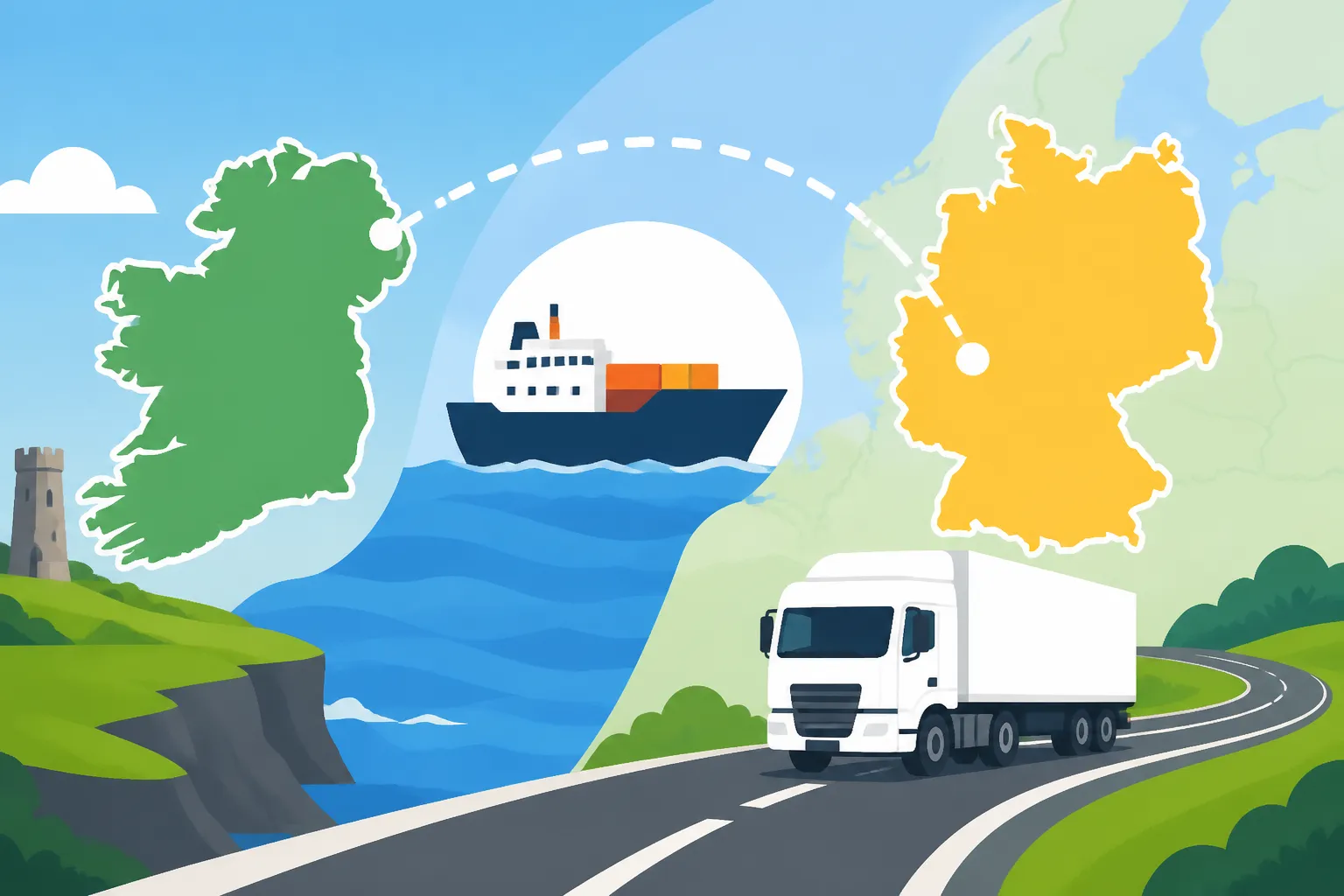
This is where the sea and road combination shines. It's the most pragmatic and cost-effective solution for moving a significant volume of goods from Ireland to Germany. You pack your items into a container, it travels by sea to a major European port, and then from there, it's transferred to a truck for the final leg of the journey directly to your new address in Germany. This method balances cost, capacity, and relative speed far better than any other option for a full household move. It's about leveraging the strengths of each transport mode to get your possessions where they need to be without breaking the bank or your back.
Initial Planning Pitfalls: What Expats Often Overlook
Believe me, I've seen it all (and made a few mistakes myself!). The most common oversight when planning a move like this is underestimating the sheer amount of detail involved. It’s not just about getting quotes for transport; it's about customs regulations, the bewildering array of documentation required, transit insurance, and coordinating timings. Imagine your furniture arriving in Hamburg, but you haven't even registered your address in Berlin yet!
Many people also forget about the specific requirements for certain items. Are you bringing your car? That's a whole other ball game. What about sentimental items or valuables? They need special care and specific insurance. It’s easy to get lost in the sea of information. This is precisely why having a reliable partner in this process is crucial. Platforms like Sirelo specialize in demystifying this process by connecting you with experienced moving companies who handle these details day in and day out. They’ve navigated the customs forms, the port procedures, and the German bureaucracy hundreds of times, so you don't have to.
Unpacking the Sea Journey: From Irish Ports to German Shores
The first major hurdle is getting your belongings off the island. This usually involves transporting your packed goods from your home in Ireland to a port, then loading them onto a cargo ship bound for mainland Europe. While Ireland has several ports, Dublin and Cork are typically the busiest for international freight. From there, your goods will likely travel to a major continental hub like Rotterdam in the Netherlands or Antwerp in Belgium, which are huge gateways into Europe, or even directly to German ports like Hamburg or Bremerhaven, depending on the shipping line and your chosen mover.
Choosing Your Shipping Method: Full Container Load FCL vs. Less Than Container Load LCL
When it comes to shipping your household goods by sea, you'll generally encounter two main options: Full Container Load (FCL) and Less Than Container Load (LCL). Understanding the difference is key to choosing the most cost-effective and efficient method for your specific move.
Full Container Load (FCL):
This means you get an entire shipping container (typically 20-foot or 40-foot) all to yourself. Your belongings are the only items inside. This is usually the go-to option if you're moving a large house, a significant amount of furniture, or if you simply prefer your items to be sealed and untouched from start to finish.
- Pros: Faster transit times because there’s no consolidation or deconsolidation with other shipments; less handling of your goods reduces the risk of damage; greater security as the container is sealed specifically for your items.
- Cons: More expensive if you don't fill the entire container; you pay for the whole container whether it’s full or not.
Less Than Container Load (LCL):
With LCL, your belongings share space within a container with other people's shipments. Your goods are crated or palletized and then loaded alongside other cargo heading in the same general direction.
- Pros: Much more cost-effective for smaller moves (e.g., a one-bedroom apartment or just a few key pieces of furniture) because you only pay for the space your items occupy.
- Cons: Slower transit times due to the additional time needed for consolidation at the origin port and deconsolidation at the destination port; increased handling of your goods as they are loaded and unloaded multiple times; slightly higher risk of damage due to more handling.
Many expats find that for a typical household move, LCL is often sufficient and more budget-friendly, especially if you're not bringing every single piece of furniture. However, if you're relocating a large family home, FCL offers peace of mind and faster delivery. When you request quotes through services like Sirelo, they'll typically ask for an inventory of your items to help determine which option is best for you and provide accurate pricing. They can help you calculate the volume and advise on the most suitable container size or LCL share.
Here’s a quick overview of FCL vs. LCL:
| Feature | Full Container Load (FCL) | Less Than Container Load (LCL) |
|---|---|---|
| Volume | Large shipments, entire households | Smaller shipments, few items to small apartments |
| Cost | Higher overall, but cheaper per cubic meter for large volumes | Lower overall, cost-effective for smaller volumes |
| Transit Time | Generally faster, direct route after loading | Generally slower, involves consolidation/deconsolidation |
| Handling | Minimal, container sealed from origin to destination | More handling, items loaded/unloaded multiple times |
| Security | High, dedicated container | Good, but shared space means more visibility/access |
| Flexibility | Less flexible for small loads | More flexible for partial loads |
Customs and Paperwork: The German Bureaucratic Hurdle
Ah, bureaucracy! A word that often sends shivers down an expat's spine, especially when talking about Germany. Moving your belongings across international borders, even within the EU, involves customs. While moving within the EU generally means fewer duties than moving from outside the EU, there are still procedures to follow to prove your items are personal effects and not commercial goods.
You'll need a comprehensive inventory of everything you're shipping. This isn't just a scribble on a napkin; it needs to be a detailed, ideally numbered list, potentially with estimated values for insurance purposes. You’ll also need proof of your residency in Germany (like your Anmeldung, which you should sort out pretty quickly after arrival) and potentially proof of deregistration from Ireland. If you've lived outside Germany for at least 12 months, and are moving your primary residence to Germany, your household goods are usually exempt from import duties, but you still need to declare them and prove your eligibility for this exemption.
The key documents often include:
- Copy of your passport or ID
- Proof of residence in Germany (e.g., rental contract, Meldebescheinigung from your local Bürgeramt)
- Proof of residency in Ireland for at least 12 months (e.g., utility bills, bank statements)
- Detailed inventory list (Packliste) in German or English
- Signed declaration that the goods are for personal use and have been owned for at least six months
- Your German tax ID (Steuer-ID), which you’ll get shortly after you complete your Registering Your Address (Anmeldung): Step-by-Step Guide.
This is where working with a professional moving company found through Sirelo truly pays off. They have customs brokers and agents who are intimately familiar with German customs regulations. They can guide you through the exact paperwork required, help you compile the inventory correctly, and submit all necessary declarations on your behalf, significantly reducing the chances of delays or unexpected fees. They understand the nuances of the German customs process, which can be a real lifeline when you’re already swamped with setting up your new life.
The Road Ahead: From European Port to Your New German Home
Once your container or crated goods have landed at a European port (let's say Rotterdam for example, a common entry point), cleared customs, and been offloaded, the second phase of your journey begins: inland transport by road. This is the final, crucial leg that brings your cherished possessions directly to your doorstep in Germany.
Inland Transport Options: The Final Leg of Your Journey
From the port, your items will be loaded onto a truck. If you opted for FCL, the entire container might be transported by truck or even rail directly to a depot closer to your destination, then transferred to a smaller delivery truck. For LCL shipments, your crated goods will be transferred from the large shipping container at the port's deconsolidation facility onto a truck that consolidates various LCL shipments heading towards specific regions in Germany.
Most reputable international moving companies offer door-to-door service, meaning they handle everything from your old home in Ireland to your new one in Germany. This is what you should always aim for. Trying to coordinate port pick-ups yourself from Rotterdam when you're settling into Berlin is an unnecessary headache. These services include:
- Trucking: The most common method. Your goods are loaded onto a truck and driven across Germany.
- Rail freight: Sometimes used for longer distances within Germany, especially for full containers, offering a potentially more eco-friendly option before the final road delivery.
- Specialized Movers: For delicate or oversized items, specialized equipment and expertise might be needed. For instance, if you're bringing an antique piano, you'll want a mover with experience in handling such delicate cargo, and a good platform like Sirelo can help you find companies that offer such specialized services.
When discussing your move with potential movers, always clarify if the quote includes "final mile delivery" to your specific German address, whether it’s an apartment on the 5th floor or a house with easy access. Some companies might quote to a regional depot, expecting you to arrange final transport, which is rarely what an expat wants to deal with. Ensure that all aspects of delivery, including handling and unloading, are covered.
Timing and Coordination: Synchronizing Your Arrival with Your Belongings
One of the trickiest parts of a sea and road move is perfectly synchronizing the arrival of your belongings with your own arrival and the readiness of your new home. Sea freight isn't known for its lightning speed; transit times from Ireland to continental Europe can range from a few days to a couple of weeks, not including customs clearance and inland transport. The entire process, from your old front door to your new one, could take anywhere from 3 to 6 weeks, sometimes even longer depending on the specific route and services.
This means you need to plan ahead.
- Temporary Accommodation: It’s often a good idea to arrange Short-Term Accommodation in Germany: Options for Your First Weeks when you first arrive. This gives you time to complete your Registering Your Address (Anmeldung): Step-by-Step Guide, open a bank account (check out Opening a Bank Account in Germany: Step-by-Step for Newcomers), and finalize your apartment details before your shipment arrives.
- Storage Solutions: If your apartment isn't ready or you need more time, many moving companies offer short-term storage options at their depots in Germany. This can be invaluable for bridging the gap between your arrival and your home being ready for your possessions.
- Communication is Key: Maintain open lines of communication with your chosen moving company. They should provide you with tracking updates and estimated delivery dates. Be prepared for potential slight delays; international logistics can be unpredictable.
The goal is to avoid the scenario where you're sleeping on an air mattress for weeks longer than anticipated because your shipment is stuck in customs or waiting for a truck. A well-planned move, facilitated by a comprehensive platform like Sirelo, helps minimize these stresses by setting realistic expectations and offering solutions for potential timing mismatches.
Making the Move Easier: How Sirelo Simplifies Sea and Road Relocation
Navigating the labyrinthine world of international moving quotes, customs regulations, and transport logistics can feel like a full-time job. This is exactly where a service like Sirelo becomes invaluable, acting as your trusted guide and simplifying what often feels like an impossible task. They understand the unique challenges faced by expats moving to Germany, especially from an island like Ireland.
Getting the Right Quotes: Transparency and Cost Comparison
The moving industry can sometimes be opaque with its pricing. You might get a quote that seems cheap, only to discover hidden fees for customs clearance, port handling, or even basic insurance down the line. This is a common frustration, and one that Sirelo actively combats.
By using Sirelo, you don't just get a quote; you get multiple, transparent quotes from pre-vetted, reputable international moving companies specializing in routes like Ireland to Germany. You submit your inventory and move details once, and then the platform does the heavy lifting, gathering competitive offers. This allows you to:
- Compare Apples to Apples: Each quote should clearly outline what's included (e.g., packing, loading, sea freight, customs assistance, delivery to your door, basic insurance) and what's not. This transparency is crucial for making an informed decision.
- Understand Pricing Structures: You'll see whether companies prefer FCL or LCL for your volume and how that impacts the cost. You can easily spot discrepancies and ask clarifying questions directly through the platform.
- Save Time and Stress: Instead of spending hours contacting individual movers, explaining your situation repeatedly, and chasing down replies, Sirelo streamlines the entire process, putting you in control with all the information at your fingertips.
Finding a mover through Sirelo means you're more likely to secure a fair price for a comprehensive service, avoiding those nasty surprises that can really dampen the excitement of starting a new life in Germany.
Beyond the Quote: Services That Make a Difference
While competitive pricing is a huge draw, the true value of a moving service often lies in the additional support they provide. Moving isn't just about transport; it's about managing every detail, big and small. Sirelo connects you with movers who offer a suite of services designed to take the burden off your shoulders:
- Professional Packing and Inventory: Many companies offer professional packing services, ensuring your items are packed securely for the long journey. They also create the detailed inventory required for customs, often in the correct format. This is not only a time-saver but also reduces the risk of damage.
- Disassembly and Assembly: For larger furniture pieces, movers can disassemble them in Ireland and reassemble them in your new German home. Imagine trying to figure out a flat-pack wardrobe after a cross-continental move!
- Customs Expertise: As mentioned, dealing with German customs can be daunting. The movers found through Sirelo have dedicated teams or partners who specialize in customs clearance, ensuring your paperwork is correct and your goods move smoothly through port.
- Comprehensive Insurance Options: Standard freight insurance usually covers catastrophic loss, but you'll likely want more robust transit insurance that protects against damage during packing, transit, and unloading. Companies facilitate this, giving you peace of mind. Getting Home Contents Insurance (Hausrat): Protecting Your Belongings once your items are settled in your new German home is also a good idea.
- Dedicated Move Coordinators: Many services provide a dedicated contact person who guides you through each step of the process, answers your questions, and keeps you updated, which is immensely reassuring during such a significant life event. This kind of personalized support, facilitated by choosing a professional mover through Sirelo, truly makes a difference.
Remember, moving to Germany is an adventure, but it doesn't have to be an ordeal. By carefully planning your sea and road combination and leveraging platforms like Sirelo, you can ensure your belongings arrive safely, allowing you to focus on the exciting aspects of your new life, whether that’s figuring out German Culture & Etiquette: A Guide to Social Life and Customs or learning how to navigate Transportation in Germany: Using Trains, Buses, and Trams Like a Local.
Preparing for Life in Germany: Post-Move Essentials
Once your belongings are safely on their way, your focus will shift to getting yourself settled in Germany. There's a lot to do, and having your personal effects handled by professionals frees you up to tackle the essential administrative tasks.
Setting Up Your New Home
Finding an apartment in Germany can be competitive, so ideally, you'll have secured your place before your belongings ship. The German rental market often features unfurnished apartments, so your furniture will be a welcome sight. Don't forget to set up your utilities; this usually includes electricity, gas, and water. You can find detailed guidance on Utilities Setup: How to Get Electricity, Gas, and Water in Your New Home.
Beyond that, you'll need to sort out your internet and mobile phone. Depending on your location, you might find English-speaking customer service with some providers, but be prepared for some German paperwork. This is also a good time to think about Home and Liability Insurance in Germany (Haftpflicht and Hausrat) to protect your new German household.
Financial and Administrative Must-Dos
The first few weeks in Germany are typically a whirlwind of bureaucracy. After registering your address (Anmeldung), you'll also need to get your German tax ID (Steuer-ID) if you haven't already received it. Opening a local bank account is crucial for managing your finances, paying rent, and receiving your salary. Take some time to understand Money Matters in Germany: Complete Financial Guide for Expats to avoid any financial surprises.
If you're still waiting for your belongings, use this time wisely to explore your new neighborhood, register for German language classes if you plan on improving your skills, and connect with other expats. Services like Sirelo aren't just for moving; they're part of a wider ecosystem that helps you transition smoothly, making sure you have one less thing to worry about.
Final Thoughts on Your Sea and Road Journey
Moving from Ireland to Germany is an exciting step, full of new opportunities and experiences. While the logistics of relocating your entire life across a sea and then across a continent can seem daunting, it's an entirely manageable process with the right approach and the right partners. The sea and road combination is truly the most practical solution for most expats, offering a balance of cost-effectiveness and efficiency.
Don't underestimate the power of thorough planning, meticulous documentation, and choosing a reputable international moving company. By entrusting your move to experienced professionals, easily found and compared through platforms like Sirelo, you free yourself up to focus on the truly exhilarating aspects of your new life in Germany. From navigating customs to coordinating doorstep delivery, having expert support for your possessions means you can dedicate your energy to settling in, learning the language, and embracing everything your new German home has to offer. So, take a deep breath, get those quotes through Sirelo, and prepare for an incredible new chapter!
Disclaimer
Please remember that while this guide provides comprehensive information based on current knowledge and common practices for moving to Germany, regulations and processes can change. It is always advisable to consult official government websites (such as the German Federal Foreign Office or customs authorities) and seek personalized advice from professional moving companies or immigration experts for the most up-to-date and specific information pertaining to your individual circumstances.