Moving to Germany from China: Ports, Costs, and Transit Times
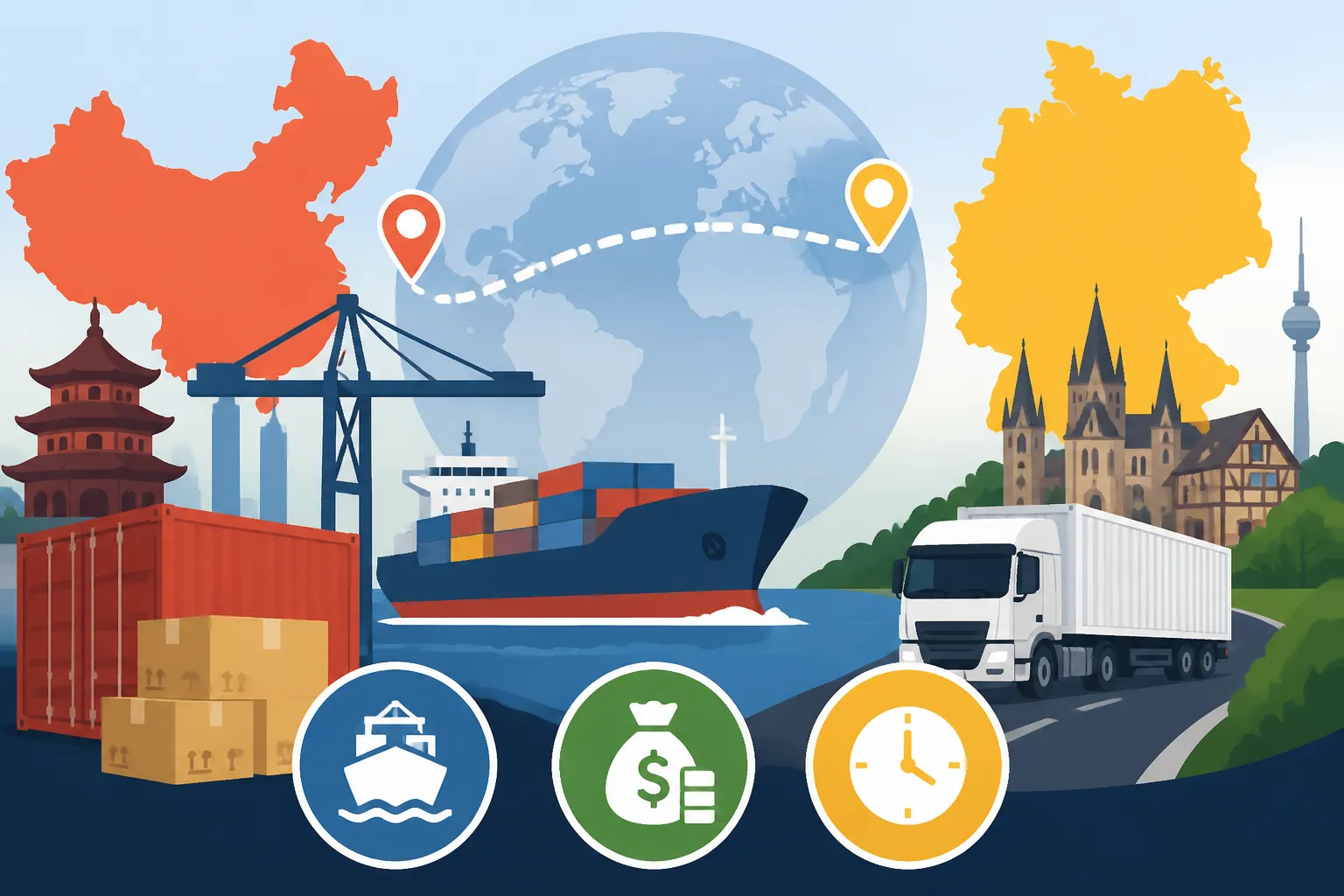
Moving your entire life from China to Germany is, let's be honest, a colossal undertaking. It's not just about packing boxes; it's a deep dive into an ocean of logistics, customs regulations, and transit times that can make your head spin. But don't despair! As someone who's navigated these expat waters, I know the frustrations are real. This guide is here to break down the complexities of ports, costs, and transit times, helping you prepare for a smoother, less stressful relocation, especially with the right moving partner.
Disclosure: This post may contain affiliate links. We may earn a commission at no extra cost to you if you make a purchase through these links. Read full disclosure.
The Grand Journey Begins: Understanding Your Moving Options from China to Germany
When you're staring at your belongings in China, wondering how on earth they're going to make it all the way to Germany, the first big decision is how they're going to travel. This isn't just a matter of preference; it's a strategic choice that impacts cost, speed, and even the safety of your cherished possessions. Trust me, picking the wrong method can add layers of stress you really don't need.
Air Freight vs. Sea Freight: Weighing Your Options
Let's talk about the two main contenders: air freight and sea freight. Each has its own distinct personality, and understanding them is crucial.
Sea Freight: The Patient Giant
Sea freight is the workhorse of international shipping. It's generally the most cost-effective option for large volumes of goods, making it ideal for moving an entire household. Think about those massive container ships crossing oceans – that's your furniture, your books, your kitchenware, all making a slow but steady journey.
The biggest "pro" of sea freight is, without a doubt, the cost. When you're moving a significant amount of stuff, shipping by sea will almost always be considerably cheaper than flying it. This is especially true for anything over a few cubic meters. Another advantage is its capacity; you can ship virtually anything, from bulky furniture to your beloved car (though that's another complex beast entirely). Environmentally, it also has a lower carbon footprint per ton-mile compared to air freight, which might matter to some.
However, sea freight demands patience, and a lot of it. The transit times from China to Germany are typically measured in weeks, not days. You're looking at anywhere from 4 to 6 weeks for the actual ocean journey, plus additional time for customs clearance, loading, unloading, and inland transportation on both ends. This means you could be waiting 6-10 weeks, or even more, before your belongings arrive at your new German home. During this time, you'll need to figure out temporary living arrangements, often relying on essential items packed in your checked luggage. For fragile or extremely valuable items, while they are handled with care, the longer journey does mean more potential for movement and exposure to varying conditions, making robust packing and good insurance paramount.
Air Freight: The Speedy Sprint
Air freight, on the other hand, is the sprinter. It's designed for speed, making it the go-to option when time is of the essence. If you're only bringing a few critical items, or if you need things quickly (perhaps for a new job that requires specific tools or documents), air freight is your answer.
The obvious "pro" here is speed. Your goods could be in Germany within 1-2 weeks, door-to-door, sometimes even faster depending on the exact route and customs efficiency. This drastically reduces the time you'll spend without your comforts. For high-value, time-sensitive, or lighter, smaller items, it can be a blessing. It also generally involves less handling, which can reduce the risk of damage for certain types of goods.
The significant "con," however, is the cost. Air freight is substantially more expensive than sea freight, especially as your volume and weight increase. This makes it impractical for moving a full household unless you have an unlimited budget. There are also stricter limitations on what you can ship via air – certain hazardous materials, liquids, or items with large batteries are often restricted or require special handling. For a comprehensive move, most expats opt for a combination: essentials by air (or luggage), and the bulk by sea.
Full Container Load FCL vs. Less Than Container Load LCL
Once you've decided on sea freight, you'll encounter another fork in the road: do you need an entire container to yourself, or are you happy to share? This choice, FCL (Full Container Load) or LCL (Less Than Container Load), hinges largely on the volume of your belongings.
Full Container Load (FCL): Your Private Moving Vehicle
An FCL shipment means you get an entire shipping container (typically 20ft or 40ft) dedicated solely to your goods. This is usually recommended if you're moving a large household – say, a three-bedroom apartment or more – or if you have particularly bulky items.
The main advantage of FCL is speed and security, relatively speaking. Since the container holds only your items, it's packed and sealed at your origin, and ideally not opened until it reaches your final destination in Germany (barring customs inspections, of course). This reduces the risk of damage or misplacement that can sometimes occur when multiple shipments are handled. The transit time is also generally quicker than LCL because the container doesn't need to be consolidated or deconsolidated at various points. It goes directly from port to port.
The disadvantage is the cost. You're paying for the entire container, whether you fill it to the brim or not. If your shipment volume is small, an FCL might be an inefficient use of your funds. It's an investment, but for truly large moves, it offers peace of mind.
Less Than Container Load (LCL): The Shared Journey
LCL is the more economical option for smaller shipments, typically for those moving a one or two-bedroom apartment, or just a selection of furniture and boxes. With LCL, your belongings share space within a container with other people's shipments going to the same general destination.
The biggest "pro" of LCL is the cost-effectiveness for smaller volumes. You only pay for the space your goods occupy within the container, usually calculated by cubic meter. This makes international moving accessible even if you don't have enough to fill an entire container.
However, LCL comes with its own set of trade-offs. Because your goods are consolidated with others, there are additional steps involved: your items need to be transported to a consolidation warehouse at the origin port, packed into a container with other shipments, and then unpacked and sorted at a deconsolidation warehouse at the destination port. This extra handling and logistical coordination usually translates to longer transit times compared to FCL. There's also a slightly higher (though still low with reputable movers) risk of damage or misplacement due to the increased handling. Good packing is absolutely paramount with LCL. For finding a reliable moving company that handles both FCL and LCL options, a platform like Sirelo can be incredibly helpful in comparing services and prices to suit your volume needs.
Door-to-Door vs. Port-to-Port Services
This choice dictates how much "heavy lifting" you're willing to do yourself at either end of your move.
Door-to-Door: The Expat Dream
Door-to-door service is exactly what it sounds like: your moving company handles everything from packing your items at your old home in China, transporting them, managing customs, and delivering them right to your new address in Germany, often even including unpacking services.
For expats, especially those dealing with a new country and a new language, this is often the most appealing option. It significantly reduces the administrative burden and stress. You literally hand over your keys (or let the movers in) in China, and then wait for your belongings to arrive at your German doorstep. The moving company coordinates all the logistics, freight, customs clearance, and local delivery. This convenience comes at a premium, but for many, it's worth every extra penny to avoid the headaches of dealing with foreign ports and customs officials directly. This is where a service like Sirelo truly shines, connecting you with full-service international movers who specialize in door-to-door moves.
Port-to-Port: The DIY Approach
Port-to-port service means the moving company's responsibility ends once your container or consolidated shipment arrives at the designated port in Germany (or begins at the port in China). From there, it's up to you to arrange customs clearance, pay any duties/taxes, and organize onward transportation to your final address.
While this option is usually cheaper, it requires a significant amount of effort, knowledge, and local logistical arrangements on your part. You'll need to understand German customs procedures, have contacts for local transporters, and be prepared to physically pick up your goods or coordinate their collection from the port. For someone new to Germany, this can be incredibly challenging due to language barriers, unfamiliar bureaucracy, and the sheer scale of German ports like Hamburg or Bremerhaven. Unless you have significant experience in international logistics or a strong support network on the ground, port-to-port is generally not recommended for personal household moves. The stress it can add often outweighs the cost savings.
Navigating the Ports: Key Logistics for Your China-Germany Move
The journey of your belongings isn't a direct line; it involves complex choreography at various ports. Understanding these hubs is like having a map to your stuff's adventure.
Major Departure Ports in China
China's coastline is dotted with some of the world's busiest ports, each a massive gateway for global trade. Your moving company will typically select the port most convenient to your departure city, or the one with the best shipping routes and rates to Germany.
Shanghai: The Eastern Giant
Shanghai is often the most prominent departure point, especially for those living in or around its vast metropolitan area. As the world's busiest container port, it offers frequent sailings and extensive connections to Europe. If you're based in cities like Hangzhou, Nanjing, or Suzhou, your goods will likely funnel through Shanghai. Its sheer volume ensures competitive rates and regular departures.
Ningbo-Zhoushan: A Powerhouse South of Shanghai
Just south of Shanghai, Ningbo-Zhoushan has rapidly grown to be another colossal port. It handles immense cargo volumes and is a key hub for many manufacturing regions. If you're moving from Zhejiang province or parts of Jiangsu, this port might be your primary exit point. Its proximity to industrial centers makes it a vital link in the supply chain to Europe.
Shenzhen and Guangzhou: Southern Gateways
For those living in southern China, particularly the Pearl River Delta region, Shenzhen and Guangzhou are the dominant ports. Shenzhen, adjacent to Hong Kong, is famous for its role in electronics manufacturing and offers excellent connectivity. Guangzhou, a historical trading city, also boasts a massive port. If you're in areas like Dongguan or Foshan, your shipment will likely depart from one of these southern powerhouses.
Tianjin and Qingdao: Northern Access Points
Further north, Tianjin serves Beijing and the surrounding regions, while Qingdao is a major port for Shandong province. If your move originates from northern or central China, these ports provide efficient access to European shipping lanes. Each of these ports is a marvel of modern logistics, and your moving company will orchestrate the initial stages of your shipment through one of them.
Primary Arrival Ports in Germany
Once your container has traversed thousands of miles across the ocean, it will dock at one of Germany's bustling North Sea ports. These are not just places where ships unload; they are sophisticated logistical centers that process vast amounts of goods.
Hamburg: Germany's "Gateway to the World"
Without a doubt, Hamburg is Germany's largest and most significant port, often referred to as its "Gateway to the World." Located on the Elbe River, it's a massive inland port with extensive rail and road connections that fan out across Germany and into Central and Eastern Europe. If you're moving to almost any part of Germany, there's a very high chance your goods will arrive here. The port infrastructure is incredibly efficient, with dedicated container terminals and highly automated systems designed to process thousands of containers daily. Its connectivity means that from Hamburg, your items can reach Berlin, Munich, Frankfurt, or anywhere else with relative ease.
Bremerhaven: The Twin Port
Situated on the Weser River, Bremerhaven (part of Bremen's port facilities) is another vital deep-water port in Germany. It works in conjunction with Hamburg to handle the country's immense shipping traffic. While not as large as Hamburg, it's a major hub, especially for specific types of cargo, including a significant amount of vehicle imports. It also boasts excellent rail connections, making it an alternative entry point for your household goods. If your mover specifies Bremerhaven, rest assured it's a highly capable and well-connected port.
Upon arrival at either Hamburg or Bremerhaven, your moving company's local partners will take over. This is where the intricacies of German customs begin, and having an experienced team on the ground, usually arranged through a reputable international mover you find via Sirelo, becomes invaluable. They'll ensure your container is moved from the ship to the terminal, and then prepared for customs clearance.
Inland Transportation and Last-Mile Delivery
The journey isn't over once your container hits German soil. From the bustling port, your cherished belongings still need to make their way to your specific address, whether that's in a big city or a charming little Dorf. This segment is known as inland transportation and last-mile delivery.
Seamless Connections from Port to Destination
Germany boasts an exceptionally efficient logistics network, primarily relying on rail and truck. From Hamburg or Bremerhaven, full containers are often loaded directly onto trains (often called "intermodal transport") that travel deep into the country to major rail hubs. This is a very green and efficient way to move large volumes of goods across long distances. For LCL shipments, your items will be transferred from the deconsolidation warehouse at the port to smaller trucks for distribution to various cities.
The final leg is the "last-mile delivery." This is where your boxes and furniture leave the regional distribution center and are transported directly to your new home. This can be the trickiest part, especially if you're moving into an apartment in a dense city center with narrow streets or limited parking. Your moving company will coordinate this with their local German partners. It's crucial to have provided accurate address details, including any specific access restrictions for large trucks, like low bridges, narrow lanes, or pedestrian zones.
Communication is Key
Throughout this process, clear communication with your moving company is paramount. They should keep you updated on the status of your shipment, from port arrival to the estimated delivery date. Don't be shy about asking questions! Confirm the delivery date, time window, and what services are included (e.g., will they carry boxes upstairs? Assemble furniture?). Having a clear understanding prevents frustrating surprises on delivery day. A reliable mover, like those you can compare on Sirelo, will guide you through this, ensuring that the final stage of your move is as smooth as possible.
The Price Tag: Unpacking the Costs of Moving Your Belongings
Let's face it, moving internationally is expensive. There’s no way around that. But understanding why it costs what it does, and what factors drive those numbers, can help you budget realistically and avoid sticker shock. It's not just a flat fee; it's a complex equation with many variables.
Factors Influencing Your Moving Costs
Several key elements determine the final price of your move from China to Germany. Each contributes significantly to the overall quote.
1. Volume and Weight: This is the most obvious factor. The more stuff you have, the more space it takes up (volume, measured in cubic meters or feet), and the heavier it is (weight). Shipping companies calculate costs based on whichever is greater for air freight (chargeable weight) or primarily on volume for sea freight. A small studio apartment will cost far less than a four-bedroom house. Decluttering ruthlessly before you move is one of the best ways to save money!
2. Chosen Method (Sea vs. Air): As we discussed, air freight is dramatically more expensive than sea freight. The speed comes at a premium. If you can afford the longer wait, sea freight will save you a substantial amount.
3. Type of Service (FCL vs. LCL): For sea freight, an FCL will cost more upfront than LCL because you're paying for the entire container. However, for very large volumes, FCL can become more cost-effective per cubic meter than LCL.
4. Distance and Route: While the direct distance from China to Germany is fixed, specific shipping routes, port congestion, and fuel prices can influence costs. Remote pick-up locations in China or final destinations in Germany that are far from major transport hubs can also add to the price due to additional ground transport.
5. Additional Services:
* Packing and Unpacking: Professional packing services ensure your items are secure and often a requirement for insurance, but they add to the cost. If you pack yourself, you save money but take on more risk and effort.
* Disassembly and Assembly: For large furniture, movers can disassemble and reassemble, saving you time and effort.
* Storage: If there's a gap between your move-out date in China and your move-in date in Germany, storage services (either at origin or destination) will be an additional expense.
* Special Items: Pianos, artwork, antiques, or vehicles require specialized handling, crating, and potentially different insurance, all of which drive up costs.
* Customs Brokerage: While often included in door-to-door services, understanding who handles the customs paperwork and associated fees is crucial.
6. Insurance: Protecting your belongings with comprehensive transit insurance is highly recommended and adds to the overall cost, but it's an expense you absolutely shouldn't skip.
Typical Cost Ranges for Sea and Air Freight
Giving exact figures for international moving costs is notoriously difficult because they fluctuate wildly based on global events, fuel prices, and supply-demand. However, I can provide some rough ranges to give you a sense of what to expect from China to Germany. Please note these are estimates and can change significantly.
Sea Freight (Most Common for Household Moves):
- Less Than Container Load (LCL): This is usually quoted per cubic meter (CBM). For a typical LCL shipment, you might expect to pay roughly €200-€400 per CBM. This generally includes freight, terminal handling, and basic customs clearance assistance. So, if you have a 10 CBM shipment (a decent-sized 1-bedroom apartment), you're looking at €2,000-€4,000 for the core freight. However, remember that the minimum charge is often around 1-3 CBM, even if you ship less.
- Full Container Load (FCL):
- 20-foot container (approx. 33 CBM): For a 20ft container, which can hold a 2-3 bedroom apartment, you might see prices ranging from €3,000-€7,000 or more.
- 40-foot container (approx. 67 CBM): For a larger 40ft container, suitable for a 3-4+ bedroom house, costs could be €6,000-€12,000+.
These FCL prices usually cover the container freight itself, but don't forget inland transport, packing, customs duties (if applicable), and other services.
Air Freight (For Essentials or Time-Sensitive Items):
Air freight is priced by chargeable weight (which is either the actual weight or the volumetric weight, whichever is higher). For a shipment from China to Germany, you could be looking at €5-€10 per kilogram, or even more for smaller, urgent shipments.
- A small shipment of 100 kg could cost €500-€1,000+.
- A larger shipment of 500 kg could easily hit €2,500-€5,000+.
Again, this is for the freight only. Door-to-door air freight with customs and delivery will add to this. Given these significant costs, many expats find that using a platform like Sirelo to get multiple, detailed quotes from international movers is the most effective way to compare prices and understand what's truly included.
Hidden Costs and What to Watch Out For
Just like finding that perfect rental apartment in Germany where the "warm rent" doesn't quite cover everything, international moving has its share of hidden (or at least easily overlooked) costs. Being aware of these upfront can save you from nasty surprises.
1. Port and Terminal Handling Charges (THC): These fees are levied by the ports themselves for loading, unloading, and moving containers around their facilities. They are standard but often not explicitly broken down in initial quotes.
2. Customs Duties and Import VAT (Mehrwertsteuer): While you can often import personal goods duty-free if you meet certain criteria (more on that later), if you don't, or if you're importing new items or items for commercial purposes, you will be subject to German customs duties and a 19% import VAT. These can add a substantial amount to your bill.
3. Demurrage and Detention Fees: These are late fees.
* Demurrage: Charged by the shipping line if your container isn't picked up from the port terminal within the free time allowed (typically 3-7 days after arrival). Port congestion can sometimes make it difficult to pick up on time, even if you're proactive.
* Detention: Charged if you don't return the empty container to the shipping line within the allotted free time after it's been delivered to your home for unpacking.
These fees can quickly add up to hundreds of euros per day, so swift action and coordination are vital.
4. Storage Fees: If your shipment arrives before you're ready to receive it, or if customs clearance is delayed, your items might need to be stored. This incurs additional daily or weekly storage fees at the port or a warehouse.
5. Inspection Fees: While not common for every shipment, customs may decide to inspect your container. This can involve fees for X-rays, physical inspection, and even fees for handling and repacking after inspection.
6. Special Handling Fees: If your delivery address has difficult access (e.g., no elevator, narrow staircase, long carry from truck to door), movers might charge extra for specialized equipment or additional manpower.
7. Currency Exchange Rate Fluctuations: International moves often involve payments in different currencies. Be mindful of how exchange rate shifts could impact the final cost if quotes are given in one currency and payment is made in another.
To truly get a handle on the "all-in" cost, it's essential to ask for a detailed, itemized quote from your moving company. A transparent mover will be able to explain all potential charges. This is another area where platforms like Sirelo prove invaluable, as they help you compare detailed quotes, ensuring you know exactly what you're paying for and what might be an additional charge.
The Waiting Game: Understanding Transit Times and Delays
Once your belongings are packed and on their way, a different kind of challenge begins: the waiting game. International shipping isn't instant, and understanding the timelines and potential pitfalls can help manage your expectations and plan your initial weeks in Germany.
Standard Transit Times for Sea and Air Freight
Let’s talk about the typical durations you can expect for your move from China to Germany. These are broad averages, and various factors, as we’ll discuss, can shift these numbers.
Sea Freight: A Marathon, Not a Sprint
For sea freight from major Chinese ports like Shanghai or Shenzhen to German ports like Hamburg or Bremerhaven, the actual ocean transit time generally falls between 28 to 40 days. This is just the time the ship spends moving across the water.
However, the "door-to-door" timeline, which is what most expats are interested in, is much longer. You need to factor in:
- Packing and loading at origin: A few days.
- Transport to the Chinese port: 1-5 days.
- Consolidation (for LCL) or container processing (for FCL) at the Chinese port: 5-10 days.
- Ocean transit: 28-40 days.
- Deconsolidation (for LCL) or container processing (for FCL) at the German port: 3-7 days.
- Customs clearance in Germany: 3-10 days (can be faster or slower).
- Inland transport to your German home: 1-5 days.
- Delivery and unpacking: 1-2 days.
Adding all this up, a realistic door-to-door timeframe for sea freight can be anywhere from 6 to 10 weeks, and sometimes even longer. It’s a long haul, so plan accordingly for your initial days in Germany without your household items. You'll likely be grateful for services like temporary furnished apartments during this period.
Air Freight: The Express Lane
Air freight, as expected, is significantly faster. For airport-to-airport transit, you're usually looking at 3 to 7 days.
For a door-to-door air freight shipment, add in:
- Collection and processing at origin: 1-3 days.
- Customs clearance at the German airport: 1-3 days.
- Delivery to your German home: 1-2 days.
So, a door-to-door air freight move typically takes about 5 to 10 days. This speed is why it's reserved for essential items you can't live without for several weeks.
Factors Affecting Transit Times
While movers give estimates, these are just that – estimates. Real-world logistics are subject to a multitude of factors that can impact how quickly your belongings reach you.
1. Port Congestion: This is a major one. Busy ports in China (like Shanghai) or Germany (like Hamburg) can experience congestion, leading to delays in ships docking, containers being unloaded, and onward transport. Peak shipping seasons (e.g., before major holidays like Christmas or Chinese New Year) exacerbate this.
2. Weather Conditions: Unfavorable weather, such as typhoons in Asia or storms in the North Sea, can cause ships to slow down, reroute, or even delay departure/arrival, adding days or even weeks to the journey.
3. Customs Clearance: The efficiency of customs can vary. While Germany's customs are generally efficient, any discrepancies in your paperwork, missing documents, or a random inspection can significantly delay your shipment. This is why accurate and complete documentation is absolutely critical.
4. Public Holidays: Both China and Germany observe numerous public holidays. Major Chinese holidays like Chinese New Year (which lasts weeks) or Golden Week (early October) can bring ports and logistics to a standstill. Similarly, German public holidays can affect customs and delivery schedules. Always check the holiday calendars for both countries around your moving dates.
5. Roll-overs: In the world of sea freight, a "roll-over" occurs when a container doesn't make it onto its scheduled vessel due to overbooking, port congestion, or other operational issues. It's then "rolled over" to the next available ship, which can add a week or more to your transit time. This is more common with LCL shipments.
6. Suez Canal Incidents / Geopolitical Events: While thankfully rare, events like the Suez Canal blockage or other geopolitical disruptions can cause massive rerouting and cascading delays across global shipping networks.
Understanding these variables helps you set realistic expectations and builds in some flexibility into your moving plan.
Preparing for Potential Delays
Since delays are a possibility, not just an exception, being prepared for them can save you a lot of grief. Here’s how you can proactively mitigate the impact of unforeseen holdups.
1. Pack an "Essentials" Kit: This is your survival bag for the first few weeks (or even months if there are significant delays). Include important documents (passports, visas, birth certificates, job contracts, your German Tax ID (Steuer-ID), your German Health Insurance Card (Gesundheitskarte)), prescription medications, a few changes of clothes, toiletries, a laptop, chargers, basic cutlery, and perhaps some comfort items. Think about what you absolutely cannot live without. You'll thank yourself later when your main shipment is stuck somewhere.
2. Keep Communication Lines Open: Stay in regular contact with your moving company. A good mover will proactively inform you of any delays, but don't hesitate to reach out if you haven't heard from them. Ask for tracking numbers and use online portals to monitor your shipment's progress. Companies found on Sirelo are generally keen on customer communication.
3. Arrange Temporary Accommodation: Assume your belongings will arrive later than planned, and book temporary accommodation accordingly. This might mean a longer stay in an Airbnb, a serviced apartment, or a hotel. Having a comfortable, albeit temporary, base in Germany will make the wait much more bearable. Consider looking at options for Short-Term Accommodation in Germany: Options for Your First Weeks.
4. Have a Backup Plan for Furniture: If your furniture is delayed and you need something immediately, research local options for affordable second-hand furniture (like on eBay Kleinanzeigen) or essential flat-pack items from stores like IKEA. This can bridge the gap until your permanent items arrive.
5. Don't Plan Anything Critical Around Delivery Dates: Avoid scheduling housewarmings, essential work setups, or appointments that heavily rely on the arrival of your specific items. Give yourself a buffer.
6. Understand Your Insurance: Review your transit insurance policy. Know what delays it covers (if any) and how to file a claim if items are damaged or lost during an extended transit.
By acknowledging that delays are part of the international moving experience and taking proactive steps, you can transform what could be a nightmare into a mere inconvenience. After all, the German bureaucracy itself can often present its own kind of "waiting game," so consider this good practice!
German Customs and Import Regulations: Your Bureaucratic Gauntlet
Ah, German bureaucracy! If you've spent any time researching your move, you've likely encountered the tales of paperwork and precise rules. Customs is perhaps the most critical bureaucratic hurdle for your belongings. Get it wrong, and your items could be held indefinitely, incur hefty fines, or worse.
Customs Duties, VAT, and Tax Exemptions for Personal Goods
The good news is that for most personal household goods, you can import them into Germany duty-free and VAT-free. But there are strict conditions you absolutely must meet.
The "Used Personal Property" Exemption:
To qualify for tax and duty exemption, your goods must meet these primary criteria:
- Ownership and Use Period: You must have owned and used the goods for at least six months in China before moving them to Germany. This rule is designed to prevent people from buying new items specifically to avoid taxes.
- Continuous Use: The items must be intended for the same use in your new German residence.
- Relocation Timeline: You must import your household goods within 12 months of establishing your normal residence in Germany. This means your move should be part of your actual relocation, not a separate, delayed shipment.
- No Commercial Intent: The goods must be for your personal use or for your household, not for commercial purposes (e.g., starting a business, reselling items).
- No Lending/Renting: You cannot lend, rent out, or transfer ownership of these goods for 12 months after import without informing customs and potentially paying duties.
If you fulfill these conditions, your personal effects are generally exempt from customs duties and the 19% import VAT.
What Happens if You Don't Qualify?
If any of your items don't meet these criteria (e.g., brand-new items still in packaging, goods you haven't owned for 6 months), they will be subject to standard import duties and the 19% import VAT. These duties vary depending on the type of goods and their origin, but they can significantly increase your costs. This is why many movers advise against shipping new, expensive items with your household goods, or at least being prepared for the extra costs.
The forms required for customs declaration are typically Form 0350 (Antrag auf Zollfreiheit für Übersiedlungsgut) and Form 0351 (Zollanmeldung für Übersiedlungsgut). These are German forms, and navigating them can be daunting. An experienced international moving company, especially those specializing in China-Germany routes like many found on Sirelo, will handle this paperwork as part of their door-to-door service, acting as your customs broker.
Prohibited and Restricted Items
Germany has strict rules about what you can and cannot bring into the country. Failing to declare restricted items or attempting to import prohibited ones can lead to severe penalties, including fines, confiscation, and even legal action.
Absolutely Prohibited Items:
- Illicit Drugs: Any illegal narcotics.
- Weapons: Firearms (unless with specific permits and declarations, which are extremely difficult to obtain for personal moves), ammunition, switchblades, certain martial arts weapons, stun guns, tear gas, etc.
- Counterfeit Goods: Products infringing on trademarks or copyrights (e.g., fake designer bags, pirated DVDs). German customs are very diligent about this.
- Child Pornography: Any material related to child sexual abuse.
- Protected Species: Items made from endangered animals or plants (e.g., ivory, certain furs, coral, reptile skin) without specific CITES permits.
- Explosives and Flammable Materials: Fireworks, highly flammable liquids, certain chemicals.
Restricted or Controlled Items (Require Permits/Declarations):
- Medication: Prescription medications are generally allowed for personal use (up to a 3-month supply). Larger quantities or certain controlled substances require detailed doctor's notes, prescriptions, and sometimes even specific import permits from German authorities. Over-the-counter medicines are usually fine in reasonable quantities. Always keep medication in its original packaging with the prescription label.
- Plants and Plant Products: Live plants, seeds, fruits, and vegetables are heavily restricted due to pest and disease control. Most require a phytosanitary certificate. It's usually best to avoid shipping these.
- Animals and Animal Products: Live animals, meat, dairy products, and certain animal-derived goods have strict import regulations for health and safety reasons, often requiring health certificates, vaccinations, and sometimes quarantine. For bringing pets, consult the Bringing Your Pet to Germany: Import Rules, Quarantine, and Vet Care guide.
- Alcohol and Tobacco: While you can bring small quantities for personal use, larger amounts may be subject to duties and taxes. There are specific allowances for "personal use."
- Cultural Artifacts/Antiques: Items deemed to be cultural heritage may require export permits from China and import permits for Germany.
- High-Value Items: While not restricted, highly valuable items (jewelry, art) should be specifically declared and insured.
When in Doubt, Leave It Out (or Ask!): If you're unsure about an item, err on the side of caution. Your international moving company should be able to advise you, or you can check the official German Customs (Zoll) website.
Essential Documentation for Customs Clearance
The success of your customs clearance hinges almost entirely on meticulous and accurate paperwork. German customs officials are thorough, and missing or incorrect documents will lead to delays and potentially additional costs.
Here's a comprehensive list of documents typically required for importing personal household goods from China to Germany:
- Passport: Valid passport for all family members whose goods are being imported.
- Visa/Residence Permit (Aufenthaltstitel): Proof of your legal right to reside in Germany. This could be your employment visa, EU Blue Card, or residence permit. This is crucial to prove you are a relocating resident, not just a visitor importing goods. For more on this, see Visas and Residence Permits in Germany: Everything You Need to Know.
- Proof of Residence in Germany (Anmeldung): A copy of your Meldebescheinigung (registration certificate from the Bürgeramt), confirming your German address. This proves you have established residency. If you haven't done your Anmeldung: Registering Your Address in Germany yet, this will be an urgent task upon arrival.
- Proof of Deregistration from China: Documentation showing you have deregistered your residence in China or are otherwise moving your primary residence from China to Germany. This could be a deregistration certificate or proof of your departure.
- Employment Contract / University Enrollment / Lease Agreement: Proof of your reason for moving to Germany. A work contract from a German employer, a letter of acceptance from a German university, or a long-term rental contract for your new home. This helps establish your genuine intent to move.
- Detailed Packing List / Inventory: This is absolutely critical. A comprehensive list of ALL items being shipped, preferably in English and ideally translated into German by your moving company. Each box should be numbered and correspond to an entry on this list. This list needs to include a description of contents for each box, and a declared value. This is what customs uses to check for prohibited items or items that may incur duties.
- Bill of Lading (for sea freight) or Air Waybill (for air freight): This is the contract of carriage between you and the shipping line/airline, detailing the goods, shipper, consignee, and destination. Your moving company will provide this.
- Declaration of Value: For insurance purposes and sometimes for customs, you'll need to declare the value of your goods.
- Power of Attorney (Vollmacht): You'll typically grant power of attorney to your moving company's customs broker in Germany, allowing them to act on your behalf during the customs clearance process.
Ensure all documents are complete, accurate, and correspond to each other (e.g., names on passports match names on bills of lading). Any inconsistencies can flag your shipment for further inspection. Working with a reputable international mover, such as those you can find and compare on Sirelo, is your best bet for navigating this paper mountain, as they have the expertise and local contacts to ensure your documentation is correct and submitted properly. They often have checklists and templates to make this process smoother for you.
Choosing Your Moving Partner: Finding the Right Fit for a Stress-Free Move
After wading through all the logistical complexities, perhaps the most impactful decision you'll make for your move is selecting the right international moving company. This isn't just about finding someone to transport boxes; it's about entrusting your entire household, and a significant amount of your peace of mind, to a service provider.
What to Look for in a Moving Company
Not all moving companies are created equal, especially when it comes to international moves from China to Germany. Here's a checklist of crucial attributes to seek out:
1. Experience with China-Germany Routes: This is non-negotiable. An experienced mover will understand the specific customs regulations, port procedures, and logistical nuances of both countries. They'll know which Chinese ports are most efficient, which German customs offices handle personal effects most smoothly, and how to anticipate common delays. Ask them directly about their experience on this specific route.
2. International Certifications and Affiliations: Look for movers who are members of reputable international associations like FIDI (Fédération Internationale des Déménageurs Internationaux) or IAM (International Association of Movers). These organizations have strict quality standards, ethical codes, and financial vetting processes that members must adhere to. This signals a higher level of professionalism and reliability.
3. Comprehensive Services: A truly good international mover offers more than just transport. Look for companies that provide:
* Professional Packing and Crating: Essential for protecting your items during long transit.
* Customs Brokerage: They handle all the intricate paperwork and liaison with customs officials on both ends.
* Storage Solutions: If you need temporary storage in either China or Germany.
* Disassembly and Reassembly: For bulky furniture.
* Tracking Services: So you can monitor your shipment's progress.
* Insurance Options: Comprehensive coverage for your peace of mind.
4. Clear Communication and Transparency: The moving process is stressful enough without opaque communication. Your mover should be responsive, provide regular updates, and clearly explain every step, including potential costs and timelines. They should be easy to reach and willing to answer all your questions, no matter how small. A good mover will also provide detailed, itemized quotes rather than vague lump sums.
5. Strong Partner Network in Germany: Even if your primary contact is in China, the quality of their local partners in Germany (for customs, delivery, and unpacking) is paramount. Inquire about their destination agents and their reputation.
6. Customer Reviews and References: Always check independent customer reviews on platforms like Sirelo or Trustpilot. Look for patterns in feedback regarding communication, delivery, and handling. Don't just rely on testimonials on their own website.
Choosing wisely here will dramatically reduce your moving stress. Many expats find a great starting point is using a platform like Sirelo, which specializes in connecting users with pre-vetted international moving companies, allowing for easy comparison of services and reviews.
Getting and Comparing Quotes
Once you know what to look for, the next step is actually gathering quotes. This is more than just asking "how much?" – it's about understanding what each quote actually entails.
1. Get Multiple Quotes: Never settle for just one quote. Contact at least three to five different international moving companies. This allows you to compare prices, services, and communication styles. Using a platform like Sirelo simplifies this immensely, as it streamlines the process of getting multiple quotes from verified movers tailored to your specific route and needs.
2. Request an In-Home Survey (or Video Survey): For an accurate quote, the moving company needs to assess the volume and nature of your goods. Reputable movers will offer a free in-home survey (or a detailed video survey if an in-person visit isn't possible). Be thorough during this survey; show them everything you intend to ship, including items in cupboards, the garage, or storage. Don't guess your volume! An accurate assessment prevents nasty surprises and additional charges later.
3. Understand the Inclusions and Exclusions: This is where the devil is in the details. Carefully review each quote and clarify:
* Is it door-to-door, port-to-port, or something in between?
* Are packing materials and services included? What about unpacking?
* Is customs clearance assistance included?
* Are all port and terminal handling charges included?
* What about insurance? Is it offered, and at what cost/coverage?
* Are there any estimated additional charges (e.g., for difficult access at your destination, or potential customs duties)?
* Are there any surcharges for fuel or peak season?
* What are the payment terms?
4. Compare Apples to Apples: Don't just compare the bottom-line price. A cheaper quote might exclude crucial services, leaving you to deal with them yourself at additional cost and stress. A slightly more expensive quote might be all-inclusive and save you money and headaches in the long run. Look at the total value, considering services, insurance, and the mover's reputation.
5. Get Everything in Writing: Ensure all agreements, quotes, and service inclusions are documented in writing before you sign anything. This protects you in case of disputes.
By diligently comparing quotes, you're not just looking for the cheapest option, but for the best value that aligns with your budget and your desire for a smooth, stress-free relocation to Germany.
Insurance: Protecting Your Valuables
For an international move of this magnitude, skipping insurance is a gamble you absolutely shouldn't take. Your life's possessions are crossing oceans and continents; unforeseen events can and do happen.
Why is Insurance So Important?
Think about the journey: your items are loaded, transported by truck, potentially stored, loaded onto a ship (or plane), unloaded, transported again, and then delivered. At each point, there's a risk of damage, loss, or even catastrophic events like fire or sinking. While reputable movers take extreme care, accidents are a reality. Without insurance, you bear the entire financial burden of any loss.
Types of Coverage:
-
Basic/Limited Liability Coverage: This is often included by law or standard practice, but it's usually minimal. It often covers items based on weight (e.g., €0.50 per kg) or a very low declared value. For most household goods, this won't even cover the cost of replacement, especially for electronics or furniture. Treat this as almost negligible coverage.
-
Total Loss Coverage: This covers your entire shipment if the whole container is lost (e.g., ship sinks, truck burns). It does not cover individual items that are damaged or lost within the shipment.
-
All-Risk Transit Insurance: This is the gold standard and what you should almost certainly opt for. It covers damage or loss to individual items (and the entire shipment) from almost all external causes during transit. This is typically based on the declared replacement value of your goods.
Key Considerations for "All-Risk":
- Valuation: You'll need to provide a detailed inventory with the replacement value of each item. Be honest and realistic; under-insuring saves a few euros but leaves you vulnerable.
- Deductible/Excess: Like car insurance, there might be an excess amount you pay out-of-pocket before the insurance kicks in.
- Exclusions: Read the policy carefully. Some items might be excluded (e.g., perishables, certain extremely fragile items unless professionally packed, pre-existing damage).
- Packing Clause: Many "all-risk" policies require professional packing by the moving company for the full coverage to be valid. If you self-pack, some policies might only offer "total loss" or reduced coverage for those specific boxes.
- Claim Process: Understand the claims procedure, required documentation (photos of damage, police reports if items are stolen, etc.), and timelines for filing a claim.
Always discuss insurance options thoroughly with your chosen moving company. They can usually arrange coverage through their brokers. The peace of mind that comes with knowing your belongings are protected is truly invaluable during a stressful international move. Don't skimp on this crucial step.
| Feature | Sea Freight (LCL) | Sea Freight (FCL) | Air Freight |
|---|---|---|---|
| Primary Advantage | Cost-effective for small volumes | Secure, often faster for large volumes | Speed for essentials and urgent items |
| Ideal Volume | 1-15 CBM (1-2 bedroom apartment) | 15-65 CBM (2-4+ bedroom house) | Up to ~2 CBM or ~200 kg (few boxes) |
| Typical Transit | 6-10+ weeks (door-to-door) | 5-9 weeks (door-to-door) | 5-10 days (door-to-door) |
| Cost (Estimate) | €200-€400 per CBM | €3,000-€12,000+ per container | €5-€10+ per kg |
| Best For | Most household goods, non-urgent items | Entire households, bulky items | Critical documents, small electronics, high-value small items, urgent needs |
| Environmental Impact | Lower per kg, but longer journey | Lower per kg, but longer journey | Higher per kg |
| Handling | More handling (consolidation/decon.) | Less direct handling once sealed | Moderate handling |
Disclaimer
Please remember that I am a lifestyle blogger and expat, not a legal or financial expert. The information provided in this article is for general guidance only and reflects my personal experiences and research. Regulations regarding visas, customs, and taxes in Germany are subject to change. It is always crucial to consult official government websites (such as the German Federal Customs Administration – Zoll.de), certified immigration lawyers, tax advisors, and reputable international moving companies for the most accurate, up-to-date, and personalized advice for your specific situation.