Practicing German Job Interviews Before You Apply
The thought of nailing a German job interview can be utterly daunting, especially when you're navigating a new country and a new language. It's not just about knowing German; it's about understanding the nuances, the formalities, and the unspoken expectations that can make or break your chances. This comprehensive guide is here to walk you through why practicing your German interview skills is paramount, and how you can effectively prepare to make a lasting, positive impression.
Disclosure: This post may contain affiliate links. We may earn a commission at no extra cost to you if you make a purchase through these links. Read full disclosure.
The Unique Challenge of German Job Interviews for Expats
As an expat in Germany, you've likely encountered the layers of bureaucracy and cultural differences that make everyday life an adventure. Now, imagine putting that high-stakes, high-pressure scenario into the context of a job interview, where your future livelihood hangs in the balance. It's more than just a conversation; it's a performance where language proficiency and cultural understanding are under intense scrutiny.
Beyond the Language Barrier: Cultural Nuances
You might be conversant in German, able to order a Brötchen or understand the train announcements, but a job interview demands a whole different level of linguistic and cultural finesse. German professional communication is typically direct, factual, and less prone to small talk than in some other cultures. While politeness is valued, there's often less emphasis on effusive praise or lengthy pleasantries. For instance, the brief silence after a question might feel awkward to you, prompting you to fill it, but in Germany, it could simply be the interviewer processing your answer or formulating their next question. This subtle difference in communication style can be a huge source of anxiety for foreigners.
Furthermore, demonstrating respect for the company, the role, and the interviewer often means adhering to certain unspoken rules. Punctuality is paramount – arriving even five minutes late without a very good reason can be a black mark. Knowing when to use the formal "Sie" versus the informal "du" is also critical, and in a professional interview setting, it's almost always "Sie" unless explicitly invited otherwise. These are the kinds of details that can easily trip you up if you haven't had the chance to practice them. Trying to understand Work Culture in Germany: Etiquette, Hierarchy, and Office Norms before your interview can be incredibly helpful.
The Pressure of Perfection: Why Every Word Counts
In an interview conducted in your non-native language, every grammatical error, every mispronounced word, and every hesitant pause can feel like a glaring spotlight on your imperfections. This intensifies the pressure significantly. While German companies are becoming more international, particularly in tech hubs like Berlin or Munich, the expectation for a certain level of German proficiency often remains, even if the daily work language is English. Why? Because it demonstrates commitment, adaptability, and the ability to integrate into the wider German society and culture.
The fear of making a mistake can lead to mental blocks, making you forget well-rehearsed answers or fumble for words you know perfectly well. Your vocabulary might be excellent for casual chats, but does it extend to discussing strategic objectives, project management methodologies, or intricate technical processes in your field? The language used in professional contexts is often highly specialized, and without adequate practice, you might find yourself struggling to articulate your skills and experience effectively. The goal isn't necessarily flawless German, but confident, clear, and culturally appropriate communication that accurately represents your professional capabilities.
Why Practicing Your German Interview Skills is Non-Negotiable
You wouldn't run a marathon without training, right? Approaching a German job interview is no different. It's a high-stakes event that requires strategic preparation, not just a casual review of common questions. For expats, this preparation is doubly critical because you're simultaneously demonstrating your professional competence and your ability to navigate a new linguistic and cultural landscape.
Building Confidence and Reducing Anxiety
The sheer act of practicing, especially out loud, can transform a terrifying unknown into a manageable challenge. When you rehearse answers to common questions, simulate the interview environment, and get comfortable expressing your thoughts in German, you build muscle memory not just for the language, but for the entire experience. This familiarity is your greatest weapon against anxiety. Instead of focusing all your mental energy on translating sentences in real-time, you can dedicate more bandwidth to the actual content of your answers, showcasing your expertise and personality.
Think about it: if you're constantly worried about whether you're using the correct Dativ or Akkusativ, how much attention can you pay to demonstrating your strategic thinking or problem-solving skills? By practicing, you streamline the linguistic processing, allowing your true professional self to shine through. You’ll walk in feeling more grounded, more prepared, and crucially, more confident.
Mastering the Flow: From Small Talk to Technical Details
A successful interview isn't just about answering questions; it's about managing the entire conversation, from the initial greeting and polite small talk to the detailed technical discussions and your own questions at the end. Job Interview Tips for Germany: What to Expect and How to Impress can give you a great overview of this flow. Each stage requires a different type of linguistic skill and cultural awareness.
For example, many German interviews start quite formally, perhaps with a brief introduction or a question about your journey to the interview. Knowing how to engage politely but professionally in this initial phase sets the right tone. Then, as you delve into your experience and qualifications, you'll need to articulate complex ideas clearly and concisely. You'll need to use industry-specific jargon accurately and confidently. Finally, when it's your turn to ask questions, you'll want to demonstrate genuine interest and thoughtful engagement, not just parrot something you found online. Practicing these transitions and the various registers of German required is crucial for presenting a coherent, professional image throughout the entire process.
Effective Strategies for Practicing German Job Interviews
Okay, so you're convinced that practice is key. But how do you actually go about it, especially when you might not have a German-speaking network readily available for mock interviews? Thankfully, there are several effective strategies you can employ to get yourself interview-ready.
Self-Practice: Role-Playing and Recording
One of the simplest yet most effective ways to start is through self-practice. Find a quiet space, maybe even stand in front of a mirror, and role-play the interview. Pretend you're sitting opposite your potential employer. Ask yourself common interview questions in German, such as "Erzählen Sie etwas über sich selbst" (Tell me something about yourself), "Warum möchten Sie bei uns arbeiten?" (Why do you want to work for us?), or "Wo sehen Sie sich in fünf Jahren?" (Where do you see yourself in five years?). Don't just think the answers; speak them out loud.
Even better, record yourself! Use your phone or computer to record your answers. It might feel awkward at first, but listening back is incredibly insightful. You'll catch hesitations, grammatical errors, and areas where your pronunciation could use work. You'll also notice your tone, pacing, and overall confidence. Is your voice strong and clear, or are you mumbling? Does your answer flow logically, or do you get lost mid-sentence? This process allows you to objectively review your performance and pinpoint specific areas for improvement. Create flashcards with key vocabulary or prepared bullet points for your answers, focusing on industry-specific terms. This is a great complement to the general advice found in How to Prepare for a Job Interview in Germany.
Finding a Language Partner or Tutor for Mock Interviews
While self-practice is a solid starting point, nothing beats real, live interaction with a native German speaker, especially one who understands professional contexts. This is where dedicated language partners and online tutors truly shine.
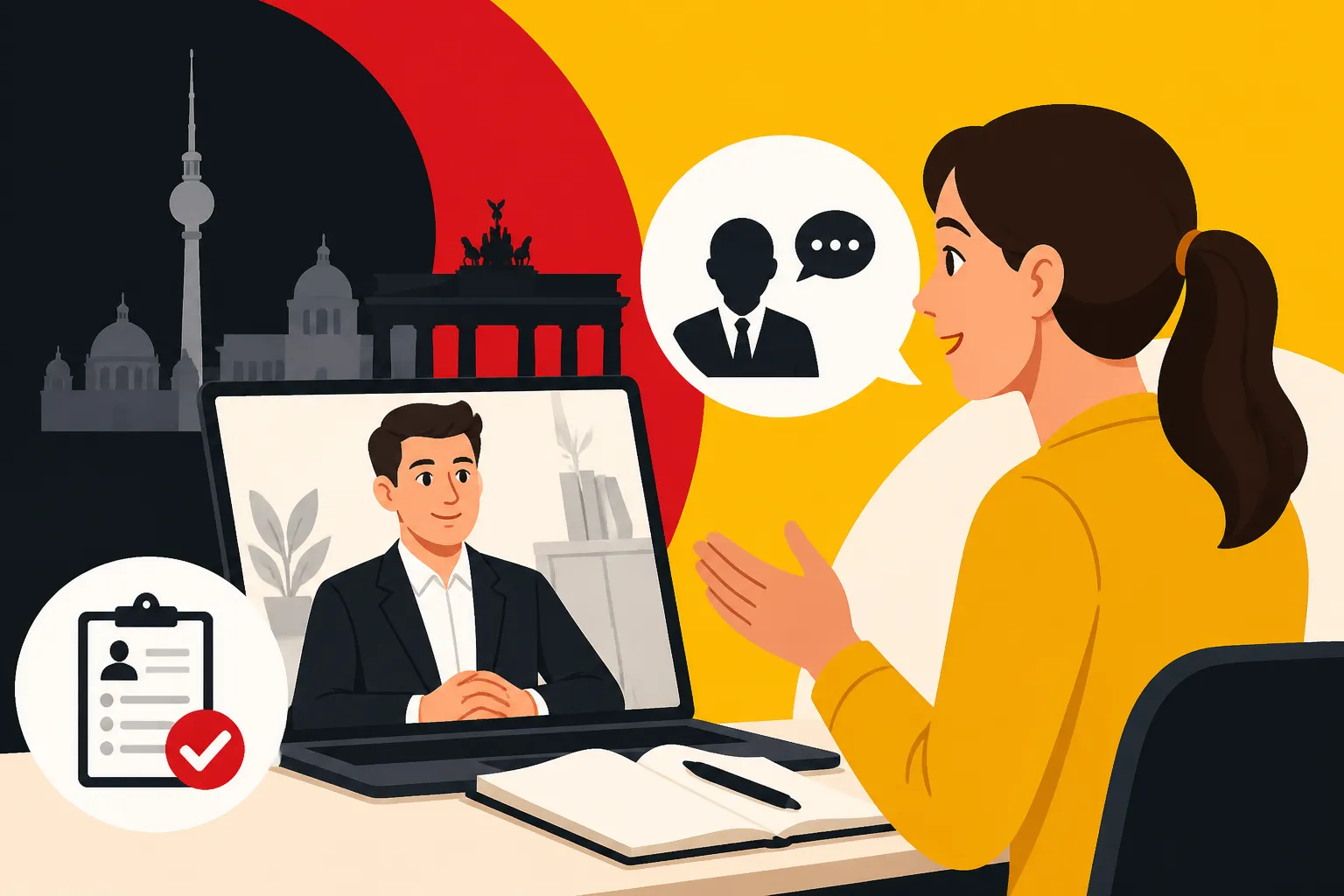
Think about using a platform like iTalki. It's a game-changer for expats because it connects you with native German speakers, many of whom are professional teachers or community tutors. The beauty of iTalki is that you can specifically seek out tutors who specialize in interview preparation or business German. Imagine sitting down (virtually, of course) with a qualified German tutor who can not only role-play an interview with you but also give you instant, personalized feedback on your grammar, vocabulary, pronunciation, and even cultural appropriateness.
An iTalki tutor can:
- Run through common interview scenarios, asking questions typical in a German setting.
- Correct your responses in real-time, explaining why a particular phrase or grammatical structure is better.
- Help you fine-tune your answers to sound more natural and professional.
- Offer insights into German business etiquette, such as appropriate greetings, how to handle salary expectations, or what questions to ask at the end.
- Help you practice articulating complex technical or professional concepts relevant to your industry.
The flexibility of iTalki means you can schedule sessions around your busy schedule, often with tutors in different time zones, making it incredibly convenient. You're not just practicing German; you're practicing interview German with an expert. This focused, one-on-one attention can significantly boost your confidence and polish your performance, making iTalki an invaluable resource for your job search in Germany. Beyond iTalki, you could look for local language exchange meetups, but these are rarely as structured or professionally focused as dedicated tutoring sessions. Your goal here is targeted, professional feedback, and iTalki provides that in spades. Don't forget that consistent Learning German: Top Language Schools and Resources for Expats can also lay a strong foundation for these specialized sessions.
Making the Most of Your Practice: Tips for Success
Practicing isn't just about repetition; it's about smart, strategic effort. To truly excel, you need to be intentional about your approach and open to continuous improvement.
Focus on Key Phrases and Industry-Specific Vocabulary
Don't try to memorize entire scripts for every possible question. Instead, identify key phrases and structures that you can adapt to various scenarios. For instance, knowing how to clearly articulate "Meine Stärken liegen in…" (My strengths lie in…) or "Ich habe Erfahrung mit…" (I have experience with…) provides a solid foundation. Then, fill in the blanks with vocabulary specific to your industry and the job description. If you're in IT, having command of terms like Softwareentwicklung, Projektmanagement, or Agile Methoden is crucial. If you're in marketing, Marktanalyse, Kundenbindung, and digitale Strategie will be key.
Research the company you're applying to, and pay close attention to the language they use in their job postings and on their website. This will give you clues about the specific jargon and preferred terminology. Build a "word bank" and practice weaving these terms naturally into your answers. This will not only make you sound more professional but also demonstrate that you've done your homework. Regularly practicing how to Improve Your German for the Workplace can greatly enhance your ability to do this.
| Category | German Phrases (Examples) | Why it's useful |
|---|---|---|
| Self-Introduction | Guten Tag, mein Name ist… | Formal opening, sets professional tone. |
| Ich bin ein erfahrener… | Confidently state your professional identity. | |
| Strengths/Skills | Meine Stärken liegen in… | Clearly articulates your value. |
| Ich verfüge über Kenntnisse in… | Shows capability in specific areas. | |
| Experience | Ich habe Erfahrung mit… | Direct and relevant to job requirements. |
| In meiner vorherigen Position war ich für… | Explains past responsibilities. | |
| Motivation | Ich bin sehr motiviert, weil… | Expresses enthusiasm and reason. |
| Das Unternehmen XY reizt mich besonders durch… | Shows you researched the company. | |
| Problem Solving | Ich würde das Problem angehen, indem ich… | Demonstrates proactive thinking. |
| Eine mögliche Lösung wäre… | Offers concrete ideas. | |
| Asking Questions | Ich hätte noch eine Frage zu… | Polite way to initiate your questions. |
| Closing | Vielen Dank für Ihre Zeit. | Expresses gratitude professionally. |
| Ich freue mich auf Ihr Feedback. | Shows continued interest. |
Embrace Feedback and Learn from Mistakes
The most crucial part of practice is not just doing it, but actively learning from it. When working with a tutor on iTalki or any language partner, be open to their feedback. Don't get defensive or discouraged if they point out mistakes. Remember, every error highlighted is an opportunity to improve.
After each practice session, make notes of the feedback you received. Did you struggle with a particular grammatical structure? Was a certain vocabulary term misunderstood? Did your answer sound too abrupt or too verbose? Spend time reviewing these points. Integrate the corrected phrases and improved sentence structures into your next practice run. It’s like refining a piece of software – each iteration gets better. The goal is progress, not instant perfection. Seeing your mistakes as stepping stones rather than stumbling blocks will keep you motivated and ensure your practice translates into tangible improvements.
Understand German Business Etiquette
Beyond the words themselves, your non-verbal communication, tone, and understanding of professional etiquette are paramount. German business culture values directness, efficiency, and professionalism. This extends to things like maintaining appropriate eye contact, offering a firm handshake (if in person), and dressing professionally. Understanding German Business Etiquette: Meeting Protocol and Dress Code can give you a clear advantage.
During your practice sessions, especially with a tutor on iTalki, don't just focus on what you say, but how you say it. Are you articulate and composed? Do you listen attentively without interrupting? When it's your turn to ask questions, are they thoughtful and relevant, demonstrating your genuine interest in the role and the company? Germans appreciate thoroughness and precision. Knowing the appropriate ways to interact will show you are not just capable of doing the job, but also capable of integrating into their professional environment. This can be as important as your technical skills, particularly when you’re applying for positions that could lead to something like The Chancenkarte (Opportunity Card): Germany’s Points-Based Job-Seeker Visa Explained, where integration potential is often considered. It's a holistic assessment, and your practiced interview skills are a significant part of that picture. Remember, even discussing sensitive topics like salary expectations requires a practiced, confident, and culturally aware approach, which ties into understanding Negotiating Salary and Perks: German Compensation Packages Explained.
Practicing your German job interview skills is undoubtedly a big undertaking, but it's an investment that will pay dividends in your job search and beyond. By combining diligent self-practice with the expert guidance available through platforms like iTalki, you'll not only hone your language skills but also gain the confidence and cultural savvy needed to truly impress German employers.
Disclaimer
This article is for general informational purposes only and does not constitute professional advice. Laws, prices and regulations vary by location and change over time. Consult a qualified professional for guidance on your specific situation.