Mountain and Forest Signal Reality: Where German Networks Actually Drop
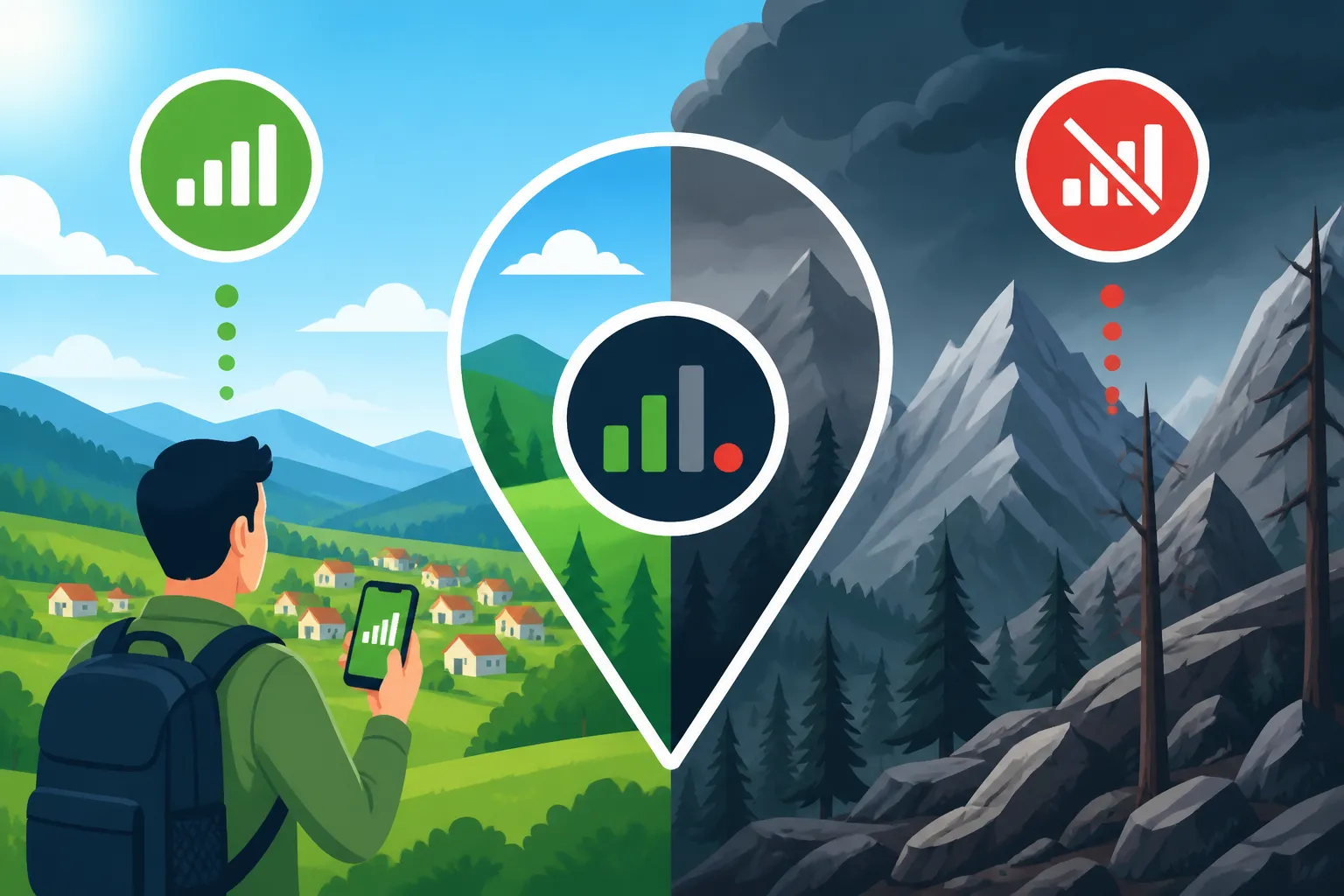
Ah, the romance of Germany's breathtaking mountains and deep, ancient forests! You picture crisp air, stunning vistas, and the quiet peace of nature, right? What you might not picture, until it hits you smack in the face, is that agonizing "no signal" icon on your phone precisely when you need it most. We've all been there: halfway up a beautiful trail in the Bavarian Alps or deep in the Black Forest, trying to check a map, send a quick update to family, or simply share that perfect photo, only to be met with the digital equivalent of a brick wall. This guide isn't here to sugarcoat it; we're diving into the stark reality of where German mobile networks truly falter in the wilderness and, crucially, how you can boost your chances of staying connected with smart solutions like Airalo.
Disclosure: This post may contain affiliate links. We may earn a commission at no extra cost to you if you make a purchase through these links. Read full disclosure.
The Unspoken Truth About German Mobile Coverage in Nature's Embrace
Let's be brutally honest: while Germany boasts a fantastic infrastructure, its mobile network coverage isn't universally flawless, especially once you venture off the beaten path and into the truly wild corners. Those picturesque mountains and dense forests, while beautiful, are often signal black holes. It’s a frustrating reality for many of us who've moved here expecting seamless digital connectivity everywhere. The charm of the remote often comes hand-in-hand with digital isolation, and it's a frustration perfectly understandable for anyone used to consistent service.
Why the German Countryside Eats Your Signal
There are several very tangible reasons why your phone goes from a powerful communication tool to an expensive paperweight the moment you step into nature's embrace here. It's not just bad luck; it's a combination of geography and infrastructure.
First off, topography plays a massive role. Picture the rolling hills of the Eifel or the soaring peaks of the Bavarian Alps. Radio waves, which carry your mobile signal, don't bend well around solid objects like mountains or even dense clusters of trees. Each peak, valley, and thicket of pine can act as a natural barrier, blocking or severely attenuating the signal before it reaches your device. You might be just a few kilometers from a cell tower as the crow flies, but with a mountain range in between, your phone might as well be on the moon. This is a common issue many of us discover the hard way, thinking a short distance means easy coverage.
Secondly, the economics of rural infrastructure come into play. Laying down fiber optic cables and erecting numerous cell towers in sparsely populated regions simply isn't as profitable for network providers as it is in bustling cities like Berlin, Munich, or Frankfurt. The cost-benefit analysis often tips against comprehensive coverage in areas where only a handful of hikers or villagers might benefit. This means fewer towers, wider coverage gaps, and older, less robust equipment in some areas. It's a sad truth that while big cities get the best of 5G, vast swathes of the countryside are still struggling with patchy 4G, or even just 3G, if you're lucky.
The Big Players and Their Blind Spots
Germany has three main mobile network operators: Telekom (often seen as having the best coverage, especially in rural areas), Vodafone, and O2 (Telefonica). While they all invest heavily in expanding their networks, none are immune to the challenges posed by Germany's diverse geography.
- Telekom: Often lauded for its superior network, Telekom certainly offers broader coverage than its competitors. However, even their signal can vanish in the deepest valleys of the Harz Mountains or on the remote trails of the Black Forest. Don't assume that because you have a Telekom contract, you're invincible. I've personally had Telekom service drop completely on the Königssee trails in Bavaria – a truly stunning place where you'd think connectivity would be a priority given the tourist traffic.
- Vodafone: A strong competitor, Vodafone also has a decent footprint, but like Telekom, they face significant hurdles in mountainous and heavily forested regions. Their network can be quite robust around larger towns but becomes noticeably spottier as you venture deeper into nature.
- O2 (Telefonica): While O2 has made strides in recent years, historically, it has been considered to have the weakest rural coverage among the big three. If you're planning an adventure in a truly remote area, relying solely on an O2 connection might lead to the most frustration.
The key takeaway here is that no single German network provider offers a bulletproof solution for every single corner of Germany's natural landscapes. This is where a flexible approach to connectivity becomes not just a convenience, but a necessity, and where a solution like Airalo can really make a difference. Understanding these limitations is the first step in mitigating the stress of a sudden digital disconnect.
Preparing for the Disconnect: Before You Head into the Wilderness
Knowing that signal drops are a likely scenario in Germany's wilder parts allows you to prepare properly. It's not about accepting total isolation, but rather about being strategic. Think of it like packing for any other outdoor adventure: you wouldn't head into the Alps without proper hiking boots and layers, right? The same goes for your digital preparedness.
Mapping Out Your Signal Strategy
Before you even tie your shoelaces, check the coverage maps provided by the major German network operators for your specific destination. These maps, while sometimes optimistic, can give you a general idea of potential dead zones. Don't just look at one; cross-reference Telekom, Vodafone, and O2 maps if possible. This foresight helps you anticipate where your primary network might fail.
This is where a flexible eSIM solution like Airalo can become your secret weapon. Instead of being tied to a single network, Airalo offers the ability to access local data plans from various providers. If you know, for example, that Vodafone has some coverage where Telekom doesn't (or vice-versa) in a particular region, having an Airalo eSIM means you could theoretically switch to a data plan on the stronger network when your primary SIM falters. This multi-network capability, even if it doesn't guarantee a signal everywhere, dramatically increases your chances of finding any sliver of connectivity.
Beyond network maps, consider downloading offline maps (Google Maps, Maps.me, Komoot, Outdooractive are excellent choices) for your hiking routes and general area. There's nothing worse than getting lost and losing signal. These apps don't require an active internet connection to show you where you are, using your phone's GPS instead. This simple step can save you a lot of anxiety and ensure your safety, even if you can't text your location to a friend. For more general travel in Germany, you might find our guide on Top 10 Apps for Living in Germany: Navigating Daily Life with Your Smartphone helpful for other practical apps.
Essential Gear Beyond the Hiking Boots
When you're out in the wilderness, relying solely on your phone for navigation or communication without a backup plan is a rookie mistake. A few extra items can make all the difference.
- Power Banks: Your phone's battery will drain faster searching for a signal. A robust power bank is non-negotiable. Ensure it's fully charged before you leave and can provide multiple charges for your devices.
- Offline Communication: If you're hiking with others, consider old-school walkie-talkies for short-range communication in areas where phones are useless. For emergencies, always remember the universal European emergency number, 112, which can often be dialed even without an active SIM card or signal, as long as any network is detectable. We have a detailed post on Emergency Numbers in Germany: Calling 112, Poison Control, and More if you want to know more about this critical service.
- Physical Maps and Compass: Yes, really. Technology can fail. A physical map of your hiking area and a basic compass could be lifesavers if your digital tools die or lose function. Many local tourist offices offer excellent hiking maps for a small fee.
- The Value of an eSIM Solution: And this brings us back to Airalo. Having an eSIM on your phone that allows you to easily purchase local data plans means you're not locked into a single provider. Imagine you have your regular German SIM (say, O2) but you know its rural coverage is spotty. With Airalo, you could buy a smaller data package from a provider known for better rural coverage, like Telekom, and activate it only when needed. This flexibility is a game-changer for navigating Germany's varied network landscape, giving you a backup data connection without needing to physically swap SIM cards. It's a pragmatic solution for anyone exploring places like the dramatic peaks for Hiking in Germany: The Black Forest, Alps, and Beyond.
The Airalo Advantage: Boosting Your Connectivity Odds in Remote Germany
So, you're picturing those frustrating moments, right? Standing on a mountain path, arm outstretched, desperately seeking that single bar of signal. This is precisely where Airalo steps in, not as a magic wand to conjure signal where none exists, but as a seriously smart tool to maximize your chances of connecting when a signal is available from any provider. It’s about being agile in a challenging environment.
How Airalo Helps Navigate Tricky German Networks
At its core, Airalo is an eSIM marketplace. If you're not familiar, an eSIM is an "embedded" SIM card – essentially a digital SIM that's built into your phone (most modern smartphones support it). This means you don't need a physical plastic card. With Airalo, you can browse and purchase local or regional data plans from various mobile operators without ever needing to visit a shop or insert a physical SIM.
Here's how this directly addresses the rural German network problem:
- Multi-Network Flexibility: As we discussed, Telekom might be strong in one valley, while Vodafone might catch a signal on the next ridge. With a traditional SIM, you're stuck with your primary provider. If they have no signal, you're out of luck. With Airalo, you can purchase a data package for Germany that might utilize the infrastructure of multiple local networks, or even better, if you have multiple eSIMs installed, you could quickly switch to another provider's data plan if your current one isn't working. For instance, if your main SIM is with O2 and it drops, you could activate an Airalo plan that runs on Telekom's network to see if it picks up. This dramatically improves your odds of finding any available connection.
- Instant Activation: Imagine you've just arrived in a remote area, and your usual network has died. Instead of finding a tiny local phone shop (which likely doesn't exist in the wilderness), you can simply open the Airalo app, browse available German data packages, purchase one, and activate it within minutes. No physical fumbling, no waiting. This seamless process means less stress and more time enjoying your adventure.
- Cost-Effective Backup: You don't need to commit to an expensive long-term contract with a secondary German provider just for occasional rural trips. Airalo allows you to buy small, affordable data packages (e.g., 1GB for a week) as a backup. It's pay-as-you-go flexibility tailored for travelers and expats exploring beyond city limits. This is a much more flexible option than a traditional Mobile Phone Contracts vs Prepaid: Which is More Cost-Effective in Germany? debate when you just need a temporary solution.
Real-World Scenarios: When Airalo Shines in the Wilderness
Let's paint a picture of how Airalo saves the day:
- The Lost Hikers in the Bavarian Forest: A couple is hiking near the Czech border, a notoriously tricky area for signal. Their primary German SIM (let's say Vodafone) has gone completely silent. They pull out their phones, realize they can't access their online map or contact their Airbnb host. But wait, one of them has Airalo installed. They quickly check the app, see a "Germany" data plan available that uses a different local network. A few taps, a quick purchase, and suddenly, they have a few bars of data, enough to pull up their online map, re-orient themselves, and send a message confirming their safety. Crisis averted, and the frustration level drops from 10 to 2.
- The Remote Work Retreat in the Sauerland: An expat freelancer decides to escape the city for a week, hoping to work from a cozy cabin. They rely on their main German data plan for work. On day one, the signal is agonizingly slow and drops frequently. Productivity plummets. Instead of packing up and heading home, they remember Airalo. They purchase an additional data package, activating a different local carrier's network via eSIM. The cabin's connectivity improves significantly, allowing them to finish their work and enjoy the serene surroundings.
- The Unplanned Detour in the Eifel: A family is on a road trip, using their phone for navigation. A road closure forces a detour through a less-traveled area, and their primary mobile network suddenly disappears. Panic starts to set in as they're unsure of the alternative route. With Airalo, they can switch to another network's data plan for just enough time to load the new route on their navigation app and ensure they're still on track for their destination.
These aren't hypothetical pipe dreams; these are scenarios where Airalo offers a tangible solution to a very real problem that many expats in Germany face. While it can't create a cell tower out of thin air, it provides the best possible chance to latch onto any available network signal, making your adventures in Germany's beautiful but digitally challenging wilderness far less stressful.
Practical Tips for Staying Connected (or Gratefully Unplugged) in Germany's Forests and Mountains
Even with the smart advantage of Airalo, there will be times when the German wilderness simply wins the signal battle. It's a good idea to have a range of strategies, from optimizing your tech to gracefully embracing the digital detox.
Optimizing Your Phone Settings for Better Signal Reception
Sometimes, a few tweaks in your phone's settings can make a surprising difference when you're battling patchy reception:
- Manual Network Selection: Your phone usually automatically connects to the strongest available network. However, in fringe areas, it might cling to a weak signal from your primary provider when a stronger, albeit unapproved, signal from another network (which your Airalo eSIM could access) is present. Go into your phone's settings (usually under "Mobile Networks" or "Network & Internet") and switch from "Automatic" to "Manual" network selection. Your phone will then search for all available networks. You might see Telekom, Vodafone, and O2 listed. If you have an Airalo plan active, or are considering activating one, this manual scan could reveal a usable network that your phone overlooked.
- Toggle Airplane Mode: It sounds counterintuitive, but sometimes turning on Airplane Mode for 30 seconds and then turning it off again can force your phone to re-scan for networks from scratch. This can reset a stuck connection and sometimes latch onto a slightly better signal.
- Disable 5G/4G (Temporarily): In extremely weak signal areas, sometimes older, lower-frequency bands (like 3G or even 2G) can penetrate obstacles better. If your phone is desperately trying to connect to a non-existent 5G signal, it might miss a faint 3G signal. Temporarily switching your preferred network type to 3G (or "3G/2G auto") in your mobile network settings might just give you enough connectivity to send a crucial message or load a map.
- Keep Software Updated: Phone manufacturers often release updates that improve modem performance and signal acquisition. Make sure your phone's operating system is always up-to-date.
Having an Internet and Mobile Phone Plans in Germany: Getting Connected Fast strategy is useful, but these small technical tricks can often buy you precious minutes of connectivity.
Embracing the Digital Detox (When All Else Fails)
Look, as much as we strive for connectivity, there will inevitably be moments, especially in Germany's truly remote and wild places, where your phone becomes nothing more than a camera. And honestly, sometimes that's a gift.
- Plan for the Unplugged: Instead of letting the lack of signal stress you out, plan for it. Tell your family or travel companions that you'll be in an area with no reception for X hours or days. Share your itinerary. Set expectations. This alone can significantly reduce anxiety. Our guide on Staying Safe in Germany: Common-Sense Tips for Travelers always emphasizes planning and communication.
- Enjoy the Present Moment: Germany's natural beauty is incredible. When your phone refuses to cooperate, take a deep breath, put it away (or use it just for photos), and immerse yourself in the experience. Listen to the birds, feel the sun on your face, marvel at the ancient trees or the sweeping mountain views. These are the memories you'll truly cherish, far more than the Instagram post you couldn't upload.
- Emergency Preparedness: Even when you're "unplugged," always carry essential emergency items. A fully charged phone for photos and potential emergency calls (remember, 112 often works without a SIM or strong signal), a physical map, a first-aid kit, enough water and snacks, and knowledge of your route are paramount. Don't rely on your phone for all safety aspects. A robust travel insurance plan, which you can learn more about in Travel Insurance for Trips to and Within Germany, is always a smart move too, covering more than just medical emergencies but also potential travel disruptions.
Ultimately, navigating Germany's stunning but often digitally challenging mountains and forests requires a blend of smart technology (like the incredible flexibility offered by Airalo) and a healthy dose of realistic expectation. You can boost your connectivity odds significantly, but also be prepared to sometimes simply unplug and soak in the raw, untamed beauty around you. After all, isn't that why we venture into these places in the first instance?
Disclaimer
Please note: While every effort has been made to provide accurate and up-to-date information, mobile network coverage is dynamic and can vary based on terrain, weather, network upgrades, and other factors. Always check current coverage maps from providers and consider multiple connectivity solutions when traveling to remote areas. This content is for informational purposes only and does not constitute professional advice.