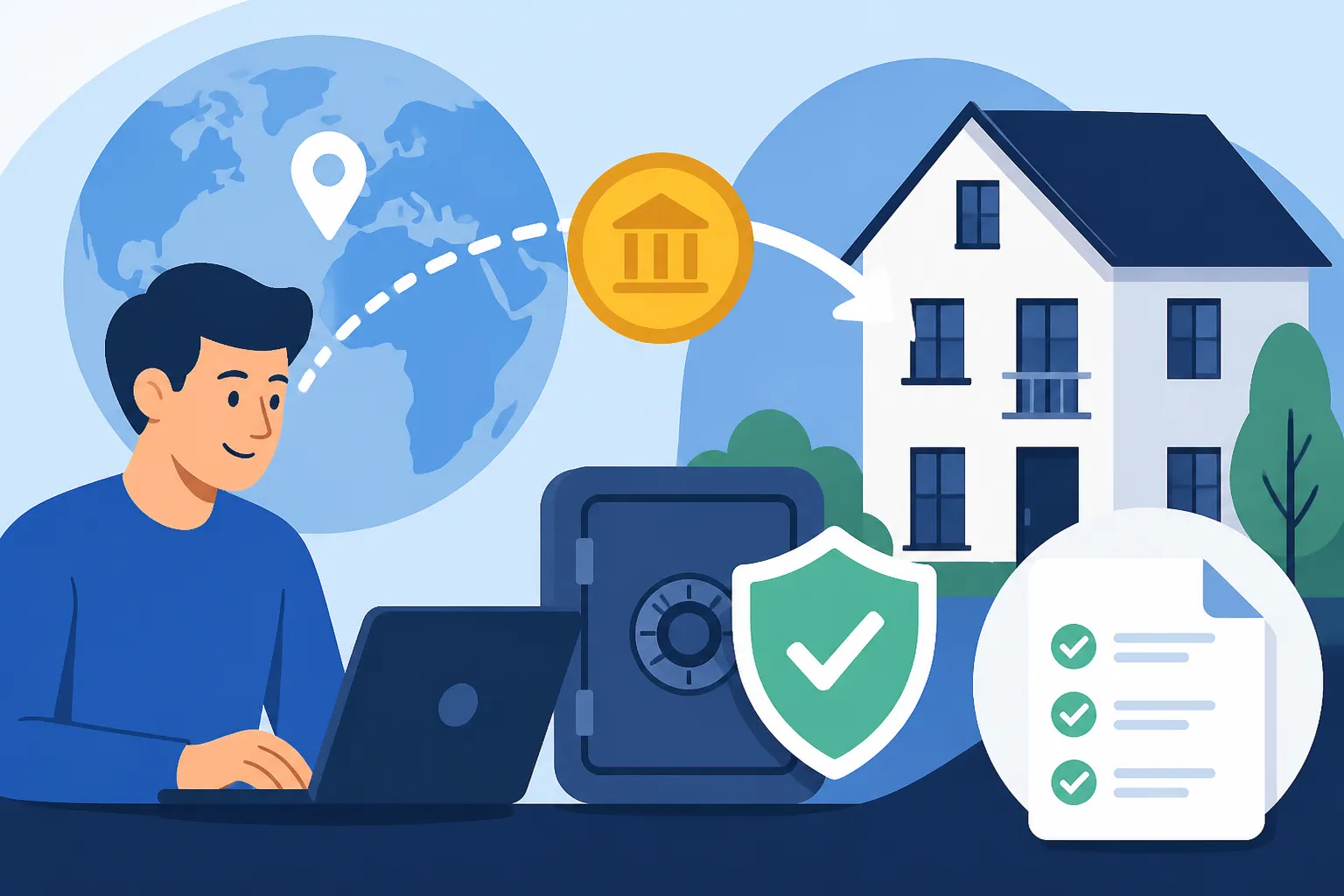
Paying a German Kaution From Abroad: Deposit Transfers and Proof
Oh, the infamous German Kaution! Just when you think you've found your dream apartment in Germany, navigating the mountain of paperwork, the landlord interviews, and perhaps even the "empty kitchen" dilemma, you're faced with the daunting task of transferring a hefty security deposit from halfway across the world. It’s a common expat headache, fraught with anxiety over exchange rates, hidden fees, and whether your money will actually arrive on time. This guide is here to walk you through the process of paying your German Kaution from abroad, making sure your hard-earned cash gets where it needs to be without unnecessary stress or financial surprises.
Disclosure: This post may contain affiliate links. We may earn a commission at no extra cost to you if you make a purchase through these links. Read full disclosure.
Understanding the German Kaution: More Than Just a Deposit
First things first, let's clear up what this Kaution actually is. In Germany, a security deposit for a rental apartment is called a Kaution or Mietkaution. It's not just a casual payment; it's a legally regulated sum designed to protect the landlord in case you cause damages to the property beyond normal wear and tear, or if you fail to pay rent or utility bills. Think of it as an insurance policy for your landlord.
The amount of the Kaution is usually between two and three months' worth of your Kaltmiete – that's your base rent, excluding utility costs (Nebenkosten). So, if your monthly Kaltmiete is €800, a three-month Kaution would set you back €2,400. This isn't a small amount for anyone, let alone someone navigating a new financial system from abroad. Legally, a landlord cannot demand more than three months' Kaltmiete. It’s a significant sum, and it needs to be handled correctly to ensure you get it back when you eventually move out. For more details on protecting your rights, you might want to read our comprehensive guide on Security Deposits (Kaution) in Germany: Getting It Back and Protecting Yourself.
The most common way to hold the Kaution is in a special, interest-bearing bank account, often called a Mietkautionskonto. This account should be separate from the landlord's personal assets and should be held in your name or a joint name, but controlled by the landlord. The interest earned on this account typically belongs to you. This is crucial because it ensures your deposit is safe, even if the landlord faces financial difficulties. In some cases, landlords might prefer a Mietbürgschaft, which is a rental guarantee from a bank or an insurance company, meaning they would pay out if you default, but this isn't a direct deposit from you and is more common once you're already established in Germany. When you're arriving from abroad, a direct bank transfer to a Mietkautionskonto is usually the expectation.
The International Headache: Why Paying from Abroad is Tricky
You've found the perfect apartment, signed the Understanding German Rental Contracts: Key Terms and Conditions, and now the clock is ticking to pay the Kaution. This is where many expats hit their first major bureaucratic and financial wall. Transferring a large sum of money internationally, especially the Kaution, comes with a unique set of challenges that can turn excitement into exasperation.
The biggest culprits are often traditional banks. While they’re perfectly fine for everyday transactions within Germany once you've opened a Opening a Bank Account in Germany: Step-by-Step for Newcomers, their international transfer services can feel like a relic from another era. You're typically looking at inflated exchange rates, where the bank skims a little off the top, often without explicitly stating it. Then there are the transfer fees – sometimes a flat fee, sometimes a percentage, and occasionally, both. These fees can quickly add up, especially for a sum like a Kaution, meaning you end up paying more than you initially budgeted for. For instance, imagine transferring €2,500 for your deposit. A bank might give you an exchange rate that's 2-3% worse than the actual market rate, costing you an extra €50-€75, plus a €30-€50 transfer fee. That's money you could have spent on furniture or a nice welcome dinner!
Beyond the financial hit, there’s the speed – or lack thereof. International bank transfers can take anywhere from 3 to 7 business days, sometimes even longer, depending on the banks involved and any intermediary banks. In the fast-paced German rental market, landlords often expect the Kaution to be paid quickly after signing the contract. Delays can lead to immense stress, potential misunderstandings with your new landlord, or, in a worst-case scenario, even jeopardizing your apartment if the landlord is impatient and has other eager tenants waiting. You don’t want to be the expat who loses their apartment because a bank transfer is stuck in limbo! Proof of payment can also be an issue; a simple receipt may not be enough if the funds don't clear promptly. You need a system that's not only cost-effective but also reliable and transparent, allowing both you and your landlord to track the transfer every step of the way.
Wise: Your Expat-Friendly Solution for Kaution Transfers
This is where services like Wise (formerly TransferWise) truly shine, making them an absolute lifesaver for expats tackling their German Kaution from abroad. Forget the traditional banking headaches; Wise was designed precisely to cut through the complexity, cost, and snail-like pace of international money transfers. It's the core solution we recommend because it addresses every single pain point you'll encounter.
So, how does Wise work its magic? Instead of transferring money directly across borders using the slow and expensive SWIFT network like traditional banks, Wise operates on a local-to-local transfer model. When you send money from your home country to Germany through Wise, you transfer your funds to Wise's local bank account in your home country. Then, Wise pays out the equivalent amount from its local bank account in Germany to your landlord's German bank account. This clever approach bypasses most of the hefty international fees and guarantees a much faster transaction. Most importantly, Wise uses the real, mid-market exchange rate – the same one you see on Google – and only charges a small, transparent upfront fee. There are no hidden markups on the exchange rate, unlike many conventional banks.
Let's put this into perspective for your Kaution. Imagine you need to send €2,500. With Wise, you'd see the exact exchange rate you're getting and the minimal fee before you even initiate the transfer. This transparency means you know precisely how much your landlord will receive, and how much it will cost you in your home currency. This certainty is invaluable when dealing with such a critical payment. Furthermore, Wise transfers are typically much faster than traditional bank wires, often arriving within a few hours to a day. This speed can be a game-changer, giving you peace of mind that your Kaution will reach its destination promptly, keeping your landlord happy and securing your new home. Many expats, including myself, have relied on Wise for everything from initial deposits to regular rent payments, finding it infinitely more convenient than trying to wrestle with their home country bank. It truly is a reliable partner for your financial life in Germany, right from the start.
Step-by-Step: Sending Your Kaution with Wise
Using Wise for your Kaution transfer is remarkably straightforward, even if you’re new to international money transfers. Here’s a simple, step-by-step guide to get your deposit where it needs to go:
- Set Up Your Wise Account: If you haven't already, head over to the Wise website or download their app. The registration process is quick and usually requires a valid ID for verification. This initial setup is a one-time thing and will serve you well for all future international financial needs in Germany.
- Initiate a Transfer: Once logged in, click "Send money." You'll then specify the amount you want to send in your home currency, and the desired recipient currency (EUR). Wise will immediately show you the real exchange rate, the transparent fee, and the exact amount your landlord will receive. This instant quote is fantastic for budgeting and avoiding surprises.
- Enter Recipient Details: This is crucial for your Kaution. You'll need your landlord's full name (or the name of the property management company), their IBAN (International Bank Account Number), and their BIC/SWIFT code. Double-check these details with your landlord – a single incorrect digit can delay or even bounce the transfer. For the "purpose of transfer" or "reference," make sure to include "Kaution for [Your Name], [Apartment Address]." This ensures the landlord can easily identify the payment.
- Fund Your Transfer: Wise offers various ways to pay for your transfer, depending on your home country. Common options include bank transfer (often the cheapest), debit card, or credit card (usually incurs a slightly higher fee but is instant). Choose the method that best suits your needs and budget.
- Confirm and Track: After you’ve paid for your transfer, Wise will send you a confirmation. You can then track the progress of your money directly through their app or website. They'll also send email notifications when the money is on its way and when it has been successfully delivered to your landlord's account. This transparency is a huge relief when dealing with important payments like a Kaution.
| Feature / Method | Traditional Bank Transfer | Wise (Recommended) |
|---|---|---|
| Exchange Rate | Marked up, hidden margin | Mid-market rate (real rate) |
| Fees | Often high, flat fees + percentage | Low, transparent upfront fee |
| Speed | 3-7 business days | Typically hours to 1 business day |
| Transparency | Limited, final cost often unclear | High, exact costs and recipient amount shown upfront |
| Reliability | Generally reliable, but delays occur | Highly reliable, real-time tracking |
| Proof of Payment | Bank statement | Digital receipt, email confirmations, in-app tracking |
| Expat Friendliness | Low, designed for institutional transfers | High, built for international individuals & businesses |
As you can see from the table, Wise simply takes the lead when it comes to international money transfers for expats. It’s no wonder so many of us rely on it for our financial transactions across borders.
Beyond the Transfer: Essential Documentation and Follow-Up
Just sending the money is only half the battle. When you’re dealing with something as important as your Kaution, especially when you're still getting to grips with Money Matters in Germany: Complete Financial Guide for Expats, documentation and follow-up are absolutely critical. This isn’t just good practice; it's vital for protecting your rights and ensuring a smooth return of your deposit when you eventually move out.
Firstly, once you’ve initiated the transfer through Wise, make sure to keep a clear record of the transaction. Wise provides a digital receipt and confirmation emails which explicitly state the amount sent, the exchange rate, the fees, and the recipient's details. Take screenshots of these, download the PDF confirmation, and save them in a dedicated folder. This will be your primary proof that the Kaution was sent. It's often helpful to forward this confirmation directly to your landlord or property management, especially if they are new to dealing with international transfers. This proactive communication can prevent any unnecessary back-and-forth about the payment status.
Secondly, and this is crucial, ensure that the handling of your Kaution is explicitly detailed in your rental contract (Mietvertrag) or a separate, signed Kaution agreement. This document should specify the exact amount of the deposit, how it will be held (preferably in a separate Mietkautionskonto in your name or joint name), and the conditions for its return. German law dictates how a Kaution must be managed, and having it in writing protects you. If your landlord insists on a different method, such as holding it in their personal account, be wary and seek advice, as this isn't standard practice and could put your money at risk. When the money arrives, confirm with your landlord that they have received the full amount and that it has been deposited into the correct, legally compliant account. Don't be shy about asking for written confirmation of receipt and the details of the Mietkautionskonto. This is your money, and you have every right to ensure it’s handled properly. Establishing clear communication and meticulous record-keeping from the very beginning will save you a lot of potential headaches down the line when it's time to get your Kaution back. For more in-depth information, you might find our article on How to Rent an Apartment in Germany: Application Process and Requirements helpful as well.
Disclaimer
This article is for general informational purposes only and does not constitute professional advice. Laws, prices and regulations vary by location and change over time. Consult a qualified professional for guidance on your specific situation.