Medical Evacuation and Repatriation From Germany: When It’s Needed
The moment you land in Germany, you're usually told all about the amazing healthcare system, the excellent doctors, and how your health insurance (whether public or private) will take care of you. And for the most part, that's true! But what happens when things go really wrong? When you face a medical crisis that's beyond local capabilities, or you desperately need to get back home for care or comfort? This is where the often-overlooked, yet absolutely critical, concept of medical evacuation and repatriation comes into play. It's a logistical and financial nightmare that standard German health insurance often doesn't cover, leaving expats in a truly vulnerable spot. This comprehensive guide will peel back the layers on medical evacuation and repatriation from Germany, explaining when it's needed, the mind-boggling costs, and crucially, how specialized global insurance like SafetyWing can be your absolute lifeline.
Disclosure: This post may contain affiliate links. We may earn a commission at no extra cost to you if you make a purchase through these links. Read full disclosure.
Understanding the "Why": When Medical Evacuation and Repatriation Become Necessary from Germany
Germany boasts one of the world's best healthcare systems, truly. From world-class hospitals to highly trained specialists, you're generally in excellent hands. But even in a country with such robust medical infrastructure, there are very specific scenarios where being moved – either to another facility within Germany, to a different country, or back to your home country – becomes a medical necessity. As an expat, understanding these distinctions is paramount, as the financial implications are staggering.
What Exactly Are We Talking About? Medical Evacuation vs. Repatriation
First, let's clarify these terms, because they are often used interchangeably, but they mean very different things, especially for your insurance provider.
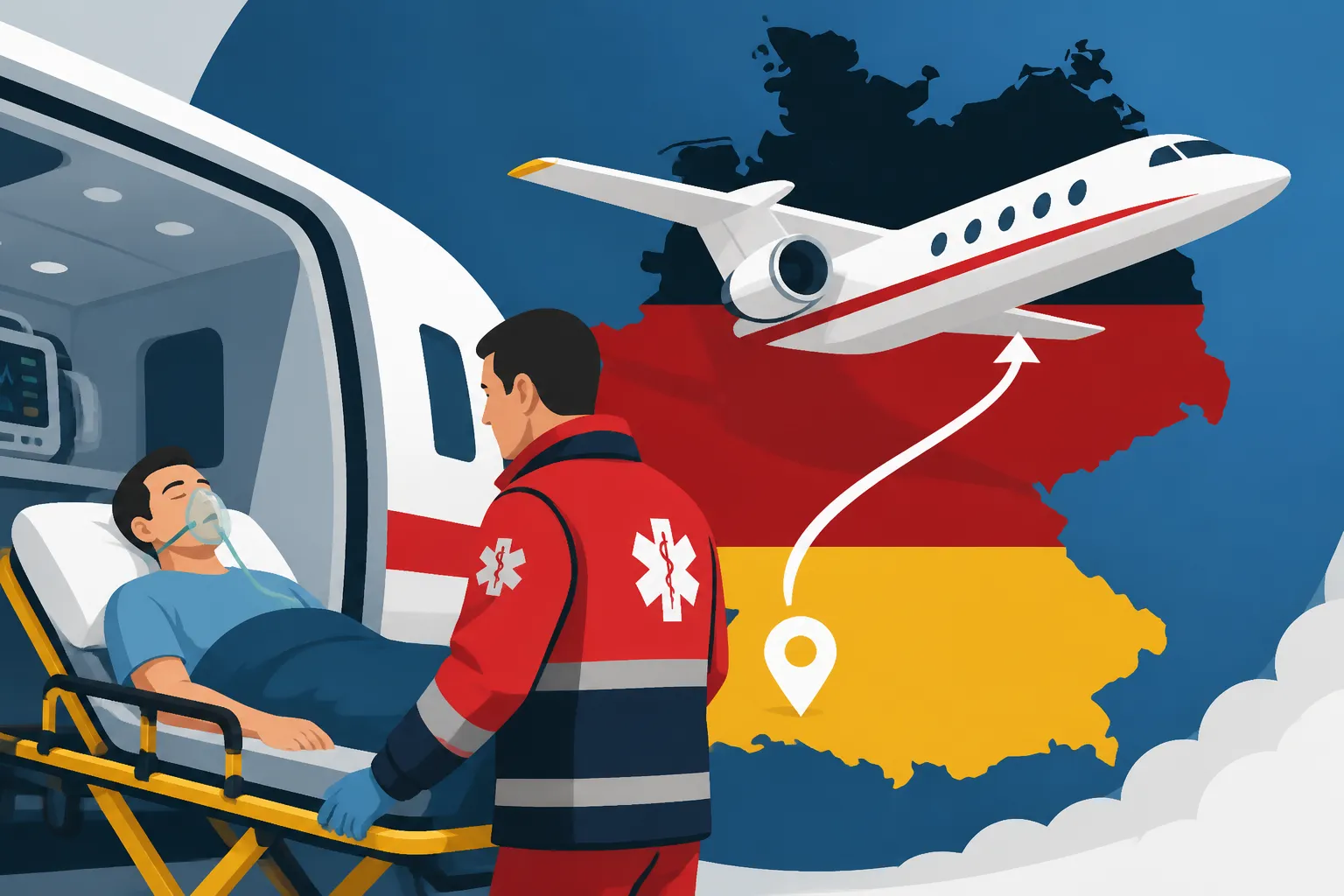
Medical Evacuation (often shortened to "MedEvac") refers to the emergency transport of a patient from a place where adequate medical care is unavailable to the nearest appropriate medical facility. This facility could be just across town, in another German city, or even in a neighboring country. Think of it as an urgent, life-saving transfer. For example, if you're hiking in a remote part of the Bavarian Alps and suffer a severe injury, a helicopter might evacuate you to the nearest trauma center in Munich. Or, in a more extreme case, if you develop an incredibly rare condition for which only a handful of specialists globally exist, and none are in Germany, an evacuation to a specialist hospital in Switzerland or the UK might be deemed medically necessary. The key is the immediacy and the necessity of moving you to a facility that can treat your condition. This is usually due to a lack of specialized equipment, expertise, or capacity at your current location.
Medical Repatriation, on the other hand, is about returning you to your country of residence or origin for medical care or after stabilization. This is typically a planned, non-emergency transfer once your immediate life-threatening condition has been stabilized. The purpose is often to allow you to receive ongoing treatment closer to family and your familiar support system, or simply to recover in a more comfortable, known environment. For instance, if you have a serious accident in Germany and spend weeks in an intensive care unit, but eventually stabilize enough to travel, you might choose to be repatriated to your home country for long-term rehabilitation or follow-up care. Repatriation can also sadly refer to the return of mortal remains in the event of death. The drive here isn't always the absence of care in Germany, but often the preference for care closer to home, or the emotional and logistical benefits for you and your family during a prolonged recovery.
Situations That Call for These Services
While Germany's healthcare is top-notch, here are some realistic scenarios where you or a loved one might need medical evacuation or repatriation:
- Rare or Highly Specialized Conditions: Imagine you're diagnosed with an extremely rare neurological disorder that requires experimental treatment or a specific surgery only performed by a handful of surgeons worldwide, none of whom are in Germany. In such cases, your best chance might be an evacuation to a specialized center in the US, Sweden, or elsewhere. This isn't a slight on German medical expertise, but a recognition that no single country has every highly niche specialization.
- Severe Trauma in a Remote Area: You're enjoying a hiking trip in a less populated region like the Harz Mountains or the Black Forest, and you suffer a serious fall, breaking multiple bones or sustaining a head injury. While a local hospital can provide initial stabilization, you might need a rapid transfer (evacuation) to a larger university hospital in a major city like Heidelberg or Berlin that has a dedicated trauma unit.
- Complex Medical Crisis Requiring Family Support: Let's say you're diagnosed with a severe, long-term illness that will require months of treatment and recovery. While German doctors are providing excellent care, the emotional toll of being far from your family and support network in your home country can be immense. Once stable, you might opt for repatriation to continue treatment where you have that crucial family presence. This is particularly relevant for those facing prolonged rehabilitation or palliative care, where comfort and familiar surroundings are paramount.
- Loss of Life Abroad: This is the most somber reason, but it's a stark reality. If an expat passes away in Germany, their family often wants their remains returned to their home country for burial or cremation services. This process falls under repatriation of mortal remains and is incredibly expensive and complex to arrange without specialized assistance.
- Limitations of Standard Care: While rare, there could be situations where, for example, a specific type of therapy or a particular drug available in your home country is not yet approved or widely available in Germany. This could prompt a medical evaluation and potentially an evacuation if deemed medically necessary by your primary care physicians.
It's clear that these aren't your run-of-the-mill doctor's visits. These are high-stakes situations where the need for specialized transport and coordinated medical care across borders becomes urgent and critical.
Why German Healthcare Might Not Be Enough (Even Though It's Excellent)
It's not about the quality of care in Germany, which is generally exceptional. The issue lies more with:
- Geographic Specialization Gaps: Even the best systems have niches. For instance, if you're looking for specific experimental cancer treatments, or highly specialized pediatric surgery for a unique congenital condition, the leading experts might simply be located elsewhere.
- Language and Cultural Comfort: During an acute medical crisis, navigating a foreign healthcare system, even with excellent English-speaking doctors, can be incredibly stressful. The desire to be treated in your native language, surrounded by familiar cultural norms and close family, can be a powerful driver for repatriation once your condition is stable enough.
- Insurance Policy Limitations: This is the biggest elephant in the room. Your standard German public (like TK, AOK) or private health insurance (like Mawista, etc.) is designed to cover your medical treatment within Germany or, to a limited extent, within the EU via the European Health Insurance Card (EHIC). They almost universally do not cover the colossal costs of a medical evacuation via air ambulance to a non-EU country, or the repatriation process back home. This gap is what can bankrupt an expat family overnight. For a deep dive into the general landscape, check out our guide on Health Insurance in Germany: Understanding Public vs Private Coverage. You'll quickly see that these policies are focused on treatment, not transport across borders.
The Harsh Reality of Costs and Coverage Gaps: Why Your Standard German Insurance Falls Short
This is where the rubber truly meets the road, and why every expat in Germany needs to be acutely aware of their coverage. The costs associated with medical evacuation and repatriation are astronomical, easily running into the tens or even hundreds of thousands of Euros. Without specific, specialized insurance, you're looking at a financial catastrophe that could decimate your life savings and put immense pressure on your family.
The Eye-Watering Price Tag
Let’s be brutally honest: these are not cheap operations. We’re talking about highly specialized logistics, medical personnel, and often, private air travel equipped for intensive care.
- Evacuation Costs: A medical evacuation, especially by air ambulance (which is often necessary for significant distances or urgent care), can range from €20,000 to €150,000 or more. For example, an air ambulance from Berlin to London might cost €25,000-€40,000. An evacuation from Frankfurt to a specialized clinic in the United States could easily exceed €100,000, considering the transatlantic flight, medical crew, and ground transfers. These figures cover the specialized aircraft, the medical team on board (doctor, nurse, specialized equipment), fuel, landing fees, and all necessary permits. It's essentially a private hospital on a jet.
- Repatriation Costs: While typically less urgent than an evacuation, repatriation can still be incredibly expensive, especially if the patient requires medical supervision during the journey. A standard commercial flight with a medical escort might cost €10,000-€30,000. If a full air ambulance is still required (e.g., for a patient on life support), the costs mirror those of an evacuation. Even the repatriation of mortal remains is not cheap, usually ranging from €5,000 to €15,000, covering embalming, specific caskets, legal documents, and transportation logistics.
- Hidden Fees and Incidentals: Don't forget the ground ambulance transfers at both ends, airport taxes, visas for medical staff, accommodation for accompanying family members, and various administrative fees. These can quickly add thousands of Euros to the overall bill.
This is not pocket change. This is the kind of bill that can force families to sell assets, crowdfund, or take out massive loans, adding immense stress to an already traumatic situation.
Where Public and Private German Insurance Draw the Line
This is the critical part that many expats misunderstand.
- Public Health Insurance (GKV) in Germany: Providers like TK, AOK, Barmer, DAK, etc., offer excellent coverage within Germany for medical treatment. They might cover local ambulance transfers to the nearest hospital. If you're in the EU, the European Health Insurance Card (EHIC) covers medically necessary treatment during a temporary stay, but it explicitly does not cover medical evacuation or repatriation. If you need to be flown home from, say, Spain after an accident, the public German health insurance will not pay for that flight. It's designed for your stay here, not your exit for specialized care abroad. For more details on what's typically covered, see our guide on Public Health Insurance (gesetzliche Krankenkasse): What It Covers and Costs.
- Private Health Insurance (PKV) in Germany: While private health insurance often offers more comprehensive benefits than public options (e.g., choice of doctors, private rooms), most standard PKV policies are also geo-restricted. They cover your medical treatment in Germany and often provide some emergency coverage for short trips abroad (e.g., 4-6 weeks), but this rarely extends to medical evacuation or repatriation specifically. You'll find a clause that states they cover "medically necessary treatment," but the transport costs across international borders for an evacuation or repatriation are typically excluded, or limited to very specific, small amounts that barely scratch the surface of the actual cost. You can learn more about private options in Private Health Insurance in Germany: Benefits, Costs, and Eligibility, but always double-check the fine print regarding international emergency transport.
The harsh truth is, neither public nor most private German health insurance plans are designed to handle the complex and costly logistics of a medical evacuation or repatriation to your home country or a third country. They are fantastic for your day-to-day and emergency care in Germany, but when it comes to leaving Germany for medical reasons, you're largely on your own.
The Indispensable Role of Specialized Coverage Like SafetyWing
This is precisely where global travel and health insurance solutions designed for digital nomads and expats, such as SafetyWing, step in as an absolute necessity. Unlike traditional German health insurance, SafetyWing's Nomad Insurance is specifically built with international mobility and these catastrophic scenarios in mind.
SafetyWing understands that expats are not static. You move, you travel, and your medical needs might extend beyond the borders of your current host country. Their policies include robust coverage for emergency medical evacuation and repatriation. This isn't just a bonus feature; it's a core component of what makes their plan so vital for anyone living abroad, especially in Germany where local plans have this gaping hole.
With SafetyWing, if you're in Germany and a medical professional deems it necessary to transport you to another facility that can provide appropriate treatment (whether within Germany or internationally), or to repatriate you home after stabilization, they help cover those staggering costs. This kind of peace of mind is invaluable, protecting you from potentially ruinous financial burdens during an already traumatic time. It turns a potential six-figure personal debt into a manageable, insured event. It is a true "safety net" for the truly unexpected and complex medical emergencies that standard insurance simply cannot address.
Navigating the Process: From Emergency to Safe Return (with SafetyWing as Your Guide)
When you're facing a medical crisis, the last thing you want to do is navigate complex logistics and mountainous paperwork. Having a clear understanding of the process – and especially how your specialized insurance can help – is vital. Let's walk through what generally happens, highlighting how a provider like SafetyWing steps in.
Immediate Steps During a Medical Crisis
No matter where you are or what kind of insurance you have, the first steps are always about immediate medical attention:
- Seek Emergency Care: If it's a life-threatening situation, immediately call the German emergency number, 112. For non-life-threatening but urgent medical issues, you can call the on-call medical service at 116117. Go to the nearest hospital Medical Emergencies: What to Do and Where to Go in Germany or get to a doctor.
- Inform Medical Staff of Your Insurance: As soon as possible, inform the treating doctors and hospital staff about your health insurance. If you have SafetyWing, let them know you have international medical and travel insurance.
- Contact Your Primary German Health Insurer: If you have a German public or private health insurance, contact them to cover the immediate treatment costs within Germany. They will handle the hospital bills for your care in Germany.
These initial steps are crucial for stabilizing the patient and ensuring they receive the best possible local care.
Working with Your Provider: A SafetyWing Example
Once the immediate crisis is under control and the patient is stable enough for a transfer to be considered, this is when your specialized evacuation and repatriation insurance truly becomes invaluable.
- Contact SafetyWing's Emergency Assistance: This is your absolute first point of contact for any potential evacuation or repatriation. SafetyWing, like other global providers, has a 24/7 emergency assistance team. You (or a family member/friend) should call them as soon as the need for evacuation or repatriation is identified by the treating medical team in Germany. You'll find their contact number prominently displayed on your policy documents.
- Medical Assessment and Recommendation: SafetyWing's medical team will liaise directly with the treating doctors in Germany. They will review your medical records, assess your condition, and determine if an evacuation (to a more appropriate facility) or repatriation (to your home country) is medically necessary and safe. This decision is made by medical professionals, not by you or your family, to ensure the safest and most effective course of action. They'll consider whether the current facility can provide adequate treatment, if a transfer is clinically indicated, and if the patient is stable enough for transport.
- Coordination of Logistics: Once approved, SafetyWing's assistance team takes over the monumental task of coordinating the entire process. This includes:
- Arranging appropriate medical transport (e.g., air ambulance, commercial flight with medical escort, stretcher transport).
- Securing necessary medical equipment for the journey.
- Arranging ground transfers at both the departure and arrival points.
- Obtaining medical clearances for travel.
- Coordinating with the receiving medical facility.
- Handling all the complex paperwork, permits, and international medical protocols.
This is where the true value of specialized insurance like SafetyWing shines. They handle the labyrinthine logistics and bureaucracy, allowing you and your family to focus solely on the patient's well-being. Imagine trying to arrange an international air ambulance from your hospital bed while trying to translate medical reports and find a receiving hospital in another country – it’s simply impossible.
The Logistical Maze and What to Expect
The actual process of evacuation or repatriation is incredibly complex and requires precision coordination.
- Type of Transport: This depends entirely on the patient's medical condition. A critically ill patient might require a dedicated air ambulance, essentially a flying intensive care unit. A stable patient needing continuous monitoring might travel on a commercial flight with a medical escort (a doctor or nurse). A less severe case might be able to fly commercially with specialized seating (e.g., stretcher installation) or simply accompanied by a non-medical family member.
- Medical Team: For medically supervised transport, a highly trained medical team will accompany the patient, continuously monitoring their condition and providing necessary care throughout the journey.
- Paperwork and Permissions: Crossing international borders with a critically ill patient involves a mountain of paperwork. Medical reports need to be translated, clearances obtained from airlines, airports, and receiving hospitals, and potentially even visas for the medical team or accompanying family. Your insurance provider's assistance team, like that of SafetyWing, manages this on your behalf.
- Communication: Throughout the process, the assistance team will keep the patient's family informed of every step, providing updates on transport arrangements, medical condition during transit, and arrival at the destination facility.
It's a huge undertaking, demanding expertise in both medicine and international logistics. Having a reliable partner like SafetyWing to shoulder this burden can make an unbearable situation manageable. Remember, while your German health insurance is fantastic for Navigating Medical Care in Germany: Doctors, Hospitals, and Pharmacies, it won't be your co-pilot for this kind of journey.
Alternatives and Considerations
While SafetyWing is an excellent solution for medical evacuation and repatriation, it's worth briefly touching upon what happens if you don't have such specialized coverage. The options are grim, to be frank.
German Public/Private Health Insurance Limitations
As we've discussed, your primary health insurance in Germany, whether public or private, is typically not designed for international medical transport for evacuation or repatriation. They excel at covering your treatments, prescriptions, and hospital stays within the German system. They cover you for Hospitals in Germany: What to Expect for Inpatient and Emergency Care and for getting your Understanding German Medical Bills: Decoding Private Invoices and Co-Pays settled here. But when it comes to a specialized air ambulance flight to, say, Canada, that bill will land squarely in your lap.
Some premium private health insurance plans might offer some limited evacuation benefits, but these often come with very low caps (e.g., €5,000 or €10,000) that are completely inadequate for the true cost. Always read the fine print! If you’re considering a German plan, ask very specific questions about medical evacuation and repatriation benefits and their monetary limits. Don't assume coverage just because it's a "comprehensive" health insurance plan.
Consular Assistance (Limited Scope)
Your embassy or consulate in Germany can offer support, but it's important to manage expectations. While they can help in a crisis, their role is primarily administrative and advisory:
- Liaison: They can help communicate with local authorities and hospitals.
- Information: They can provide lists of local English-speaking doctors or legal assistance.
- Emergency Loans: In extreme cases, some consulates might offer very limited emergency loans for critical needs, but these are rare, subject to strict criteria, and must be repaid.
- Coordination (Not Funding): They can help coordinate with family members back home or facilitate communication, but they do not fund medical evacuations or repatriations. They are not an insurance provider.
Relying solely on consular assistance for a medical evacuation is not a viable strategy.
Self-Funding (Extremely Risky)
This is the scenario you absolutely want to avoid. If you require medical evacuation or repatriation and lack appropriate insurance, you or your family will be responsible for 100% of the costs. As detailed earlier, these costs can bankrupt individuals and families.
Imagine receiving a bill for €80,000 for an air ambulance, on top of all the medical treatment you've already received. It's a terrifying prospect. This is why investing in a specialized, globally-focused insurance plan like SafetyWing is not just a good idea, it's a non-negotiable part of responsible expat life, especially for those considering Travel Health Insurance: What Expats Need for Schengen Visa & Short Trips or living long-term in Germany. The relatively modest monthly premium for such coverage pales in comparison to the potential financial devastation of an uninsured medical evacuation or repatriation.
Choosing the Right Plan for Your Needs
When considering your options for medical evacuation and repatriation from Germany, it's clear that a general German health insurance policy, while excellent for local care, isn't enough. You need specific coverage that understands the unique challenges of being an expat or global citizen.
This is precisely where products like SafetyWing shine. Their Nomad Insurance is explicitly designed for people who live and travel internationally, offering a package that includes emergency medical evacuation and repatriation, alongside standard medical coverage for accidents and illnesses. It's built for flexibility and the realities of an expat lifestyle, covering you even if you decide to pop back home for a visit.
When evaluating any plan, make sure it clearly states coverage for:
- Emergency Medical Evacuation: The transport from inadequate facilities to appropriate ones.
- Medical Repatriation: The transport back to your home country for ongoing care or recovery.
- Repatriation of Remains: The transport of mortal remains in case of death.
- High Coverage Limits: Ensure the limits are realistic for the astronomical costs involved (e.g., at least €100,000-€250,000 for evacuation).
- 24/7 Emergency Assistance: A dedicated team that can coordinate everything for you, medically and logistically.
Don't leave your most vulnerable moments to chance or to inadequate coverage. While you navigate the excellent Healthcare in Germany: A Comprehensive Guide for Expats for your routine needs, secure your peace of mind for the worst-case scenarios with a specialized plan. Having SafetyWing in your back pocket ensures that if you ever face that unthinkable medical emergency requiring a return home or transfer to a specialized facility, you're covered, and their expert team will handle the overwhelming logistics. It’s an investment in your safety and financial security that no expat should overlook.
Disclaimer
This article is for general informational purposes only and does not constitute professional advice. Laws, prices and regulations vary by location and change over time. Consult a qualified professional for guidance on your specific situation.