Paying German Visa and Consulate Fees From Overseas: What Gets Accepted
Oh, the joy of German bureaucracy! Just when you think you've got your visa application perfectly squared away, you hit the payment section and suddenly it feels like you're navigating a labyrinth blindfolded. Trying to pay those German visa and consulate fees from halfway across the world can be incredibly confusing, fraught with hidden charges, rejected transfers, and sheer uncertainty. This guide is here to untangle that mess, walking you through the accepted payment methods, common pitfalls, and the most efficient ways to ensure your payment actually makes it to the German authorities without a hitch.
Disclosure: This post may contain affiliate links. We may earn a commission at no extra cost to you if you make a purchase through these links. Read full disclosure.
Understanding German Visa and Consulate Fees
First things first, let's talk about why you're paying these fees and what they actually cover. When you're applying for a German visa – whether it's a student visa, a work visa, or even a short-stay Schengen visa – you're essentially paying for the administrative processing of your application. This isn't a guarantee of approval, but rather the cost of having the consulate or embassy review your documents, conduct interviews, and make a decision. It's a non-refundable fee, which makes getting it right the first time absolutely crucial.
What the Fees Cover (and Don't)
These fees cover the consular service itself. Think of it as the price of admission to the visa application process. They typically cover the cost of reviewing your application, data entry, and the eventual issuance of your visa sticker in your passport. What they don't cover, crucially, are any costs associated with preparing your application, like translation services, courier fees for sending documents, or travel expenses to and from the consulate.
The exact amount you'll pay depends on the type of visa you're applying for and your age. For example, an adult applying for a long-stay national visa (D-visa) will typically pay a standard fee, while children or certain student visa categories might have reduced or waived fees. It’s absolutely vital to check the German embassy or consulate website for the specific country you are applying from, as fees can occasionally vary slightly or be quoted in local currency, creating yet another layer of potential confusion. Always assume the stated fee is non-negotiable and must be paid in full. You can find a more general overview of these costs in our guide, German Visa Fees and Costs: What to Expect.
The Frustration of Unclear Instructions
One of the biggest headaches expats face is the ambiguity in payment instructions. You might find a generic note on the website, or perhaps slightly more detailed instructions in a confirmation email after booking your German Visa Appointment: How to Book and Prepare for Your Consulate Visit. But often, it's not as crystal clear as you'd hope, leading to guesswork about bank details, reference numbers, and acceptable currencies. I’ve heard countless stories of applicants whose payments were rejected because a single digit was off in the reference number, or the name on the bank transfer didn't exactly match the applicant's name. It's not just frustrating; it can delay your entire application, sometimes by weeks or even months, if you have to re-do the payment and wait for processing again. This is where precision becomes your best friend.
Accepted Payment Methods from Abroad
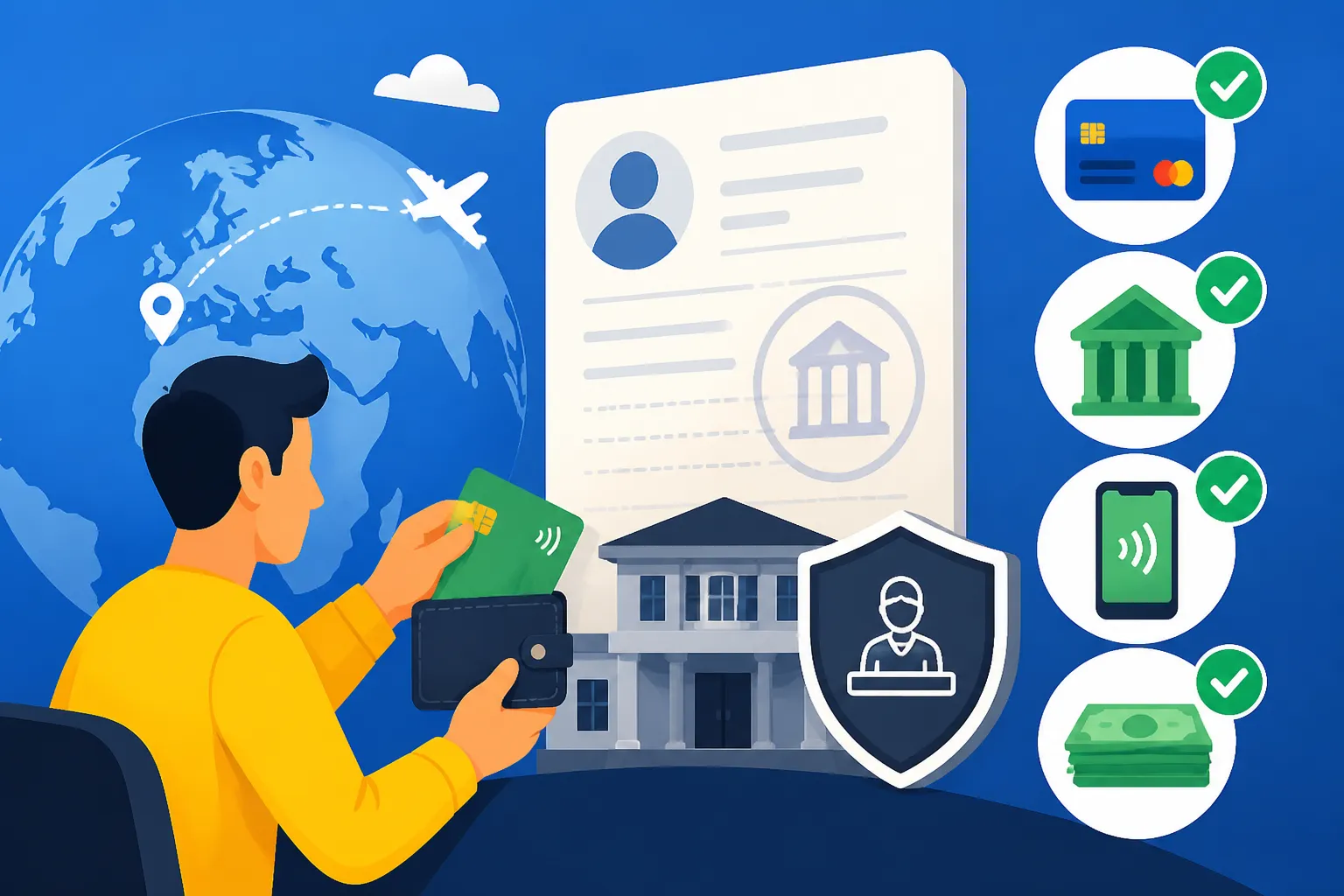
When it comes to actually parting with your hard-earned cash for those visa fees, German consulates and embassies abroad usually offer a few standard methods. However, the exact options can differ significantly depending on the country you're applying from. Always, always double-check the specific instructions for your local German mission.
Bank Transfers (Überweisung)
This is often the preferred, or sometimes only, method for many German embassies and consulates, especially for longer-stay national visas. They love their bank transfers! You'll typically be given a specific bank account number (IBAN), the bank's Swift/BIC code, and a reference number (Verwendungszweck) that absolutely must be included. This reference number is how they link your payment to your application, so if you mess it up, your payment might as well have gone into the void.
The challenge with bank transfers from overseas, especially from non-Eurozone countries, is the potential for hefty transfer fees and unfavorable exchange rates from traditional banks. Your bank might charge you an outgoing international transfer fee, and the receiving bank might also ding you with an incoming fee. On top of that, the exchange rate they use might not be the most advantageous, meaning the amount that actually arrives in the consulate’s account could be less than what you intended to send, triggering a rejected payment. It's a classic expat financial headache.
Credit and Debit Card Payments
While credit and debit card payments are increasingly common in Germany for daily transactions, don't assume they're universally accepted for visa fees. Some consulates, particularly in larger or more modern cities, do allow payments via Visa or Mastercard. However, others might only accept cash (usually in local currency or Euros, depending on the location) at the counter, or strictly bank transfers. If card payments are an option, you'll need to check if there are any additional service charges, and again, be mindful of the exchange rate if you're paying in a currency other than Euros. Always have your card details ready and be prepared for potential international transaction fees from your own bank.
Cash Payments
For some consulates, especially for short-stay Schengen visas or in countries where banking infrastructure isn't as robust, cash might be an accepted option, often paid directly at the counter during your appointment. If this is the case, the website will usually specify which currency is accepted (Euros or local currency). While this avoids bank transfer fees, it requires you to physically have the cash on hand, and you still face currency exchange issues if you're converting from your local currency to Euros. Always bring the exact amount if possible, as they might not have change for large denominations.
Navigating Currency Exchange and Hidden Costs
This is where many aspiring expats stumble. You’ve calculated the fee, you’ve got the bank details, but then comes the actual money transfer, and suddenly you’re losing a chunk of your payment to fees and poor exchange rates. It's a tale as old as time for those moving abroad. Traditional banks are notorious for making a killing on international transfers, not just with explicit transfer fees, but by marking up the exchange rate.
The Problem with Traditional Bank Transfers
Imagine you need to pay €80 for your visa. Your bank might show a transfer fee of, say, $30, and then apply an exchange rate that's 2-3% worse than the actual market rate. By the time the money reaches the German consulate's account, it might be €78 instead of €80. Guess what? Your payment will be rejected, and you'll have to start the whole process over, incurring more fees and delays. It's an absolute nightmare. The German authorities are very particular about receiving the exact amount specified. Not a cent more, not a cent less.
This is precisely why services like Wise have become such a lifesaver for expats. Wise is built on transparency and fair exchange rates, making it a hero for situations exactly like this.
Why Wise is a Game-Changer for Visa Fees
When you're trying to send money to pay your visa fees, you want certainty that the exact amount in Euros will arrive in the consulate’s account, without any nasty surprises. This is where Wise shines.
Here's why Wise is often the best solution for paying German visa and consulate fees from overseas:
- Mid-Market Exchange Rates: Unlike traditional banks that add a hidden markup to their exchange rates, Wise uses the real, mid-market rate – the one you see on Google. This means you get more for your money.
- Transparent Fees: Before you even hit "send," Wise shows you exactly how much your transfer will cost in fees. There are no hidden charges. What you see is what you get, and what the recipient gets. This transparency is invaluable when you must ensure the exact Euro amount arrives.
- Faster Transfers: While bank transfers can sometimes take days, Wise transfers are often much quicker, with many reaching their destination within hours or a day. This is a huge advantage if you're on a tight deadline for your application.
- Ease of Use: The Wise platform is incredibly user-friendly. You can set up an international transfer in minutes, often from your phone, and track its progress every step of the way. This significantly reduces the stress of sending money overseas.
For example, if the consulate asks for €80, you can initiate a transfer with Wise, and it will tell you upfront how much it will cost in your local currency to ensure exactly €80 reaches the recipient. No guesswork, no hidden fees, just straightforward international money transfer. It’s a tool that truly understands the expat struggle with international payments. If you're looking for more ways to handle your finances, definitely check out Using Wise, TransferWise and Revolut: Fintech Solutions for Expats.
Practical Tips for a Smooth Payment Process
Beyond choosing the right payment method, there are several practical steps you can take to make sure your visa fee payment goes through without a hitch. This is Germany, after all, and attention to detail is paramount.
Double-Checking Bank Details and Reference Numbers
I cannot stress this enough: triple-check every single digit of the bank account number (IBAN), the Swift/BIC code, and especially the reference number (Verwendungszweck). Many consulates require you to include your full name, date of birth, and/or application number in this reference field. If the instructions say "use your passport number as reference," do exactly that. Don't add extra information unless explicitly told to. A mismatch here is the quickest way to get your payment lost in the system and your application delayed.
When using a service like Wise, input these details carefully. Wise will often highlight potential errors or give you a chance to review the recipient details, adding an extra layer of security. Always ensure the name on the Wise account sending the money matches the visa applicant's name if possible, as this can sometimes be a requirement from the receiving bank’s side, making it easier for the consulate to identify your payment.
Proof of Payment: Your Essential Backup
Once you've made the payment, immediately save proof of payment. This usually means a screenshot of the completed transaction (especially if using an online service like Wise), or a stamped receipt from your bank. This document should clearly show:
- The amount paid in Euros.
- The date of payment.
- The recipient's bank details (IBAN/SWIFT).
- The reference number (Verwendungszweck) you used.
- Your name as the sender.
You will almost certainly need to bring this proof of payment to your visa appointment, or upload it as part of your application documents. Think of it as your insurance policy. If any questions arise later, this document is your irrefutable evidence. Keeping diligent records is a crucial part of preparing your Documents Required for German Visa Applications: Complete Guide.
Timing Your Payment Correctly
Don't wait until the last minute to make your payment. While Wise transfers are often fast, bank holidays in Germany or your home country, differing time zones, and the internal processing times of the consulate can all add unexpected delays. Give yourself a buffer of at least 3-5 business days before your appointment or application deadline to ensure the funds arrive and are reconciled. Some consulates might even explicitly state that payment must be received x days prior to the appointment. Adhering to these timelines is crucial to avoid having your application marked as incomplete.
What to Do If Your Payment is Rejected or Lost
If, despite all your best efforts, you get a notification that your payment was rejected, or it hasn't shown up, don't panic. First, review your proof of payment against the consulate's instructions for any discrepancies. Was the amount exact? Was the reference number correct? Did the payment arrive in the right currency?
Next, contact your bank or Wise customer support with your transaction details. They can often provide a SWIFT confirmation or trace the payment. If the error was on your side (e.g., wrong reference number), you'll likely need to initiate a new transfer with the correct details and ask for a refund of the original payment (though this can sometimes be a lengthy process). If the error was on the receiving bank's side or unclear instructions, having that proof of payment is your leverage. Be prepared for a bit of back-and-forth, as bureaucracy moves at its own pace. This is part of the larger experience of Navigating the Ausländerbehörde: Tips for Dealing with German Immigration Offices, where patience is a virtue.
Using a transparent service like Wise greatly minimizes the chances of rejection due to incorrect amounts or hidden fees, giving you one less thing to worry about during your Visa Application Tips: How to Prepare a Successful German Visa Application. It's always best to prepare meticulously, but knowing you have a reliable payment partner makes a world of difference.
Final Thoughts on Financial Preparedness
Paying your visa fees from overseas isn't just about clicking a button; it's about meticulous attention to detail, understanding currency dynamics, and choosing a financial partner that prioritizes transparency. Whether you're sorting out your Proof of Financial Means for Visas: Blocked Accounts and Sponsorship Letters or just need to cover a basic application fee, the journey to Germany is paved with administrative hurdles, and getting your finances in order early on is paramount.
By leveraging services like Wise, you can cut through the noise of hidden bank fees and unfavorable exchange rates, ensuring that the exact amount reaches the German authorities. This not only saves you money but, more importantly, reduces stress and potential delays in your visa application process. Remember, in Germany, precision and preparation are key – and that applies just as much to your money transfers as it does to your application forms. Good luck!
Disclaimer
The information provided in this guide is for general informational purposes only and does not constitute legal, financial, or immigration advice. Visa regulations, fees, and accepted payment methods can change frequently and vary based on your nationality and the specific German consulate or embassy you are dealing with. Always consult the official website of the German embassy or consulate in your country of residence for the most current and accurate information. Financial advice, including recommendations for payment services like Wise, is based on common expat experiences and publicly available information; individual circumstances may vary. We recommend seeking professional advice for your specific situation.