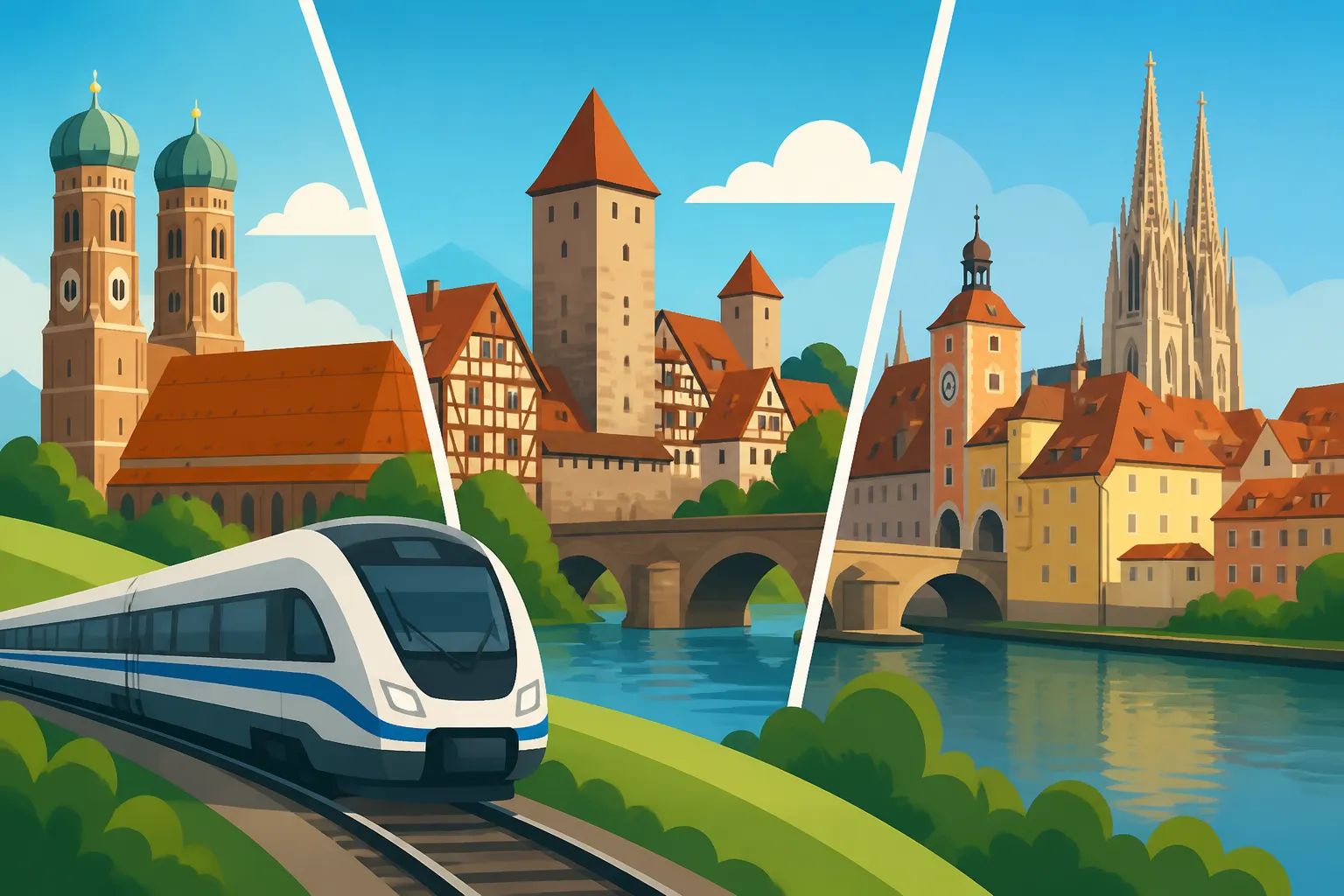
Munich to Nuremberg and Regensburg: Bavarian Regional Connections
So, you've settled into Munich, perhaps enjoyed your fill of beer gardens and museums, and now you're feeling that itch to explore more of what Bavaria truly has to offer. Perhaps the historic charm of Nuremberg is calling, or maybe the ancient Roman and medieval delights of Regensburg are on your list. Connecting these incredible cities can feel a bit daunting at first, especially when you're faced with a new language and a whole host of transport options. Trust me, I've navigated these routes myself many times, and I know the feeling of wanting to explore without the hassle. This guide is designed to make those Bavarian regional connections crystal clear, helping you understand your travel choices and, most importantly, showing you how smart tools like Omio can take all the stress out of your journey planning.
Disclosure: This post may contain affiliate links. We may earn a commission at no extra cost to you if you make a purchase through these links. Read full disclosure.
Discovering Bavaria's Historic Gems: Munich, Nuremberg, and Regensburg
Bavaria isn't just Munich; it's a tapestry of rich history, stunning architecture, and vibrant culture that stretches far beyond its capital. Each of these three cities offers a distinct flavor of Germany, and combining them into a triangular journey is a fantastic way to truly immerse yourself in the region.
Munich: The Heart of Bavaria
Munich, or München as it's known locally, is often the first stop for many visitors, and for good reason. It’s a city that effortlessly blends traditional Bavarian charm with a modern, cosmopolitan vibe. From the grandeur of Marienplatz and the iconic Glockenspiel to the tranquil English Garden, Munich offers a wealth of experiences. It's a fantastic base, but don't let it be your only stop! While you're there, make sure to try some traditional Bavarian regional dishes every visitor should try – your tastebuds will thank you.
Nuremberg: A City Forged in History
Just a short trip north of Munich, Nuremberg (Nürnberg) stands as a testament to Germany's complex past. Its imposing Kaiserburg (Imperial Castle) dominates the skyline, reminding you of its importance during the Holy Roman Empire. Wander through the charming Old Town, rebuilt with care after WWII, and you’ll find quaint half-timbered houses, historic churches, and the bustling Hauptmarkt, especially famous for its Christmas Market. The city's association with the Nuremberg Trials also makes it a poignant site for reflection on modern history.
Regensburg: A UNESCO World Heritage Treasure
East of Nuremberg, on the banks of the Danube, lies Regensburg. This city often flies under the radar compared to its more famous neighbors, but it's an absolute gem. Its Old Town, a UNESCO World Heritage site, is one of the best-preserved medieval city centers in Germany, boasting narrow alleyways, towering patrician houses, and the magnificent Regensburg Cathedral. Crossing the Steinerne Brücke (Stone Bridge) feels like stepping back in time, offering incredible views of the city. Regensburg offers a more relaxed pace and an authentic feel, making it a perfect counterpoint to the larger, busier cities.
Navigating the Triangle: Munich to Nuremberg & Beyond
Starting your journey from Munich, you have excellent options to reach Nuremberg, which is approximately 170 kilometers (about 105 miles) north. The choice often comes down to balancing speed, cost, and convenience.
By Train: Speed and Comfort
The German railway system, Deutsche Bahn (DB), is incredibly efficient, and the connection between Munich and Nuremberg is a prime example. You essentially have two main options:
- ICE (Intercity-Express): These high-speed trains are your fastest bet, zipping you between Munich Hauptbahnhof (Hbf) and Nuremberg Hbf in as little as 1 hour and 10 minutes. They're comfortable, offer Wi-Fi (though sometimes spotty, let's be real), and amenities like dining cars. However, flexibility comes at a price. If you book last minute, tickets can be quite expensive. Planning ahead and using a platform like Omio to compare prices and secure an advance fare (Sparpreis) can save you a pretty penny. Omio allows you to see all the available connections, including the ICE trains, with clear pricing.
- Regional Trains (RE/RB): If you're not in a rush and prefer a more budget-friendly option, regional trains are a great alternative. These trains take a bit longer, typically around 1 hour and 45 minutes to 2 hours, making a few more stops along the way. The real magic here for budget travelers is the Bayern Ticket. This day ticket allows unlimited travel on regional trains and most public transport within Bavaria for a fixed price, making it incredibly economical if you're traveling with a group or planning multiple regional hops on the same day. You can learn more about how to buy Deutsche Bahn tickets and save money, especially with regional options.
The beauty of using a platform like Omio is that it doesn't just show you the fastest ICE connection; it aggregates all the options, including regional trains. This means you can easily compare the journey time versus the cost, deciding if that extra 45 minutes on a regional train is worth the savings, especially if you're using a Bayern Ticket.
By Bus: The Budget Traveler's Friend
Long-distance buses in Germany, primarily operated by FlixBus, offer a significantly cheaper alternative, though they do take a bit longer. A bus journey from Munich to Nuremberg usually takes between 2 hours and 2 hours and 30 minutes, depending on traffic and the specific route.
- FlixBus Experience: Buses are generally comfortable, offer free Wi-Fi and power outlets, and are a fantastic option if you're on a tight budget. They typically depart from and arrive at the central bus station (ZOB) in both cities, which is usually conveniently located near the main train station (Hauptbahnhof). While they might not be as scenic as a train journey through the Bavarian countryside, the cost savings can be substantial, especially during peak travel times. Checking Omio for FlixBus tickets alongside train options is a smart move to find the best deal.
By Car: Flexibility at a Cost
Renting a car and driving on the Autobahn offers the ultimate flexibility, allowing you to stop wherever you please. The drive from Munich to Nuremberg typically takes around 1 hour and 45 minutes to 2 hours via the A9, depending on traffic.
- Pros and Cons: The freedom of the open road is appealing, especially if you're planning to visit smaller towns or attractions off the main public transport routes. However, factor in rental costs, fuel, and parking fees, which can add up quickly in German cities. Also, navigating German city traffic and finding parking can be a challenge. Unless you have specific detours planned, public transport is often more relaxing and efficient for city-to-city travel. For those interested in this option, here's a guide to renting a car and driving on the Autobahn.
Connecting the Dots: Nuremberg to Regensburg & Onward
Once you've explored Nuremberg, the next leg of your Bavarian triangle takes you southeast to Regensburg, a journey of approximately 100 kilometers (about 62 miles).
By Train: The Most Practical Choice
For this route, regional trains are almost always the best option. There's no high-speed ICE connection directly between Nuremberg and Regensburg, making regional services both efficient and cost-effective.
- Regional Express (RE/RB): Trains run frequently from Nuremberg Hbf to Regensburg Hbf, with journey times typically around 1 hour. These are direct services, offering a comfortable ride through the Bavarian landscape. Again, the Bayern Ticket shines here, making this connection very affordable, especially if you're combining it with other regional travel on the same day. You can easily find these connections and compare prices on Omio, which will show you the regional train schedules and ticket options, often suggesting the Bayern Ticket if it's the most economical choice.
By Bus: Limited Options, Potential Savings
While less frequent than the train, FlixBus does offer services between Nuremberg and Regensburg. The bus journey typically takes between 1 hour and 15 minutes to 1 hour and 45 minutes.
- Considerations: If you find a bus ticket at a significantly lower price than the train, it might be worth considering. However, given the efficient and direct regional train service, the train is generally the preferred mode for this specific route for most travelers, especially if you're already utilizing a Bayern Ticket. It’s always worth a quick check on Omio to see if a bus deal pops up that beats the train, though!
By Car: A Straightforward Drive
Driving from Nuremberg to Regensburg is a straightforward journey, usually taking about 1 hour via the A3. The roads are generally excellent, and it's an easy drive. Similar to the Munich-Nuremberg leg, the decision to drive mostly depends on whether you value the flexibility of a car for exploring areas outside the city centers, versus the convenience and often lower cost of public transport.
Completing the Triangle: Regensburg to Munich
After soaking in Regensburg's medieval charm, you'll likely want to head back to Munich to complete your Bavarian loop. This leg of the journey is around 125 kilometers (about 78 miles) southwest.
By Train: Direct and Scenic
The train connection between Regensburg and Munich is well-served by regional trains, operated by Deutsche Bahn and sometimes by agilis or Bayerische Regiobahn (BRB).
- Regional Trains (RE/BRB): Direct trains run frequently from Regensburg Hbf to Munich Hbf, taking approximately 1 hour and 20 minutes to 1 hour and 45 minutes. This is a very pleasant journey, often offering glimpses of rolling hills and charming Bavarian towns. The Bayern Ticket is once again your best friend for this route, making it an excellent value. Omio conveniently displays all these regional services, making it easy to see the different departure times and journey durations, ensuring you pick the best one for your schedule.
By Bus: Less Frequent but Viable
FlixBus also operates routes between Regensburg and Munich. The journey duration is usually between 1 hour and 45 minutes to 2 hours and 15 minutes.
- Flexibility and Price: As with the other routes, buses can offer a cost-effective alternative, particularly if you book well in advance. Check Omio to compare the bus options with the train schedules and prices; sometimes a bus might fit your schedule better, or offer a significant saving, especially if you're not using a Bayern Ticket for this leg.
By Car: An Easy Drive
The drive from Regensburg to Munich is quite simple, typically taking about 1 hour and 15 minutes via the A93 and A9. The route is direct and generally well-maintained. This stretch offers easy access to some beautiful countryside if you're inclined to make a few stops, perhaps in smaller towns like Freising or Landshut, which are worth a visit if you have the time and the means of transport.
The Smart Way to Travel: Why Omio is Your Best Friend
Navigating public transport in a foreign country can be a real headache. You’re juggling different operators (Deutsche Bahn, FlixBus, local transport companies), varying ticket types, and often a language barrier. This is where Omio truly shines as the hero of your Bavarian travel plans.
Omio is an incredible platform that aggregates information from various train, bus, and even flight providers, presenting all your travel options in one clear, easy-to-understand interface. Instead of hopping between the Deutsche Bahn website, the FlixBus app, and trying to decipher regional ticket rules, Omio brings everything together.
Here’s why I, as an expat who’s dealt with my fair share of German bureaucracy, recommend Omio wholeheartedly for journeys like your Bavarian triangle:
- One-Stop Shop: Seriously, this is huge. You input your departure and arrival points (e.g., Munich to Nuremberg), and Omio instantly shows you all available train and bus connections. You don't have to guess which operator to check, or if there's a bus option you're missing.
- Clear Comparison: Omio clearly lays out journey times, prices, and even potential transfers for each option. You can quickly see if an ICE train is worth the extra cost for speed, or if a regional train or bus offers better value. It even highlights when the Bayern Ticket might be your cheapest option for regional routes.
- Easy Booking: Once you've chosen your preferred option, you can book directly through Omio in English (or your preferred language) and pay in your local currency. No more struggling with unfamiliar booking interfaces or payment systems. Your tickets are usually sent right to your email or integrated into the Omio app.
- Mobile Tickets: Many Omio bookings provide mobile tickets, meaning one less piece of paper to worry about. Just show your phone to the conductor or driver.
- Time-Saving: Think of all the minutes (or hours!) you'd spend researching separate websites. Omio does the heavy lifting for you, giving you back precious time to enjoy your trip.
- Peace of Mind: Knowing you've got all the options laid out, picked the best one for you, and booked it easily, takes a huge chunk of travel stress off your shoulders. This is especially true for expats still getting used to German travel intricacies.
Whether you're planning your journey from Munich to Nuremberg, figuring out the best way from Nuremberg to Regensburg, or completing your loop back to Munich, Omio simplifies the entire process. It’s an essential tool for any traveler hoping to see more of Germany without getting bogged down in logistical details.
Practical Tips for Your Bavarian Journey
Beyond choosing your transport method, a few extra tips can make your Bavarian regional connections even smoother.
Booking in Advance vs. Flexibility
For long-distance, high-speed trains (like ICE from Munich to Nuremberg), booking well in advance (weeks or even months) often secures the best "Sparpreis" or "Super Sparpreis" fares. These are non-flexible tickets, so you're committing to a specific train.
For regional trains and the Bayern Ticket, there's less need to book far in advance as the prices are usually fixed. You can even buy the Bayern Ticket on the day of travel at a station ticket machine, or even directly through Omio. Buses also benefit from advance booking for the cheapest fares.
Consider your travel style: if you're a planner, book ICE and bus tickets early via Omio. If you prefer spontaneity, rely on regional trains with the Bayern Ticket for maximum flexibility.
Understanding German Public Transport Etiquette
Germans value order and quiet on public transport.
- Punctuality: Trains are usually on time, but delays can happen. Check the departure boards at the station or your Omio app for real-time updates.
- Quiet Hours: Especially on regional trains, keep your phone conversations low and use headphones for music.
- Seat Reservations: On ICE trains, you can reserve a seat for a small fee, which is advisable during peak times or if traveling with a group. Regional trains typically don't offer seat reservations.
You might also find these tips on German social etiquette for visitors helpful to navigate other interactions during your travels.
Food and Drink on the Go
Most major train stations in Munich, Nuremberg, and Regensburg have plenty of bakeries (Bäckereien) and small shops where you can grab a pretzel, a sandwich, or a coffee for your journey. ICE trains have dining cars, and some regional trains have snack trolleys, but it's often more economical and convenient to bring your own.
Using the Deutschland-Ticket for Regional Connections
The Deutschland-Ticket, often referred to as the 49-Euro Ticket, is a fantastic option if you're planning extensive regional travel throughout Germany for a month. It allows unlimited travel on all local and regional public transport (including regional trains, S-Bahn, U-Bahn, buses, and trams) across the entire country. This would cover all your regional train journeys between Munich, Nuremberg, and Regensburg, as well as local transport within each city. However, it doesn't include high-speed ICE/IC/EC trains. For tourists, it's a monthly subscription, so you'd need to consider if its cost (currently €49/month) is worthwhile for your specific travel duration. Omio can still help you plan, showing you the eligible routes. If you're staying for a while and plan a lot of regional hops, understanding the Deutschland-Ticket and whether it’s worth it could be a game-changer.
Conclusion: Your Bavarian Adventure Awaits
Exploring the rich history and vibrant culture of Bavaria, from the bustling streets of Munich to the medieval splendor of Nuremberg and Regensburg, is an unforgettable experience. While the prospect of coordinating travel across these cities might seem a bit overwhelming at first, with the right approach and the right tools, it's genuinely simple.
By understanding your options—whether it’s the speedy ICE, the economical regional train with a Bayern Ticket, or the budget-friendly bus—you can tailor your journey to your preferences. And by making Omio your go-to companion for booking, you streamline the entire process, allowing you to focus on the excitement of your trip rather than the logistics. So go ahead, plan that Bavarian adventure. These connections are easier than you think, especially with a little help!
Disclaimer
The information provided in this guide is for general informational purposes only and is subject to change. While we strive to keep the content up-to-date and accurate, transport schedules, prices, and regulations in Germany can vary. It is always recommended to check the latest information directly with transport providers or through booking platforms like Omio before making travel arrangements.