Super Sparpreis Explained: When the Cheapest DB Fare Is Worth the Restriction
Navigating Germany's train system can feel like a labyrinth, especially when you're just trying to get from A to B without breaking the bank. The lure of those incredibly cheap "Super Sparpreis" tickets from Deutsche Bahn is strong, but many expats and tourists wonder if the savings are truly worth the often-confusing restrictions. As someone who's spent years figuring out the German travel landscape, I'm here to unpack everything about the Super Sparpreis, helping you understand when it’s your best friend for affordable travel and when it might just lead to a travel headache.
Disclosure: This post may contain affiliate links. We may earn a commission at no extra cost to you if you make a purchase through these links. Read full disclosure.
What Exactly Is Super Sparpreis? Decoding Deutsche Bahn's Budget Gem
When you first arrive in Germany, you quickly learn that public transport, especially trains, is a way of life. Deutsche Bahn, or DB as it's commonly known, is the backbone of intercity travel. However, unlike some other countries where train tickets have a more straightforward pricing model, DB operates with a dynamic system that can feel pretty opaque to a newcomer. The Super Sparpreis is often the star of the show when it comes to low prices, promising travel across this beautiful country without emptying your wallet. But what exactly is it, and how does it fit into the bigger picture of German train fares?
The Basics of Deutsche Bahn Fares
You've probably noticed those sleek ICE trains zipping across the country, and then you've seen the price tag on a Flexpreis ticket that makes your wallet weep. Deutsche Bahn (DB) offers a tiered pricing system, which is common with many national rail operators, but for newcomers, it can be a real head-scratcher. At the top, you have the Flexpreis, which is essentially your 'walk-up-and-go' ticket. It's fully flexible, allowing you to take any train on your chosen route on your travel day, change plans, or even get a full refund if something comes up. This flexibility comes at a premium, of course, and can often be surprisingly expensive, especially for long distances.
Then there are the Sparpreis fares, designed to entice passengers to book in advance by offering significant discounts in exchange for some commitment. The idea is simple: fill up seats that would otherwise go empty, especially during less popular travel times. The further you book in advance, and the more off-peak your travel, the cheaper these tickets tend to be. This strategy helps DB manage demand and optimize train capacity, which is great for their bottom line and potentially for your budget.
This is where the Super Sparpreis really enters the scene, offering the deepest discounts in exchange for the most stringent conditions. It's DB's answer to budget airlines, aiming to capture travelers who prioritize cost above all else and are willing to commit to a fixed itinerary. For many expats trying to manage the often-high cost of living in Germany, these fares can be a tempting way to explore the country or visit friends and family without a huge financial outlay.
Super Sparpreis vs. Regular Sparpreis
So, you're eyeing those sweet, sweet savings, but what's the real difference between a Super Sparpreis and a 'regular' Sparpreis? On the surface, both are saver fares, meaning you're committing to a specific route and usually a specific connection to get a discount. However, the Super Sparpreis is DB's absolute cheapest offering, often making headlines for fares as low as €17.90 for long-distance journeys. It’s designed to be the lowest possible entry point for train travel.
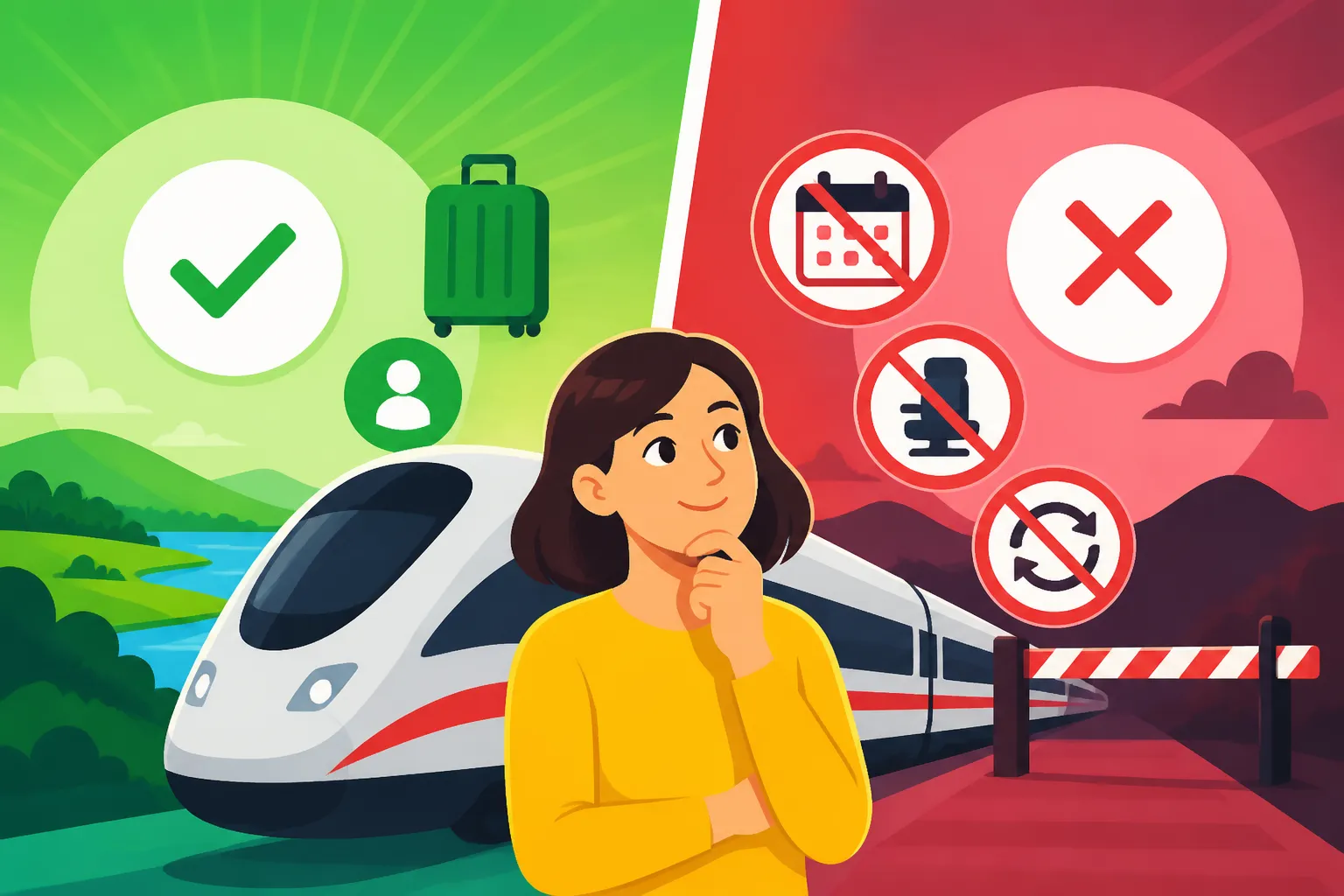
The trade-off is stark: the Super Sparpreis is non-refundable and non-changeable. Period. If you miss your train, if your plans shift, if you just wake up and don't feel like going, that money is gone. This is a critical point that many expats, used to more flexible ticketing in other countries, often overlook until it's too late. It feels counter-intuitive to throw away money, but with Super Sparpreis, you are committing absolutely to that journey, and there’s no turning back.
The standard Sparpreis, while still restrictive, at least offers a sliver of hope; you can usually cancel it for a small fee (often €10-19 depending on the fare class and timing) and receive a voucher for future travel. This tiny bit of wiggle room can be a lifesaver if you're uncertain about your schedule, especially when navigating unexpected expat life events like sudden appointments at the Navigating the Ausländerbehörde: Tips for Dealing with German Immigration Offices or last-minute work changes.
Another key distinction often missed is the 'City-Ticket' inclusion. A regular Sparpreis ticket for longer journeys (over 100 km) typically includes a City-Ticket for both your departure and arrival cities. This allows you to use local public transport (U-Bahn, S-Bahn, bus, tram) to and from the train station on your travel day, usually within certain zones. It’s a fantastic perk that really adds value. The Super Sparpreis, however, explicitly does not include this convenient perk. This means you'll need to budget extra for local transport to reach the station and then again at your destination, which can add up, especially if you're not within easy walking distance. When you're trying to figure out which fare works best, these small details really matter, impacting your overall cost and convenience. For a deeper dive into the broader German train system, check out our guide on Deutsche Bahn Guide: Using Trains for City and Long-Distance Travel.
The "Catch": Understanding the Restrictions That Come with Savings
Alright, let's talk about the fine print. While the Super Sparpreis can save you a bundle, it comes with some pretty strict rules that can easily catch unsuspecting travelers off guard. As an expat who’s learned a few lessons the hard way, I can tell you that understanding these restrictions is paramount to avoiding frustration and unexpected costs. It’s not just about finding the cheapest ticket; it’s about knowing what you’re signing up for.
Non-Refundable, Non-Changeable – No Exceptions
This is the big one, the elephant in the room that often trips up even seasoned travelers new to the German system. A Super Sparpreis ticket is essentially a one-way street: once you've bought it, there's no turning back. No refunds, no changes, no 'I woke up with a sniffle' excuses. I've heard countless stories from friends who had to abandon travel plans due to a sudden illness or an urgent work meeting, only to realize their Super Sparpreis ticket was completely worthless.
Let's say you've booked a Super Sparpreis from Berlin to Munich for a crucial meeting or a fun weekend trip that you've been looking forward to. Two days before, your schedule unexpectedly shifts, or you realize you double-booked. With any other train ticket in most countries, you might be able to change it for a fee, or at least get some credit back for future travel. Not here. Your Super Sparpreis ticket is now, in essence, a piece of paper (or a QR code on your phone) worth precisely nothing if you don't take that exact train. This can be incredibly frustrating, particularly if you're still navigating the unpredictable nature of expat life, like those aforementioned visa appointments or last-minute changes at work, or even something as simple as a suddenly scheduled Doctor’s Appointments in Germany: Making Appointments and Avoiding Long Waits.
This rigidity is why it's so important to be 100% sure of your travel dates and times before clicking that 'buy' button. The attractive price comes with a complete lack of flexibility, and that's a trade-off you absolutely need to factor into your decision-making process. The only scenario where you might get a refund or change is if Deutsche Bahn is significantly at fault for a delay or cancellation, which we'll cover later. Otherwise, consider that money spent and your plans set in stone.
Train-Specific Binding: Your Ticket is to That Train
Another crucial restriction, intricately linked to the non-changeable nature, is the Zugbindung or 'train-specific binding.' This means your Super Sparpreis ticket is valid only for the specific train connections printed on your ticket. It's not just the date, but the exact departure time, the specific ICE or IC train number, and often even the connecting regional trains that make up your journey. You can't just decide to catch an earlier or later train, even if there are seats available.
If you miss your booked train, for any reason (unless Deutsche Bahn itself is significantly at fault for a delay on a prior segment of your booked journey), your ticket becomes invalid. Imagine you've planned a trip from Hamburg to Frankfurt with a Super Sparpreis, involving an ICE train. On your way to the Hamburg Hauptbahnhof, your local S-Bahn is delayed, and you miss your ICE by five minutes. Tough luck. Your ticket is gone. You'll need to buy a brand new, likely much more expensive, Flexpreis ticket on the spot to continue your journey. This scenario is a common pitfall for those unfamiliar with the strictness of the Zugbindung.
The only common exception to this strict rule is if Deutsche Bahn causes a significant delay (usually 20 minutes or more) to one of the pre-booked legs of your Super Sparpreis journey, causing you to miss a connection. In that case, the Zugbindung is lifted, and you are usually allowed to take the next available train to your destination. However, this is DB's fault, not yours. This binding makes planning connections, especially tight ones, a high-stakes game. Always leave ample time, particularly if you're traveling on a critical timeline or if your journey involves multiple changes. When planning your trips, remember the German emphasis on punctuality extends to their expectations of you making your connections!
No City-Ticket Included: Mind Your Local Transport Costs
As I touched on earlier, one subtle but important difference that often gets overlooked by expats accustomed to more comprehensive tickets is the absence of the City-Ticket with Super Sparpreis fares. This can be a sneaky little cost that eats into your perceived savings if you're not careful. While it might seem like a small detail, these kinds of 'hidden' costs can really add up to affect your overall Cost of Living in Germany: Budgeting Guide for Expats.
When you buy a regular Sparpreis ticket for a journey over 100 km, it typically includes a free City-Ticket for both your departure and destination cities. This means on your travel day, you can use local public transport—U-Bahn, S-Bahn, buses, and trams—to get to your initial station and from your final station to your accommodation, often within the core city zones. It’s incredibly convenient and can save you a few euros, especially in larger cities like Berlin or Munich where a single ride can cost upwards of €3-4.
With a Super Sparpreis, however, you're on your own. You'll need to purchase separate tickets for local transport, which can quickly erode the savings you thought you were getting, particularly if you're making multiple local trips or are traveling with family. This adds another layer of planning and expense to your journey. You’ll need to familiarize yourself with the local Public Transport Tickets and Passes: Navigating German Transit Systems for each city.
While this might seem minor, it’s a detail that adds up, both financially and in terms of mental load, when you’re trying to navigate an unfamiliar public transport system. Always factor in these additional local transport costs when comparing Super Sparpreis with other fare options. It's a classic example of German efficiency meaning you pay for exactly what you get, no more, no less, so be sure to account for every little piece of the puzzle!
When Super Sparpreis Shines: Maximizing Savings on German Rails
Despite all the restrictions, there's a reason the Super Sparpreis is so popular: it genuinely offers incredible value when used strategically. For the savvy traveler with a clear plan, these tickets are your golden ticket to exploring Germany without feeling like you need a second mortgage. It's all about playing by DB's rules to unlock those sweet, sweet discounts.
The Early Bird Gets the Worm: Advance Booking is Key
The golden rule of snagging a Super Sparpreis is simple: book early, really early. Deutsche Bahn releases its tickets approximately six months in advance, and the cheapest Super Sparpreis fares are always the first to disappear. Think of it like airline tickets – the closer you get to the travel date, the higher the prices climb. This isn't just a suggestion; it's practically a command if you want to save serious cash.
If you know you'll be traveling from, say, Dresden to Leipzig for a specific event in four months, that's your cue to start looking now. Don't wait until a few weeks before. These ultra-cheap tickets are volume-limited, meaning there's only a certain contingent available on each train and for each connection. Once they're gone, they're gone, and you'll only find more expensive Sparpreis or Flexpreis options. Procrastination is the enemy of the budget traveler when it comes to Super Sparpreis.
For expats who are still learning the ropes of planning travel in Germany, this can feel like an unnecessary rush, but it’s the reality of the system. Planning ahead also reduces the stress of last-minute scrambling and allows you to integrate your travel costs more accurately into your budget, a definite win for keeping those expat finances in check. To make this process easier, especially when planning far ahead, using a platform like Omio can be a real game-changer. It allows you to quickly compare fares across different dates and times, making it simpler to spot those elusive Super Sparpreis deals. You can even set up alerts to notify you when prices drop for your desired route.
Fixed Plans, Fixed Savings: When Your Schedule is Set in Stone
If your plans are as solid as German engineering, then the Super Sparpreis is absolutely your friend. Do you have a wedding to attend in Cologne on a specific date? A flight booked from Frankfurt that you simply cannot miss? A pre-arranged visit with family that has been set for months? These are the moments when the Super Sparpreis really delivers its value. Since there's no flexibility to change or cancel, you're essentially telling Deutsche Bahn, 'I am 100% committed to this specific journey,' and they reward you for that certainty with the lowest possible fare.
This commitment is often easier for long-term expats who have a clearer understanding of their schedules, or for tourists who've meticulously planned out their itinerary before even arriving in Germany. It means you've checked for potential conflicts, you've ensured no other appointments clash, and you're confident that nothing short of a true emergency will derail your trip. For example, if you're planning a weekend trip to visit friends in Berlin and have already confirmed your dates for months, booking your train with Omio using a Super Sparpreis ticket weeks in advance will almost certainly be the most economical option. You get the peace of mind of knowing your transport is sorted for a fraction of the Flexpreis cost.
The key here is confidence in your schedule. If there's even a whisper of uncertainty – perhaps a new job with an unpredictable start date, or plans that hinge on other people's availability – you might want to consider the slightly more flexible Sparpreis or another mode of transport. But when you’re absolutely sure, the Super Sparpreis is unbeatable. Just be sure to double-check everything, because as we've discussed, there’s no going back!
Short Hops and Day Trips: Low Risk, High Reward
While Super Sparpreis fares can be found for long cross-country journeys, they often make the most practical sense for shorter trips and day excursions. Why? Because the potential downside of the restrictions is significantly lower. If you’re planning a day trip from Munich to Salzburg (just over the border, but often a popular rail route for German travelers) or from Hamburg to Lübeck, the cost of a replacement ticket if you miss your train is much less punitive than if you were going from one end of Germany to the other.
Furthermore, with shorter trips, there are fewer complex connections to worry about, reducing the chance of a missed train due to a delay on an earlier leg. This makes the Zugbindung less of a high-stress factor, as you likely have only one or two direct trains to catch. The overall journey time is shorter, meaning fewer opportunities for something to go wrong.
For instance, if you're exploring the regional sights around your home base, say taking an afternoon trip from Stuttgart to Heidelberg to see the castle, a Super Sparpreis booked a few weeks out can make it an incredibly affordable outing. The risk is manageable, the potential savings are great, and you get to experience the efficiency of German trains without feeling like you've overpaid. This is where Omio can help you quickly compare train options for these shorter, regional journeys, ensuring you get the best deal. It's a great way to be a budget-conscious explorer of Germany's many beautiful towns and cities.
The Alternatives: When Flexibility or Different Transport is Necessary
Sometimes, the Super Sparpreis just won't cut it. Whether your plans are too fluid, or the train simply isn't the most practical option, it’s crucial to know what other possibilities are out there. As an expat, you’ll quickly learn that Germany offers a wealth of transportation choices, and diversifying your booking strategy can save you headaches, and sometimes even money.
Flexpreis: The Price of Freedom
On the complete opposite end of the spectrum from Super Sparpreis is the Flexpreis. As its name suggests, this ticket offers maximum flexibility. With a Flexpreis, you can hop on any train (of the category you purchased, e.g., ICE) on your chosen route on your specific travel day. You can change your mind about the departure time, take an earlier or later train, or even cancel it for a full refund before the first day of validity. This freedom is invaluable if your schedule is unpredictable, if you're traveling for business where last-minute changes are common, or if you simply prefer the peace of mind knowing you're not locked into a specific train.
For example, if you're flying into Frankfurt and aren't sure how long immigration and baggage claim will take, a Flexpreis to your next city allows you to simply catch the next available train whenever you're ready, without the panic of missing a pre-booked connection. This is also ideal for situations where external factors might change your plans unexpectedly, like dealing with unforeseen administrative hurdles or even just the ebb and flow of Travel Logistics in Germany: Money, Safety, and Connectivity.
The trade-off, however, is the cost. Flexpreis tickets are significantly more expensive, often several times the price of a Super Sparpreis. For expats on a tight budget, or tourists who have planned every minute of their trip, the Flexpreis might seem prohibitive. But for those times when certainty is elusive, it's a necessary expenditure to avoid potentially larger costs (like having to buy a new ticket anyway) or major stress. You can easily see Flexpreis options when you search for your journey on platforms like Deutsche Bahn's own website or on Omio, allowing you to compare the cost of flexibility versus restriction with complete transparency.
Sparpreis: A Middle Ground with Some Wiggle Room
If Super Sparpreis is too rigid and Flexpreis too pricey, the 'regular' Sparpreis (often just displayed as 'Sparpreis' without the 'Super' prefix on booking sites) can be your sweet spot. This fare offers a good balance between savings and a modicum of flexibility. Like the Super Sparpreis, it typically involves Zugbindung, meaning you're committing to specific trains. However, it's often slightly more expensive than its 'super' counterpart, but for that extra cost, you gain two significant advantages.
Firstly, as mentioned, the regular Sparpreis usually includes the City-Ticket, giving you free local public transport at your departure and destination cities. This is a genuinely useful perk that can save you money and hassle, allowing you to seamlessly transition from long-distance to local travel without fumbling for extra change or navigating ticket machines in an unfamiliar language. For new arrivals or even long-term residents, this is a major convenience.
Secondly, and perhaps more crucially, the regular Sparpreis fares are partially refundable/changeable. You can typically cancel the ticket for a fee (€10-19 depending on the fare class and how close to travel you cancel) and receive a voucher that you can use for future Deutsche Bahn travel. This isn't a cash refund, but it's far better than losing your entire ticket cost if your plans unexpectedly change. For an expat still getting used to German life, where appointments can pop up unexpectedly or bureaucracy can throw a wrench in your schedule, this small safety net can be incredibly valuable. When you're weighing your options, especially for longer trips or when there's even a slight chance your plans might shift, it’s worth checking if the regular Sparpreis offers better overall value, taking into account the City-Ticket and potential voucher. Again, Omio makes comparing these fare types straightforward, displaying the key differences clearly and helping you make an informed decision.
Beyond the Tracks: Buses and Car-sharing
While Deutsche Bahn is often the first thought for intercity travel in Germany, it's definitely not your only option, especially if you're on a tight budget or your route isn't optimally served by trains. This is particularly true for routes where train prices are inexplicably high, or for destinations that require multiple slow regional train changes. Sometimes, the journey by rail can be longer and more expensive than you expect.
Long-distance buses, primarily operated by FlixBus, have become incredibly popular in Germany. They often offer significantly cheaper fares than even Super Sparpreis tickets, especially for routes between major cities like Berlin, Munich, or Hamburg. The journey times are usually longer due to road traffic and more frequent stops, but if time isn't a critical factor, the savings can be substantial. For example, a bus from Berlin to Hamburg might take an hour or two longer than the train but cost half the price. Bus tickets are often more flexible, too, with options to change or cancel for a fee or voucher. Dive deeper into this option with our guide on Long-Distance Buses in Germany: FlixBus and Networks.
Car-sharing services like BlablaCar are another viable alternative. These platforms connect drivers with empty seats to passengers going in the same direction, allowing you to split fuel costs. It can be a very social way to travel and often offers door-to-door convenience that trains can't match, particularly for destinations off the main rail network. You can often find last-minute rides and it can be incredibly affordable, sometimes even cheaper than a bus ticket. Lastly, for families or groups, renting a car can sometimes be more cost-effective and offers unparalleled flexibility, especially if you plan to visit multiple smaller towns or explore scenic routes. Our guide on Renting a Car and Driving on the Autobahn has all the details. It’s always worth checking these alternatives when planning your German adventures; sometimes, the best solution isn't on the rails at all. And platforms like Omio are fantastic because they don't just show you train options; they'll also present bus and even flight options for your route, giving you a complete overview of all available transport modes to help you find the absolute best deal, all in one place.
Booking Smart: Your Guide to Nabbing Those Bargain Fares
Finding a Super Sparpreis ticket isn't always as simple as clicking a button; it requires a bit of strategy, timing, and knowing which tools to use. For those who want to master the art of affordable train travel in Germany, these tips are invaluable. After all, the joy of travel is often amplified when you know you've bagged a genuine bargain.
Timing is Everything: When to Look for Tickets
I can't stress this enough: for Super Sparpreis tickets, the early bird truly gets the worm. Deutsche Bahn typically releases tickets about six months in advance, and that's precisely when you should start looking if you're aiming for the lowest fares. Don't wait until a month or even a few weeks before your trip. The cheapest tickets are limited in number per train, and they get snapped up quickly, especially on popular routes between major cities like Berlin, Munich, or Frankfurt. If you miss the initial window, those rock-bottom prices will be gone.
Beyond booking early, consider when you travel. Mid-week (Tuesday, Wednesday, Thursday) and off-peak hours (avoiding rush hour in the mornings and late afternoons, as well as Friday afternoons and Sunday evenings) will almost always yield cheaper fares. Traveling on a Saturday afternoon, for example, is usually more affordable than a Friday evening. If you have any flexibility with your travel dates, even shifting by a day or a few hours can result in significant savings.
Use the flexible date search options on booking platforms to quickly identify the cheapest days and times. For major holidays or popular event weekends, these tickets vanish even faster, so plan those trips even further in advance. This takes some strategic thinking, and might require you to adjust your plans, but the savings are well worth it, especially if you're regularly traveling across Germany or trying to stick to a tight budget as an expat.
Platform Power: The Best Way to Book
When it comes to actually purchasing your tickets, you have a few options. The official Deutsche Bahn website (bahn.de) is, of course, the primary source. It's comprehensive and reliable, offering all fare types and connections. You'll find every possible route and fare option there, along with real-time updates. However, for many expats, the German-only sections can be a hurdle, and even the English version can sometimes feel a bit clunky or overwhelming with all the options and jargon. It’s functional, but not always the most intuitive experience.
This is where a third-party booking platform like Omio really shines as our hero. Omio is designed specifically to simplify complex travel bookings. It aggregates results from multiple transport providers – not just Deutsche Bahn, but also FlixBus, and even flights – for your chosen route. This means you can see all your options in one glance, compare prices and journey times across trains, buses, and planes, and then book directly, often in English, and with clear explanations of fare rules. It’s like having a universal travel agent in your pocket, without the fees.
For finding those Super Sparpreis tickets, Omio's interface is often more user-friendly, allowing you to quickly filter by price and see the cheapest available dates. It's a fantastic tool for expats because it cuts through the German bureaucracy and makes the booking process intuitive, reducing the common stress associated with German travel planning. I’ve personally used Omio countless times to compare various modes of transport and snag the best deals, including those tempting Super Sparpreis fares, making my life here in Germany so much easier and helping me save money. It’s genuinely a platform I recommend for hassle-free travel booking.
Breaking Down Your Journey: Is It Worth It?
Sometimes, especially for very long or slightly unusual routes, you might find that booking a journey in segments could yield a cheaper Super Sparpreis. For example, instead of searching for a direct Berlin to Munich ticket, you might look for Berlin to Nuremberg, and then Nuremberg to Munich separately. This strategy can sometimes uncover cheaper Super Sparpreis contingents that aren't available for the full end-to-end journey, especially if there are limited direct tickets remaining.
However, this comes with a significant caveat, especially when dealing with Super Sparpreis tickets and their strict Zugbindung. If you book your journey in separate segments, you are creating separate contracts. This means if the first leg of your journey is delayed and you miss your connection for the second leg, Deutsche Bahn is not obligated to honor the second ticket or provide alternative transport, because each segment is an independent booking. The Zugbindung only gets lifted for missed connections if they are part of a single, continuous booking. This is a critical distinction that can turn a money-saving hack into a very expensive lesson.
Therefore, while it can sometimes offer deeper discounts, breaking down your journey with Super Sparpreis tickets is a high-risk strategy that I generally advise against unless you have very generous layover times (hours, not minutes!) between your self-booked connections, or if one of the segments is a very low-cost regional train where the financial loss of missing it is negligible. For simplicity and peace of mind, especially as an expat or tourist, booking your entire journey as one ticket is usually the safer bet, even if it costs a few euros more. The potential stress and financial burden of a missed connection on a fragmented Super Sparpreis journey rarely outweighs the modest savings.
Making the Most of Your Super Sparpreis Journey
So, you've successfully navigated the booking process and snagged yourself a Super Sparpreis ticket. Fantastic! But the journey doesn't end with the purchase. There are still a couple of key things to keep in mind to ensure your trip is as smooth and stress-free as possible, even with the inherent restrictions of your budget fare. Being prepared can make all the difference, transforming a potentially anxiety-inducing trip into a relaxed experience.
Seat Reservations: A Small Price for Peace of Mind
You've scored that fantastic Super Sparpreis deal – congratulations! Now, let's make sure your journey is as comfortable as possible. While a seat reservation isn't mandatory for every Super Sparpreis ticket (it's often an optional add-on for a few extra euros), I cannot recommend it highly enough, especially for longer journeys or during peak travel times. This is one of those small investments that pays huge dividends in peace of mind.
Imagine standing for three hours on a crowded ICE from Berlin to Frankfurt because every seat is taken, trying to balance your luggage and perhaps even struggling with a language barrier. Not fun, right? For a minimal additional fee, typically around €4.90 per person per direction, you can secure a specific seat, often with a window or aisle preference, in your chosen coach. This small investment buys you invaluable peace of mind, knowing that you have a guaranteed spot to relax, read, or work without having to scramble for an unreserved seat.
On busy routes and during popular travel periods, trains can get incredibly full, and the 'free' seats can be snatched up quickly, sometimes even by people without tickets who are hoping to blend in. Remember, with a Super Sparpreis, you're locked into that specific train, so you can't just wait for the next, less crowded one if your chosen train is packed. Booking your seat reservation through Omio or directly with DB when you purchase your ticket is a smart move that enhances your travel experience significantly. Don't underestimate the power of a guaranteed perch on a long journey! It's worth every cent to avoid a potentially uncomfortable and stressful ride.
Understanding Your Rights During Delays and Cancellations
Even with the best planning, delays and cancellations can happen on Deutsche Bahn, and as a Super Sparpreis ticket holder, it's crucial to know your rights. This is one area where the system actually offers some protection, despite the strict Zugbindung. The general rule is: the Zugbindung is usually lifted if DB itself causes a significant delay to your pre-booked connection. This means if your first train is late, causing you to miss your second, DB has to sort you out.
If your outbound train, part of your singular Super Sparpreis booking, is delayed by 20 minutes or more, meaning you'll miss your connecting train, you are generally allowed to take the next available train to your destination, even if it's a higher-category train (like an ICE instead of an IC) and without paying extra. You might even be able to take an alternative route. This is important: this only applies if DB's delay impacts your specific booked journey. If you planned two separate Super Sparpreis tickets for connecting segments, as discussed earlier, you're usually out of luck because those are considered separate contracts.
Beyond lifted Zugbindung, you also have rights for compensation under EU passenger rights regulations. For delays of 60 minutes or more at your destination, you're entitled to 25% of the fare back. For 120 minutes or more, it's 50%. This is a European standard, and it applies to all DB tickets, including Super Sparpreis. You'll need to fill out a 'Fahrgastrechte-Formular' (passenger rights form), which you can often get from the train conductor, at a DB Reisezentrum (travel center) at the station, or download online. Keep your ticket! While Super Sparpreis tickets are non-refundable for your changes, DB is still accountable for its own service issues. Don't be shy about claiming what you're owed – many expats find this process cumbersome and bureaucratic, but it's part of living and traveling here. Ensure you keep track of your journey details and actual arrival times, as you’ll need this information for your claim. Travel Insurance for Expats: When and How to Use It could also provide an extra layer of protection for unexpected disruptions, especially for more complex itineraries.
Comparing Deutsche Bahn Fares: A Quick Overview
To help you decide which fare is right for your next German adventure, here's a handy comparison of the main Deutsche Bahn long-distance ticket types:
| Fare Type | Flexibility (Zugbindung) | Refund/Change Policy | City-Ticket Included | Price Point | Ideal For |
|---|---|---|---|---|---|
| Super Sparpreis | Very Strict (Train-specific) | No refund/change (voucher only if DB is at fault for delay) | No | Lowest | Fixed plans, short trips, early booking; 100% certainty of travel date/time. |
| Sparpreis | Strict (Train-specific) | Cancel for voucher (€10-19 fee) up to 1 day before travel. | Yes (for >100km) | Low-Medium | Slight chance of plan changes, longer trips, early booking; values City-Ticket. |
| Flexpreis | High (No train-specific binding) | Full refund/change before first day of validity. | Yes | Highest | Unpredictable schedules, last-minute travel, business trips, peace of mind. |
Disclaimer
The information provided in this guide is for general informational purposes only and does not constitute legal or financial advice. While we strive to keep the information up-to-date and accurate, policies and regulations in Germany, especially those concerning public transport and fare conditions, can change. Always verify the latest information directly with Deutsche Bahn or a trusted travel platform like Omio before making any travel decisions. Travel plans should always be made with careful consideration of personal circumstances and current conditions.