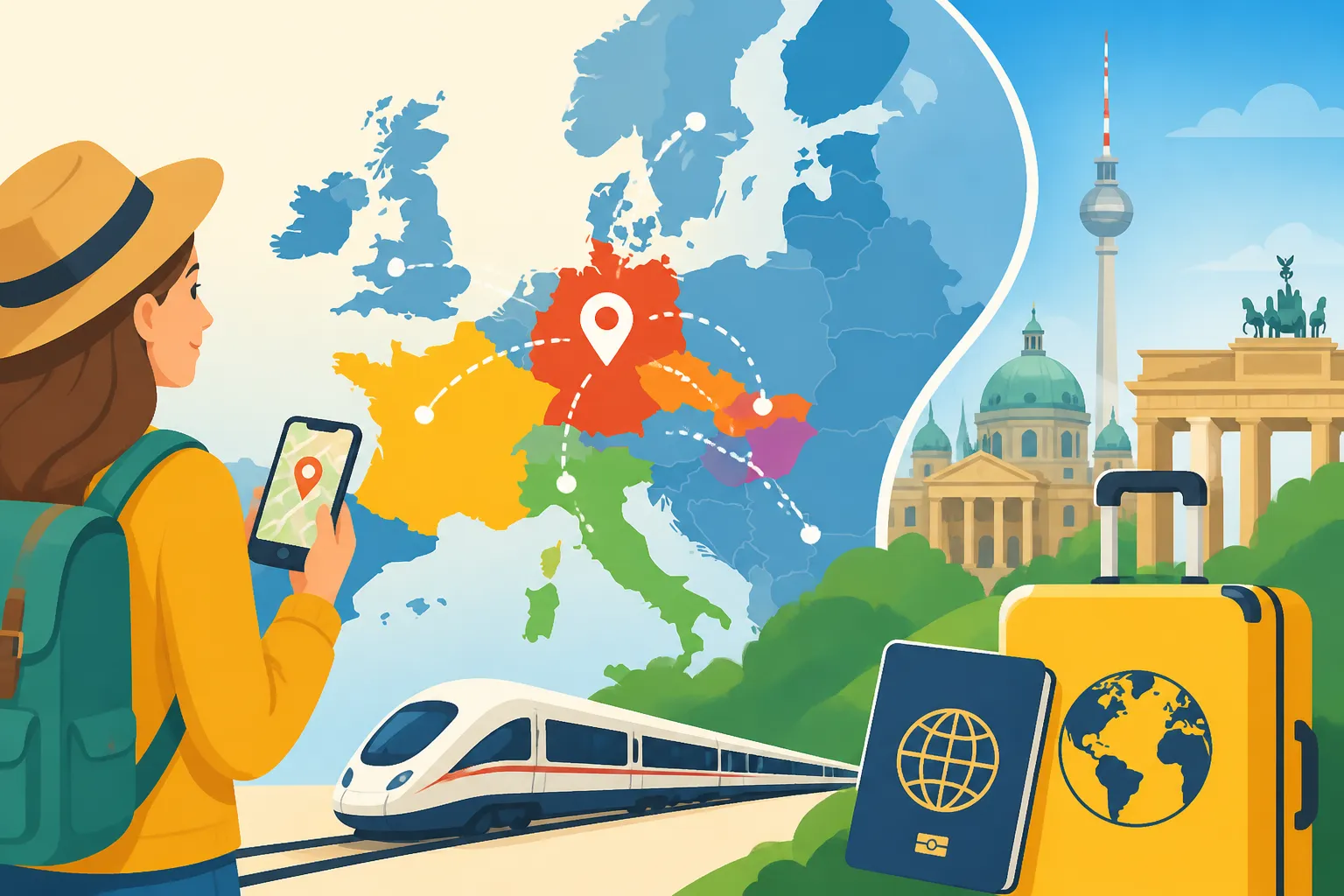
Multi-Country Europe Trips Starting in Germany: Route Planning and Booking
Oh, the dream of a multi-country European adventure! It’s what draws so many of us expats to Germany in the first place, isn't it? The sheer proximity to so many incredible cultures, landscapes, and historical gems is just intoxicating. But then reality hits: how do you even begin to stitch together a coherent itinerary, let alone figure out how to get from point A in Germany to point B in Italy, and then point C in France, without losing your mind or your entire savings? Trust me, I've been there, staring blankly at a map, feeling a mix of excitement and utter dread. This guide is here to untangle that knot, showing you how to plan and book your multi-country European trip starting right here in Germany, with a little help from a fantastic tool that makes it all a breeze.
Disclosure: This post may contain affiliate links. We may earn a commission at no extra cost to you if you make a purchase through these links. Read full disclosure.
The Allure of European Multi-Country Trips from Germany
Germany isn't just a place to live; it's a launchpad to the rest of Europe. Its central location, robust infrastructure, and well-connected cities make it an unparalleled starting point for exploring the continent. For those of us who've navigated the initial hurdles of settling into expat life, the promise of easy international travel is one of the biggest rewards.
Why Germany is Your Perfect European Gateway
Let's be honest, living in Germany already puts you in a prime position for continental exploration. Whether you're in Berlin, a cultural kaleidoscope; Frankfurt, a major international hub; or Munich, with its Bavarian charm and alpine proximity, you're never far from an international airport or a high-speed train connection. This geographical advantage means less travel time within Germany and more time exploring your dream destinations abroad. Think about it: a quick train ride and you can be in Paris, Vienna, or Amsterdam. A short flight and Rome or Barcelona are at your fingertips.
The sheer diversity within Europe, all within a few hours’ reach, is truly a marvel. One weekend you could be hiking in the Austrian Alps, the next savoring pasta in Italy, and the one after that exploring bustling markets in Prague. This accessibility is what makes Germany such a fantastic base for expats with a keen sense of wanderlust. However, this wealth of options can also be paralyzing. Where do you even begin when so much is possible? That's where smart planning and smart tools come into play, streamlining the process so you can focus on the fun parts.
Popular Travel Hubs and Their Connections
Germany boasts several excellent travel hubs, each with its own advantages for launching your European adventures. Frankfurt am Main, for example, is home to one of Europe's busiest airports, making it a gateway for international flights and a major rail intersection. From here, you can easily fly to nearly any European capital or hop on an ICE train to countries like France, Belgium, and Switzerland.
Then there's Berlin, the vibrant capital, offering direct train connections to cities like Prague, Warsaw, and Amsterdam, alongside a well-connected airport for budget-friendly flights across the continent. Munich, in the south, provides fantastic access to Austria, Switzerland, and Italy, often with scenic train journeys through the Alps. Even cities like Hamburg, Cologne, and Düsseldorf offer their own unique advantages for specific routes, connecting you efficiently to Scandinavia, the Benelux countries, or France. Understanding which German city best serves as your starting point can significantly streamline your initial planning, especially if you're looking to minimize travel time on your first leg.
Crafting Your Itinerary: Where to Go and How Long to Stay
One of the biggest temptations when planning a multi-country trip is to pack in as many destinations as humanly possible. I've fallen into this trap myself, creating itineraries that looked more like a frantic race against the clock than a relaxing holiday. Take it from a seasoned expat: less is often more, especially when you're crossing borders.
Balancing Ambition with Reality: Common Itinerary Pitfalls
It's natural to want to see everything when Europe is literally at your doorstep. You're thinking, "I'm already here, I might as well see London, Paris, Rome, and Athens in ten days!" While technically possible, doing so often means you spend more time in transit, rushing through attractions, and checking off a list rather than truly experiencing a place. You end up with a blur of train stations and airport lounges, remembering very little of the actual destinations.
Instead of a frantic sprint, consider a more deliberate pace. Pick 2-3 countries or 3-5 cities for a two-week trip, allowing yourself at least 2-3 full days in each location. This gives you time to not only hit the main tourist spots but also wander through local neighborhoods, discover hidden gems, and simply soak in the atmosphere. Remember, the goal is enjoyment and cultural immersion, not just accumulating passport stamps. Rushing only leads to burnout, something we expats already have enough of dealing with German bureaucracy!
Popular Multi-Country Routes from Germany
Given Germany's central location, the possibilities for multi-country routes are vast and varied. Here are a few popular options that consistently delight travelers:
- The Western European Whirl: From Germany, you could head west to the romantic streets of Paris, France, then swing up to the charming canals of Bruges, Belgium, and conclude with the vibrant energy of Amsterdam, Netherlands. This route offers a fantastic mix of culture, history, and picturesque scenery, all easily connected by high-speed trains.
- Alpine & Mediterranean Charm: For those drawn to stunning landscapes and delicious food, a journey south could take you from Germany through the majestic Austrian Alps (think Vienna or Salzburg), perhaps into the pristine beauty of Switzerland (Lucerne or Zurich), before descending into the culinary paradise of Italy (Milan, Florence, or Rome). This journey can be incredibly scenic by train, offering breathtaking views as you traverse the mountains.
- Eastern European Gems: If history and affordability are your priorities, head east from Germany. Prague, Czech Republic, is a fairytale city, followed by the historic charm of Krakow, Poland, and the vibrant culture of Budapest, Hungary. These cities offer rich histories, impressive architecture, and often more budget-friendly experiences compared to Western Europe.
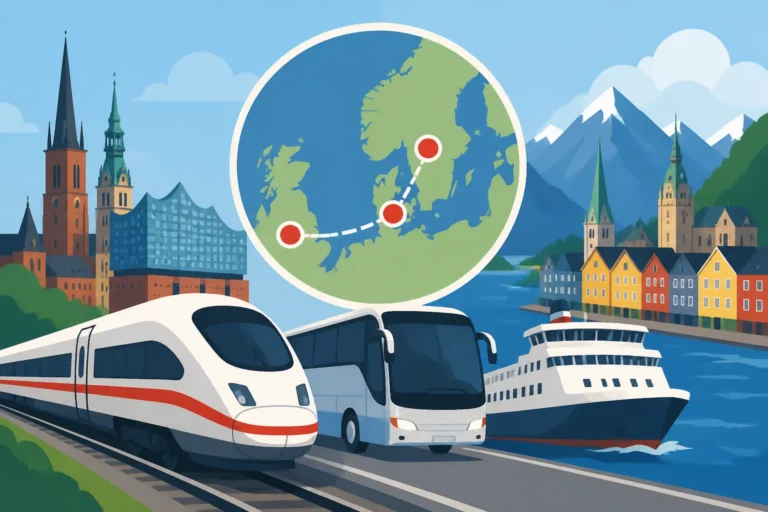
- Nordic Exploration: For something different, consider heading north to Scandinavia. From Hamburg, you can take a direct train or ferry to Copenhagen, Denmark, and then connect further north into Sweden. This route offers a cooler climate, modern design, and stunning coastal landscapes.
When planning these routes, remember that a tool like Omio is incredibly helpful. It allows you to visualize and book the connections between these diverse destinations, showing you all your options whether you prefer trains, buses, or flights, making the logistical puzzle much easier to solve.
Practical Considerations for Route Planning
Beyond just picking destinations, there are several practical aspects to consider when crafting your multi-country itinerary to ensure a smooth journey. First, think about the time of year. Summer is popular but also crowded and more expensive. Spring and autumn offer milder weather and fewer tourists, while winter can be magical for Christmas markets in Germany and beyond, but also means shorter days and potential for snow disrupting travel.
Visa requirements are crucial. If you're coming from a non-EU country, remember the Schengen Area rules. Most European countries are part of this border-free zone, allowing 90 days of tourism within a 180-day period. However, countries like the UK or Ireland are not in Schengen, meaning you'll need to account for separate entry requirements and potential visa processes if you plan to visit them. Always double-check the specific requirements for your nationality and destinations. This is part of the joys (and headaches!) of Moving to Germany: Comprehensive Visa & Immigration Guide.
Lastly, budget should heavily influence your route. Western Europe tends to be more expensive than Eastern or Southern Europe. Factor in accommodation, food, activities, and, crucially, transport costs. Sometimes, flying into one major city (e.g., Frankfurt) and flying out of another (e.g., Rome) – an "open-jaw" ticket – can save you time and money compared to returning to your initial entry point. Consider where you want to splurge and where you can save, and remember that even small savings can add up over multiple countries.
Navigating European Transport: Trains, Buses, and Flights
The beauty of Europe is its incredibly dense and efficient transport network. Unlike some other continents where one mode might dominate, here you truly have options. And this is where Omio really comes into its own, simplifying the headache of comparing them all.
The European Rail Network: Speed, Scenery, and Convenience
Train travel in Europe is, for many, the quintessential way to experience the continent. Germany's Deutsche Bahn (DB) is a fantastic starting point, with its high-speed ICE trains connecting major cities across Germany and into neighboring countries. From Berlin, you could take a direct train to Prague, or from Munich, a scenic route to Vienna. These trains are generally comfortable, offer ample legroom, and often have dining cars or bistro services.
Beyond Germany, Europe boasts an extensive network of high-speed rail lines, like France's TGV, Italy's Frecciarossa, and the Eurostar connecting mainland Europe to London. The major advantage? You go from city center to city center, avoiding airport transfers and long security lines. It's often faster for journeys under 4-5 hours door-to-door. Plus, the scenery outside your window can be breathtaking, transforming transit into part of the travel experience itself. For those looking to save money, booking in advance is key, and exploring options for the Deutschland-Ticket within Germany before branching out can be a savvy move.
Budget-Friendly Bus Travel: FlixBus and Alternatives
For the ultimate budget-conscious traveler, or for routes where train connections might be less direct or more expensive, bus travel is a solid option. Companies like FlixBus have created a vast network across Europe, connecting thousands of cities and towns, often for a fraction of the cost of a train ticket or flight. I've taken countless FlixBuses myself, from short hops within Germany to overnight journeys across borders, and while they might not offer the same luxurious comfort as a high-speed train, they get the job done.
Buses are particularly useful for shorter international journeys, or for reaching destinations not well-served by rail. They can also be a lifesaver when last-minute train tickets are prohibitively expensive. The main trade-off is often speed; journeys can be longer due to traffic and more frequent stops. However, modern buses usually offer Wi-Fi, power outlets, and comfortable seating, making the experience more pleasant. When you're comparing options on Omio, you'll see bus routes seamlessly integrated, giving you a comprehensive overview of all available transport for your multi-country hop.
When to Fly: Low-Cost Carriers and Time Savings
Despite the romantic appeal of train travel, sometimes flying is simply the most efficient option. For longer distances, especially if you're trying to connect distinct regions (e.g., Germany to Portugal, or a northern city to a southern one), low-cost airlines like Ryanair, EasyJet, Vueling, and Wizz Air can save you significant time. The key here is to factor in the total travel time: getting to and from the airport, security checks, boarding, and the flight itself. Often, what looks like a 1-hour flight can quickly become a 4-5 hour ordeal.
However, for a multi-country trip spanning considerable distances, a flight can be a game-changer. Imagine flying from Munich to Rome in just over an hour, versus an all-day train journey. The savings in time can often justify the additional cost and airport hassle. Just be mindful of baggage allowances with budget airlines, as those fees can quickly negate any initial savings. Omio does a brilliant job here, allowing you to easily compare flights alongside train and bus options, so you can make an informed decision based on your priorities for speed, cost, and convenience. It's your one-stop shop for Getting Around Germany: Trains, Buses, Flights, and Car Hire and beyond!
Booking Your Journey with Omio: Your Expat Travel Companion
Let's be real, the European transport landscape can feel like a labyrinth. National rail websites, dozens of bus companies, countless airlines – trying to compare all your options for a multi-leg trip across several countries could easily become a full-time job. This is precisely why Omio has become my go-to and why I champion it for fellow expats. It’s designed to cut through that complexity and make planning genuinely enjoyable.
The Power of Multi-Modal Search: Why Omio Shines
Before Omio, planning a trip from Berlin to Venice, then on to Nice, felt like solving a complex puzzle with missing pieces. I’d have one browser tab open for Deutsche Bahn, another for a regional Italian train, then a third for a budget airline, and a fourth just to remember the bus options. It was exhausting and often led to me missing out on the best deals or most efficient routes.
This is where Omio steps in as an absolute game-changer. Its core brilliance lies in its multi-modal search engine. You simply input your starting point, your destination, and your travel dates – for any two points in Europe – and Omio pulls up all the available trains, buses, and flights, side-by-side. It shows you the price, the duration, and even filters for the cheapest, fastest, or smartest (a balance of both). For someone like us, navigating life in Germany and wanting to explore, this unified view is invaluable. No more tab-hopping or guesswork; all the information you need to make an informed decision is right there. It transforms a frustrating task into a straightforward comparison, making multi-country planning feel manageable, even enjoyable.
Step-by-Step Booking Experience
Once you've done your initial search on Omio and found the best options for your multi-country adventure, the booking process itself is wonderfully streamlined. Let's say you're looking to go from Munich to Zurich by train. You've entered your details, seen the various connections (maybe direct, maybe with one change), and picked the one that suits your schedule and budget.
- Select Your Journey: Click on your preferred train, bus, or flight option. Omio will then show you specific details, like the number of stops, departure and arrival platforms (for trains/buses), and any included services.
- Add Passenger Details: You'll input your name, date of birth, and contact information. If you're traveling with companions, you'll add their details here too. For some routes, you might be asked for ID document details, so have your passport handy.
- Choose Seating/Extras (if applicable): For trains, you might have the option to reserve a seat, choose a specific carriage class (e.g., 1st or 2nd class), or add specific requests. For flights, this is where you'd typically select your seat or add checked luggage, though be aware that budget airlines might direct you to their site for these extras.
- Payment: Omio accepts a variety of payment methods, including major credit cards and often services like PayPal. The process is secure and straightforward.
- E-tickets and Confirmation: Once your booking is confirmed, you'll receive your e-ticket directly to your email. Many tickets can be stored in the Omio app, often as a QR code, which means no printing necessary – just show your phone! This convenience is a godsend when you're juggling multiple tickets across different countries. It takes the stress out of managing complex itineraries, especially when you're on the go and need quick access to your travel documents.
Tips for Getting the Best Deals on Omio
Even with a fantastic tool like Omio, a little strategic thinking can go a long way in securing the best prices for your multi-country European trip.
- Book in Advance: This is probably the golden rule for European travel, especially for trains and popular flights. Prices for both tend to increase significantly closer to the departure date. Aim to book train tickets 2-3 months out, and flights even further if possible, particularly for peak seasons.
- Be Flexible with Dates: If your schedule allows, playing around with your travel dates can yield substantial savings. Mid-week travel (Tuesday-Thursday) is often cheaper than weekends, and avoiding major public holidays in Germany or your destination countries can also cut costs. Remember to check the German Public Holidays: How They Affect Life and Work for your departure country!
- Consider All Modes of Transport: Don't automatically dismiss buses or discount flights. Omio's real strength is showing you all three. A bus might take longer, but if it saves you €50 on a specific leg, that's more money for experiences. Similarly, a short flight can be surprisingly cheap for longer distances, even with the airport transfers. Always compare the total cost and time.
- Look at Off-Peak Travel Times: Early morning or late-night departures for trains and buses are frequently cheaper than midday options. If you're an early riser or don't mind a later arrival, you can often snag better deals.
- Use Filters Wisely: Omio's interface allows you to filter by price, duration, and even specific transport providers. Use these tools to quickly narrow down your options and find the sweet spot between cost and convenience.
By combining the power of Omio with these savvy booking strategies, you'll be well on your way to enjoying a seamless and affordable multi-country adventure from your German base.
Essential Travel Tips for Your European Adventure
Alright, you've planned your route, booked your tickets with Omio, and you're almost ready to roll. But hold your horses! As an expat who's crisscrossed this continent more times than I can count, I've picked up a few crucial tips that can make or break your multi-country trip. It's not just about the tickets; it's about being prepared for life on the go.
Packing Smart and Staying Connected
When you're constantly on the move, especially between different cities and countries, packing light is non-negotiable. Seriously, that extra pair of shoes will feel like a ton of bricks after the third train transfer. Embrace the capsule wardrobe concept, choose versatile items that can be mixed and matched, and always pack layers. If you're flying budget airlines, remember their strict luggage rules and potential exorbitant fees for checked bags; a good quality carry-on is your best friend. Also, don't forget comfortable walking shoes – you'll be doing a lot of exploring on foot!
Staying connected is equally important. While Wi-Fi is generally available in European cities, having your own data is incredibly convenient for navigation, checking Omio for real-time updates, and staying in touch. Consider getting an eSIM for Europe, which allows you to switch data plans easily across countries without physically changing SIM cards. Many German providers also offer excellent EU roaming packages. Always carry a portable power bank; your phone will be working overtime as your map, camera, and travel guide. For more in-depth advice on staying online, check out Mobile Data and eSIMs for Travel in Germany.
Money Matters and Managing Your Budget
Europe is predominantly in the Eurozone, which simplifies currency exchange for many countries. However, if your itinerary takes you to non-Euro countries (like Switzerland, Poland, Czech Republic, Hungary, or the UK), you'll need to account for currency conversions. While credit cards are widely accepted, especially in major cities and tourist areas, many smaller shops, markets, and even some local restaurants (especially outside of Germany) still prefer cash. It's always a good idea to have some local currency on hand.
Setting a daily budget for food, activities, and incidentals is crucial for a multi-country trip. Eating out for every meal can quickly drain your funds. Mix in some supermarket picnics, street food, and cooking in self-catering accommodations if possible. Look into city passes if you plan on visiting many attractions, but do the math to ensure they actually save you money. For a deeper dive into financial planning relevant to your expat life, our Money Matters in Germany: Complete Financial Guide for Expats is a great resource.
Cultural Sensitivity and Safety on the Go
Traveling across multiple European countries means encountering a diverse array of cultures and customs. While there are overarching similarities, each nation has its nuances. A little effort to learn a few basic phrases – "hello," "please," "thank you" – in the local language can go a long way. Germans appreciate a polite "Danke schön," while a "Bonjour" in France or a "Ciao" in Italy can open doors (and smiles!). Understanding general etiquette, like appropriate tipping customs or noise levels, will make your interactions much smoother. For tips on navigating German social norms, you might find our guide on German Etiquette and Social Life for Visitors helpful, which can often be applied broadly across Europe.
When it comes to safety, Europe is generally very safe, but common sense is always your best defense. Be aware of your surroundings, especially in crowded tourist areas or on public transport, where pickpocketing can occur. Keep valuables secured and out of sight, and avoid flashing large amounts of cash. Familiarize yourself with local emergency numbers (112 is standard across the EU for police, fire, and ambulance). By being prepared, culturally sensitive, and safety-conscious, you'll ensure your multi-country European trip is not only memorable but also wonderfully stress-free.
| Travel Mode | Average Speed | Cost Range (per 100km) | Comfort & Experience | Environmental Impact | Ideal For |
|---|---|---|---|---|---|
| Train | Medium-High | €10 – €40 | High, Scenic | Low | Mid-range distances, city-to-city, enjoying views |
| Bus | Low-Medium | €5 – €20 | Basic-Medium | Medium | Budget travel, short-mid distances, specific routes |
| Flight | High | €15 – €100+ | Low (Airport Hassle) | High | Long distances, time-saving, specific country access |
Disclaimer
The information provided in this guide is intended for general informational purposes only and does not constitute professional advice. While we strive to provide accurate and up-to-date information for expats and tourists in Germany, travel regulations, prices, and services can change rapidly. Always verify current visa requirements, transportation schedules, and prices with official sources and service providers before making any travel arrangements. We recommend purchasing comprehensive travel insurance for any multi-country trip to cover unforeseen circumstances.