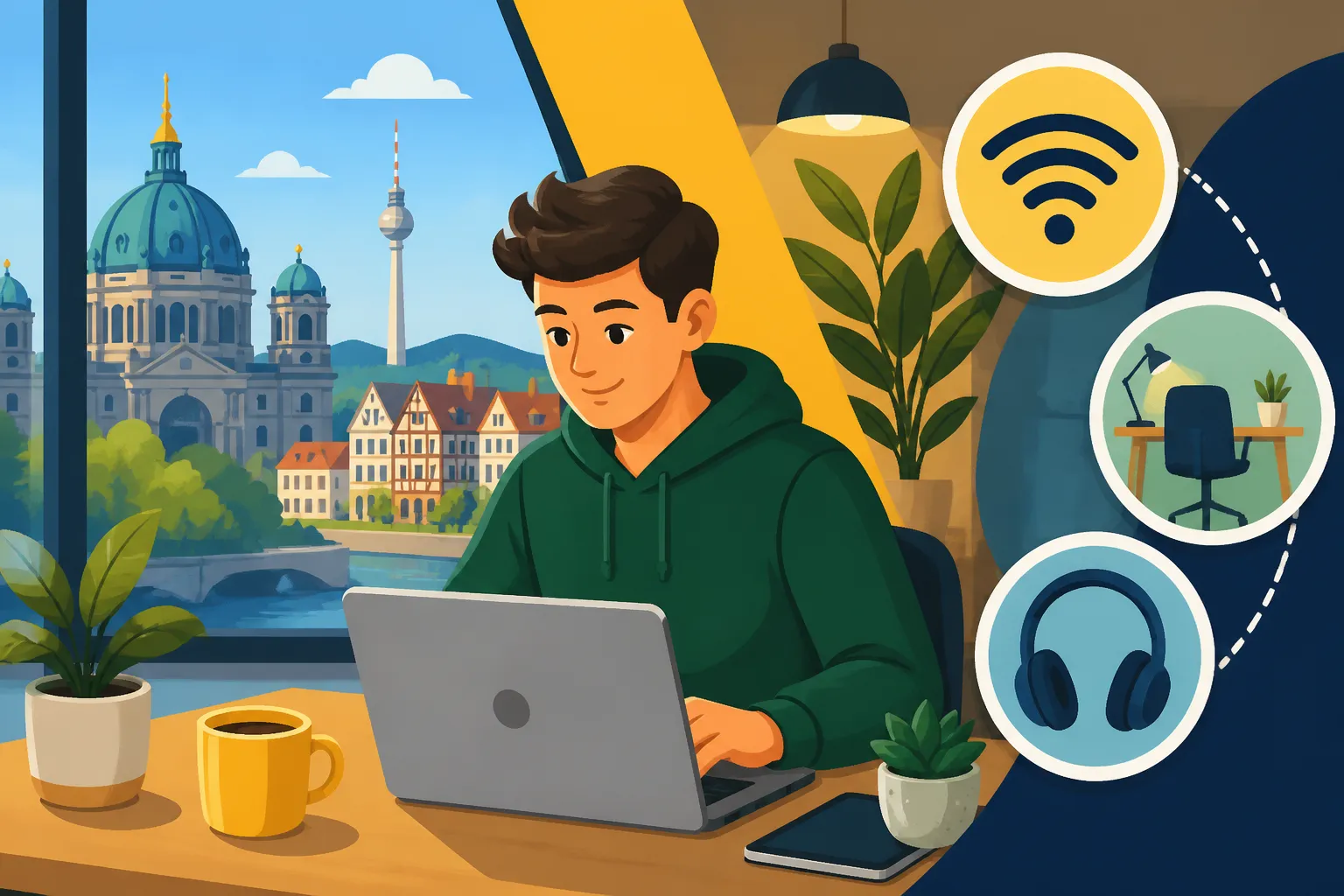
Digital Nomad Stays in Germany: Booking for Wi-Fi, Desks, and Quiet
Ah, the life of a digital nomad in Germany! It sounds so idyllic on Instagram, doesn't it? Picture yourself sipping a perfectly brewed Kaffee in a sunlit apartment, your laptop open, crushing deadlines with ease. The reality, as many of us expats know, can be a starkly different beast, especially when your temporary "home office" turns out to be a cramped hotel room with Wi-Fi that struggles to load a simple email. This guide is for all you brave souls venturing into Germany with your laptop and a dream, helping you navigate the tricky world of finding digital nomad stays that actually work for your professional and personal sanity.
Disclosure: This post may contain affiliate links. We may earn a commission at no extra cost to you if you make a purchase through these links. Read full disclosure.
The Digital Nomad Dream vs. German Reality: Why Accommodation Matters
Let's be honest, the romanticized image of the digital nomad often overlooks the very real, very un-glamorous struggle of finding decent accommodation that actually supports your work. In Germany, a country renowned for its efficiency, you'd think this would be a breeze. But trust me, finding that sweet spot between affordability, a functional workspace, and a stable internet connection can feel like searching for a unicorn. It's not just about having a roof over your head; it's about having a base that fuels your productivity and doesn't add unnecessary stress to your already busy life.
The Unique Challenges of Remote Work Accommodation
As a digital nomad, your accommodation isn't just a place to sleep; it's your office, your sanctuary, and often your main point of contact with the outside world. This means the stakes are higher. You can't just pick any place with four walls and a bed. You need a reliable internet connection that can handle video calls and large file transfers without a hitch. You need a dedicated space where you can focus, away from distractions, whether that's a bustling common area or a paper-thin wall sharing secrets with your neighbor.
Beyond the practicalities, there's the emotional aspect. Constantly moving or being stuck in an unsuitable environment can lead to burnout faster than you can say Feierabend. You're already dealing with the challenges of being in a new country, maybe even grappling with a new language or cultural norms. Your living situation shouldn't be another source of anxiety. It should be a foundation that supports your journey, allowing you to thrive, not just survive.
More Than Just a Bed: What Makes a "Good" Nomad Stay
So, what exactly elevates a run-of-the-mill rental to a "good" digital nomad stay? It's a combination of practical features and subtle comforts that create a productive and livable environment. Think of it this way: if you were setting up a permanent home office, what would you need? A proper desk and chair, excellent lighting, quiet, and robust connectivity. These are the non-negotiables.
But it goes beyond that. It’s also about the peace of mind that comes from knowing your basic needs are met. Access to a kitchen, laundry facilities, and perhaps even a bit of green space can significantly impact your well-being. A good stay understands that you're not just a tourist; you're a working professional integrating into a temporary local life. It's about empowering you to focus on your clients, your projects, and your personal growth, rather than battling with a flickering Wi-Fi signal or a wobbly kitchen table doubling as a desk.
What to Prioritize in Your German Digital Nomad Accommodation
When you're sifting through endless listings, it's easy to get overwhelmed by the sheer volume of choices. To cut through the noise, you need a clear checklist of priorities, tailored specifically for the working traveler. In Germany, some things become even more critical due to local regulations, building types, and cultural expectations.
Reliable Wi-Fi: Your Lifeline in Germany
Let's be brutally honest: without solid internet, you're not a digital nomad; you're just a tourist with an expensive laptop. This isn't just a "nice-to-have" feature; it's the absolute foundation of your livelihood. In Germany, while overall internet infrastructure is good, individual apartment connections can vary wildly. Don't assume anything.
When looking for a place, always, always scrutinize descriptions for Wi-Fi details. Does it mention "high-speed"? Is there a specific provider listed? More importantly, check the reviews. Past guests are often the most honest about whether the Wi-Fi was strong enough for video calls or if it repeatedly dropped out. A quick search on Booking.com allows you to filter specifically for properties offering Wi-Fi, but you'll need to dig deeper into the reviews for true reliability. It's not just about existence; it's about performance. If a listing boasts "free Wi-Fi" but doesn't elaborate, proceed with caution. Many a nomad has learned the hard way that "free" can often mean "barely functional." Consider even contacting the host directly to ask about the internet speed, especially if your work is data-intensive. For longer stays, you might also consider securing your own mobile data plan from an Internet and Mobile Providers in Germany, but having a good base Wi-Fi is still paramount.
The Elusive "Quiet Space" and Proper Work Setup
Anyone who's tried to join a crucial client call from a bustling café or a shared hostel dorm knows the pain of finding a quiet, dedicated workspace. This is another non-negotiable for digital nomads. Germany, with its strong emphasis on order and quiet, often has strict Ruhezeit (quiet hours) which can be a double-edged sword: great for your focus, but you need to ensure your accommodation itself isn't a source of noise.
Look for listings that explicitly mention a desk or a "work area." A small dining table might suffice for a few days, but for weeks or months, you'll feel the strain on your back and neck. A proper desk, an ergonomic chair (a rare find, but worth asking about!), and good lighting are invaluable. Also, consider the layout of the space. Is the "work area" in the bedroom, offering privacy, or is it in a common living area? Pay attention to the neighborhood as well. A vibrant city center location might be exciting, but the constant hum of traffic or late-night revelers could severely impact your productivity. Suburbs or smaller towns might offer more tranquility, though perhaps less buzz. When you are looking on Booking.com, use the photos to truly visualize the workspace. Does it look like an afterthought, or is it genuinely designed for productivity?
Location, Location, Location: Balancing Work and Life
The perfect location for a digital nomad balances work needs with lifestyle desires. Do you want to be in the thick of a bustling city like Berlin or Munich, with all the networking opportunities and vibrant nightlife, or do you crave the quiet charm of a smaller town in the Black Forest or along the Rhine? Your choice of city can profoundly impact your experience.
Consider proximity to amenities: grocery stores, laundromats, public transport (crucial for getting around without a car), and perhaps even a good café. Being close to parks or green spaces can also be a huge boon for mental well-being and a quick break from screen time. If you're planning longer stays and need to do something official like your The Anmeldung: Registering Your Address in Germany, being centrally located or well-connected to public transport might make those bureaucratic tasks a little less painful.
Furthermore, think about your social life. Are there expat communities, coworking spaces, or language schools nearby? While your work setup is essential, so is finding your tribe and maintaining a healthy work-life balance. A great location supports both.
Decoding Your Options: Types of Stays for Digital Nomads in Germany
Germany offers a variety of accommodation types, each with its own set of pros and cons for the digital nomad. Understanding these can help you narrow down your search and find what best fits your working style and budget.
Serviced Apartments and Aparthotels: The Home-Away-From-Home Vibe
These are often the golden ticket for digital nomads, especially for medium to long-term stays. Serviced apartments, or aparthotels as they are often called, combine the best features of a hotel and a traditional apartment.
Pros:
- Fully Equipped: Most come with a fully functional kitchen (a huge win for saving money on meals), and often laundry facilities, either in-unit or communal. This is a game-changer when you're settling in for a few weeks or months.
- Dedicated Workspace: Many are designed with business travelers in mind, meaning a proper desk, chair, and reliable Wi-Fi are standard rather than an afterthought.
- Privacy and Space: You get more space than a typical hotel room, allowing for a better separation between your work area and living area.
- Services: They often include weekly cleaning, linen changes, and sometimes even a reception desk, offering a sense of security and support without the formality of a full-service hotel.
Cons:
- Cost: Generally more expensive than basic hotel rooms or private rooms in shared apartments. However, the cost savings from cooking your own meals can offset this.
- Availability: Can be harder to find, especially in smaller cities or during peak seasons.
- Less Community: While some aparthotels might have common areas, they typically offer less social interaction than dedicated coliving spaces.
How Booking.com Helps: Booking.com has robust filters that allow you to specifically search for "apart-hotels" or "apartments." You can then check amenities like "kitchen," "washing machine," and "workspace" to find the perfect match.
Hotels with Work-Friendly Amenities: When Convenience is King
Sometimes, for shorter stints or when you crave the simplicity of hotel living, a hotel can be a great option. However, not all hotels are created equal for digital nomads.
Pros:
- Convenience: Daily cleaning, room service, and often on-site restaurants or breakfast options. No need to worry about household chores.
- Reliable Infrastructure: Often have professional-grade Wi-Fi and backup systems.
- Business Centers: Many hotels cater to business travelers and might offer meeting rooms, printing services, or dedicated co-working areas within the hotel itself.
- Flexibility: Easier to book for short, irregular periods, and cancellations are often more flexible.
Cons:
- Lack of Kitchen: Eating out for every meal can quickly drain your budget.
- Limited Space: Standard hotel rooms can feel cramped, especially if you need to spread out with equipment or documents. The "desk" might be a tiny table.
- Less Personal: Can feel impersonal and isolating over longer periods.
- Noise: Depending on the hotel, noise from other guests or common areas can be an issue.
How Booking.com Helps: On Booking.com, you can filter by "business-friendly" or look for hotels that specifically list "desk" or "laptop-friendly workspace" as an amenity. Reading guest reviews is crucial here to ensure the Wi-Fi actually performs as advertised.
Coliving Spaces: Community and Productivity Combined
For those who thrive on community and a shared sense of purpose, coliving spaces are becoming increasingly popular in larger German cities.
Pros:
- Instant Community: Built-in opportunities to meet other digital nomads, share experiences, and network. Great for combating Dealing with Homesickness Abroad: Tips for Expats in Germany.
- Dedicated Workspaces: Often feature well-designed coworking areas, meeting rooms, and high-speed internet.
- Amenities: Can include shared kitchens, gyms, event spaces, and social activities.
- Simplified Living: Rent often includes all utilities, cleaning, and internet, simplifying your budget and reducing administrative hassle.
Cons:
- Less Privacy: You typically have your own private room but share common areas like kitchens and living rooms.
- Noise Potential: While there are quiet rules, shared living can still be noisier than a private apartment.
- Fixed Terms: Some coliving spaces prefer longer commitments, and availability might be limited.
- Cost: Can be on the higher end, but often includes many benefits that would cost extra elsewhere.
How Booking.com Helps: While Booking.com might not have a dedicated "coliving" filter, you can often find these spaces listed as "hostels," "boutique hotels," or "serviced apartments" that emphasize community. Check descriptions carefully for terms like "coworking," "community events," and "shared spaces." You may need to cross-reference with specific coliving websites.
Traditional Short-Term Rentals: Navigating the German Market
Platforms like Airbnb are popular, but finding legitimate, compliant short-term rentals in Germany for a working stay can be a bit more complex. Cities like Berlin and Munich have strict regulations on short-term rentals to protect housing markets.
Pros:
- Authentic Experience: You can live like a local in a residential neighborhood.
- Privacy: An entire apartment offers maximum privacy and space.
- Full Kitchen: Usually comes with a fully equipped kitchen.
Cons:
- Regulation Issues: Many German cities have tightened rules on short-term rentals, especially for non-touristic stays. Always ensure the listing is legitimate and compliant, especially for longer durations.
- Bare-Bones Setup: Unless specifically advertised, don't expect a dedicated office setup. You might get a small dining table and a hard chair.
- Owner Dependent: Quality of Wi-Fi, responsiveness, and amenities can vary greatly depending on the individual host.
- Anmeldung Complications: If you plan to stay for more than a few months, you'll need to register your address (Anmeldung). Many private hosts are unwilling or unable to provide the necessary Wohnungsgeberbestätigung for this, which can lead to significant administrative headaches. This is a crucial point many nomads overlook.
How Booking.com Helps: While Booking.com does list private apartments, similar to other platforms, you still need to be vigilant about the specific rules of the German city you're targeting. Always read reviews, scrutinize photos for workspace indications, and if considering a longer stay, be prepared to ask the host about providing Wohnungsgeberbestätigung and clearly understand Understanding German Rental Costs: Kaltmiete, Warmmiete, Nebenkosten.
Finding Your Perfect Pad: Making Booking.com Your Best Friend
Alright, let's talk about the tool that can truly streamline your search: Booking.com. While it might be known for hotels, it’s a powerhouse for finding a wider range of accommodation types suitable for digital nomads, including serviced apartments and even some coliving concepts if you know how to use it right. It's truly a hero when it comes to options and detailed filtering.
Leveraging Booking.com's Filters for Digital Nomads
This is where Booking.com shines. Their filtering system is incredibly robust, allowing you to narrow down thousands of listings to just a handful that meet your specific needs. Don't be shy about using them!
First, start with your destination and dates. Then, immediately jump into the "Accommodation Type" filter. This is crucial. Instead of just "Hotel," look for:
- Apartments: These are often private apartments with kitchens, offering more space and flexibility.
- Apart-hotels: The aforementioned serviced apartments, usually with more consistent amenities and services than private rentals.
- Guesthouses/Pensions: Sometimes these smaller, family-run establishments can surprise you with quiet rooms and a cozy atmosphere, though a dedicated desk might be hit or miss.
Next, dive into the "Facilities" or "Amenities" section. Here's what to tick:
- Free Wi-Fi: Non-negotiable, as we discussed.
- Kitchen/Kitchenette: A lifesaver for budget and healthy eating.
- Desk: Essential for a proper workspace. Sometimes listed under "Work desk" or "Working area."
- Washing Machine: A huge convenience for longer stays.
- Air Conditioning: Especially if you're traveling in summer, as many older German buildings lack it, and Heatwave Health: Coping with Hot Summers in Germany (Hydration, Cooling) can be a real issue.
- Non-smoking rooms: If this is important to you.
You can also filter by "review score" to ensure you're only looking at highly-rated properties. For those on a budget, use the "price range" filter. Booking.com makes it incredibly easy to see exactly what you're getting, laying out the amenities clearly and concisely, making your decision process much smoother.
Reading Between the Lines: Reviews and Photos on Booking.com
Once you've applied your filters, you'll still have a selection of properties. This is where your detective skills come into play. Booking.com excels at providing a wealth of user-generated content, but you need to know how to interpret it.
Reviews are gold. Don't just look at the overall score. Click into individual reviews and specifically search for keywords like "Wi-Fi," "internet," "desk," "quiet," "noise," "work," or "connectivity." See what other guests, especially those who mentioned working remotely, had to say. Were there complaints about internet speed during peak hours? Was the "desk" just a tiny shelf? Did the neighborhood get noisy at night? Look for consistency – a single bad review about Wi-Fi might be an anomaly, but several suggest a pattern.
Photos tell a story. Scrutinize every single photo. Does the "desk" look sturdy, or like it might collapse under your laptop's weight? Is there enough natural light? Is the chair actually comfortable, or just a decorative piece? Look at the windows – do they face a quiet courtyard or a busy street? Photos of the building exterior and surrounding area can give you clues about the neighborhood's general vibe. Does the property have good sound insulation? These details, often overlooked, are critical for a productive digital nomad stay. Booking.com provides numerous photos for most listings, so take your time and examine them all.
Booking.com Genius Levels and Loyalty Perks
As a frequent traveler, sticking with Booking.com can also yield some sweet benefits through their Genius loyalty program. Once you reach certain levels, you can unlock discounts, free breakfasts, free room upgrades, or even late check-outs. For a digital nomad, a late check-out can be incredibly valuable, allowing you to get a few extra hours of work in before heading to your next destination or catching a flight, without having to rush out or pay for an extra night.
These perks might seem minor individually, but cumulatively, they can significantly enhance your travel experience and contribute to your overall comfort and productivity. So, if you're going to be a regular globetrotter, committing to Booking.com as your primary booking platform can genuinely pay off in the long run.
Beyond the Click: Tips for Securing and Optimizing Your German Stay
Once you've identified a promising few options on Booking.com, your work isn't quite done. A little extra effort before and during your stay can ensure it's truly optimized for your digital nomad lifestyle.
Communicating with Hosts Before You Book
Don't hesitate to reach out to the property directly, even if you're booking through Booking.com. Most listings on Booking.com allow you to send a message to the host or property manager. This is your chance to get clarity on crucial details that might not be fully covered in the listing or reviews.
Here are some questions to consider asking:
- "What's the internet speed like? Can you provide an estimate (e.g., Mbps download/upload) or tell me the provider?" This is especially important if your work involves heavy data use or frequent video conferencing.
- "Is there a dedicated workspace with a proper desk and chair?" Reiterate this, as descriptions can be vague.
- "How quiet is the area/building, especially during working hours?"
- For longer stays: "Would it be possible to receive mail/packages at the property?" This is a practical consideration for anything from new bank cards to online shopping.
- For stays over a month: "Would you be able to provide a Wohnungsgeberbestätigung for Anmeldung if needed?" This document is legally required for registering your address, and its absence can cause serious bureaucratic headaches if you plan to stay longer than three months. Landlords are often hesitant, so asking upfront is key.
Clear communication beforehand can prevent misunderstandings and ensure the property truly meets your needs.
Negotiating for Longer Stays and Better Deals
Many properties, especially serviced apartments and smaller hotels listed on Booking.com, are open to offering discounts for longer stays. If you're planning to be in one place for several weeks or even a month or more, it's always worth asking.
Even if a long-stay discount isn't explicitly advertised, reach out to the host. You can phrase it politely: "I'm looking to book for X weeks/months. Is there a possibility of a reduced rate for this extended period?" The worst they can say is no. For them, a guaranteed longer booking means less turnover and fewer administrative tasks, which can be an incentive for them to offer you a better rate than the nightly price. This negotiation is often best done directly with the property rather than through the Booking.com platform itself, though you can use the platform's messaging system to initiate contact.
Essential Check-in and Check-out Considerations
The check-in process in Germany can sometimes be less flexible than what you might be used to in other parts of the world. Punctuality is often valued, and if you have a late arrival, ensure you've communicated this clearly and confirmed the key handover process. Many apartments use key boxes or smart locks, but for others, you might need to meet someone in person.
Upon check-in, immediately test the Wi-Fi. Seriously. Open your laptop, run a speed test, try a video call. If there are issues, report them immediately. It's much easier to resolve problems at the outset than to discover them the morning you have a crucial presentation. Also, quickly assess the workspace. Is it as described? Is anything missing?
For check-out, understand the process for returning keys and any cleaning expectations. Germany has a strong culture of order and cleanliness, so leaving the place tidy is not just good manners, it's often expected to ensure you get your full deposit back (if applicable). Make sure to note any existing damage on arrival to avoid issues later on. Remember, you want a smooth experience so you can focus on your work, not on logistical woes.
Navigating German Nuances: Local Considerations for Your Stay
Germany has its own distinct way of doing things, and understanding these cultural and practical nuances can save you a lot of grief as a digital nomad.
The "Empty Kitchen" Phenomenon and Other Rental Quirks
One of the biggest culture shocks for many expats, particularly in unfurnished rentals, is the "empty kitchen" phenomenon. Unlike many other countries, it's common for rental apartments in Germany to come without a fitted kitchen – no cupboards, no sink, no oven, nothing. While this is less common for short-term, furnished digital nomad stays, it's worth being aware of. Always confirm what exactly is included in the kitchen of your chosen accommodation. If the listing states "fully equipped kitchen," then you should expect pots, pans, plates, and utensils. But if it's vague, a quick message to the host is prudent. You certainly don't want to arrive after a long journey only to find you can't even make a cup of tea without buying half a kitchen. Also check for things like lighting fixtures; sometimes even these are not included in unfurnished rentals. For more on this, you might find our guide on Why Are German Apartments Often Unfurnished? Understanding the Culture enlightening.
Another quirk can be laundry facilities. Not all apartments come with an in-unit washing machine. Many buildings have shared laundry rooms (Waschkeller) in the basement, often operating on a schedule or requiring coins. Factor this into your planning, especially if you have a demanding work schedule.
Understanding Ruhezeit and Neighborly Etiquette
Germany takes its quiet hours, or Ruhezeit, very seriously. Typically, these are from 10 PM to 6 AM on weekdays, and all day on Sundays and public holidays. During these times, any loud activities – think vacuuming, loud music, drilling, or even excessive noise from children – are frowned upon and can lead to complaints from neighbors.
As a digital nomad, this is crucial for two reasons:
- Your own peace: It means you can generally expect a quiet environment for your evening work or relaxation.
- Your behavior: Be mindful of your own noise levels. If you're on a late-night video call, use headphones. If you're moving furniture or making noise, be aware of the time. Good neighborly relations are valued, and a polite "Hallo" in the hallway goes a long way. Understanding and respecting these unspoken rules will make your stay much smoother. For more insights into local customs, delve into German Etiquette: Do’s and Don’ts in Social and Professional Settings.
The Importance of Anmeldung for Longer Stays
If you plan to stay in Germany for more than a few months, you are legally required to register your address, a process known as Anmeldung. This is a critical step for almost all other administrative tasks, from opening a bank account to getting a tax ID.
The challenge for digital nomads in short-term accommodation is that for Anmeldung, you need a Wohnungsgeberbestätigung from your landlord or host. This is a confirmation that you are indeed living at that address. Many hosts of short-term rentals (especially those not explicitly set up for longer-term stays) might be unwilling or legally unable to provide this document. If you're only staying for a few weeks, it's not usually an issue. But if your plans extend to several months, or if you need to establish residency for other reasons, confirm with your host before booking if they can provide this. Failing to get this document can seriously derail your plans in Germany. We have a detailed guide on The Anmeldung: Registering Your Address in Germany which you should definitely check out if you're planning a longer stay.
Navigating the digital nomad life in Germany, like much of life here, is all about preparation and understanding the system. By using resources like Booking.com effectively and being aware of German specifics, you can set yourself up for a truly productive and enjoyable experience. Happy nomad-ing!
Disclaimer
This article is for general informational purposes only and does not constitute professional advice. Laws, prices and regulations vary by location and change over time. Consult a qualified professional for guidance on your specific situation.