iTalki vs Self-Study Apps: Live Tutoring or Courses First?
Oh, the joys and frustrations of learning German in Germany! Believe me, I've been there, staring blankly at a government form or struggling to order a simple coffee, feeling like my brain was trying to untangle a particularly stubborn knot. Many expats arrive here, excited by the prospect of a new life, only to find themselves intimidated by the language, wondering if they should dive into a self-study app or shell out for a tutor. This guide will walk you through the real-world advantages and disadvantages of each, ultimately revealing why a focused, interactive approach can make all the difference, especially with platforms like iTalki.
Disclosure: This post may contain affiliate links. We may earn a commission at no extra cost to you if you make a purchase through these links. Read full disclosure.
The German Language Challenge for Expats: More Than Just Words
It’s easy to feel overwhelmed by the German language. You arrive, full of optimism, perhaps with a few "Guten Tag" and "Danke schön" phrases under your belt, and then reality hits. Suddenly, you're faced with bureaucratic forms, complex sentence structures, and a speed of conversation that feels like a high-speed train without brakes. This isn't just about vocabulary; it's about navigating a completely new linguistic landscape.
Why German Feels So Hard: Grammar, Cases, and Pronunciation
Let's be honest, German grammar can feel like a labyrinth designed by a mischievous genie. The infamous cases – nominative, accusative, dative, and genitive – change not only nouns but also articles and adjectives, often in ways that feel completely illogical to a native English speaker. Then there are the verb conjugations, the separate prefixes, and the endless compound nouns that can take up an entire line. And don't even get me started on pronunciation, with those tricky "ch" sounds and the guttural "r" that some of us never quite master. It’s not just a matter of memorization; it's about rewiring your brain.
Beyond the grammatical hurdles, German has a precision that can be both beautiful and maddening. Every word has its place, and omitting a tiny article or mixing up a case can change the entire meaning of a sentence, leading to confusion or, sometimes, unintended hilarity. This precision, while making for clear communication once mastered, presents a steep learning curve that many expats find daunting. It’s a language that demands respect for its structure, and that respect is earned through dedicated, often frustrating, practice.
The Importance of German for Daily Life and Integration
While you might get by with English in some expat bubbles or international companies in big cities like Berlin or Munich, to truly live and thrive in Germany, speaking German is non-negotiable. Imagine trying to understand your German Rental Contract Mietvertrag or dealing with utility providers. Suddenly, those seemingly minor linguistic struggles become major roadblocks in your daily life. From ordering at a local bakery to understanding important announcements on public transport, a lack of German can leave you feeling isolated and dependent.
Moreover, true integration into German society, whether it’s making local friends, joining clubs, or engaging with your community, hinges significantly on your ability to communicate in German. While Germans are often excellent English speakers, they appreciate and expect the effort to speak their language. It's a sign of respect and a key to unlocking the full experience of living here. Whether it’s for a simple doctor’s appointment or a casual chat with your neighbours, knowing German fundamentally improves your quality of life. For those seeking professional advancement or long-term residency, fluency moves from a "nice to have" to an absolute "must-have" for things like getting Permanent Residence in Germany Paths and Timelines.
Common Pitfalls of Learning German as an Expat
One of the biggest traps new expats fall into is procrastinating. "Oh, I'll learn it eventually," they say, relying on English-speaking colleagues or international friends. But time flies, and before you know it, years have passed, and you're still struggling with basic conversations. Another common pitfall is inconsistency. You might spend a week diligently using a self-study app, then life gets in the way, and your motivation wanes. Learning a language is a marathon, not a sprint, and consistency is key.
Then there's the fear of making mistakes. Germans are direct, and sometimes feedback can feel blunt, leading to a reluctance to speak up. This fear creates a vicious cycle, hindering practice and slowing progress. Many also struggle with finding the right resources or a learning method that genuinely clicks with them. They might try generic courses that don't address their specific needs or learning style, leading to frustration and burnout. This is where personalized approaches shine, offering a lifeline in the often overwhelming ocean of German language learning.
Understanding Self-Study Apps: Convenience vs. Efficacy
When you first decide to tackle German, self-study apps often feel like the easiest, most accessible entry point. They’re right there on your phone, ready whenever you have a few spare minutes, and many offer a gamified experience that makes learning feel less like work and more like play. But convenience, as we expats know, doesn't always equate to effectiveness when it comes to long-term goals.
The Appeal of Self-Paced Learning and Gamification
The allure of self-study apps is undeniable. You can learn German on your commute, during your lunch break, or while waiting for your laundry to finish. This flexibility is a huge bonus, especially for busy professionals or parents juggling a new life in Germany. The gamified elements, like points, streaks, and leaderboards, tap into our competitive side, providing a sense of achievement with each new lesson completed. It feels productive, and you can quickly build a basic vocabulary and grasp simple sentence structures without the pressure of a classroom setting.
For many, these apps provide a gentle introduction to the language, helping them overcome the initial intimidation. They're excellent for building foundational knowledge, recognizing common phrases, and getting a feel for the sounds and rhythm of German. This self-paced environment allows you to revisit difficult concepts as many times as you need without feeling embarrassed or rushed. They are certainly a valuable tool in any language learner's arsenal, particularly for those initial steps.
Limitations: Lack of Real Interaction and Personalized Feedback
However, the biggest limitation of self-study apps quickly becomes apparent: the lack of genuine human interaction. While some apps use AI for voice recognition, it's simply not the same as conversing with a real person. You can nail pronunciation drills all day, but when a native speaker asks you a question, the dynamic changes entirely. You have to recall vocabulary, construct sentences on the fly, and understand nuances that an algorithm can't teach. This is where many app-learners hit a wall, finding themselves unable to bridge the gap between theoretical knowledge and practical application.
Furthermore, personalized feedback is minimal or non-existent. An app can tell you if you got a multiple-choice answer wrong, but it can't explain why you're consistently making a particular grammatical error, or offer alternative ways to phrase something more naturally. It won’t correct your subtle intonation issues or suggest more appropriate vocabulary for a given situation. This lack of tailored guidance means you could be reinforcing bad habits without even realizing it, making it harder to correct them down the line.
When Self-Study Apps Shine: Vocabulary, Basic Phrases, and Reinforcement
Despite their limitations, self-study apps absolutely have their place. They are fantastic for what I call "passive learning" or "reinforcement." Think of them as your daily vocabulary gym. They excel at introducing new words and phrases, drilling them through repetition, and helping you build a solid base of common expressions. For instance, if you're trying to quickly learn basic greetings, numbers, or essential phrases for German Meal Times and Restaurant Basics for Visitors, these apps can be incredibly efficient.
They are also great for supplementing other forms of learning. If you're taking a formal German class or working with a tutor, an app can be a useful tool for reviewing material, practicing concepts that felt difficult in class, or simply keeping your language skills active on days you don't have dedicated study time. They can help with memorization and consistency, ensuring that the German you’re learning isn’t just fleeting. However, they should be seen as a stepping stone, not the entire path to fluency.
The Power of Live Tutoring with iTalki: A Game Changer for German Expats
Alright, let's talk about the real secret weapon for cracking the German language: live, one-on-one tutoring. After years of struggling with group classes and self-study, I can tell you that nothing accelerates your progress like personalized attention. And when it comes to accessible, affordable, and effective live tutoring, iTalki stands head and shoulders above the rest. It's truly a game-changer for expats who are serious about integrating and speaking German confidently.
Personalized Learning Experience and Tailored Content
One of the most profound benefits of platforms like iTalki is the truly personalized learning experience it offers. Forget rigid textbooks and generic curricula that don't match your pace or interests. With iTalki, you're in the driver's seat. Your tutor can design lessons specifically around your needs: perhaps you need to focus on conversational German for everyday situations, prepare for a job interview in German, or simply want to understand complex grammar points like the subjunctive II. The content is tailored to you.
This means if you're struggling with differentiating between "der," "die," and "das," your iTalki tutor can spend an entire session on gender rules and exceptions, complete with relevant examples from your daily life in Germany. If you're an engineer, they can incorporate technical vocabulary that's useful for your profession. This targeted approach ensures that every minute you spend learning German is highly efficient and directly contributes to your personal goals, making it far more effective than any one-size-fits-all app. It means you can tackle specific areas that you feel weakest in, getting detailed explanations and examples that resonate with your individual learning style.
Real-Time Conversation and Corrective Feedback
This is where iTalki truly shines over any self-study app. The ability to engage in real-time conversation with a native German speaker is invaluable. It forces you to think on your feet, recall vocabulary instantly, and structure sentences in the moment – exactly what you need for daily interactions. You're not just practicing drills; you're having a genuine dialogue, which builds confidence faster than anything else. Your iTalki tutor will patiently listen, correct your errors kindly, and encourage you to keep speaking.
The corrective feedback is immediate and specific. If you misuse a preposition or make a case error, your iTalki tutor will stop you, explain the mistake, and give you the correct form, sometimes even repeating it several times until it sinks in. This kind of instant, human feedback is crucial for preventing bad habits from forming and for understanding the nuances of spoken German. They can also help you with pronunciation, intonation, and even non-verbal communication cues that are so important in German culture, which you just can't get from an app.
Cultural Insights Beyond the Textbook
Learning a language isn't just about grammar and vocabulary; it's also about understanding the culture it embodies. A good iTalki tutor from Germany offers a window into the local customs, etiquette, and social norms that no textbook or app can fully convey. They can explain why Germans value German Etiquette Do’s and Don’ts in Social and Professional Settings so much, clarify the difference between "Du" and "Sie" in various social contexts, or even give you tips on navigating German bureaucracy.
This cultural exchange is incredibly enriching and practically useful for expats. Your tutor can share insights into daily life, local traditions, or even current events, helping you feel more connected and informed. Imagine discussing regional German dialects, understanding humor, or getting advice on local customs from someone who lives it every day. This deeper understanding makes your language learning more meaningful and helps you integrate far more smoothly into your new home. For instance, they can guide you on the specific language needed for things like Booking Doctor Appointments in Germany and Cutting Wait Times or understanding your payslip.
iTalki vs. Self-Study Apps: A Direct Comparison
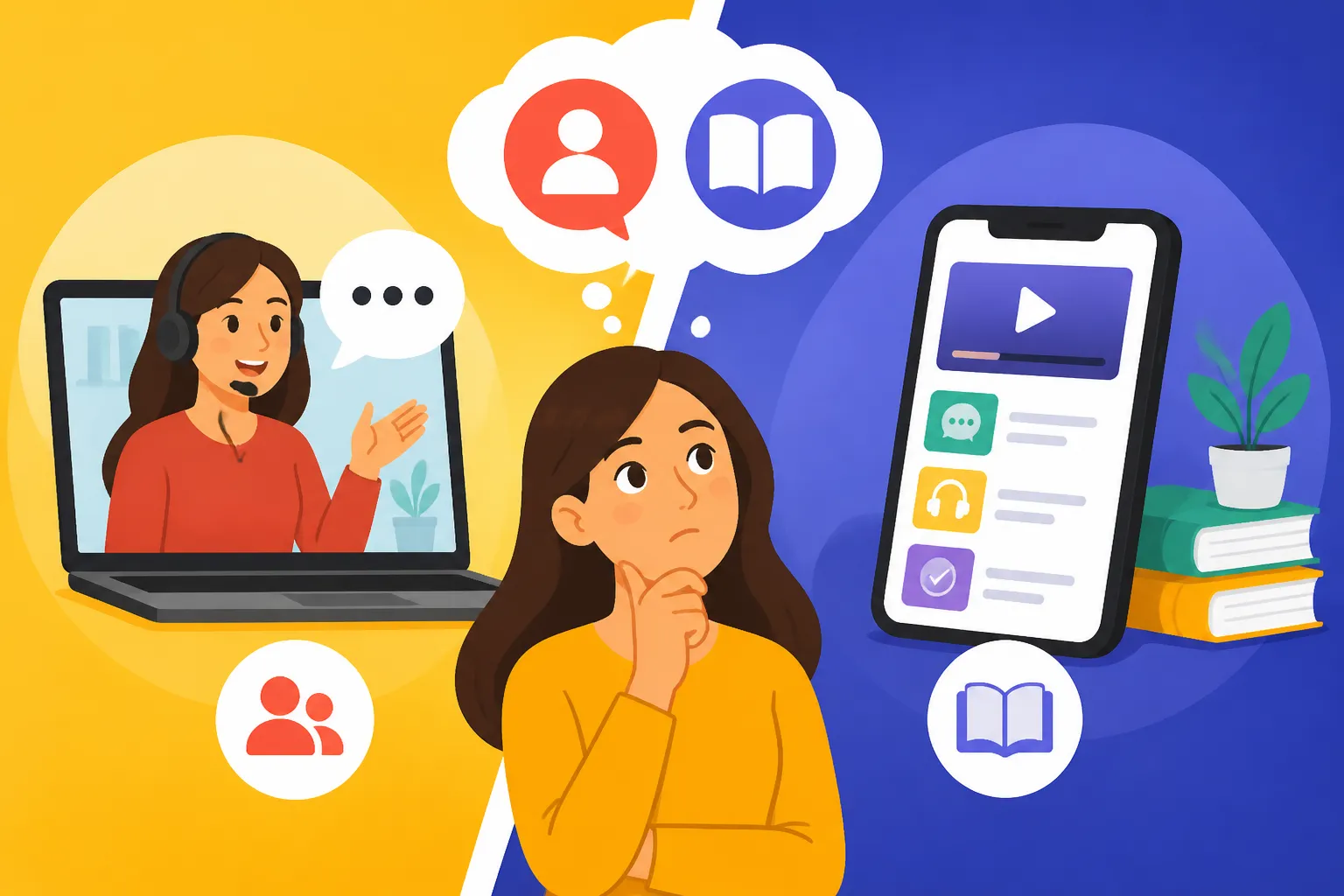
When it comes down to choosing your primary German learning tool, it's not simply a matter of preference; it's about what will yield the best results for an expat living in Germany. Let's stack iTalki against self-study apps across a few critical dimensions.
Cost-Effectiveness: Long-Term Value of Investment
At first glance, self-study apps often appear cheaper, with many offering free tiers or low monthly subscriptions. However, consider the return on investment. While they provide basic vocabulary and grammar drills, the progress towards true fluency is often slow and plateau-ridden without interaction. You might spend months or even years on an app, gaining a foundational understanding, but still struggling to hold a conversation.
iTalki, on the other hand, involves paying per lesson, which can seem like a higher upfront cost. But the concentrated, personalized learning, the immediate feedback, and the rapid improvement in conversational skills means you achieve your goals much faster. A few targeted lessons on iTalki can often accomplish more than weeks of unfocused app usage. When you factor in the time saved and the accelerated path to practical fluency – which directly impacts your job prospects, social life, and overall integration in Germany – the long-term value of investing in iTalki far outweighs the seemingly cheaper options. It's about getting more bang for your buck by getting to where you need to be faster.
Flexibility and Scheduling: Fitting Learning into a Busy Expat Life
Both self-study apps and iTalki offer significant flexibility, a huge plus for expats with unpredictable schedules. Apps are always available, anytime, anywhere. You can sneak in a quick lesson while waiting for the train or brewing your morning coffee. This "micro-learning" is great for maintaining consistency.
However, iTalki offers a different kind of flexibility that's equally, if not more, crucial: the ability to schedule lessons around your specific availability, often 24/7 across different time zones, and with a vast pool of tutors. If you work rotating shifts or have family commitments, you can find an iTalki tutor who matches your unique schedule. You can book a lesson an hour beforehand or weeks in advance. This means you’re not forced into rigid class times, and you can truly integrate language learning into your life without it feeling like an added burden. Plus, the sheer variety of tutors means you can easily find someone whose teaching style and availability align perfectly with your needs, something you don't get with a static app.
Motivation and Accountability: Staying on Track with Your Goals
One of the biggest challenges in language learning is staying motivated and accountable. Self-study apps use gamification, streaks, and notifications to try and keep you engaged. But let's be honest, it's easy to ignore those notifications, skip a day, and eventually fall off the wagon entirely when you're only accountable to yourself. There’s no external pressure, which can be both a blessing and a curse.
With iTalki, you have a scheduled appointment with a real person. This creates a powerful sense of accountability. You're far less likely to skip a lesson if someone is waiting for you. This commitment, coupled with the visible progress you'll make, significantly boosts motivation. Your iTalki tutor acts as your cheerleader, guide, and a consistent touchpoint in your learning journey. They celebrate your successes, help you overcome obstacles, and keep you focused on your goals, whether it’s preparing for a German Language Certificates TestDaF DSH and Goethe exam or simply being able to confidently order in a restaurant. This human connection fosters a sense of commitment that no app can replicate.
Here's a quick overview to summarize the differences:
| Feature | Self-Study Apps | iTalki Live Tutoring |
|---|---|---|
| Primary Focus | Vocabulary, basic grammar drills, memorization | Conversational fluency, pronunciation, personalized grammar |
| Interaction | Minimal, AI-driven, pre-recorded | Real-time, human, two-way dialogue |
| Feedback | Automated, basic error identification | Immediate, detailed, personalized explanations and corrections |
| Pacing | Fully self-paced, no external pressure | Flexible scheduling, structured lessons, tutor-led pacing |
| Motivation/Accountability | Internal motivation, gamification, streaks | External accountability, human connection, visible progress |
| Cultural Insight | Limited, often generic | Direct from native speakers, real-world context, nuanced advice |
| Content Customization | Generic curriculum, limited adaptation | Highly tailored to individual needs and interests |
| Confidence Building | Slow, often theoretical | Rapid, practical application, overcoming fear of speaking |
| Cost Perception | Low upfront, variable long-term value | Higher per-lesson, high long-term value for accelerated fluency |
Strategic Integration: Combining the Best of Both Worlds
While I've made a strong case for iTalki as the primary driver for achieving fluency, that doesn't mean self-study apps should be completely abandoned. In fact, the most effective approach for learning German as an expat often involves strategically combining both methods. Think of it as a well-rounded fitness regimen – you need both strength training and cardio.
Using Self-Study for Foundation and Vocabulary Building
Self-study apps are excellent for building your foundational knowledge. Use them for your daily vocabulary drills, practicing grammar concepts you learned in your iTalki lessons, and getting comfortable with basic sentence structures. This allows you to walk into your iTalki sessions with a solid base, ready to apply what you've learned rather than spending precious tutor time on rote memorization. They’re fantastic for repetitive tasks that don’t necessarily require a human touch.
For example, dedicate 15-20 minutes each morning to an app to learn new vocabulary or review verb conjugations. This constant exposure helps solidify basic concepts and keeps your mind "in German" even on days you don't have a live lesson. It's like doing warm-up exercises before a full workout. This strategy helps maximize the value of your iTalki sessions, ensuring that your valuable time with a native speaker is spent on higher-level tasks like conversation, complex grammar application, and cultural nuances.
Leveraging iTalki for Fluency and Confidence Boost
Once you have a decent grasp of basic vocabulary and grammar from your self-study, iTalki becomes your fluency accelerator. This is where you bring everything you've learned to life. Use your iTalki sessions to practice speaking, engage in free-flowing conversations, ask questions about specific situations you encountered during your week in Germany, and get immediate, targeted feedback.
The more you practice speaking with an iTalki tutor, the more confident you'll become. Your tutor can role-play scenarios, discuss topics relevant to your life (like German Business Etiquette Meeting Protocol and Dress Code or how to deal with local bureaucracy), and gently push you out of your comfort zone. This active application of knowledge is crucial for moving from understanding German to actually speaking it confidently. It bridges the gap between passive learning and active communication, transforming your theoretical knowledge into practical, usable skills.
Creating a Balanced Learning Routine for Expats
A balanced learning routine will incorporate both independent study and live interaction. Here’s a hypothetical example for an expat aiming for B1 fluency:
- Daily (15-30 minutes): Use a self-study app for vocabulary review, flashcards, or basic grammar exercises. Listen to German podcasts or watch German news to immerse yourself passively.
- 2-3 times a week (45-60 minutes each): Schedule live lessons with an iTalki tutor. Focus on conversation, role-playing, discussing current events, or reviewing difficult grammar points that came up during your self-study or daily life.
- Weekly (1-2 hours): Review your iTalki lesson notes, practice writing short paragraphs in German, or watch a German movie with subtitles. Seek out expat meetups or local language exchange groups to practice in a less formal setting.
This kind of routine ensures you're constantly building your knowledge base while simultaneously developing your practical speaking and listening skills. It creates a powerful synergy, where each component supports and enhances the other, leading to faster, more sustainable progress in your German language journey. Remember, consistency is your best friend when learning a language, and a varied approach helps keep things interesting and prevents burnout. For resources beyond apps, check out Learning German Top Language Schools and Resources for Expats.
Getting Started with iTalki for Your German Journey
You've read this far, so I'm guessing you're ready to seriously level up your German. Taking the plunge into live tutoring, especially with a platform as robust as iTalki, can feel a bit daunting at first. But trust me, it's one of the best investments you can make in your expat life here in Germany. It’s a straightforward process, and I’m here to walk you through how to make the most of it.
Choosing the Right Tutor: Beyond Just Language Skills
The beauty of iTalki is the sheer number of qualified German tutors available. This also means you have to be discerning in your choice. Don't just pick the first person you see! Look for a tutor whose teaching style, personality, and experience align with your learning goals. Many tutors offer a trial lesson at a reduced rate, which is a fantastic opportunity to test the waters.
Consider these factors:
- "Professional Teacher" vs. "Community Tutor": Professional teachers usually have formal language teaching certifications and structured curricula. Community tutors are native speakers who offer more informal conversational practice. Both are valuable, depending on whether you want structured lessons or just casual chat practice. For beginners or those needing specific grammar explanations, a professional teacher on iTalki might be a better start.
- Specializations: Some tutors specialize in exam preparation (e.g., Goethe, TestDaF), business German, or conversational fluency. If you have a specific goal, seek out tutors with relevant experience.
- Personality and Rapport: This is huge! You'll be spending a lot of time with this person. Look for someone who is patient, encouraging, and whose energy you connect with. Watch their introduction videos on iTalki to get a feel for their style.
- Reviews and Ratings: Always check a tutor's reviews. Pay attention to what other students say about their teaching methods, punctuality, and ability to explain difficult concepts.
Don't be afraid to try a few trial lessons with different iTalki tutors before committing to one. Finding the right fit is crucial for long-term success and enjoyment.
Preparing for Your First Lesson: Maximizing Your Investment
Once you've booked your first iTalki lesson, take a few minutes to prepare. This isn't just about impressing your tutor; it's about making sure every minute of your paid session is productive.
- Communicate Your Goals: Before the lesson, use the chat function on iTalki to tell your tutor what you want to achieve. Are you a complete beginner? Do you want to practice specific grammar? Do you need help with a particular aspect of Understanding German Medical Bills Decoding Private Invoices and Co-Pays or your German Dental Appointment How to Book and What to Expect on Your Visit? The more information you provide, the better they can tailor the lesson.
- Have a Notebook and Pen Ready: Or a digital equivalent. You'll want to jot down new vocabulary, grammar rules, and corrections.
- Find a Quiet Space: Ensure you have a good internet connection and a distraction-free environment so you can focus fully on the lesson.
- Don't Be Afraid to Make Mistakes: This is why you're here! Your tutor is there to help you learn, not to judge. Embrace the errors as learning opportunities.
- Review Basic Phrases: If you're a beginner, have a few basic German phrases ready to introduce yourself and state your learning goals, even if it's just "Ich möchte Deutsch lernen."
Being prepared helps you feel more confident and ensures you get the most out of your valuable time with your iTalki tutor.
Setting Goals and Tracking Progress
Learning a language takes time, and it's easy to get discouraged if you don't see immediate results. That's why setting clear, achievable goals and tracking your progress is so important, especially with your iTalki lessons.
- SMART Goals: Make your goals Specific, Measurable, Achievable, Relevant, and Time-bound. Instead of "I want to speak German better," try "I want to be able to order food confidently at a German restaurant by next month" or "I want to explain my job to a new German colleague without hesitation in two weeks."
- Regular Check-ins: Discuss your progress and goals with your iTalki tutor regularly. They can provide valuable insights into your strengths and weaknesses and adjust the lesson plan accordingly. They are a fantastic resource for understanding your personal growth and what steps you need to take next.
- Keep a Language Journal: After each iTalki lesson, write down what you learned, new words, and any areas you struggled with. This creates a tangible record of your progress.
- Practice Outside Lessons: Don't let your iTalki lessons be your only exposure to German. Try to apply what you've learned in daily life. Use German when shopping, speaking to neighbors, or watching German TV. The more you use it, the faster it sticks.
Remember that language learning is a journey, not a destination. There will be good days and bad days. But by combining the foundational benefits of self-study apps with the personalized, interactive power of iTalki, you'll be well on your way to truly mastering German and embracing your expat life to the fullest. Take that first step, book that trial lesson on iTalki, and prepare to see your German skills soar!
Disclaimer
This article is for general informational purposes only and does not constitute professional advice. Laws, prices and regulations vary by location and change over time. Consult a qualified professional for guidance on your specific situation.