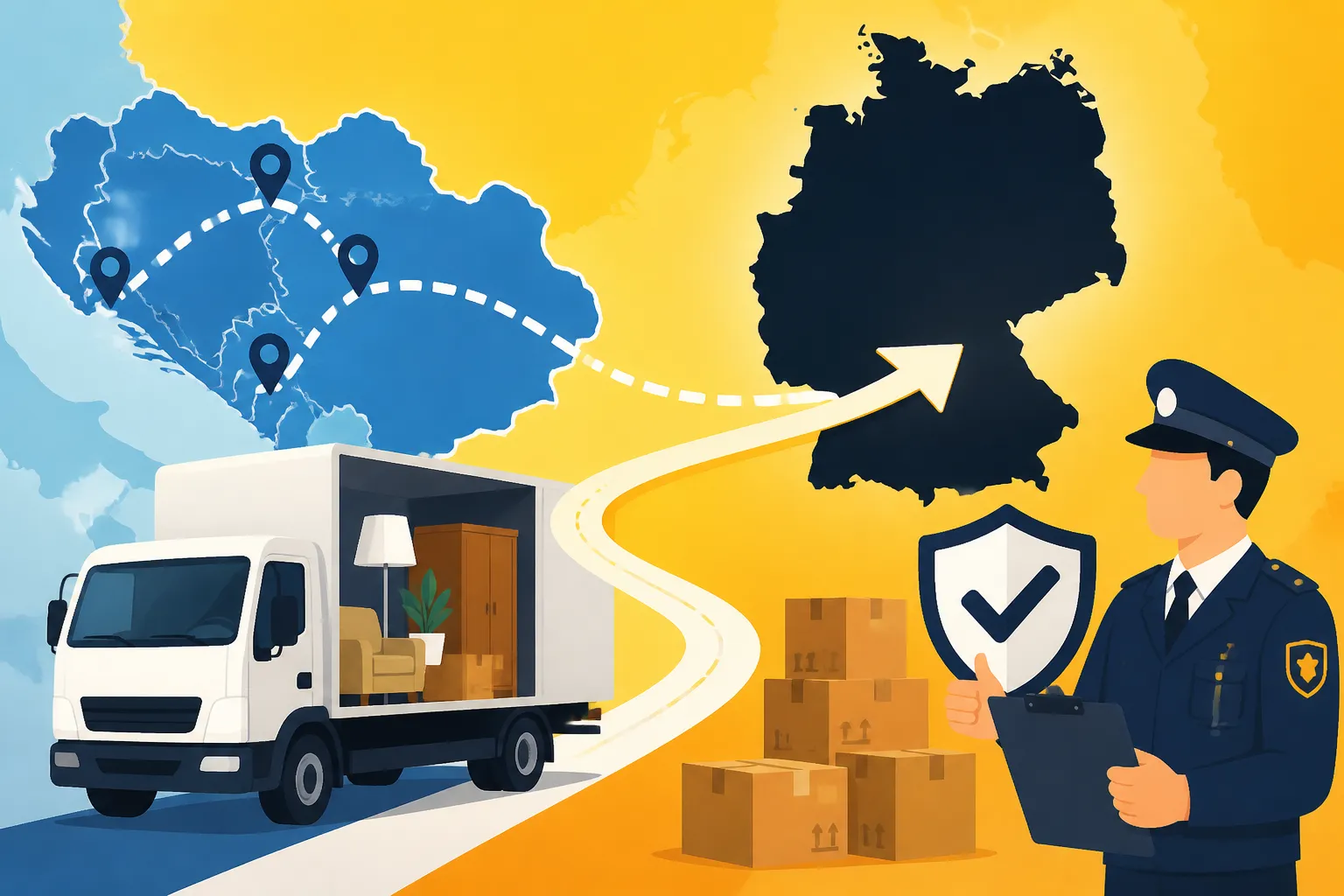
Moving to Germany from the Western Balkans: Routes and Customs Status
Moving to Germany from the Western Balkans is an incredibly exciting step, a chance for new beginnings and opportunities. But let's be honest, the excitement often comes tangled with a hefty dose of anxiety when you start thinking about the nitty-gritty: how do you actually get your life, your home, and your belongings from, say, Belgrade or Sarajevo, across international borders, through customs, and into your new German apartment? The administrative hurdles alone can feel like scaling a mountain, and the thought of customs forms and international shipping logistics might just push you over the edge. This guide is here to untangle that knot, walking you through the routes, customs statuses, and practical considerations to make your big move a smoother journey. And trust me, having a solid plan and the right support, like the kind you'll find through Sirelo, can make all the difference.
Understanding the Lay of the Land: Visa and Residence Status First
Before you even think about packing a single box, the most critical step is ensuring your legal right to live and work in Germany. For those of you coming from the Western Balkans – countries like Albania, Bosnia and Herzegovina, Kosovo, Montenegro, North Macedonia, and Serbia – these countries are not EU member states, which means specific visa and residence permit requirements apply. This isn't just a formality; it dictates everything from your entry into Germany to your ability to establish a life here and, crucially, how you navigate customs for your household goods.
Disclosure: This post may contain affiliate links. We may earn a commission at no extra cost to you if you make a purchase through these links. Read full disclosure.
Schengen vs. National Visas: Why it Matters for Your Move
Many people from the Western Balkans might have experience with short-stay Schengen visas for tourism or visiting friends and family. However, this is not the visa you need for moving to Germany permanently. A Schengen visa allows a stay of up to 90 days within any 180-day period in the Schengen area, and it explicitly prohibits taking up employment or establishing residency. For a long-term stay – whether for work, study, family reunification, or any other purpose – you will need a national visa (a D-visa), which is specific to Germany.
The national visa is your gateway. Once you arrive in Germany with this visa, you'll then need to apply for a residence permit (Aufenthaltstitel) at your local Foreigners' Office (Ausländerbehörde). This residence permit is the official document that grants you the right to reside in Germany for an extended period, and it’s what immigration officials will look for. Trying to move your entire household on a short-stay visa is a recipe for disaster at the border and with customs, so ensure your visa status is crystal clear and appropriate for your long-term intentions before you commit to any moving plans. You can find a wealth of information on the official requirements in our comprehensive guide, Moving to Germany: Comprehensive Visa & Immigration Guide
The Importance of Your Residence Permit
Once your national visa is approved and you've registered your address in Germany (the infamous Anmeldung, which is another crucial first step in settling in), you’ll eventually receive your physical residence permit. This card, often called the eAT (elektronischer Aufenthaltstitel), is crucial. It dictates your rights and responsibilities in Germany, including your eligibility for social services, your right to work, and often plays a role in how smoothly your customs clearance process goes. For example, some customs offices might want to see a valid residence permit to confirm your status as a genuine resident moving your personal effects, rather than someone attempting to import commercial goods. Without a proper residence permit or the clear path to obtaining one, customs officials could raise questions about the true purpose of your imported goods, potentially leading to delays, duties, or even seizure. Always prioritize securing your legal residency. Check out Visas and Residence Permits in Germany: Everything You Need to Know for more detailed guidance on this often complex process.
Navigating the Customs Maze: What You Can (and Can't) Bring
Ah, customs. This is often where the real headaches begin, especially for those moving from non-EU countries like the Western Balkans. The good news is that if you're genuinely moving your household goods for personal use, you can usually import them duty-free. But, as with everything bureaucratic, there are rules, conditions, and a whole lot of paperwork. This isn't like bringing an extra suitcase; it's a formal process that needs careful attention to detail.
Duty-Free Import of Personal Belongings: The Golden Rule
The primary rule for duty-free import of your personal belongings into Germany (or any EU country) is that these goods must have been in your possession and used by you for at least six months before your move to Germany. Furthermore, they must be intended for your personal use in your new German home and cannot be sold, rented out, or given away for at least 12 months after their import. This rule prevents people from importing new goods duty-free under the guise of "personal effects."
This applies to furniture, clothing, kitchenware, personal electronics, books, and even your private vehicle, provided it meets the usage criteria. However, there are exceptions and special rules for certain items like alcohol, tobacco, and professional equipment, which might have limits or specific taxation. It’s crucial to understand that "personal belongings" does not include commercial goods, raw materials, or items intended for resale. Getting this wrong can lead to significant delays, unexpected duties, or worse. This is precisely why engaging with an experienced international moving company, easily found through platforms like Sirelo, is invaluable. They can connect you with reputable international moving companies through Sirelo's network, ensuring all customs paperwork is handled correctly and you don't fall foul of these often-intricate rules.
Documents Required for Customs Clearance
The German customs authority (Zoll) requires a precise set of documents to grant duty-free clearance for your personal effects. Missing even one document can halt the entire process, leaving your belongings in limbo. Here's a typical list of what you'll need:
- Proof of Identity: Your passport, of course.
- Proof of Residence in Germany: This is usually your residence permit (Aufenthaltstitel) or, at the very least, a valid national visa that clearly indicates your intention to reside long-term, along with your official address registration (Anmeldung). Without proof that you're actually moving to Germany, they won't release your goods duty-free.
- Proof of Residence in Your Home Country: Documentation like old rental contracts, utility bills, or bank statements from your Western Balkan country, proving you've lived there for at least 12 months before the move. This is essential to show the "transfer of residence."
- Proof of Employment/Purpose of Stay in Germany: A work contract, university admission letter, or family reunification visa invitation can help demonstrate the reason for your move and solidify your intent to reside.
- Detailed Inventory/Packing List: This is non-negotiable. Every box needs to be clearly labeled with its contents, and you'll need a comprehensive list of all items, preferably in German (or English, if accompanied by an official translation). This should include quantity, description, and sometimes even estimated value. Don't just write "kitchen stuff"; list "6 plates, 4 mugs, 1 toaster."
- Declaration for Customs Clearance: You'll need to fill out a specific customs declaration form (e.g., Antrag auf Zollfreiheit für Übersiedlungsgut), declaring your goods as personal effects and requesting duty-free status.
- Authorization for the Moving Company: If you're using a professional mover (and for an international move, I strongly recommend it), you'll need to provide them with a power of attorney (Vollmacht) to act on your behalf with customs.
It's a lot, I know. My advice? Start collecting these documents early. Make copies, scan everything, and keep both digital and physical files. And when you’re dealing with an international move, particularly from outside the EU, professional movers are worth their weight in gold for handling this documentation.
Restricted and Prohibited Items: Don't Get Caught Out
While most of your everyday household items will sail through (with the right paperwork), there are specific categories of goods that are either restricted, meaning they require special permits, or outright prohibited. Ignoring these can lead to fines, confiscation, or even criminal charges.
Common Restricted Items:
- Firearms and Ammunition: Absolutely require specific permits and licenses, which are incredibly difficult to obtain for personal import.
- Pets: Bringing your beloved fur babies requires an EU Pet Passport, up-to-date vaccinations (especially rabies), microchipping, and potentially a waiting period. Please look into this well in advance.
- Certain Plants and Plant Products: Germany is strict about importing plants to prevent the spread of diseases and pests. Seeds, fruits, and certain plants may require phytosanitary certificates.
- Medication: Personal medication for a reasonable period (usually up to 3 months) is generally fine if accompanied by a doctor's prescription. However, controlled substances or large quantities will raise red flags and require special permission.
- Cultural Artifacts/Antiques: Items deemed to be cultural heritage from your home country might require export permits from your government.
- Alcohol and Tobacco: While small quantities for personal consumption are usually allowed, anything above specific limits will be subject to duties and taxes. These limits are much lower than for intra-EU travel.
- Vehicles: Importing a car from outside the EU involves not only customs clearance but also significant technical inspections (TÜV) and potential modifications to meet German standards, along with new registration. It's a complex process that often incurs VAT and customs duties, even if it's your personal car, unless specific conditions are met for duty-free status (like owning it for 6 months and having lived outside the EU for 12 months).
Prohibited Items:
- Illegal Drugs: Obvious, but worth stating.
- Counterfeit Goods: Knock-offs of designer brands, fake electronics, etc., are illegal and will be confiscated.
- Endangered Species and Products: Any items made from endangered animals or plants (e.g., ivory, certain furs, exotic leathers) are strictly prohibited under CITES regulations.
- Pornographic Material (especially child pornography): Absolutely forbidden.
- Weapons (illegal): Any weapon not legally permitted in Germany.
When you're comparing moving companies through Sirelo, be sure to discuss any unusual or potentially restricted items with them. Their partners often have expertise in customs regulations and can advise you on the specifics, or help you find a specialized service if needed. It's always better to ask and declare than to face severe consequences at the border.
Choosing Your Moving Route: Road, Rail, or Sea?
For most moves from the Western Balkans to Germany, road transport is by far the most practical and common option. However, depending on the volume of your goods and your specific location, other methods might come into play for certain parts of the journey. Understanding the logistics helps you budget and plan effectively. This is where platforms like Sirelo truly shine. They allow you to compare quotes from multiple vetted international moving companies, giving you a clear picture of what services are available and at what cost for your specific route.
Road Transport: The Most Common Route
Given the geographical proximity, road transport via truck is the go-to method for moves from the Western Balkans to Germany. It offers flexibility, door-to-door service, and generally quicker transit times compared to sea freight. You'll find a range of options:
- Full Load (Exclusive Use): Your belongings fill an entire truck. This is the fastest and most direct option, as the truck travels directly from your old home to your new one. It's ideal for larger households and those who need their items quickly.
- Part Load (Groupage/Consolidation): Your belongings share space in a truck with other shipments heading in the same general direction. This is a more cost-effective option, particularly for smaller moves (e.g., a few boxes or a single room's worth of furniture), but it means longer transit times as the truck makes multiple stops.
When you're planning your move, consider the border crossings. While many Western Balkan countries are not in the EU, they do have existing trade routes and border procedures with EU members. Professional moving companies are experts at navigating these, handling all the necessary transit declarations and paperwork. They know which routes are most efficient and can minimize delays.
Professional Moving Services vs. DIY: Weighing Your Options
Deciding whether to hire a professional moving company or attempt a DIY move is a critical choice, especially for an international move involving customs clearance.
Professional Moving Services (Recommended):
- Expertise in Customs: This is perhaps the biggest advantage. Professional international movers specialize in navigating complex customs regulations, preparing the right documentation, and liaising with authorities on your behalf. This alone can save you immense stress, time, and potential penalties.
- Packing and Unpacking: Many companies offer professional packing services, using high-quality materials to protect your belongings during transit. They can also unpack at your new home.
- Logistics and Coordination: They handle all the heavy lifting, loading, transport, and scheduling. They also manage any transit permits or specific requirements for crossing multiple borders.
- Insurance: Reputable movers offer comprehensive insurance options, protecting your valuables against damage or loss during the journey.
- Reduced Stress: Let's face it, moving is stressful enough. Offloading the logistics to experts frees you up to focus on other aspects of settling in Germany, like finding an apartment (check out Housing in Germany: Renting, Buying, and Finding Your Home as an Expat for help with that!), setting up utilities, or even just adjusting to the new culture.
When you choose a professional mover found through Sirelo, you're not just getting a truck; you're getting a partner who understands the intricacies of international relocation. They can also often assist with specialized services, like dismantling and reassembling furniture or handling delicate items.
DIY Move:
- Cost Savings (Potentially): If you have very few items and are comfortable handling all the packing, loading, driving, and paperwork yourself, a DIY move might be cheaper. However, for anything beyond a few suitcases, the costs of vehicle rental, fuel, tolls, and crucially, potential customs fines if you make a mistake, can quickly add up.
- More Control: You're in charge of every step. But with international moves, this also means you're responsible for every potential problem.
- Time and Effort: This is a massive undertaking. You'll need to dedicate significant time to research, planning, packing, and execution, all while managing your visa, new job, and other personal affairs.
For a move from the Western Balkans to Germany, particularly given the non-EU customs aspect, my strong recommendation is to use a professional international moving company. The peace of mind and expertise they offer, especially in customs declarations and logistics, far outweighs the perceived savings of a DIY attempt. Platforms like Sirelo connect you with reliable movers who understand these specific routes and challenges.
The Practicalities of Packing and Transit
So you've got your visa sorted, you understand the customs regulations, and you've decided on professional help. Now comes the tangible part: getting your belongings ready for their journey. This stage is all about preparation, protection, and clear communication with your chosen moving company.
Packing Smart: Tips for International Moves
Packing for an international move is an art form. It's not just about putting things into boxes; it's about strategic organization, protection, and adherence to regulations.
- Declutter Ruthlessly: Before you pack anything, go through every single item. Do you really need it? Will it fit in your new German apartment? Will it be worth the cost of shipping? The less you bring, the less you pay, and the less you have to unpack later. Sell, donate, or discard anything you don't truly cherish or need.
- Label Everything Meticulously: This cannot be stressed enough. Every box needs a clear, sequential number, a detailed list of its contents (e.g., "Kitchen – Pots, Pans, Cutlery"), and the room it belongs in at your new home. This helps with inventory, customs, and unpacking.
- Use High-Quality Packing Materials: Invest in sturdy boxes, bubble wrap, packing paper, and strong tape. Don't skimp here. Your belongings will travel a long way and endure various handlers.
- Pack an "Essentials Box": This box should contain everything you'll need immediately upon arrival in Germany, as your main shipment might take a few days or weeks to arrive. Think toiletries, a change of clothes, important documents (passports, visas, birth certificates, medical records – keep these with you, not in the shipment), basic medications, chargers, and a few comfort items.
- Separate Valuables and Documents: Jewellery, irreplaceable sentimental items, and all critical documents (passports, visa approvals, birth certificates, marriage certificates, university degrees, etc.) should always travel with you personally, not in the main shipment.
- Consider German Power Outlets: Germany uses Type F (Schuko) sockets, with 230V and 50Hz. If your appliances from the Western Balkans use a different voltage or plug type, you'll need adapters or converters. Appliances with different voltage might not work, or could even be damaged.
Many international moving companies you find via Sirelo offer comprehensive packing services, which can be a huge relief. They use specialized techniques and materials to ensure your items are safe, and they'll handle the detailed inventory lists required for customs.
Insurance for Your Valuables
While you hope for the best, mishaps can occur during international transit. This is why having adequate insurance for your household goods is paramount.
- Basic vs. Comprehensive: Most moving companies offer a basic liability coverage, which is usually minimal and based on weight, not value. This won't be enough for your cherished possessions. Always opt for comprehensive transit insurance that covers the full replacement value of your goods.
- Document Everything: Before anything is packed, photograph or video all valuable items, noting their condition. This serves as proof in case of a claim. Create a detailed inventory with estimated values.
- Understand the Policy: Read the insurance policy carefully. Understand what's covered, what's excluded, the deductible, and the claims process. Ask your moving company questions until you're completely clear.
Reputable moving companies listed on Sirelo will always offer various insurance options and can guide you through choosing the right coverage for your peace of mind.
Here's a quick comparison of moving options for common move sizes, highlighting the benefits of professional assistance:
| Aspect | DIY Move (Small Items) | Part Load (via Sirelo Partner) | Full Load (via Sirelo Partner) |
|---|---|---|---|
| Volume | Very few boxes, suitcases | 1-3 rooms, medium number of boxes/furniture | Large household, entire house contents |
| Cost | Low (if you do everything yourself) | Medium (cost-effective for smaller shipments) | Higher (but often best value for large volumes) |
| Transit Time | Immediate (if you drive yourself) | Longer (truck consolidates multiple shipments) | Fastest (direct route, dedicated truck) |
| Effort/Stress | Very High (all logistics, customs, packing on you) | Low to Medium (packing might be your only major task) | Low (movers handle almost everything) |
| Customs Handling | All yours, high risk of error | Handled by professional movers, minimal effort for you | Handled by professional movers, minimal effort for you |
| Insurance | Your responsibility (home insurance may not cover) | Optional comprehensive insurance available | Optional comprehensive insurance available |
| Best For | Minimalists, students with few belongings | Expats with limited budget, smaller apartment contents | Families, large houses, those prioritizing speed and convenience |
This table hopefully gives you a clearer picture of the benefits of leveraging a service like Sirelo to find a professional moving company that fits your needs. They'll alleviate so much of the burden when dealing with the nitty-gritty of international relocation from the Western Balkans to Germany.
The journey to your new life in Germany might seem daunting, especially with the administrative hurdles and customs complexities. But remember, countless expats have walked this path before you. With careful planning, a clear understanding of the rules, and the right support from reliable moving partners, you can make your move a success. Ready to take the plunge and find the perfect moving solution for your new German adventure? Head over to Sirelo today and compare quotes from trusted international movers!
Disclaimer
Please note that while this article provides comprehensive guidance based on current regulations and typical experiences, immigration and customs laws in Germany are subject to change. The information shared here is for general informational purposes only and does not constitute legal, financial, or immigration advice. Always consult official government websites, the German embassy/consulate in your home country, and qualified professionals (such as immigration lawyers, tax advisors, or professional moving companies) for the most up-to-date and personalized advice regarding your specific situation.