Understanding the Apotheke’s Role: Minor Ailments the Pharmacist Can Help With
Wandering down the aisles of a German supermarket looking for basic cough syrup is a humbling expat experience that usually ends in total confusion. I once spent thirty minutes searching a local grocery store for ibuprofen before realizing it simply isn’t sold there. This guide breaks down exactly how German pharmacies work and which minor ailments they can actually treat.
Disclosure: This post may contain affiliate links. We may earn a commission at no extra cost to you if you make a purchase through these links. Read full disclosure.
The German Apotheke vs Drogerie Divide
If you are accustomed to buying a giant bottle of aspirin along with your weekly groceries or picking up allergy pills at a convenience store, the German system will be a massive culture shock. Germany strictly separates the sale of everyday toiletries from the sale of active medical ingredients. Understanding this divide is your first step to getting the right relief.
The Strict Rules of Pharmacy Only Medication
In Germany, any product containing active pharmaceutical ingredients—even something as mild as low-dose paracetamol, basic antacids, or hydrocortisone cream—is subject to the Apothekenpflicht (pharmacy-only requirement). This law dictates that these items can only be sold inside a licensed pharmacy (Apotheke). You will recognize an Apotheke by the iconic, large red ‘A’ logo displayed outside the storefront.
Conversely, if you walk into a Drogerie (drugstore) like dm, Rossmann, or Müller, you are essentially walking into a large cosmetics and wellness shop. A Drogerie sells shampoo, diapers, cleaning supplies, and dietary supplements, but it cannot legally sell medication. If you have a headache, the strongest thing you will find at a Drogerie is a peppermint oil roll-on. You will not find ibuprofen. To fully grasp this ecosystem and understand what specific brands to ask for when you cross over to the pharmacy, it is highly recommended to read Common Over-the-Counter Medicines in Germany: A Guide for Cold, Pain, and More.
The Highly Trained German Pharmacist
Because you cannot simply grab medicine off a shelf, you are forced to interact with the pharmacist (Apotheker or Apothekerin). Do not view them merely as cashiers; German pharmacists undergo years of rigorous university training and act as frontline medical consultants. They are legally obligated to provide counseling (Beratungspflicht) before handing over medication.
When you ask for a painkiller, the pharmacist will likely ask who it is for, what kind of pain you are experiencing, and if you are taking any other medications. This might feel invasive if you just want to buy some aspirin and leave, but it is a vital safety net designed to prevent dangerous drug interactions. Their expertise makes them incredibly valuable when you are dealing with minor health issues that do not necessarily warrant a visit to a general practitioner. To understand how they fit into the broader clinical landscape, check out our deep dive into Healthcare in Germany: A Comprehensive Guide for Expats.
Common Ailments the Pharmacist Can Help You Treat
Before you spend hours in a doctor’s waiting room for a common sniffle, consider utilizing the Apotheke as your first point of medical contact. Pharmacists are perfectly equipped to diagnose mild, everyday ailments and recommend highly effective over-the-counter (OTC) treatments.
Colds Flu and Seasonal Allergies
When the dreaded winter wave of respiratory viruses hits, the Apotheke is your best friend. If you present with a sore throat, a blocked nose, and a mild fever, the pharmacist can provide you with targeted relief. They will usually dispense ibuprofen or paracetamol for the fever, medicated nasal sprays (like Nasenspray ratiopharm), and throat lozenges containing local anesthetics.
However, they cannot prescribe antibiotics. If your cold symptoms are caused by a bacterial infection like strep throat, the pharmacist will advise you to see a doctor. For seasonal allergies (Heuschnupfen), the pharmacist can dispense highly effective antihistamines like Cetirizine or Loratadine over the counter. If you suffer from chronic, year-round allergies and prefer to build a robust baseline of natural immunity before the pollen season hits, many expats choose to order specialized quercetin or high-dose vitamin C supplements through iHerb, which reliably ships international wellness brands directly to German addresses.
Digestive Issues and Stomach Bugs
Gastrointestinal distress is another area where the pharmacist shines. If you have eaten something that didn’t agree with you or caught a mild stomach bug, you don’t immediately need a doctor.
You can walk into an Apotheke and explain your symptoms (e.g., heartburn, nausea, diarrhea). The pharmacist will quickly provide you with the standard German remedies. For heartburn, they might recommend Pantoprazol (in low, OTC doses) or Talcid. For diarrhea, Loperamid is the standard chemical intervention, while Perenterol (a medicinal yeast) is heavily favored for rebuilding the gut flora. For general stomach cramps, almost every German pharmacist will suggest Iberogast, a famous herbal extract. Maintaining your gut health proactively is a massive topic here, and for a broader look at maintaining your physical baseline, explore our Healthy Living in Germany: Wellness, Fitness, and Mental Health Guide. If you need high-potency daily probiotics that are often too expensive at local pharmacies, ordering them via iHerb is a very common expat workaround.
Minor Skin Irritations and Burns
For superficial wounds, mild burns, insect bites, or sudden rashes, the pharmacist can save you a trip to a dermatologist. They can examine the affected area right at the counter.
If you have a mild eczema flare-up, they can provide a low-dose hydrocortisone cream (up to 0.5% without a prescription). For minor cuts and scrapes, they will dispense antiseptic sprays like Octenisept and high-quality healing ointments like Bepanthen. If the pharmacist looks at your rash and suspects it might be shingles or a severe allergic reaction, they will immediately refuse to treat it and instruct you to seek formal medical care. Knowing exactly where to go when the pharmacist turns you away is crucial, so be sure to review Navigating Medical Care in Germany: Doctors, Hospitals, and Pharmacies.
| Condition | Typical Over-the-Counter Recommendation | When to See a Doctor Instead |
| Fever / Headache | Ibuprofen (up to 400mg), Paracetamol | Fever lasts more than 3 days, “worst headache of your life” |
| Allergies | Cetirizine, Loratadine, saline eye drops | Severe shortness of breath, facial swelling |
| Diarrhea | Loperamid, medicinal charcoal, electrolytes | Blood in stool, lasts more than 48 hours, severe dehydration |
| Skin Rash | 0.5% Hydrocortisone, Bepanthen cream | Spreading rapidly, accompanied by fever, signs of infection (pus) |
Natural Remedies and When to See a Doctor
One of the most surprising aspects of German pharmacy culture is the deep integration of natural and alternative medicine alongside conventional pharmaceuticals.
The German Penchant for Herbal Medicine
If you walk into an Apotheke complaining of a cough and simply ask for “something to help,” there is a very high probability the pharmacist will hand you a box of ivy leaf extract (Prospan) or a homeopathic sugar pill. Germany has a massive cultural affinity for Naturheilkunde (naturopathy) and pflanzliche Arzneimittel (herbal medicines).
If you want conventional, chemical medicine, you often have to explicitly ask for it. You can politely tell the pharmacist, “Ich möchte lieber etwas Chemisches” (I would prefer something chemical) or “Keine Homöopathie, bitte” (No homeopathy, please). The pharmacist will not be offended; they simply default to the gentlest possible remedy first. It is a fundamental difference in how minor ailments are treated compared to the United States or the UK. Many expats who embrace this naturopathic approach often supplement their local herbal drops with adaptogens and specialized teas from iHerb to build a comprehensive holistic medicine cabinet at home.
Red Flag Symptoms That Require a Doctor
Pharmacists are trained to recognize their own limits. They are legally not allowed to diagnose complex diseases or dispense prescription-only medications (verschreibungspflichtige Medikamente) like antibiotics, strong painkillers, or blood pressure medication without a doctor’s signature.
If you describe symptoms that indicate a severe infection, chronic illness, or acute trauma, the pharmacist will tell you, “Sie müssen zum Arzt gehen” (You must go to the doctor). This is not them being unhelpful; it is them recognizing a red flag.
Navigating Costs and Insurance at the Pharmacy
Understanding who pays for what at the Apotheke depends entirely on the color of your prescription slip and the type of health insurance you hold.
Public vs Private Insurance Rules
If you are insured under the statutory public health system (Gesetzliche Krankenversicherung), going to the pharmacy is generally very cheap, provided you have a prescription from a doctor. When a doctor writes a prescription for a necessary medication, they usually issue a pink slip (or an electronic E-Rezept). When you hand this to the pharmacist, your public insurance covers the bulk of the cost. You are only required to pay a small co-payment (Zuzahlung), which is usually between 5 and 10 euros per medication.
However, public insurance almost never pays for over-the-counter medications for adults. If you go to the Apotheke on your own to buy ibuprofen or cough syrup, you must pay the full retail price out of pocket.
If you have private health insurance (Private Krankenversicherung), the process is different. You typically pay the full cost of the prescription medication upfront at the pharmacy counter. The pharmacist will give you a stamped receipt and a copy of the prescription, which you then submit to your private insurance provider for full reimbursement. For expats who want premium care and rapid reimbursement, Ottonova offers a fully digital private health plan where you simply snap a photo of your pharmacy receipt in their app to get your money back within days. If you are considering upgrading your coverage, definitely review Private Health Insurance in Germany: Benefits, Costs, and Eligibility to weigh the pros and cons. Furthermore, some specialized supplementary plans via Feather Insurance can even cover alternative medicines that the pharmacist might recommend.
Finding an After Hours Emergency Pharmacy
Illnesses rarely respect business hours. If you develop a raging fever at 2 AM on a Sunday, you cannot simply wait until Monday morning. Fortunately, Germany operates a highly reliable Apotheken-Notdienst (pharmacy emergency service).
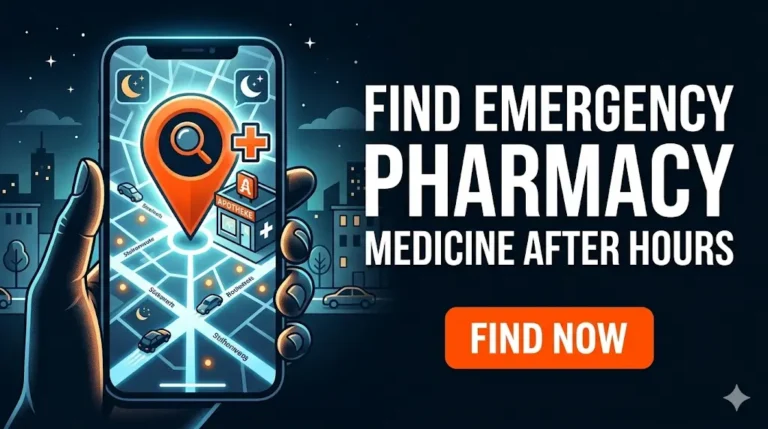
Pharmacies in every district take turns staying open 24 hours a day, 365 days a year. There will always be an open Apotheke relatively close to your home, but it rotates daily. To find the one currently on duty, you can check the official website aponet.de, or you can walk to your nearest closed pharmacy. By law, every closed pharmacy must display a printed list or an illuminated screen in their window showing the exact address of the nearest open emergency pharmacy.
When you visit a pharmacy during the night or on a Sunday, you usually do not go inside. You ring a designated night bell (Nachtglocke), and the pharmacist will serve you through a small security hatch in the door. Be aware that a small emergency surcharge (Notdienstgebühr) of around 2.50 euros is added to your bill during these after-hours visits.
Understanding the immense capability of the German Apotheke transforms it from a confusing retail shop into an accessible, highly professional first line of defense for your health. Once you learn how to ask the right questions, the pharmacist will become one of your most trusted resources in your new country.
References
Primary sources (official)
- Federal Ministry of Health (BMG) – Everything you need to know about the healthcare system in Germany: https://www.bundesgesundheitsministerium.de/fileadmin/Dateien/5_Publikationen/Ministerium/Broschueren/BMG_Ratgeber_Gesund_in_Deutschland_EN_bf.pdf
- Federal Ministry of Health (BMG) – The German National Medication Plan: https://www.bundesgesundheitsministerium.de/fileadmin/Dateien/3_Downloads/P/Patientensicherheit/WS6-2017/WS6_Schulz_Medication_Plan_Ministerial_Summit_WS_6_Bonn_Schulz_20170329pptx.pdf
Other helpful sources
- Aponet – Official Emergency Pharmacy Search (Apotheken-Notdienstsuche): https://www.aponet.de/apotheke/notdienstsuche
Disclaimer
This article is for informational purposes only and does not constitute formal medical or legal advice. Pharmacists in Germany can offer professional advice but cannot replace a medical doctor for severe, chronic, or worsening conditions. Health insurance regulations, co-payment rules, and emergency service availability are subject to frequent legislative changes. Always consult directly with a licensed healthcare provider, your pharmacist, or your official health insurance provider for guidance tailored to your specific medical situation.