Germany Immigration Checklist: 10 Steps to Moving Legally
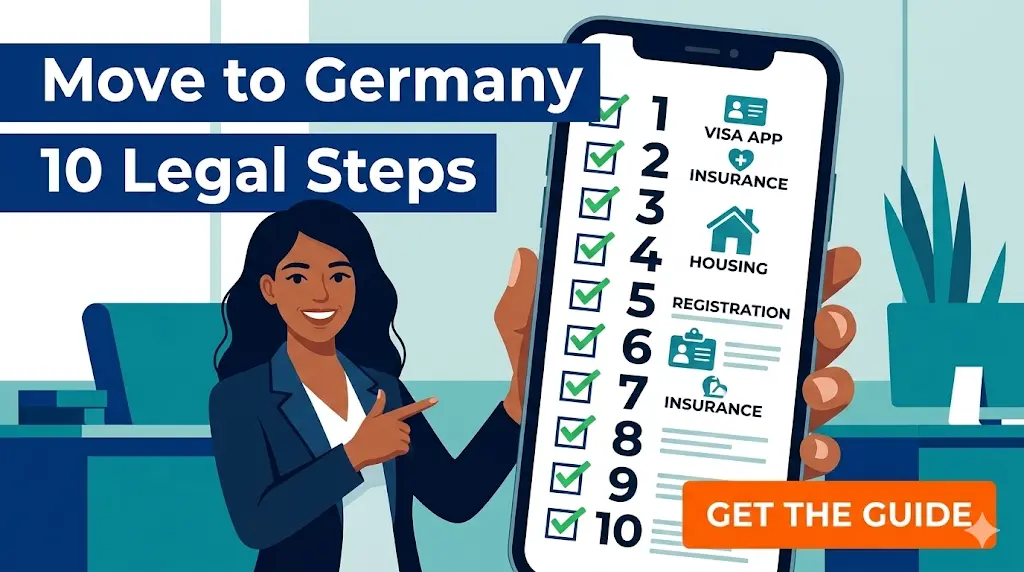
Missing a single translated apostille on your degree can derail your entire German relocation before you even board the plane. I once had a work visa delayed by three agonizing months because my university transcript lacked one specific, certified stamp. This comprehensive ten-step checklist breaks down exactly how to legally navigate the German immigration labyrinth, avoid devastating rejections, and secure your new life.
Disclosure: This post may contain affiliate links. We may earn a commission at no extra cost to you if you make a purchase through these links. Read full disclosure.
Phase 1: Pre-Departure Bureaucracy and Planning
The biggest mistake expats make is assuming that moving to Germany involves simply booking a flight and finding a job once they arrive. The German immigration system is highly compartmentalized, and every single step is dependent on the flawless execution of the step before it. Your relocation begins months before you ever set foot in the country.
Step 1: Decoding Your Visa Eligibility and Entry Privileges
Your very first task is determining exactly which set of legal rules applies to your specific passport. The German system relies heavily on bilateral treaties, meaning an American expat and an Indian expat will face entirely different logistical timelines, even if they are applying for the exact same job.
If you hold a passport from a “privileged nation”—specifically the United States, Canada, Australia, New Zealand, Japan, South Korea, Israel, or the United Kingdom—you are granted a massive administrative advantage. You do not legally need to apply for a National Visa in your home country. You can fly directly to Germany, enter visa-free as a tourist for 90 days, and apply for your long-term residence permit directly at the local immigration office. However, this is a terrifying race against the clock, as securing a municipal appointment within those 90 days is notoriously difficult due to extreme bureaucratic backlogs.
If you are from a third country not on that privileged list, you must apply for a National Visa (Type D) at the German embassy in your home country before you travel. Attempting to enter Germany on a standard Schengen tourist visa and hoping to “switch” your status to a work permit from inside the country is illegal and will result in immediate deportation. You must figure out exactly which visa fits your profile—whether that is a student visa, a freelance permit, or a corporate transfer. To deeply understand how these rigid categories define your legal standing, you must review our Moving to Germany: Comprehensive Visa & Immigration Guide. For high-earning professionals, specifically investigating the EU Blue Card Germany: Eligibility, Benefits, and Application Process is your most lucrative first step.
| Application Pathway | Target Demographic | Pros | Cons |
| Applying from Home Country (National D Visa) | All non-privileged third-country nationals (Mandatory) | Legal certainty before booking flights; no ticking 90-day clock upon arrival. | Massive embassy wait times; difficult to attend in-person job interviews in Germany. |
| Applying from Within Germany (Visa-Free Entry) | Citizens of US, UK, Canada, Australia, Japan, etc. | Immediate relocation possible; allows you to view apartments and interview locally. | Extreme stress trying to secure an Ausländerbehörde appointment before the 90 days expire. |
Step 2: Translating and Authenticating Your Documents
Once you know which visa you need, you must gather the evidence to prove you deserve it. The German bureaucracy operates on absolute proof. The authorities will not accept your word, and they will certainly not accept a disorganized folder of unverified, English-language documents. Every single university degree, marriage certificate, and employer reference letter must be presented in its original form alongside perfectly clear photocopies.
Crucially, any document not originally issued in German must be formally translated. This is where thousands of expats fail. You cannot translate these documents yourself, nor can you use an AI tool or a cheap online commercial agency. The German embassy and local immigration offices demand absolute legal accountability for every word. They almost exclusively require formal translations executed by a “Sworn Translator” who is legally recognized by the German regional courts.
Finding these specific, certified translators from thousands of miles away can stall your application for weeks. Utilizing a dedicated platform like Lingoking is essential to bypass this nightmare. They connect you directly with German-certified sworn translators who turn around legally flawless, perfectly formatted documents that carry the exact stamps and seals the immigration office demands. Ensuring your portfolio is translated by a professional through Lingoking guarantees it will never be rejected at the desk for administrative errors. Furthermore, check if your home country’s documents require an Apostille or formal legalization by the German embassy, as securing this government authentication can easily add another month to your timeline.
Step 3: Establishing Financial Proof and Blocked Accounts
The German government provides a robust social safety net for its citizens, but it absolutely refuses to subsidize newly arrived expats. Whether you are coming to study, search for a job, or start a freelance business, you must provide a Finanzierungsnachweis—absolute proof that you have the financial resources to survive without claiming state welfare.
If you are coming on a standard work visa, your signed German employment contract serves as this proof, provided the salary meets the legal minimums. However, if you are arriving without a guaranteed monthly paycheck, you must prove you possess significant liquid savings. The authorities calculate exactly how much money you need to survive per month (currently hovering around €934 to €1,027 depending on the visa type), and they will demand proof of a lump sum covering your entire first year.
You cannot simply present a screenshot of a savings account from your home country, as those funds can be withdrawn the day after the visa interview. The authorities mandate that these funds be transferred into a highly regulated German Blocked Account. This escrow account locks your money and only releases a predetermined maximum monthly allowance to you after you arrive. To manage this safely from abroad without losing money to terrible currency conversion rates, utilizing a certified digital provider like Expatrio is highly recommended. They allow you to open a government-approved blocked account entirely online within days, instantly generating the exact PDF confirmation document the embassy demands. For a deep dive into executing this transfer, read Student Visa Blocked Account Sperrkonto: What It Is and How to Set It Up.
Phase 2: Securing the Visa and Immediate Pre-Flight Tasks
With your documents translated and your finances locked, you move into the active application phase. This phase requires intense patience and a meticulous understanding of what German consular officers are actually looking for during an interview.
Step 4: Acing the Embassy Appointment
Securing an appointment slot at the German embassy or consulate in your home country is often the most frustrating bottleneck of the entire journey. Due to global backlogs, wait times just to secure an interview slot can stretch for several months. You must monitor the booking portals aggressively, often logging in early in the morning to catch cancellation slots.
On the day of your appointment, you must arrive with your portfolio perfectly organized according to the embassy’s official checklist. The consular officer’s job is to verify your intent and detect fraud. They will meticulously cross-reference your translated university degrees against the German Anabin database to ensure your qualifications are recognized. They will ask you detailed questions about your future employer, your study plans, and why you chose your specific target city in Germany.
If you are applying for a family reunification visa or a freelance permit, the scrutiny is even higher. You must be prepared to confidently explain your business plan or your relationship history. If a single required document is missing—or if you brought a standard translation instead of a sworn translation—the officer will not hold your file pending the missing paper. They will reject you at the desk, keep your application fee, and force you to book a new appointment months in the future.
Step 5: Securing Compliant Health Insurance Before You Fly
This is a non-negotiable requirement that catches nearly every expat off guard: you absolutely cannot receive a German visa without proving you have comprehensive health insurance that activates the exact moment your flight lands.
The German healthcare system is excellent, but it is strictly regulated and divided into public and private sectors. If you are entering as a salaried corporate employee, you will be mandated to join the statutory public health insurance system. However, your corporate public health insurance usually does not activate until your official first day of work. If you plan to fly to Germany two weeks early to find an apartment and settle in, you have a dangerous coverage gap. The embassy will deny your visa if this gap exists.
To bridge this gap, you must purchase an “incoming travel insurance” policy. To ensure you do not buy a cheap, non-compliant policy that the embassy rejects, using an English-first, specialized expat broker like Feather Insurance is absolutely critical. They can instantly set up both your required incoming bridging travel insurance and enroll you in your permanent public or private policy, ensuring all your documents are flawlessly compliant with embassy requirements.
Step 6: Booking Temporary Housing for the Anmeldung
As you prepare to book your flights, you will face the most brutal paradox of the German immigration system. To open a local bank account, get your tax ID, or apply for your final residence permit, you must register your address at the local citizens’ office. But to rent a long-term German apartment, landlords universally demand to see a local bank account and your German credit score.
You cannot break this cycle by simply booking a hotel or a casual vacation rental for a few weeks. The address registration process requires a specific, legally binding document from your landlord confirming you actually live there. Most hotels and short-term tourist hosts refuse to provide this document because they do not want you establishing legal tenancy rights.
To survive this phase, you must specifically search for “temporary furnished housing” or “aparthotels” that explicitly advertise that they provide address registration paperwork. These short-term apartments are incredibly expensive, but they are the only way to secure a legal foothold in the country while you hunt for a permanent home.
Phase 3: The Critical First Weeks After Arrival
Getting the visa glued into your passport and boarding your flight feels like the ultimate victory, but it is merely the end of the tutorial. The real administrative marathon begins the moment you land in Frankfurt, Berlin, or Munich. The first fourteen days will dictate your success.
Step 7: Executing the Address Registration Anmeldung
The absolute foundation of your legal existence in Germany is the Anmeldung. By law, anyone moving to Germany must register their residential address at the local citizens’ office within exactly 14 days of moving into an apartment.
To complete this process, you must secure an appointment at the Bürgeramt. You will bring your passport, your entry visa, and the critical Wohnungsgeberbestätigung (Confirmation of Residence) signed by your temporary or permanent landlord. The clerk will type your details into the federal database and hand you a stamped piece of paper called the Meldebescheinigung.
Guard this piece of paper with your life. You will be asked to present it for every single contract you sign in Germany, from your internet provider to your gym membership. Furthermore, executing the Anmeldung automatically triggers the federal tax office to generate your personal Tax Identification Number. This number will arrive by physical mail to your registered address a few weeks later, and your employer desperately needs it to process your first paycheck correctly.
Step 8: Opening a German Bank Account
Once you have your stamped Meldebescheinigung, your very next priority is opening a proper German current account. While you might have survived your first week using an international credit card, you cannot live in Germany long-term without a local IBAN. You need this regular checking account to receive your salary, pay your rent via automatic bank transfers, and set up your essential utility contracts.
If you used a blocked account to secure your visa, you cannot simply walk to an ATM and withdraw cash directly from that escrow fund. You must log into your blocked account portal, upload your new German address registration and your new German IBAN, and instruct them to begin releasing your monthly payouts.
However, traditional German brick-and-mortar banks are incredibly hostile to newly arrived foreigners who do not possess a German credit history. To bypass this frustration, expats highly rely on digital-first neo-banks. If you already utilized Expatrio for your blocked account, they often bundle a free, fully functional German bank account into their value packages, providing you with the vital local IBAN you need within minutes of arriving. Securing this banking infrastructure allows you to finally set up automatic payments for your compliant Feather Insurance premiums, ensuring you maintain the continuous coverage required for Healthcare in Germany: A Comprehensive Guide for Expats.
Phase 4: Finalizing Your Long-Term Legal Status
With your immediate survival logistics handled, you must turn your attention to securing your permanent future. The entry visa in your passport is only a temporary bridge; you must convert it into a definitive legal status before it expires.
Step 9: Applying for Your Electronic Residence Title
The National Visa you received from the embassy is usually only valid for three to six months. If you entered visa-free as a privileged national, you only have 90 days. Before this time runs out, you must convert your temporary entry rights into a physical, plastic Electronic Residence Title.
This requires booking an appointment at the local Foreigners’ Office. In major metropolitan hubs, these offices are notoriously understaffed and overwhelmed. You must bring all the original documents you initially showed the embassy, plus your new address registration, your German bank statements, and your final employment contract. The caseworkers possess immense discretionary power, often speak only German, and expect your paperwork to be perfectly organized.
If your entry visa is expiring and you cannot secure an appointment, you must act strictly according to the law to freeze your status. If you officially apply before your current visa expires, the office will issue you a Fiction Certificate, legally extending your presence until they process your card.
Step 10: Mapping Your Path to Permanent Residency
The ultimate reward for enduring the grueling German immigration system is long-term stability. The government desperately wants integrated, skilled expats to put down deep roots, and they offer massive incentives for those who survive the early years.
Under standard German immigration law, a foreign worker must endure the anxiety of temporary visa renewals for five years before they can apply for a Permanent Settlement Permit. However, highly skilled professionals, EU Blue Card holders, and graduates of German universities are granted magical fast tracks, allowing them to apply for permanent residency in as little as 21 to 36 months. Achieving this permanent status frees you completely from the anxiety of visa renewals. You can pivot your career, step down from a stressful corporate role, or start a completely new venture without asking the government for permission.
Furthermore, Germany recently passed historic, sweeping overhauls to its nationality laws. You can now apply for a powerful German passport after just five years of legal residency, and the draconian rules forcing expats to surrender their home country passports have been entirely abolished.
References
Primary sources (official)
- Federal Foreign Office (Auswärtiges Amt) – Visa regulations and FAQs: https://www.auswaertiges-amt.de/en/visa-service/buergerservice/faq/weiteres-box-230198
- Make it in Germany – Step-by-Step Guide for Qualified Professionals: https://www.make-it-in-germany.com/en/visa-residence/types/work-qualified-professionals
Other helpful sources
- IHK (Chamber of Commerce and Industry) – Employment of foreign workers: https://www.ihk.de/en
Disclaimer
This guide is for informational purposes only and does not constitute formal legal, financial, or immigration advice. German immigration laws, salary thresholds, and municipal processing requirements change frequently and depend heavily on the discretion of local authorities and the Federal Employment Agency. Always consult the official websites of the German embassy in your home country, the Federal Office for Migration and Refugees (BAMF), or seek professional counsel from a certified German immigration lawyer before making binding relocation decisions or submitting formal visa applications.