Glasses and Contact Lenses: Getting an Eye Prescription and Lenses in Germany
Navigating vision care in Germany involves understanding the distinct roles of local opticians and medical ophthalmologists, alongside complex health insurance rules. This comprehensive guide walks expats through getting a German eye prescription, purchasing glasses or contact lenses, and maximizing your insurance coverage.
Disclosure: This post may contain affiliate links. We may earn a commission at no extra cost to you if you make a purchase through these links. Read full disclosure.
Navigating Eye Exams and Prescriptions in Germany
Visiting an Optician versus an Ophthalmologist
A common point of confusion for newly arrived expats is knowing exactly where to go for a standard vision check. In Germany, the roles of eye care professionals are strictly delineated. If you are a healthy adult who simply needs a new pair of glasses or a routine check of your visual acuity, you do not need to visit a medical doctor. Instead, you should visit an optician, known locally as an Optiker or Augenoptiker. German opticians undergo rigorous, multi-year vocational training and are highly qualified to perform precise vision tests, determine your prescription, and fit you for frames and contact lenses. Walk-ins are frequently welcome at optical shops, though booking an appointment online ensures you will not have to wait.
Conversely, an ophthalmologist, or Augenarzt, is a fully qualified medical doctor specializing in eye health. You should book an appointment with an Augenarzt if you are experiencing medical symptoms such as eye pain, sudden vision loss, chronic dry eyes, or if you need routine screenings for medical conditions like glaucoma, cataracts, or diabetic retinopathy. Additionally, children under the age of 14 are generally required to be seen by an Augenarzt for their initial eye exams rather than an optician.
Booking an appointment with an Augenarzt can sometimes take weeks or even months for a non-urgent routine check, reflecting the broader wait times in the German medical system. While a referral from a general practitioner is not strictly legally required to see an eye doctor, having one can sometimes expedite the booking process. To understand how to establish a relationship with a primary care physician to secure these referrals, review our comprehensive guide on Finding a Doctor in Germany: How to Choose a Hausarzt.
| Feature | Optician (Optiker) | Ophthalmologist (Augenarzt) |
| Primary Role | Vision correction, prescribing and selling glasses/contacts | Medical diagnosis, treating eye diseases, performing surgeries |
| Can perform a Sehtest? | Yes | Yes |
| Can prescribe medication? | No | Yes |
| Appointment Wait Times | Immediate or very short (Walk-ins often welcome) | Long (Weeks to months for routine checks) |
| Public Insurance Coverage | Usually free if buying glasses; nominal fee otherwise | Fully covered for medical diagnostics |
How to Get an Eye Test and Prescription
The standard eye test in Germany is called a Sehtest. When you visit an Optiker for a Sehtest, the process is highly technical and efficient. The optician will typically use an autorefractor to get a baseline measurement of your eyes, followed by a manual refraction test using a phoropter to fine-tune the exact prescription required for perfect visual acuity. The entire process takes about 20 to 30 minutes.
The cost of a Sehtest varies depending on your end goal. If you are taking the test with the intention of purchasing your glasses or contact lenses directly from that specific optician, the test is almost universally offered for free. However, if you only want the prescription document so you can buy glasses online from a discount retailer, the optician will usually charge a service fee, which generally ranges from €15 to €30. Furthermore, if you are taking a highly specific, legally mandated eye test to obtain a German driving license (Führerschein-Sehtest), the fee is statutorily fixed across the country and usually costs under €10.
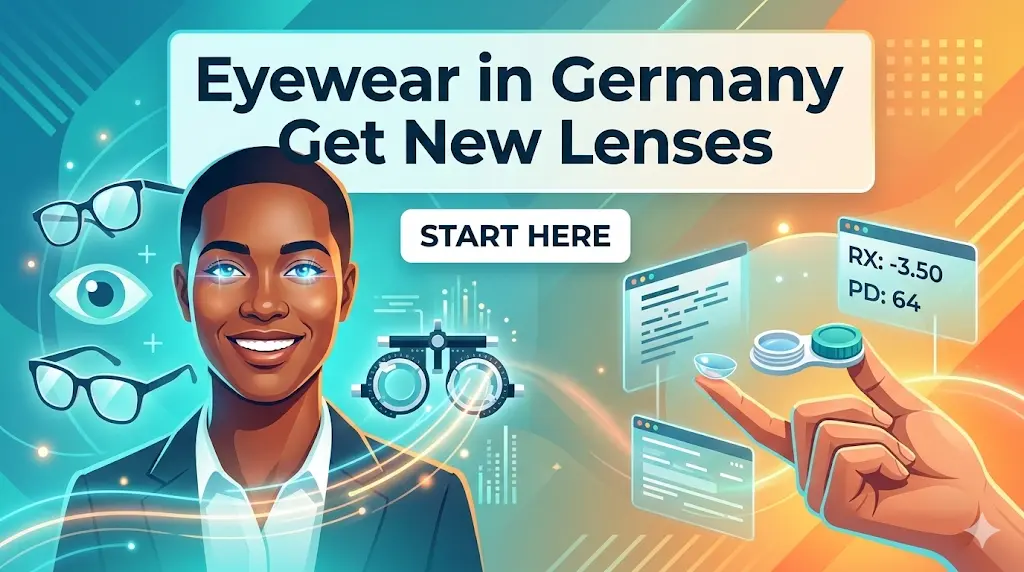
When you receive your printed prescription (Brillenpass or Verordnung), the terminology will be in German, but the metrics are universal. You will see values for Sphäre (Sph – the main lens power), Zylinder (Zyl – for astigmatism), and Achse (A – the axis of astigmatism). Another critical measurement is the Pupillendistanz (PD), which is the exact distance between your pupils. While you can technically bring an old prescription from your home country to a German optician to have frames made, it is highly recommended to undergo a fresh Sehtest locally to ensure the precise centering and calibration required by German optical standards.
Buying Glasses and Contact Lenses
Popular German Optician Chains and Boutiques
The German eyewear market is vast and heavily dominated by a few massive retail chains, alongside a thriving sector of independent optical boutiques. Fielmann and Apollo-Optik are the undisputed giants of the high street. They have branches in almost every pedestrian shopping zone across the country. These chains are renowned for their aggressive pricing models, massive selections, and their “Nulltarif” (zero tariff) collections, which are highly basic frames covered entirely by statutory health insurance for eligible individuals. They are the ideal starting point for expats on a strict budget.
For a more modern, omnichannel retail experience, Mister Spex is incredibly popular. Originally an online-only retailer, they now operate numerous physical stores where you can undergo an eye test and try on frames, while still benefiting from their massive online inventory and competitive digital pricing. Another favorite among young professionals and expats is Ace & Tate, a stylish, direct-to-consumer brand offering trendy, high-quality frames with a transparent, flat-rate pricing structure that includes basic single-vision lenses.
If you are looking for luxury, independent optical boutiques (Meisteroptiker) offer high-end designer frames and premium German-engineered lenses from heritage brands like Zeiss or Rodenstock. Purchasing custom progressive lenses (Gleitsichtbrille) at these boutique locations can easily cost between €800 and €1,500. If you are a new arrival paying for these premium medical devices using funds transferred from your home country, relying on traditional bank transfers will result in terrible exchange rates and high hidden fees. By utilizing a borderless financial platform like Wise, you can transfer your home currency into Euros at the exact mid-market rate, ensuring your healthcare budget is spent entirely on your vision rather than on legacy banking markups.
Purchasing Contact Lenses and Solutions
Contact lenses (Kontaktlinsen) are ubiquitous and highly accessible in Germany. For standard daily or monthly disposable soft lenses, you do not actually need to visit an optician to purchase replacements. You can buy basic, generic contact lenses straight off the shelf at any major German drugstore chain, such as dm or Rossmann, alongside your shampoo and toothpaste. The same applies to contact lens solutions (Kontaktlinsenflüssigkeit), which are incredibly cheap and sold in massive bottles at these retail locations. To understand the strict regulatory difference between these drugstores and clinical pharmacies where actual medication is sold, read our guide on Pharmacies in Germany: Apotheke vs Drogerie Explained.
However, buying generic lenses off the drugstore shelf is only recommended if you already know your exact measurements and tolerate standard materials well. If you are switching to contacts for the first time, or if you require toric lenses for astigmatism, booking a professional fitting (Kontaktlinsenanpassung) at an optician is highly recommended. The optician will measure the base curve and diameter of your cornea to ensure a perfect, breathable fit that prevents long-term corneal damage.
Wearing contact lenses daily, especially in dry, heavily heated German offices during the winter, can cause severe eye fatigue and dryness. Expats who prioritize their ocular health frequently seek out specialized, preservative-free eye drops, holistic vision supplements like lutein and zeaxanthin, and premium contact lens care kits. Because the selection in local drugstores can be basic, many internationals prefer to use borderless wellness platforms. By ordering through iHerb, you can access a massive global catalog of specialized eye care products and holistic supplements, having them delivered securely to your German address. Keeping your bathroom cabinet stocked with high-quality supplies from iHerb is a proactive step in managing your long-term vision health.
Health Insurance Coverage for Eye Care
What Public Health Insurance Covers
Understanding how glasses are funded in Germany requires navigating the strict, highly regulated rules of the statutory health insurance system (Gesetzliche Krankenversicherung or GKV). Historically, glasses were heavily subsidized by the state, but severe healthcare reforms over the past two decades have drastically stripped these benefits back. Today, for the vast majority of healthy adults, public health insurance pays absolutely nothing toward the cost of new glasses or contact lenses. You must cover the cost entirely out of pocket.
However, there are critical exceptions established by the National Association of Statutory Health Insurance Funds (GKV-Spitzenverband). If your visual impairment is classified as exceptionally severe—specifically, if you require a correction of more than 6 diopters for myopia or hyperopia, or more than 4 diopters for astigmatism—the public insurance fund will provide a fixed subsidy (Festbetrag) toward the cost of the lenses. Even in these severe cases, the public insurance explicitly does not cover the cost of the fashionable frames, only the medically necessary lenses.
The rules are entirely different for children and adolescents under the age of 18. Public health insurance fully covers the cost of standard, single-vision lenses for minors. Most major optician chains offer a specific selection of frames for children that are also fully covered, meaning parents can frequently outfit their kids with new glasses at no direct cost. Navigating the enrollment and benefits of the public system can be administratively exhausting for new arrivals. Utilizing an expat-focused digital broker like Feather Insurance ensures you are paired with a public provider that offers English-language support to help you decode these exact vision benefits. For a broader overview of the public system’s baseline offerings, review Public Health Insurance gesetzliche Krankenkasse: What It Covers and Costs.
The Benefits of Private Health Insurance and Supplemental Plans
If you are enrolled in the private health insurance system (Private Krankenversicherung or PKV), your experience regarding vision care will be vastly superior. Because private plans are tailored to your specific tariff, they frequently include built-in, recurring allowances specifically designated for vision aids (Sehhilfen-Pauschale).
Depending on your exact contract, a premium private insurer might grant you a fixed allowance of €150 to €300 every two years to spend on new glasses or contact lenses, regardless of whether your prescription has actually changed. Premium, digital-first insurers like Ottonova cater specifically to the expat demographic and make claiming this allowance incredibly seamless. If you purchase new designer frames, you simply photograph the invoice from the optician and upload it via the Ottonova app for rapid reimbursement.
For those who are bound to the public system but want financial protection against the exorbitant cost of progressive lenses, purchasing supplemental vision insurance (Brillenzusatzversicherung) is a highly popular strategy. For a small monthly premium, these supplemental policies essentially mimic the vision allowances of the private sector, providing a predictable financial safety net for your eye care needs. Ultimately, securing the right combination of coverage is the absolute cornerstone of a successful life abroad, ensuring you can focus on your career rather than medical anxiety. You can map out your entire strategic setup by reading Healthcare in Germany: A Comprehensive Guide for Expats.
References
Primary sources official
- GKV-Spitzenverband (National Association of Statutory Health Insurance Funds): The central association that dictates the exact fixed amounts (Festbeträge) and medical eligibility thresholds for the reimbursement of vision aids across all public health insurers. https://www.gkv-spitzenverband.de/
- Berufsverband der Augenärzte Deutschlands e.V. (BVA): The Professional Association of Ophthalmologists in Germany, providing official guidelines on eye diseases, preventative medical screenings, and the strict differentiation between medical eye care and commercial optometry. https://www.augeninfo.de/
Other helpful sources
- Zentralverband der Augenoptiker und Optometristen (ZVA): The central association for opticians in Germany, offering data on the optical market, quality standards for the Sehtest, and professional guidelines for contact lens fittings. https://www.zva.de/
- Make it in Germany: The official German government platform for international professionals, offering practical checklists on navigating the broader healthcare system and understanding the limitations of statutory insurance. https://www.make-it-in-germany.com/en/
Disclaimer
The information provided in this article is for general informational and educational purposes only and does not constitute professional medical, optometric, or financial advice. The specific fixed reimbursement amounts (Festbeträge) for vision aids mandated by the GKV-Spitzenverband, as well as the exact vision allowances provided by private tariffs from insurers are highly specific and subject to continuous legislative and contractual updates. Always consult directly with a qualified Augenarzt for medical eye conditions, a licensed Optiker for prescription measurements, or a certified insurance broker regarding your unique coverage entitlements in Germany.